
经济全球化

Search documents
别再说“走出去”了!瞎出海,同样出局
Feng Huang Wang Cai Jing· 2025-09-24 14:28
Group 1 - The core message of the forum emphasizes the urgency for domestic companies to globalize, but warns against reckless expansion without proper understanding of local markets [1][5] - The global economic landscape is undergoing significant changes, with rising tariffs and trade policy uncertainties impacting supply chains and investment [4][5] - Despite challenges, globalization is seen as an inevitable trend driven by the pursuit of optimal resource allocation and efficiency, supported by advancements in digital technology and logistics [6][8][12] Group 2 - Chinese companies are transitioning from merely selling products abroad to establishing a systematic global presence, focusing on deep localization [13][15] - Successful global enterprises prioritize becoming integral parts of local ecosystems rather than just foreign entities, which requires a long-term commitment to local communities [26][28] - The shift towards a "co-creation of value" mindset is essential for Chinese companies to establish a sustainable presence in international markets, moving away from short-term profit motives [29][30][31]

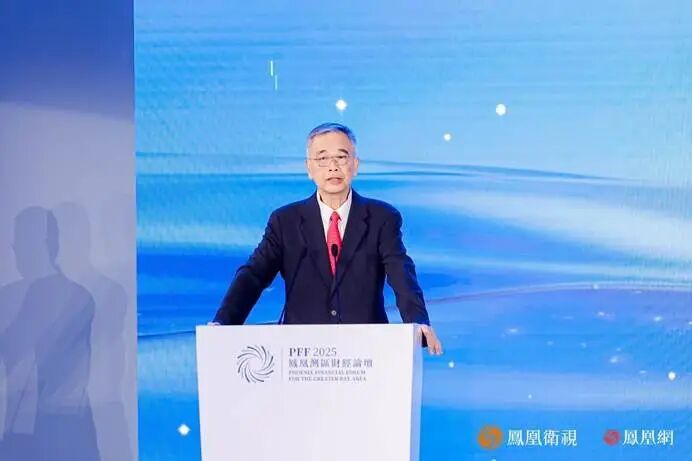
央行原副行长李东荣:关税壁垒难以阻止经济全球化的发展大势
凤凰网财经· 2025-09-24 14:08
Core Viewpoint - The forum "Phoenix Bay Area Finance Forum 2025" emphasizes the theme of "New Pattern, New Path" and aims to explore new development opportunities amidst global economic changes [1] Group 1: Economic Globalization - Economic globalization is currently facing challenges, entering a phase of adjustment and slow globalization, but tariff barriers cannot halt the overall trend of globalization [3] - The underlying logic of globalization is based on comparative advantages, driven by the pursuit of optimal resource allocation and maximum efficiency. Companies will continue to seek the best production locations and sales markets globally, despite tariff impacts [4] - Technological advancements, including digital technology, the internet, and modern logistics, facilitate unprecedented ease in cross-border production collaboration, information exchange, and trade [4] - Tariff barriers may not only fail to stop globalization but could also catalyze its evolution into new models. Modern supply chains increasingly emphasize risk resilience alongside cost and efficiency [4] - The uncertainty of tariff policies has accelerated regional economic cooperation among ASEAN and BRICS countries as a risk mitigation strategy [4] - Despite the shocks and uncertainties brought by tariff barriers, the strong internal dynamics and market laws of economic globalization will continue to drive its forward momentum [4]
央行原副行长李东荣:关税壁垒难以阻止经济全球化的发展大势
Feng Huang Wang Cai Jing· 2025-09-24 06:48
Core Insights - The forum "Phoenix Bay Area Finance Forum 2025" was held in Guangzhou, focusing on the theme "New Pattern, New Path" to explore development opportunities amidst global changes [1] Economic Globalization - Economic globalization is currently facing challenges, entering a phase of adjustment and slow globalization, but tariff barriers cannot halt its overall trend [3] - The underlying logic of globalization is based on comparative advantages, driven by the pursuit of optimal resource allocation and maximum efficiency, leading companies to seek the best production locations and markets globally [3] - Technological advancements, including digital technology, the internet, and modern logistics, facilitate unprecedented ease in cross-border production collaboration, information exchange, and trade [3] Supply Chain Dynamics - Modern supply chains are increasingly focusing on risk resilience and flexibility, in addition to cost and efficiency, with examples including the diversification of server manufacturing to the Americas while maintaining mobile and computer production in Asia [3] - Uncertainty in tariff policies has accelerated regional economic cooperation among ASEAN and BRICS countries as a risk mitigation strategy [3] Conclusion on Globalization - Despite the shocks and uncertainties brought by tariff barriers, economic globalization will continue to advance due to its strong internal dynamics and market principles [3]

李强会见加拿大总理卡尼
Xin Hua She· 2025-09-24 02:21
Group 1 - The core viewpoint emphasizes the constructive and pragmatic approach taken by China and Canada to improve bilateral relations, marking the 55th anniversary of diplomatic ties and the 20th anniversary of the strategic partnership as significant milestones [1][2] - China expresses willingness to maintain and develop the positive momentum in trade, which has seen rapid growth this year, and aims to deepen cooperation in energy, green initiatives, tourism, and other sectors for mutual benefit [2][3] - Canada reaffirms its commitment to the One China policy and seeks to enhance dialogue and cooperation across various sectors, including trade, energy, agriculture, manufacturing, finance, health, and tourism, to elevate the strategic partnership to a new level [3] Group 2 - Both countries acknowledge the need for a fair and non-discriminatory business environment for Chinese enterprises in Canada, highlighting the importance of addressing economic concerns through dialogue [2] - The international landscape is changing, with rising unilateralism and protectionism, prompting a call for strengthened global cooperation to tackle risks and challenges [2] - Canada expresses a desire to collaborate closely with China in multilateral communication to uphold WTO rules and address global challenges such as climate change [3]
申万宏观·周度研究成果(9.13-9.19)
赵伟宏观探索· 2025-09-21 03:14
Group 1: New Economic Dynamics - The high-tech manufacturing sector continues to show strong growth, indicating a new acceleration in economic dynamics [9][10] - Recent financial data shows a decline in credit balance and social financing, with M1 increasing slightly [17] - The impact of "anti-involution" is beginning to manifest in mid-to-lower production and investment sectors [21] Group 2: Gold Price Concerns - Recent trends indicate that gold price increases are primarily concentrated during U.S. trading hours, raising concerns about future price stability [12][11] - The differentiation in investment allocation among different regions may influence future gold price movements [12] Group 3: Fiscal Policy Insights - Broad fiscal spending is slowing down, prompting the need for potential countermeasures to address downward pressure on the economy [21][23] - The upcoming fiscal "second half" may focus on risk prevention, transformation promotion, and consumer protection [16] Group 4: Real Estate Market Trends - There is an improvement in new home transactions in first-tier cities, supported by industrial production recovery and high infrastructure investment [24] Group 5: International Cooperation - The BRICS summit emphasized the importance of multilateralism and international cooperation to address global challenges and promote economic development [29] Group 6: Monetary Policy Outlook - The recent FOMC meeting resulted in a 25 basis point rate cut, with increased expectations for further rate cuts in 2025 [30]

东西问丨约瑟:世界变局下的RCEP如何往前走?
Zhong Guo Xin Wen Wang· 2025-09-15 11:40
Core Viewpoint - The Regional Comprehensive Economic Partnership (RCEP) is positioned as a significant driver for regional economic integration amidst global challenges such as unilateralism and trade protectionism, aiming to evolve from the "largest free trade area" to a "high-level free trade area" [5][6][9]. Group 1: RCEP's Role and Impact - Since its implementation, RCEP has significantly boosted trade within the region, particularly benefiting emerging markets like Laos, Cambodia, Indonesia, Vietnam, and Malaysia [3]. - The region has become a stronghold for global foreign direct investment (FDI), with ASEAN attracting 49.2% of global FDI inflows in 2023 [3]. - Trade in intermediate goods has shown a notable increase, rising from 65% of total trade in 2021 to 68.3% in 2024 [3]. Group 2: Challenges and Areas for Improvement - RCEP faces challenges such as low utilization rates of its rules and slow progress in fulfilling commitments in key areas like services and investment [8]. - The absence of a fully established RCEP secretariat has hindered timely decision-making on critical issues like upgrading terms and expanding membership [8]. - There is a lack of effective platforms for policy coordination and communication among member countries [8]. Group 3: Future Directions for RCEP - To transition to a high-level free trade area, RCEP should expand its scope beyond economic matters to include governance and investment [9]. - Strong leadership is essential for establishing relevant rules and plans, addressing issues like regulatory policies and industry standards [9][10]. - Regular summits for RCEP leaders are necessary to ensure focused attention on trade, investment, and supply chain issues [12]. - Enhancing organizational capabilities and establishing a mechanism for progress assessment will be crucial for RCEP's effectiveness [12][13].

2025年服贸会闭幕 外交部:中国为世界经济注入稳定性和新动能
Zhong Guo Xin Wen Wang· 2025-09-15 09:09
Group 1 - The 2025 China International Service Trade Fair (CIFT) concluded, showcasing China's commitment to high-level openness and innovation in the global economic landscape [1] - The CIFT attracted nearly 2,000 enterprises with an international participation rate exceeding 20%, covering 26 of the top 30 countries and regions in service trade [1] - A total of 198 new products and achievements were presented at the fair, responding to the global demand for high-quality service trade amid rapid technological development and industrial transformation [1] Group 2 - Recent events such as the 2025 World Intelligent Industry Expo and the 25th China International Investment and Trade Fair signal China's intent to strengthen innovation cooperation and address global challenges [2] - China aims to continue being a promoter of economic globalization, a defender of the multilateral trading system, and a builder of stable supply chains, sharing the long-term benefits of institutional openness with other countries [2]
外交部:坚决反对在他人胁迫下以各种名目对华设限
Zhong Guo Xin Wen Wang· 2025-09-15 08:56
Core Viewpoint - The Chinese Ministry of Foreign Affairs firmly opposes any restrictions imposed on China under coercion, regardless of the justification, and emphasizes the importance of mutual benefit in China-Mexico economic cooperation [1] Group 1: Economic Globalization - China advocates for inclusive and beneficial economic globalization and opposes unilateralism, protectionism, and discriminatory measures [1] - The Ministry stresses the need to protect China's legitimate rights and interests based on actual circumstances [1] Group 2: China-Mexico Relations - Both China and Mexico are significant global southern countries, and their economic cooperation is characterized by mutual benefit and win-win outcomes [1] - China places high importance on the development of China-Mexico relations and hopes for Mexico to work together to maintain a favorable international economic environment [1]
习近平同瑞士联邦主席凯勒-祖特尔互致贺电
Xin Hua She· 2025-09-15 00:47
Core Points - The 75th anniversary of diplomatic relations between China and Switzerland was celebrated, highlighting the friendly cooperation between countries with different social systems and development stages [1] - Both nations have cultivated a spirit of "equality, innovation, and win-win" cooperation, leading to fruitful bilateral and multilateral cooperation results that enhance the welfare of their peoples [1] - China expresses a commitment to deepen economic, financial cooperation, and cultural exchanges with Switzerland, aiming to elevate the innovative strategic partnership to a new level [1] Summary by Sections - **Bilateral Relations**: The relationship between China and Switzerland is characterized by mutual respect, dialogue, and practical cooperation, establishing a diverse and solid partnership over 75 years [1] - **Milestones**: Key milestones include the implementation of the free trade agreement in 2014 and the establishment of the innovative strategic partnership in 2016, marking the continuous expansion and deepening of cooperation across various fields [1] - **Future Outlook**: Switzerland expresses a willingness to continue deepening exchanges and cooperation with China, reinforcing the long-term friendship between the two nations [1]
2025年国际议员友好交流论坛乌鲁木齐宣言
Xin Hua Wang· 2025-09-14 13:42
Core Viewpoint - The 2025 International Forum for Friendly Exchanges among Parliamentarians emphasizes global cooperation, sustainable development, and the importance of dialogue among nations to address various global challenges [2][3]. Group 1: Themes of the Forum - The forum's theme is "Building Global Cooperation and Promoting Sustainable Development Together," focusing on high-quality Belt and Road Initiative construction, ecological protection, and cultural preservation [2]. - Discussions included topics such as ethnic regional autonomy, human rights protection, and national unity [2]. Group 2: Key Summarized Points - Legislative bodies should enhance friendly exchanges and multi-level dialogue to promote global peace and stability, injecting lasting momentum into economic and social development [3]. - Advocacy for a multipolar world order, maintaining the UN-centered international system, and promoting dialogue to resolve international issues while opposing hegemony [3]. - Support for inclusive economic globalization, prioritizing development, and respecting the rights of developing countries to contribute to global economic growth [3]. - Emphasis on upholding international law, supporting countries' development paths, and fostering dialogue on human rights issues based on mutual respect [3]. - Recognition of China's development achievements and the modern development model it offers, encouraging continued high-level openness and cooperation on global initiatives [4]. - Importance of green and low-carbon development, prioritizing ecological protection, and enhancing cooperation in clean energy and environmental governance [4]. - Commitment to ensuring equal rights for all ethnic groups and promoting political rights and participation [4]. - Acknowledgment of China's governance strategy in Xinjiang and the region's socio-economic achievements, opposing foreign interference in domestic affairs [4]. - Appreciation for China's hospitality during the forum and support for the institutional development of the forum, with an invitation for the next forum in 2026 [4].