新型能源体系

Search documents
这一年,新能源从替补席走上舞台中央
中国能源报· 2025-12-29 04:57
Core Viewpoint - In 2025, the renewable energy industry in China transitioned from rapid scale expansion to high-quality development, driven by dual goals of carbon neutrality and a new energy system, marking a significant leap in energy structure [1][2]. Group 1: Industry Achievements - By the end of September 2025, the installed capacity of renewable energy in China approached 2.2 billion kilowatts, accounting for 59.1% of the total installed capacity, with wind and solar power exceeding 1.7 billion kilowatts [4]. - In the first three quarters, renewable energy generation reached 2.89 trillion kilowatt-hours, representing about 60% of the total electricity consumption, indicating that new energy sources are primarily supporting economic growth [4]. - The solar power installed capacity reached 1.14 billion kilowatts, a year-on-year increase of 43.8%, while wind power capacity reached 590 million kilowatts [4]. Group 2: Technological Advancements - The energy storage sector is experiencing diverse technological developments, with large-capacity battery cells (over 500Ah) becoming a new competitive focus, enhancing system integration efficiency [7]. - Breakthroughs in hydrogen energy technology are being made, with significant advancements in electrolyzer efficiency and the establishment of long-distance hydrogen transport pipelines, paving the way for large-scale applications [7]. - In the wind and solar sectors, rapid advancements in N-type photovoltaic cell technology and floating wind power technology are contributing to improved energy conversion efficiency and expanding operational capabilities [7]. Group 3: Market Dynamics and Challenges - The renewable energy industry is facing a transformation from capital-driven rapid expansion to a more stable and precise policy-driven growth model, leading to a period of deep adjustment characterized by overcapacity and price wars [8][10]. - The industry is witnessing a shift from simple capacity competition to deeper value creation and global expansion, with companies focusing on technological innovation and international partnerships [10]. Group 4: Future Outlook - The upcoming "15th Five-Year Plan" emphasizes building a strong energy nation, with the renewable energy sector expected to focus on strength rather than just size, integrating various energy components to address consumption challenges [11].


2025油气行业交出“十四五”以来最具分量的“安全答卷”
Zhong Guo Neng Yuan Wang· 2025-12-29 04:23
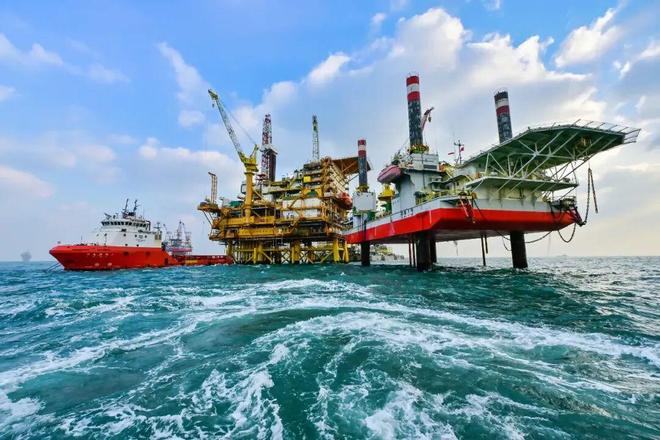
Core Viewpoint - In 2025, China's oil and gas industry is undergoing a multi-dimensional transformation, achieving historical highs in both oil and gas production while transitioning from a traditional energy provider to a materials and systems service provider [1][7]. Group 1: Industry Achievements - The "Seven-Year Action Plan" for increasing oil and gas reserves and production has successfully concluded, marking a significant milestone in energy security [3][4]. - Offshore oil production has significantly contributed to national oil output, with the Bohai Oilfield achieving a historic breakthrough of 40 million tons of oil equivalent, comparable to creating a new "Daqing" in offshore production [3][4]. - The first 10,000-meter exploratory well, "Deep Earth Taka 1," has been drilled, marking a global first in discovering oil and gas at such depths, thus opening new resource reserves [4][5]. Group 2: Technological Advancements - China has developed a complete deep-sea oil and gas development capability, mastering the entire chain from exploration to operation, which allows for independent development of most deep-sea resources [4][5]. - Significant breakthroughs in ultra-deep drilling technology have been achieved, with drilling cycles for deep coalbed gas wells reduced from nearly 100 days to under one month, enhancing resource extraction efficiency [5][6]. - The industry is transitioning from reliance on external technologies to a self-sufficient, technology-driven model, establishing a robust safety defense for energy independence [5][6]. Group 3: Value Transition - The oil and gas industry is at a critical juncture as refined oil consumption peaks, indicating a shift from traditional fuel provision to becoming a key player in industrial materials and stable system services [7][8]. - The role of oil is evolving from merely a fuel source to being integral in high-end manufacturing and supply chain security, with petrochemicals becoming increasingly important [7][8]. - Natural gas is positioned as a crucial stabilizer and regulator in the new power system, especially as renewable energy sources like wind and solar gain prominence [7][8]. Group 4: Future Outlook - The oil and gas industry is set to integrate into the new energy system blueprint, showcasing its potential to adapt and thrive in a changing landscape [8].
中国能源这一年,加速跑!
中国能源报· 2025-12-29 03:28
Group 1 - The core viewpoint of the article emphasizes China's commitment to achieving a low-carbon economy by 2035, marking a significant step in global climate cooperation and showcasing the country's ability to balance climate responsibility with economic growth [2][3]. - The "14th Five-Year Plan" includes the goal of building an energy powerhouse, elevating energy from a foundational element of economic development to a core pillar of national strength, thus establishing a clear direction for high-quality energy development in the coming years [2][3]. Group 2 - China's energy strategy is characterized by a dual focus on security and development, with coal production expected to remain above 4.8 billion tons by 2025, and renewable energy capacity projected to exceed 2.2 billion kilowatts, highlighting a robust commitment to clean energy [3][4]. - The construction of a new energy system is anticipated to be flexible, reliable, and interconnected, moving beyond simple iterations of old and new energy sources [4]. Group 3 - In the first 11 months of the year, China's total electricity consumption reached 94,602 billion kilowatt-hours, a year-on-year increase of 5.2%, with projections indicating that total consumption will exceed 100 trillion kilowatt-hours for the first time [6]. - The energy supply security measures have proven effective, with record-high electricity loads during peak summer months and significant inter-provincial electricity support [6]. Group 4 - Oil and gas production has reached new heights, with crude oil output at approximately 215 million tons and natural gas production surpassing 260 billion cubic meters, marking a historic high [7][8]. - The oil and gas industry is expected to continue focusing on increasing reserves and production while ensuring a resilient and sustainable energy supply system [8]. Group 5 - The renewable energy sector is rapidly advancing, with installed capacity nearing 2.2 billion kilowatts and accounting for approximately 59.1% of total capacity, driven by strong policy support and technological breakthroughs [10]. - New energy storage capacity has also seen significant growth, exceeding 100 million kilowatts, representing over 40% of the global total [10]. Group 6 - The renewable energy industry is undergoing a transformation to address issues of price competition and market order, with government initiatives aimed at regulating low-price competition in the photovoltaic sector [11][12]. - The focus is shifting from scale expansion to value creation, emphasizing innovation and differentiation in product development and business models [12]. Group 7 - China's nuclear power sector is expanding, with five new projects approved this year, maintaining a leading position globally with 54 units under construction and 58 in operation [14]. - Significant advancements in nuclear technology, including the development of the "Hualong One" reactor and breakthroughs in thorium-based molten salt reactors, are enhancing the role of nuclear energy in achieving a low-carbon energy system [14]. Group 8 - The electricity market has seen substantial growth, with a total trading volume of 60,300 billion kilowatt-hours from January to November, representing a 7.6% increase year-on-year [19][20]. - The implementation of market reforms is facilitating the integration of renewable energy into the grid, with new policies promoting market-based pricing for renewable projects [21]. Group 9 - The national carbon market has expanded to include key industries such as steel, cement, and aluminum, covering over 60% of total carbon emissions, with significant trading volumes recorded [23]. - The integration of carbon markets with renewable energy markets is being strengthened, which is crucial for promoting low-carbon transitions in the economy [23]. Group 10 - The establishment of zero-carbon parks is underway, with a goal to create approximately 100 national-level parks, emphasizing the importance of these areas in achieving green transformation and carbon neutrality [24]. - Various regions are exploring innovative practices to enhance renewable energy consumption and industrial green transformation within these parks [24].

“缺电”的经济大省,又放了个大招
3 6 Ke· 2025-12-29 02:09
据当地媒体报道,浙江天台抽水蓄能电站未来将成为长三角地区重要的清洁能源调节枢纽,对区域电网的调峰、填谷、调频、调相和紧急事故备用起到至 关重要的"稳定器"和"调节器"作用。 值得注意的是,随着该机组投运,浙江抽水蓄能总装机规模首次突破1000万千瓦,达到1030.5万千瓦,仅次于广东,位居全国第二。与此同时,浙江在建 和规划建设的抽水蓄能装机规模近2000万千瓦,位居全国首位。 12月25日,三峡集团浙江天台抽水蓄能电站首台机组实现并网发电,标志着我国在高水头、大容量抽蓄机组建设领域实现重要突破。 天台抽水蓄能电站是我国"十四五"重点实施项目,总装机容量170万千瓦。此次投运的机组单机容量达42.5万千瓦,位居国内之首;额定水头724米,为世 界第一;单级斜井长度达483.4米,也创下国内纪录。 作为华东电网重要的调节电源,电站预计2026年迎峰度夏期间全面投产,年发电量约17亿千瓦时,可满足约160万人一年生活用电,每年可节约燃煤52万 吨、减少二氧化碳排放104万吨。 当前,我国正着力构建清洁低碳、安全高效的新型能源体系。随着风、光等新能源快速发展,电力系统对灵活调节能力的需求也日益增强。 储能作为能源转 ...

叶巴滩水电站首批机组正式投产发电
Ren Min Ri Bao Hai Wai Ban· 2025-12-28 23:37
据新华社成都12月27日电(记者薛晨)27日,我国在建海拔最高双曲拱坝电站——叶巴滩水电站首批机 组正式投产发电,为构建新型能源体系和能源强国建设再添新动能。 叶巴滩水电站位于四川省甘孜藏族自治州白玉县与西藏自治区昌都市贡觉县交界的金沙江干流上,是国 家"十四五"规划重大工程。叶巴滩水电站总装机容量224万千瓦,是金沙江上游川藏段装机容量最大的 水电站。叶巴滩水电站最大坝高217米,具有高寒、高海拔、特高拱坝、高地应力、高埋深、大跨度地 下厂房等"五高一大"基本特征。此次首批投产发电的机组为4号和3号机组,实现"一月双投"。 据悉,项目全容量投产后,平均年发电量超102亿千瓦时,每年可节约标准煤约310万吨,减少二氧化碳 排放超830万吨。 ...
绿色低碳发展取得新成效
Jing Ji Ri Bao· 2025-12-28 21:51
在天津,像这样源自一线的"小革新"还有很多。冬日午后,东丽区刘台小学的教室里暖意融融,智慧能 源平台显示室内始终保持在体感舒适的温度。 "过去供热靠经验,现在靠数据。"国网(天津)综合能源服务有限公司暖通设计管理专责卢德志告诉记 者,系统能根据天气、使用时间自动调节供热策略,实现"按需供热",避免能源浪费。 相较于传统供暖方式,国网(天津)综合能源公司为刘台小学打造的空气源热泵清洁供暖方式,如同高 效的能量搬运工,能效大幅提升。仅刘台小学一个项目,每年就可节约标准煤约140吨,减排二氧化碳 约360吨,供热成本也随之下降。 今年9月,国网(天津)综合能源服务有限公司凭借技术、模式等优势,成功中标东丽区首批10个公共 机构能源托管项目,供热面积突破24万平方米,预计年减排二氧化碳超5000吨,是天津地区首批区级全 域能源托管项目。 近日,记者在天津市西青区110千伏雄年一二线电缆改造现场看到,第四代高压电缆接头自动剥切打磨 机器人缓缓旋转,通过夹具抱紧电缆,旋转刀具实现对绝缘层和半导电层的精准高效剥切。 "过去两个工人4个小时的工作,这台机器人只需1.5小时,而且电缆剥切和打磨的精度更高。"全国劳动 模范、国网 ...
宁夏重大项目年度建设任务超额完成 2885个项目全部开工
Zhong Guo Xin Wen Wang· 2025-12-28 15:15
Core Insights - Ningxia has successfully launched all 2,885 major projects, achieving an annual investment completion rate of 101% [1] - The completion rate for 100 key projects reached 123%, providing crucial support for the economic recovery [1] Economic Development Initiatives - The Ningxia Development and Reform Commission has focused on economic analysis, planning, project promotion, and reform efforts, implementing over 40 policy measures to stimulate economic stability [1] - A closed-loop work mechanism has been established to address economic operation issues through monthly assessments and analyses [1] Reform and Market Vitality - Key reforms include the market-oriented reform of renewable energy grid prices and the reform of transmission and distribution prices [1] - Comprehensive strategies have been initiated to integrate into the national unified market and promote various strategic tasks, including the construction of a new energy system and digital development [1] Funding and Project Support - The scale of central funding support secured throughout the year has reached a historical high, effectively supporting the construction needs of 595 projects [1] - High-quality completion of planning work has laid a solid foundation for long-term regional development, including the drafting of the "14th Five-Year" achievements and the "15th Five-Year" planning outline [2]
塔里木油田年光伏发电量突破20亿千瓦时
Xin Hua She· 2025-12-28 07:01
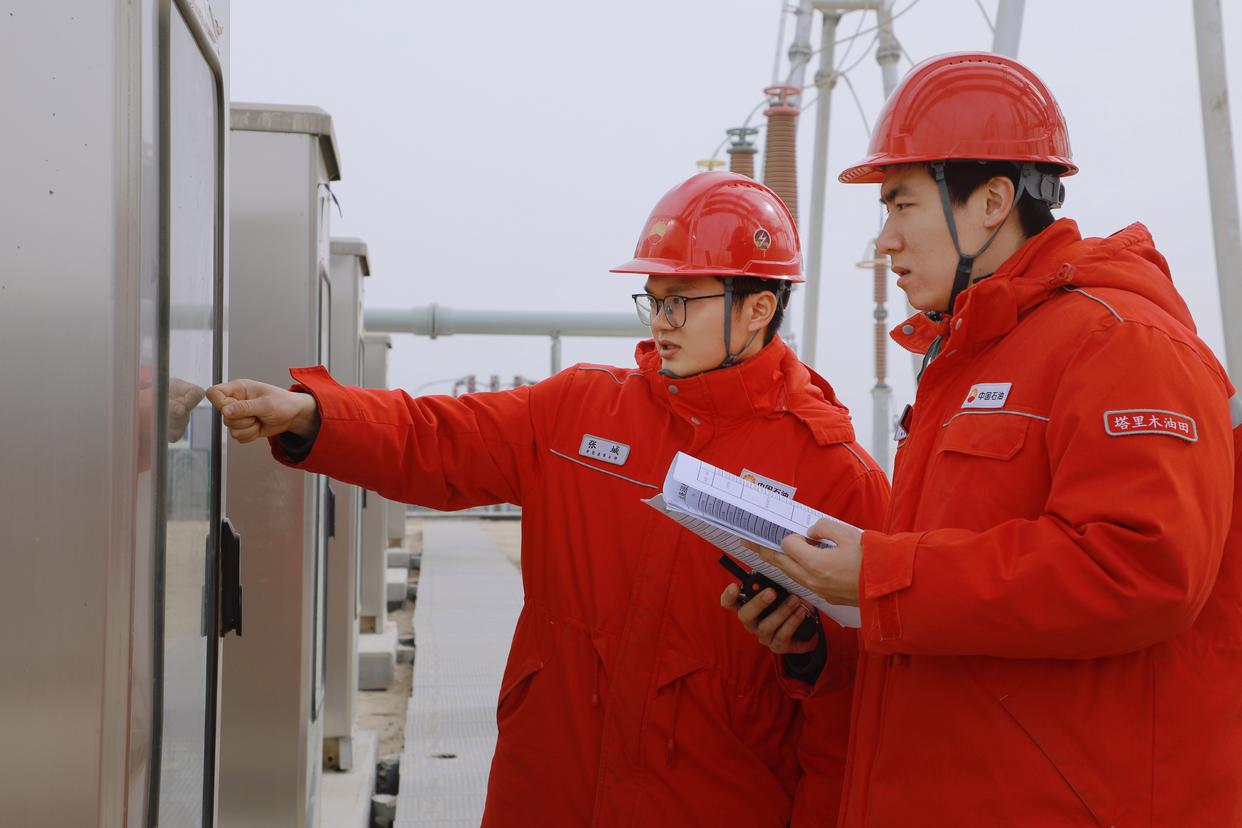
Core Insights - The Tarim Oilfield in China has achieved a record annual photovoltaic power generation of over 2 billion kilowatt-hours, with a single-day peak output exceeding 10 million kilowatt-hours, marking a significant milestone in the integration of oil, gas, and renewable energy development in the Taklamakan Desert region [1][3] Group 1: Renewable Energy Development - The Tarim Oilfield has established five centralized photovoltaic power generation projects with a total installed capacity of 2.6 million kilowatts and 239 distributed photovoltaic projects with a total capacity of 63,000 kilowatts [3] - The 2 billion kilowatt-hours of green electricity generated can meet the annual electricity needs of over 1.8 million people, equivalent to replacing 600,000 tons of standard coal and reducing carbon dioxide emissions by 1.07 million tons [3] - Approximately 8% of the generated electricity is used for the oilfield's own production, replacing traditional energy sources like grid electricity and natural gas, while 92% is supplied externally [3] Group 2: Future Plans and Initiatives - The Tarim Oilfield is actively expanding its renewable energy initiatives by constructing additional photovoltaic projects in areas such as Luntai County and Shaya County, and is accelerating the development of pumped storage, new energy storage, and hydrogen energy applications [3] - The oilfield has signed long-term bilateral agreements for green electricity delivery with regions like Shanghai and Jiangsu, contributing to the "Xinjiang electricity export" initiative [3] - Xinjiang is recognized as a key area for developing large-scale clean energy bases as part of the national 2035 vision [3]

奋勇争先,决战决胜“十四五”|新型能源体系加快建设
Ren Min Ri Bao· 2025-12-28 06:09
Core Insights - The construction of new energy systems is crucial for achieving carbon peak and carbon neutrality goals, emphasizing the importance of self-sufficiency in energy resources [1][2] - The Ningxia Tengger Desert "Shagao Huang" renewable energy base is a significant project, with the first phase of 3 million kilowatts of solar capacity launched in October, showcasing a blend of traditional and new energy sources [1][2] - The Ningxia-Hunan UHV project, spanning over 1,600 kilometers, enhances the transmission of green electricity, with over 360 billion kilowatt-hours delivered annually to Hunan, significantly increasing its power supply [1][2] Energy Supply and Consumption - During the 14th Five-Year Plan period, China's energy supply system is diversifying, with non-fossil energy sources experiencing significant growth, while fossil energy is being utilized more cleanly and efficiently [2][3] - The share of renewable energy generation capacity is expected to rise from 40% to around 60%, indicating a substantial shift towards green energy sources [3] - Non-fossil energy's share in national energy consumption is increasing by 1 percentage point annually, with expectations to exceed the 20% target set for the 14th Five-Year Plan [3] Technological Advancements - The energy sector is witnessing rapid technological innovations, with China leading in nuclear power and new energy storage solutions, including the first domestic 26 MW offshore wind turbine and advanced sodium-ion storage systems [5][6] - The development of smart microgrids and virtual power plants is accelerating, indicating a shift towards more flexible and resilient energy systems [6] Energy Security and Sustainability - China's energy production accounts for over 20% of the global total, with a self-sufficiency rate of over 80% during the 14th Five-Year Plan, ensuring that the majority of energy consumption growth is supported by domestic resources [4][6] - The implementation of energy-saving and carbon-reduction modifications in coal-fired power plants and advancements in carbon capture technologies are enhancing the sustainability of fossil energy [4]
奋勇争先,决战决胜“十四五”︱人民日报头版:新型能源体系加快建设
国家能源局· 2025-12-28 04:07
Core Viewpoint - The article emphasizes the accelerated construction of a new energy system in China, highlighting the importance of transitioning to renewable energy sources and enhancing energy security to support economic development and carbon neutrality goals [15][16][19]. Group 1: New Energy Development - The Ningxia Tengger Desert New Energy Base has successfully launched its first batch of 3 million kilowatts of solar capacity, showcasing a significant expansion in renewable energy production [17]. - The Ningxia-Hunan UHV project, spanning over 1,600 kilometers, can transmit green electricity in approximately 0.0054 seconds, significantly enhancing energy distribution efficiency [17]. - The project is expected to deliver over 36 billion kilowatt-hours of electricity annually to Hunan, with renewable energy accounting for over 50% of this supply [17][18]. Group 2: Energy Supply Structure - During the "14th Five-Year Plan" period, China's renewable energy generation capacity is projected to increase from 40% to around 60%, marking a substantial shift in the energy supply structure [21]. - The share of non-fossil energy in national energy consumption is expected to exceed the 20% target set for the "14th Five-Year Plan," with green electricity accounting for nearly 40% of total electricity consumption [21]. Group 3: Technological Innovations - China has developed a 26-megawatt offshore wind turbine with a rotor diameter exceeding 310 meters, capable of generating 62 kilowatt-hours per rotation, representing a significant technological advancement in renewable energy [20]. - The country is also implementing various innovative energy solutions, including the first domestic 220 kV flexible low-frequency transmission project and the world's first grid-connected sodium-ion energy storage system [23]. Group 4: Fossil Energy Transition - The domestic oil and gas production capacity has reached over 400 million tons, maintaining a rapid growth trend, while efforts are being made to enhance the efficiency and environmental sustainability of fossil fuel usage [22]. - The implementation of energy-saving and carbon-reduction modifications in coal-fired power plants is part of the broader strategy to transition towards greener energy sources [22].