
粮食安全

Search documents
科技为媒点亮镇有味“稻”发展谱系
Zhen Jiang Ri Bao· 2025-12-19 21:51
Core Viewpoint - The event highlighted the promotion of high-quality rice products from Zhenjiang, showcasing advancements in agricultural technology and the improvement of rice cultivation standards in the region [2][4]. Group 1: Event Overview - The 8th Zhenjiang Agricultural Science and Technology Carnival focused on rice, featuring the launch of 10 recommended "Zhenjiang Good Taste Rice" products [2]. - The event included demonstrations of premium rice packaging and cooking, emphasizing the quality and flavor of local rice [1]. Group 2: Featured Rice Products - The recommended rice products include varieties such as "Wild Mountain Village" South Jing 46 rice, "Zhen Rice" brand Zhen Rice 6243, and "Zhenjiang Fortune Rice" among others, sourced from various rice-producing areas in Zhenjiang [2]. - The diversity of the rice products reflects the overall improvement in rice cultivation levels across the region [2]. Group 3: Agricultural Practices - Dai Zhuang Organic Agricultural Cooperative has been practicing organic rice cultivation for 18 years, resulting in a significant increase in soil organic matter and biodiversity, with yields rising from 300 kg to over 450 kg per mu [3]. - The cooperative's success exemplifies the benefits of sustainable agricultural practices, contributing to food security and farmer income [3]. Group 4: Research and Development - The Zhen Rice 6243 variety, developed by the Zhenjiang Agricultural Science Institute, is currently in the demonstration phase, showing promising yields of around 600 kg per mu and a milling rate exceeding 65% [4]. - The research team has been active in breeding high-quality rice varieties for nearly 60 years, contributing to the development of multiple award-winning rice strains [5]. Group 5: Technological Innovations - The Zhenjiang Agricultural Science Institute employs modern techniques such as molecular marker technology and gene editing to enhance rice quality and yield, addressing challenges like grain aging [6]. - The introduction of disease-resistant rice varieties has reduced pesticide use, promoting environmentally friendly farming practices [7]. Group 6: Economic Impact - The cultivation of new rice varieties has led to an increase in rice production by over 30 million kg annually, generating direct economic benefits exceeding 100 million yuan for local farmers [7]. - The integration of rice varieties into food processing industries has garnered positive feedback, with significant annual usage in producing vinegar, wine, and rice flour [8].
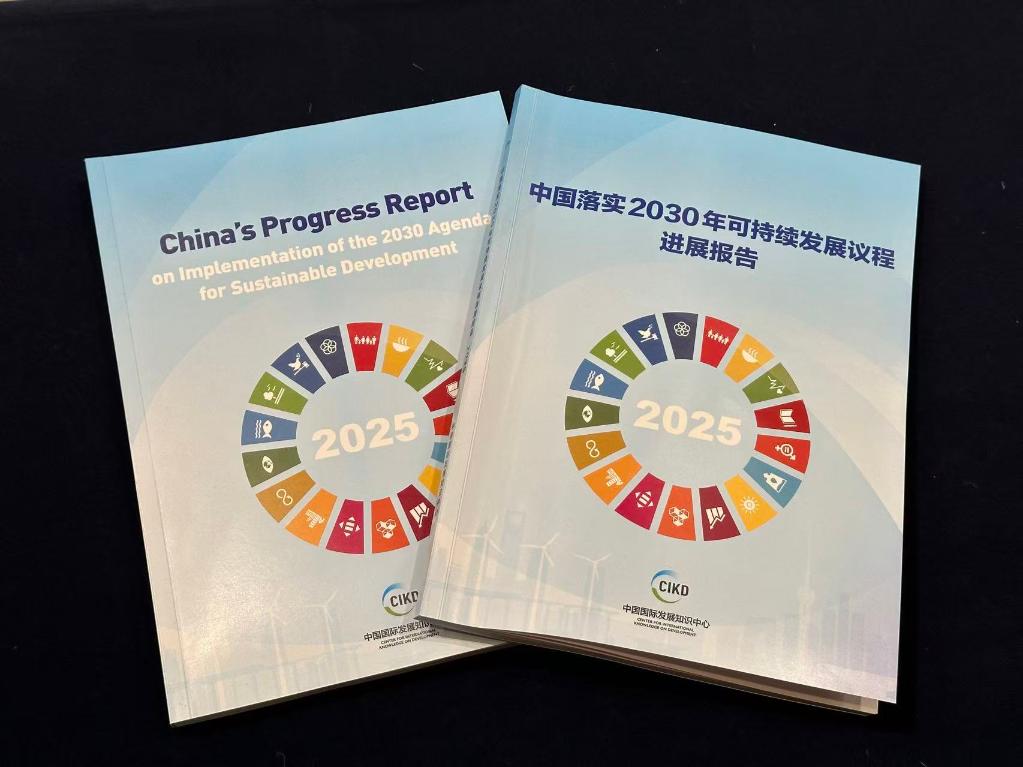
《中国落实2030年可持续发展议程进展报告2025》发布
Xin Hua She· 2025-12-19 15:11
Core Insights - The report titled "Progress Report on China's Implementation of the 2030 Agenda for Sustainable Development 2025" highlights China's significant progress in implementing the UN 2030 Agenda over the past decade, focusing on poverty alleviation, food security, ecological protection, and global development partnerships [1][2] Group 1: Implementation Progress - China has effectively integrated resources and encouraged participation from various sectors to promote development, particularly through support from developed eastern regions to the central and western regions [2] - The report indicates that China's food security capabilities have continuously improved, with stable food prices and a resilient agricultural food system, marking a significant milestone in global food security governance [2] Group 2: Future Plans - In the next five years, China aims to further advance the 2030 Agenda by adhering to goal-oriented and problem-oriented approaches, enhancing systemic thinking, deepening reforms, and expanding openness to achieve qualitative and reasonable economic growth [3] - The report outlines plans to promote comprehensive human development and common prosperity for all, while also collaborating with various parties to build a community with a shared future for humanity [3]

“粮食安全看山东”之淄博:聚焦聚力“三关”,强化粮食监管
Zhong Guo Fa Zhan Wang· 2025-12-19 14:13
中国发展网讯 近年来,山东省淄博市深入贯彻落实党的二十届三中全会"统筹推进粮食购销和储备管理 体制机制改革,建立监管新模式"部署,紧盯三个环节,创新监管模式,强化依法管粮治粮质效,坚决 扛稳粮食安全政治责任,持续巩固提升粮食安全保障能力。 紧盯出库关,力保粮食规范轮换 市级储备粮轮换是全年粮食工作重点。淄博市发展改革委督促市属储备粮承储企业积极发挥国有企业粮 食安全"压舱石"、服务调控"主力军"、调节市场"稳定器"作用,加强储备粮轮换出库管理,防范风险隐 患,顺利完成轮换任务,为全市粮食市场平稳运行提供保障。 加强制度建设,规范地方储备粮油轮换工作。近年来,先后建立制度12项,夯实规范化管理基础。严格 按照《淄博市地方储备粮油轮换管理细则》要求,督促企业规范轮换计划、检验检测、竞价交易等流 程,确保储备粮油数量真实、质量良好、储存安全。 加强出库检查,杜绝违法、违规问题出现。每年组织政策性粮食销售出库专项检查,通过实地查看、查 阅台账等方式,对企业轮换政策执行、出入库管理、安全生产等方面进行全方位监督。出库结束后逐仓 查验,督促企业做好仓储设施检查和空仓消杀。整理形成政策性粮食出库政策文件汇编,组织企业学习 ...
安徽省安庆市下浒山水库灌区工程开工
Zhong Guo Jing Ji Wang· 2025-12-19 07:40
Core Viewpoint - The construction of the Xiaohushan Reservoir irrigation area project in Anqing City, Anhui Province, has officially commenced, marking the start of a significant national project aimed at enhancing agricultural irrigation and water supply security in the region [1] Group 1: Project Overview - The Xiaohushan Reservoir irrigation area project is part of national "two heavy" projects and aligns with several key planning documents, including the "Comprehensive Planning of the Yangtze River Basin (2012-2030)" and the "14th Five-Year Plan for Water Security" [1] - The project is designed to irrigate an area of 528,000 acres and has a total construction period of 48 months [1] Group 2: Regional Importance - The project is located in a crucial grain production base in Anhui Province, which will enhance the comprehensive benefits of the Xiaohushan Reservoir [1] - Upon completion, the irrigation area will improve water resource allocation capabilities, ensuring food security and water supply safety in the region, thereby contributing to rural revitalization and high-quality socio-economic development [1]
秋粮收购一线探访
Ren Min Ri Bao· 2025-12-19 01:36
Core Insights - The autumn grain harvest in China is progressing rapidly, with a notable increase in both the speed of grain purchases and market activity, particularly in Heilongjiang Province [8] Group 1: Grain Purchase Characteristics - Digital platforms like "Hui San Nong" are facilitating grain sales, allowing farmers to secure better prices, with some reporting a price increase of 27 to 34 yuan per ton compared to grain brokers [2] - The average purchase price for corn has risen by 80 to 100 yuan per ton compared to last year, leading to increased enthusiasm among farmers for selling their grain [4] - As of November 25, Heilongjiang Province has seen a total grain purchase of 506 billion jin, an increase of 109.7 billion jin year-on-year [7] Group 2: Financial Support and Loan Disbursement - The Agricultural Development Bank is providing significant financial support, with a total of 40.7 billion yuan in loans for autumn grain purchases, facilitating the acquisition of 168.8 million tons of grain [3] - The bank has also increased its loan disbursement for the 2025 grain year by 13.78 billion yuan, supporting the purchase of 110.46 billion jin of grain [7] - The bank's commitment to providing 24-hour payment services is crucial for ensuring farmers receive their payments promptly [3] Group 3: Quality and Market Dynamics - The quality of this year's corn is reportedly better than last year, with most samples classified as first-grade, which supports higher prices for farmers [7] - There is a growing demand for corn from outside Heilongjiang, indicating a recovery in downstream demand [8] - The market for high-protein soybeans remains strong, with active purchasing interest from operators [8] Group 4: Challenges and Recommendations - Some farmers are hesitant to sell their grain, driven by market speculation, which could pose risks [9] - Experts suggest enhancing the coordination between policy-driven and market-driven purchases, improving financial support, and promoting storage technology to ensure farmers benefit from the harvest [9]
五粮液将构建主品牌产品体系,食品饮料ETF天弘(159736)昨日净申购居深市同类第一,农业ETF天弘(512620)连续4日“吸金”
2 1 Shi Ji Jing Ji Bao Dao· 2025-12-19 01:33
Group 1 - The A-share market showed mixed performance on December 18, with the food and beverage ETF Tianhong (159736) experiencing a net subscription of 2 million units, ranking first among similar products in the Shenzhen market [1] - The agricultural ETF Tianhong (512620) has seen net inflows for four consecutive days, accumulating nearly 50 million yuan as of December 17 [1] - The food and beverage ETF tracks the CSI Food and Beverage Index, focusing on leading stocks in high-end and mid-range liquor, as well as key players in beverages, dairy, condiments, and beer [1] Group 2 - According to Xinyi Securities, the food and beverage sector is at a relatively clear supply-demand bottom, with expectations for a turning point in 2026 after a challenging bottoming process in 2025 [2] - Xiangcai Securities noted that the current valuation of the food and beverage sector is at historical lows, suggesting potential for recovery and valuation repair as market styles shift [2] - The industry is advised to focus on innovation opportunities in categories, channels, and consumption scenarios, while also considering undervalued traditional consumption areas [2]

【人民日报】秋粮收购一线探访(乡村观察)
Ren Min Ri Bao· 2025-12-19 00:53
Group 1 - The core viewpoint of the articles emphasizes the importance of food security and the current rapid pace of autumn grain procurement in China, particularly in Heilongjiang Province, which is experiencing a bumper harvest and favorable prices for farmers [1][7]. Group 2 - Digital platforms like "Hui San Nong" are facilitating grain sales, allowing farmers to efficiently sell their produce and receive payments quickly, with prices at procurement points being higher than those offered by grain brokers [2][3]. - The average procurement price for corn has increased by 80 to 100 yuan per ton compared to last year, leading to higher enthusiasm among farmers for selling their grain [4][6]. - As of the end of November, the Agricultural Development Bank has provided significant financial support for grain procurement, with loans amounting to 40.7 billion yuan for autumn grain purchases, facilitating the acquisition of 168.8 million tons of grain [3][6]. Group 3 - The quality of grains, particularly corn, has improved this year, with most samples being classified as first-grade, which is crucial for ensuring better prices for farmers [6][7]. - The total grain procurement in Heilongjiang Province has reached 506 billion jin, an increase of 109.7 billion jin year-on-year, indicating a robust market activity [6][7]. - Companies are focusing on building a complete industrial chain for corn, from procurement to deep processing, which enhances product value and competitiveness [5].
秋粮收购一线探访(乡村观察)
Ren Min Ri Bao· 2025-12-18 21:56
Core Insights - The article discusses the current state of autumn grain procurement in Heilongjiang Province, highlighting the rapid pace of grain purchases and the positive impact of digitalization on the process [2][7]. Group 1: Procurement Characteristics - The autumn grain procurement is characterized by a significant increase in purchasing speed, with Heilongjiang Province's enterprises having purchased a total of 506 billion jin of new grain by November 25, an increase of 109.7 billion jin year-on-year [7]. - Digital platforms like "Hui San Nong" are facilitating the procurement process, allowing farmers to easily schedule sales and receive timely payments [2][3]. - The average purchase price for corn has increased by 80 to 100 yuan per ton compared to last year, leading to higher enthusiasm among farmers to sell their grain [4][7]. Group 2: Financial Support - The Agricultural Development Bank has provided substantial financial backing, with a total of 172.81 billion yuan in loans for autumn grain procurement by the end of November, an increase of 13.78 billion yuan year-on-year [7]. - The bank supports both policy-based and market-oriented grain purchases, ensuring that farmers receive timely payments for their grain sales [7][8]. Group 3: Quality and Market Dynamics - The quality of grain, particularly corn, has improved this year, with most samples being classified as first-grade, which is expected to benefit farmers through better pricing [6][7]. - There is a notable increase in demand for corn from outside Heilongjiang, indicating a recovery in downstream demand [7]. - The market for soybeans remains strong, with high protein soybean purchases being actively pursued by operators [7]. Group 4: Challenges and Recommendations - Some farmers are hesitant to sell their grain, driven by a "look up, not down" mentality regarding market prices, which could pose risks [8]. - Experts suggest enhancing the coordination between policy-based and market-oriented procurement, improving financial support, and promoting storage technology to ensure that farmers can effectively capitalize on their harvests [8].
下浒山水库灌区工程开工
Xin Hua She· 2025-12-18 15:13
Core Viewpoint - The construction of the Xiaohushan Reservoir irrigation area project in Anqing City, Anhui Province, has officially commenced, marking a significant step in enhancing agricultural irrigation and water supply security in the region [1] Group 1: Project Overview - The Xiaohushan Reservoir irrigation area project is a national "two heavy" project and is part of the comprehensive planning for the Yangtze River Basin, the national modern irrigation development plan, and the "14th Five-Year" water security guarantee plan [1] - The project is designed to irrigate an area of 528,000 acres and has a total construction period of 48 months [1] Group 2: Importance and Impact - The primary focus of the project is agricultural irrigation, while also addressing urban and rural water supply needs [1] - The area where the project is located is a crucial grain production base in Anhui Province, and the completion of the irrigation area will enhance the comprehensive benefits of the Xiaohushan Reservoir, improve water resource allocation, and ensure food and water security in the region [1] - The project is expected to significantly contribute to rural revitalization and the high-quality economic and social development of the area [1]
“粮食安全看山东”之莱州:“五强化”推进粮食产业高质量发展
Zhong Guo Fa Zhan Wang· 2025-12-18 07:59
Core Viewpoint - Food security is a national priority, and the Shandong Yantai Laizhou Development and Reform Bureau is implementing a comprehensive strategy to enhance food security through reforms, regulation, and public service initiatives [1] Group 1: Strengthening Reserve Guarantees - The focus is on improving the efficiency of food reserves by enhancing the role of storage enterprises and providing training for employees to improve skills [2] - A total of over 6.8 million yuan has been allocated for the construction of smart grain storage facilities and the improvement of grain detection systems since the re-establishment of storage units in 2022 [2] Group 2: Strengthening Regulatory Norms - A comprehensive regulatory system for food circulation is being established, including thorough inspections of state-owned storage enterprises to identify and rectify potential hazards [3] - Collaboration with market regulatory bodies is ongoing to ensure fair market practices and transparency in food processing enterprises [3] Group 3: Promoting Awareness and Guidance - Various promotional activities are being conducted to instill a culture of saving and valuing food, leveraging events like World Food Day to engage the public [4] - Educational initiatives targeting school students are being implemented to raise awareness about food conservation and reduce waste [5] Group 4: Enhancing Post-Harvest Services - An emergency response mechanism has been activated to ensure orderly autumn grain procurement amidst adverse weather conditions [6] - Monitoring of grain quality and storage practices is being intensified to prevent losses and ensure compliance with food safety standards [6] Group 5: Driving Technological Innovation - The focus is on developing local high-quality grain and oil brands, enhancing product value through technological advancements, and promoting sustainable agricultural practices [7] - Efforts are being made to encourage grain enterprises to adopt modern processing technologies and improve the overall competitiveness of the grain industry [7]