
AI制药

Search documents
万和财富早班车-20251030
Vanho Securities· 2025-10-30 01:45
Core Insights - The report highlights a significant growth in the AI pharmaceutical sector, with Eli Lilly deploying the world's largest AI drug manufacturing facility, indicating a potential explosive growth in the industry [5] - The lithium battery supply chain continues to see production increases, with energy storage prices rising nearly 60%, suggesting strong demand and investment opportunities in related stocks [5] - The introduction of new quantum devices by NVIDIA marks an acceleration in quantum technology development, presenting investment prospects in companies involved in this field [5] Industry Dynamics - The Central Committee of the Communist Party of China has released recommendations for the 15th Five-Year Plan for national economic and social development, which may influence future industry policies and investment strategies [4] - The State Administration of Foreign Exchange has introduced nine policy measures to support cross-border trade, potentially impacting financial markets and trade-related sectors [4] - The State Council's report on financial work indicates a focus on researching new policy measures to consolidate the positive momentum in capital markets, which could lead to favorable conditions for investments [4] Company Focus - Keli Yuan (科力远) reported a significant increase in net profit for the first three quarters, driven by the booming energy storage sector, indicating a strong upward trajectory for the company [6] - Weilan Biological (蔚蓝生物) achieved a 205% growth in net profit in the third quarter, completing a systematic capacity layout, which may enhance its market position [6] - China Ping An (中国平安) saw a 7.2% increase in operating profit attributable to shareholders in the first three quarters, with a robust growth of 46.2% in new business value for life insurance, reflecting strong performance in the insurance sector [6] Market Review and Outlook - On October 29, the market experienced a significant rally, with the ChiNext Index rising nearly 3% to reach a new high for the year, and the Shanghai Composite Index rebounding above 4000 points [7] - The trading volume in the Shanghai and Shenzhen markets reached 2.26 trillion yuan, an increase of 108.2 billion yuan compared to the previous trading day, indicating heightened market activity [7] - The current market environment is characterized by low valuations and low leverage, with the Shanghai Composite Index's PE ratio at 16.7-18.6 times, significantly lower than previous peaks, suggesting a more sustainable market rally driven by strategic emerging industries [7]
10月30日早餐 | 英伟达市值破5万亿美元
Xuan Gu Bao· 2025-10-30 00:03
Group 1: Market Overview - US stock market showed mixed results with Dow Jones down 0.16%, Nasdaq up 0.55%, and S&P 500 flat [1] - Nvidia's stock rose by 2.99%, pushing its market capitalization above $500 billion [1] - The storage sector saw significant gains with Seagate Technology up 19.11%, Western Digital over 13%, SanDisk over 16%, and Micron Technology up 2.13% [1] Group 2: Federal Reserve and Economic Policies - The Federal Reserve lowered interest rates by 25 basis points and announced the end of quantitative tightening (QT), but Powell's hawkish comments reduced the probability of a December rate cut from 95% to 65% [2] - South Korea agreed to invest $350 billion in the US in exchange for tariff concessions on automobiles and semiconductors [2] Group 3: Corporate Earnings and Stock Performance - Alphabet reported Q3 revenue of $102.35 billion, exceeding expectations of $99.85 billion, with Google Cloud revenue at $15.16 billion, above the forecast of $14.75 billion [2] - Meta's stock fell nearly 8% after reporting Q3 revenue of $51.24 billion, a 26% year-over-year increase, but below the expected $49.59 billion [2] - Microsoft saw a drop of 5% in after-hours trading despite a nearly 20% increase in quarterly revenue, as Azure cloud growth was below expectations [2] Group 4: Upcoming IPOs and Innovations - OpenAI plans to submit an IPO application in 2026, aiming for a valuation of around $1 trillion [3] - Western Union announced a stablecoin settlement system based on the Solana blockchain [4] - The European Central Bank is considering launching a digital euro by 2029 [5] Group 5: Commodity Prices - Copper prices rose by 1.31%, reaching $11,184 per ton, marking a new closing record high [6] Group 6: Domestic Developments - China's central enterprises launched a strategic emerging industry development fund with an initial scale of 51 billion yuan, focusing on AI, aerospace, high-end equipment, quantum technology, and future energy [8] Group 7: Sector Insights - The retail sector is set to benefit from a new action plan aimed at boosting consumption and expanding domestic demand [10] - The shipping industry is experiencing a rebound, with major shipping companies announcing rate increases due to stable export demand [11] - The AI pharmaceutical sector is expected to grow significantly, with a projected market size increase from 730 million yuan to 5.86 billion yuan from 2024 to 2028, reflecting a compound annual growth rate of 68.5% [14]


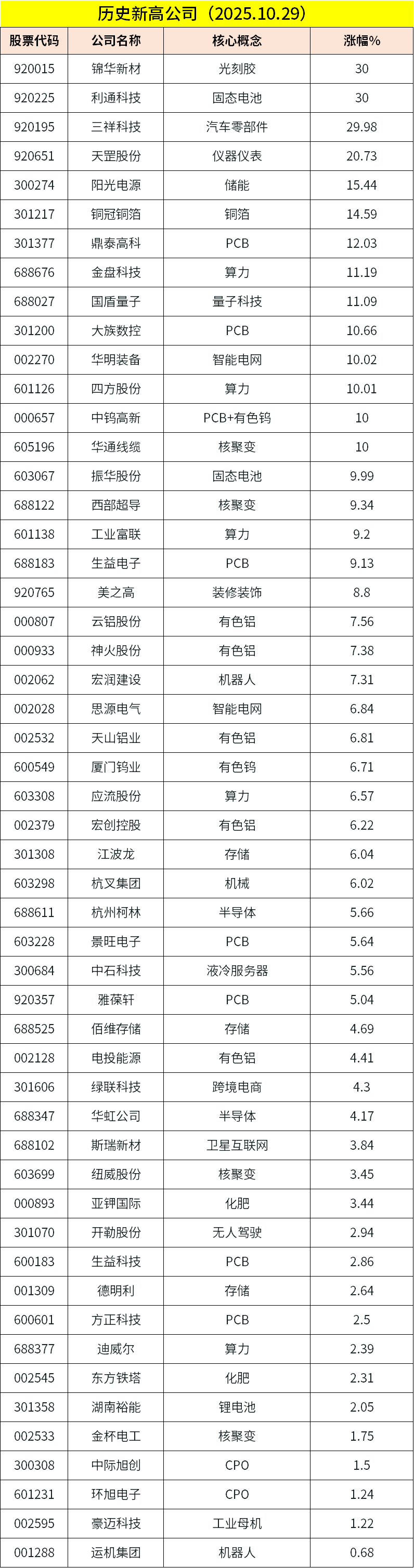
美联储再次降息25个基点,英伟达市值站上5万亿美元;卫星产业进入加速期,上游制造与发射环节需求旺盛——《投资早参》
Mei Ri Jing Ji Xin Wen· 2025-10-29 23:36
Important Market News - The Federal Reserve announced a 25 basis point reduction in the federal funds rate target range to 3.75% to 4.00%, marking the fifth rate cut since September 2024 [1] - U.S. stock indices showed mixed results, with the Nasdaq up 0.55%, S&P 500 flat, and Dow down 0.16%. Notably, Nvidia's market cap surpassed $5 trillion, making it the first company to reach this milestone [1] Industry Insights - The satellite industry is experiencing rapid growth, with China's StarNet planning to launch 12,992 satellites by 2030. The commercial space sector is seeing a surge in companies seeking to go public, with a market size projected to grow from 9.2 billion yuan in 2020 to 310 billion yuan by 2024, reflecting a compound annual growth rate (CAGR) of over 100% [3] - The first humanoid robot powered by the open-source HarmonyOS, named "Kua Fu," was unveiled in Wuhan, marking a significant advancement in China's robotics sector. The HarmonyOS ecosystem has over 1 billion devices and is expected to open up a market space worth trillions [4] - Eli Lilly and Nvidia announced a collaboration to build a powerful supercomputer and AI factory for the pharmaceutical industry, aimed at accelerating drug development. The system will consist of over 1,000 Nvidia GPUs and is expected to be operational by January [5][6] Stock Movements - Jianghua Micro announced that its chairman plans to reduce his stake by up to 11.57 million shares, representing 3% of the total share capital [7] - Hechuan Technology's major shareholder plans to reduce its stake by up to 4.53 million shares, also 3% of the total share capital [7] - WuXi AppTec's major shareholder plans to reduce its stake by up to 59.68 million shares, representing 2% of the total share capital [7]
礼来联手英伟达共同部署,AI制药产业链再迎风口
Xuan Gu Bao· 2025-10-29 14:47
Group 1 - Eli Lilly and Nvidia announced a collaboration to build the pharmaceutical industry's most powerful supercomputer and AI factory, aimed at accelerating drug development processes [1] - The supercomputer is expected to be completed by December and operational by January, consisting of over 1,000 Nvidia Blackwell Ultra GPU chips connected through a unified high-speed network [1] - The AI factory will utilize this supercomputer to develop, train, and deploy AI models for drug research, enhancing the identification of potential drug targets and assisting in drug molecule design [1] Group 2 - The AI pharmaceutical market in China is projected to grow from 730 million to 5.86 billion yuan from 2024 to 2028, with a compound annual growth rate of 68.5% [1] - Lijun Group has strengths in oncology, reproductive health, gastrointestinal, and psychiatric medications, and has invested in AI drug design technology developer Infiniz [2] - Hongbo Pharmaceutical combines AI algorithms with drug design to improve research efficiency, focusing on large-scale virtual screening and predicting drug metabolism properties [2]

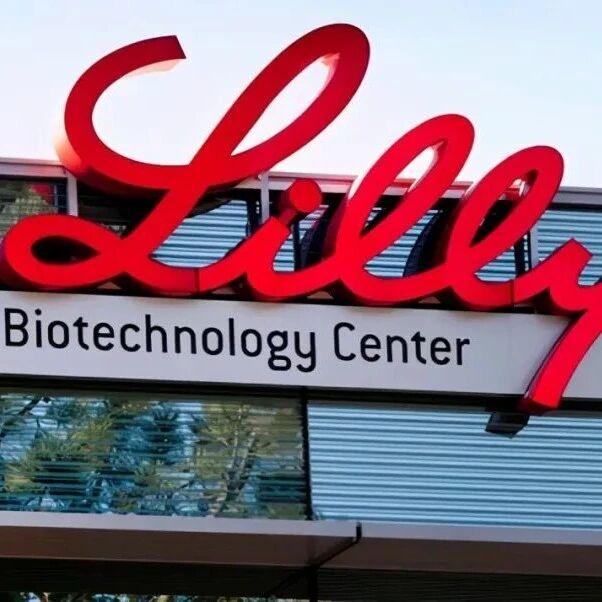
礼来联手英伟达建制药业最强超算和AI工厂:加速药物研发,发现人类无法找到的分子
硬AI· 2025-10-29 01:46
Core Viewpoint - Eli Lilly collaborates with NVIDIA to build a powerful supercomputer and AI factory aimed at accelerating drug development in the pharmaceutical industry, expected to launch in January next year [2][4]. Group 1: AI in Drug Development - The pharmaceutical industry's efforts to utilize AI for accelerating drug approvals are still in the early stages, with no AI-designed drugs yet on the market, but an increase in AI-discovered drugs entering clinical trials [4]. - Eli Lilly's Chief AI Officer, Thomas Fuchs, describes the supercomputer as a novel scientific instrument, akin to a giant microscope for biologists [5]. - The supercomputer will enable scientists to train AI models through millions of experiments, significantly expanding the scope and complexity of drug discovery [6]. Group 2: Precision Medicine - The new AI tools are not solely focused on drug discovery but represent a significant opportunity to discover new molecules that humans may not identify [7]. - Eli Lilly emphasizes that new scientific AI agents can support researchers and advanced medical imaging can help in observing disease progression and developing biomarkers for precision treatment [9][10]. - NVIDIA's healthcare VP, Kimberly Powell, states that achieving the promise of precision medicine requires AI infrastructure, which is being built, with Eli Lilly serving as a prime example [11]. Group 3: Open Platform for Data Sharing - Multiple AI models will be available on the Lilly TuneLab platform, launched by Eli Lilly in September last year, which allows biotech companies to access drug discovery models trained on proprietary research data valued at $1 billion [13]. - The platform aims to broaden industry access to drug discovery tools, with Powell noting the significance of assisting startups that might otherwise take years to reach similar stages [14]. - In exchange for access to the platform, biotech companies are expected to contribute some of their research and data to help train the AI models [15].

礼来联手英伟达建制药业最强超算和AI工厂:加速药物研发,发现人类无法找到的分子
美股IPO· 2025-10-29 01:11
Core Viewpoint - Eli Lilly collaborates with NVIDIA to build a powerful supercomputer and AI factory aimed at accelerating drug development, expected to launch in January next year [1][3] Group 1: Supercomputer and AI Factory - The supercomputer will consist of over 1,000 NVIDIA Blackwell Ultra GPUs connected through a unified high-speed network [3] - The system is designed to power an AI factory specifically for large-scale development, training, and deployment of AI models in drug discovery [3] - Eli Lilly's Chief Information and Digital Officer, Diogo Rau, indicated that significant returns from these new tools may not be realized until 2030 [3][6] Group 2: AI in Drug Discovery - Currently, no drugs designed using AI have been approved, but there is an increase in the number of AI-discovered drugs entering clinical trials [5] - Eli Lilly's Chief AI Officer, Thomas Fuchs, described the supercomputer as a novel scientific instrument that will allow scientists to train AI models through millions of experiments [6] - Rau emphasized that while drug discovery is a major focus, the new tools will also support other research areas [7] Group 3: Precision Medicine - Eli Lilly plans to use the supercomputer to shorten drug development cycles and enhance treatment efficacy [8] - Precision medicine aims to customize disease prevention and treatment based on individual genetic, environmental, and lifestyle differences [9] - NVIDIA's healthcare VP, Kimberly Powell, stated that AI infrastructure is essential for realizing the promise of precision medicine [10] Group 4: Data Sharing and Collaboration - Multiple AI models will be available on the Lilly TuneLab platform, which was launched last September, allowing biotech companies access to Eli Lilly's drug discovery models valued at $1 billion [12] - The platform aims to broaden industry access to drug discovery tools, with biotech companies contributing their research and data to help train AI models [13]
德州打造千亿元级 “北方生物谷”
Da Zhong Ri Bao· 2025-10-27 03:19
Core Insights - The article highlights the development of a billion-level "Northern Bio Valley" in Dezhou, focusing on the growth of the biotechnology industry through collaboration and innovation [1][2][4] Industry Overview - Dezhou is concentrating on five key areas within the biotechnology sector: biomanufacturing, biomedicine, bio-agriculture, biomedical engineering, and biomass energy, aiming for high-end, clustered, and international development [2][3] - The city has established a clear framework for its biotechnology industry, with 153 enterprises in the sector and projected revenue of 40.4 billion yuan in 2024 [2] Innovation and Collaboration - Innovation is identified as the core driver for overcoming challenges and seizing development opportunities, supported by numerous national and provincial innovation platforms [3] - Dezhou has established long-term collaborations with over 40 universities and research institutions, holding nearly 300 patents related to biopreparation [3] Regional Development - Different regions within Dezhou are focusing on specific areas of biotechnology, such as biomanufacturing in Yucheng and medical devices in Qihe, creating a diverse and collaborative development landscape [4] - The city has mechanisms in place for regular roadshows and result transformation, targeting investors, entrepreneurs, and industry experts to facilitate efficient connections among technology, capital, market, and policy [4] Future Outlook - Dezhou aims to target cutting-edge fields such as synthetic biology, gene cell therapy, and AI pharmaceuticals, with plans to establish high-level innovation platforms and pilot bases [4] - The city is committed to enhancing its industrial cluster development, optimizing its industrial layout, and attracting leading enterprises and major projects to achieve the goal of becoming a billion-level "Northern Bio Valley" [4]
德州|德州打造千亿元级 “北方生物谷”
Da Zhong Ri Bao· 2025-10-27 01:15
Core Insights - The article discusses the development of a billion-level "Northern Bio Valley" in Dezhou, focusing on the growth and innovation in the biotechnology industry [1][3][6] Industry Overview - Dezhou is concentrating on five key areas within the biotechnology sector: biomanufacturing, biopharmaceuticals, bio-agriculture, biomedical engineering, and biomass energy [3] - The city has established a clear layout and strong innovation initiatives to promote high-end, clustered, and international development of the industry [3] Current Developments - The biomanufacturing industry in Dezhou has seen significant growth, with 153 enterprises in the sector and projected revenue of 40.4 billion yuan in 2024 [3] - Eight companies in the biotechnology sector have achieved over 1 billion yuan in output value, while 41 companies have surpassed 100 million yuan [3] Innovation and Collaboration - Innovation is identified as the core driver for overcoming challenges and seizing development opportunities in the biotechnology industry [4] - Dezhou has established numerous national and provincial innovation platforms and maintains long-term collaborations with over 40 universities and research institutions [4] Product Development - Companies like Baolingbao Biological Co., Ltd. are developing new products such as erythritol, with a production capacity of 30,000 tons per year, and exporting to over 70 countries [4] Strategic Initiatives - Dezhou is implementing mechanisms for regular roadshows and results transformation to connect investors, entrepreneurs, and industry experts [5] - The city is also exploring the establishment of a specialized fund for the biotechnology industry and has formed an association for high-quality development in the sector [5] Future Outlook - Dezhou aims to focus on cutting-edge areas such as synthetic biology, gene cell therapy, and AI pharmaceuticals, while continuing to optimize its industrial layout and attract leading enterprises [6]
中新健康丨医药企业热议四中全会公报:我们正经历“质的飞跃”
Zhong Guo Xin Wen Wang· 2025-10-24 14:17
Core Viewpoint - The 20th Central Committee's Fourth Plenary Session emphasized accelerating high-level technological self-reliance and innovation in the biopharmaceutical industry, which is expected to lead to a qualitative leap in China's biopharmaceutical innovation [1][2]. Group 1: Strategic Direction - The session's report encourages innovation as the primary focus for the biopharmaceutical industry, providing a clear direction for companies engaged in original and cutting-edge technology development [2][4]. - Companies are motivated by the report's emphasis on high-level technological self-reliance, which is seen as a call to pursue original and leading innovations rather than low-level repetitions [2][3]. Group 2: Industry Advantages - China's unique innovation ecosystem is highlighted as a significant advantage, with biopharmaceutical companies leveraging the engineer dividend and exploring deep innovation areas [2][3]. - The country’s data platform and algorithm breakthroughs allow for cost-effective and rapid data collection, enhancing the competitiveness of AI-driven pharmaceutical innovations [3]. Group 3: Global Positioning - Some Chinese biopharmaceutical companies have begun to gain recognition on the global stage, developing innovative drugs that are acknowledged by international academia and industry [4]. - There is a need for more companies to enhance their global clinical development and commercialization capabilities to compete with multinational pharmaceutical firms [4]. Group 4: Policy and Support - The industry calls for supportive policies to foster high-level technological innovation, including financial support and optimized regulatory mechanisms [5]. - Companies are encouraged to take on the responsibility of innovation, increasing R&D investment and focusing on key technology development to enhance domestic biopharmaceutical innovation capabilities [5].
诺泰生物:前三季度业绩稳中有升 技术平台优势稳固
Zheng Quan Shi Bao Wang· 2025-10-23 01:46
Core Viewpoint - The company, Nuotai Bio (688076.SH), reported a robust performance in Q3 2025, with revenue of 1.527 billion yuan, a year-on-year increase of 21.95%, and a net profit of 445 million yuan, up 26.92%, driven by the expanding GLP-1 market and its commitment to "time and technology leadership" [1][2]. Group 1 - The growth in revenue and profit is primarily attributed to the increasing demand for peptide drugs, particularly GLP-1 targeted drugs, which has been a core driver of the company's performance in recent years [1]. - The global peptide drug market has been growing steadily, reaching a size of 43 billion USD in 2020, with a growth rate of nearly 16% since 2007 [1]. - Sales of GLP-1(R) drugs are projected to exceed 50 billion USD in 2024, with semaglutide contributing over half of the sales, positioning Nuotai Bio as a major beneficiary of this trend [1]. Group 2 - The company is enhancing its core competitiveness through various initiatives, including the establishment of a commercial production facility for oligonucleotides, expected to be completed by 2025, which will have a capacity of 1,000 kg for oligonucleotides and 200 kg for PEG-linked peptides [2]. - Nuotai Bio is actively pursuing external growth opportunities, including a strategic partnership with Novozymes to establish a joint venture focused on synthetic biology technology [2]. - The collaboration with DeepTech in AI drug development aims to leverage AI technology to transform the biopharmaceutical industry, creating a comprehensive value system encompassing intelligent R&D and precision manufacturing [2]. Group 3 - The company plans to leverage its advantages in peptide and small molecule drug development to build an XDC technology platform through internal development and strategic investments, focusing on various coupling platforms [3]. - Efforts are being made to establish a high-quality international business development team to explore new business directions [3].
