
气候变化

Search documents
对话联合国儿童基金会气候事务负责人:中国青年气候责任意识显著增强,期待更多青年参与全球气候治理
Xin Lang Cai Jing· 2025-11-11 02:55
Core Viewpoint - The 30th United Nations Climate Change Conference (COP30) is currently taking place in Belem, Brazil, focusing on the impact of climate change on children and the importance of youth involvement in climate action [1][3]. Group 1: Impact on Children - Climate change poses significant threats to children, starting even before birth, as fetuses are exposed to risks from heatwaves and malnutrition [3]. - After birth, children may face a lack of clean water and sanitation due to resource scarcity, and schools can be destroyed by extreme weather events, disrupting education [3]. - Protecting children and their communities from climate impacts is essential for building community resilience and advancing adaptation efforts, which are key topics at COP conferences [3]. Group 2: Role of Youth - All young generations, regardless of nationality, are seen as crucial in addressing climate change, as they hold the potential for future solutions through new technologies and innovative approaches [3]. - There is encouragement for youth to continue their efforts, strengthen organization, and enhance skills in climate action [3]. - The involvement of Chinese youth in climate initiatives is particularly noted, reflecting a strong sense of responsibility and active participation in international climate affairs [3].


COP30开启“贝伦时间”
2 1 Shi Ji Jing Ji Bao Dao· 2025-11-11 01:37
Group 1 - The 30th United Nations Climate Change Conference (COP30) is taking place in Belem, Brazil, from November 10 to 21, marking a significant moment as it coincides with the 10th anniversary of the Paris Agreement [1][2] - COP30's core mission is to shift from negotiation rules to delivering results, focusing on countries submitting more ambitious climate action plans and fulfilling financial commitments [1][2] - The conference agenda includes the submission of Nationally Determined Contributions (NDCs) for 2035, establishing a foundation for the second global stocktake to be completed at COP33 [2][3] Group 2 - The conference aims to ensure the substantial implementation of climate financing goals established at COP29, with a roadmap connecting $1.3 trillion in climate financing from Baku to Belem [2][3] - The launch and effectiveness of a global carbon market are critical, with the design of its rules determining whether it will serve as an engine for emissions reduction or a loophole [3] - The declaration from over 40 countries, including China, emphasizes the need for equitable and inclusive climate action, acknowledging the exacerbation of hunger and poverty due to climate change [3][4] Group 3 - The urgency of COP30 is underscored by the World Meteorological Organization's report predicting 2025 could be one of the hottest years on record, highlighting the need for immediate action [5][6] - China has submitted its 2035 NDC to the UN Climate Change Secretariat, emphasizing the necessity of a conducive international environment for achieving its climate goals [6] - The focus on just transition and adaptation is crucial for the success of climate actions in developing countries, with COP30 expected to balance various related topics [6]
《联合国气候变化框架公约》第30次缔约方大会在巴西贝伦开幕 中国代表团持续发挥积极建设性作用
Yang Guang Wang· 2025-11-11 00:38
Core Points - The 30th Conference of the Parties (COP30) to the United Nations Framework Convention on Climate Change has commenced in Belem, Brazil, focusing on the implementation of the Paris Agreement and addressing the challenges posed by unilateralism and protectionism [1][2] - China aims to provide direction for global climate governance over the next decade and emphasizes the need for developed countries to fulfill their obligations in emission reduction and funding [1] - China's target for 2035 includes a reduction of greenhouse gas emissions by 7% to 10% from peak levels, indicating a significant shift in focus from carbon dioxide to total greenhouse gas emissions [1] Industry Insights - China's commitment to reducing greenhouse gas emissions by over 1 billion tons of CO2 equivalent by 2035 demonstrates unprecedented ambition and determination in addressing climate change [2] - The absence of high-level U.S. officials at COP30 marks the first time in 30 years that the U.S. will not participate in UN climate negotiations, potentially impacting global climate discussions [2]
联合国气候变化贝伦大会开幕 呼吁合作应对气候危机
Xin Hua She· 2025-11-10 16:33
Core Points - The 30th Conference of the Parties (COP30) to the United Nations Framework Convention on Climate Change opened in Belem, Brazil, focusing on global cooperation to address the climate crisis and accelerate emission reductions [1][2] - The conference emphasizes the need for countries to submit more ambitious Nationally Determined Contributions (NDCs) as per the Paris Agreement, aiming for a strategic transformation and climate financing goals [1] - Brazilian President Lula called for countries to fulfill their climate commitments and accelerate climate action, highlighting three priority areas: strengthening multilateralism, linking climate mechanisms to real-life and the economy, and expediting the implementation of the Paris Agreement [2] Group 1 - COP30 aims to promote climate action integration into economic activities and job creation, with a focus on inclusive and just transitions [1] - The conference will run until November 21, attracting representatives from over 190 countries and regions, including government officials, scientists, and NGOs [2] Group 2 - The Executive Secretary of the Convention, Simon Steele, emphasized the need for faster progress in emission reductions and resilience enhancement, urging consensus on actionable steps for inclusive and just transitions [1]
联合国气候变化贝伦大会开幕 呼吁合作应对气候危机
Xin Hua She· 2025-11-10 13:52
Core Points - The 30th Conference of the Parties (COP30) to the United Nations Framework Convention on Climate Change opened in Belem, Brazil, on November 10 [1] - The conference focuses on several important climate issues, calling for global cooperation to find common solutions to the climate crisis [1] - Key objectives include accelerating emission reductions, enhancing climate resilience, and promoting an inclusive and just transition [1]
联合国气候变化框架公约》第三十次缔约方大会在巴西开幕
Yang Shi Xin Wen· 2025-11-10 13:45
Core Points - The 30th Conference of the Parties (COP30) to the United Nations Framework Convention on Climate Change officially commenced in Belem, Brazil, on November 10, 2023, with thousands of officials and representatives discussing climate action plans [1] - The conference aims to achieve a climate financing target of $1.3 trillion annually and to propose new measures to support countries in adapting to climate change and transitioning to a clean economy [1] - This year marks the 10th anniversary of the Paris Agreement and a new round of Nationally Determined Contributions submissions, representing a critical juncture in global climate governance [1] - UN Secretary-General António Guterres warned of severe socio-economic consequences from rising global temperatures and expressed hope that COP30 could initiate a decade of accelerated development and action [1] - The Chinese delegation will actively participate in formal agendas and host multiple events at the "China Corner" to showcase China's policies and achievements in addressing climate change [1] - The conference will conclude on November 21, 2023, and the U.S. government confirmed it will not send any high-level officials, marking the first absence of the U.S. from UN climate negotiations in 30 years [1]
外媒聚焦COP30:中国贡献至关重要
Zhong Guo Xin Wen Wang· 2025-11-10 12:33
Group 1 - The COP30 conference in Brazil emphasizes the critical role of China in addressing global climate change, with a focus on limiting global temperature rise to within 1.5°C and reviewing progress on financing commitments made in previous meetings [1][2] - The conference marks the 10th anniversary of the Paris Agreement, highlighting the need for cohesive climate diplomacy despite geopolitical tensions and economic competition [2] - China has established itself as a key player in the green supply chain, producing the world's largest solar panels, electric vehicles, batteries, and essential minerals crucial for the global economic transition to green energy [2] Group 2 - The UN climate department has proposed a 10% budget increase to €81.5 million for the 2026-27 fiscal year, with China's contribution share rising from 15% to 20% facilitating this increase [3] - China's latest carbon reduction commitments significantly exceed those of the US and Europe, indicating a proactive stance in climate action [3]
美国30年来首次缺席国际气候谈判,COP30如何研判“交卷年”?
Di Yi Cai Jing· 2025-11-10 12:29
Core Points - The absence of the U.S. at COP30 marks the first time since 1995 that the country has not sent senior officials to a COP meeting, which raises concerns about global climate cooperation [1][5] - COP30 is crucial as it aims to assess collective progress on climate actions and convert the scientific consensus on the 1.5°C target into practical measures [3][4] - The conference will focus on submitting new Nationally Determined Contributions (NDCs) from countries, which outline their emission reduction targets and specific measures [3][4] Group 1 - The global temperature is on track to exceed the 1.5°C limit set by the Paris Agreement, necessitating a 60% reduction in global emissions by 2030 to stay within this target [3][4] - The current NDCs are projected to achieve only about 10% of the required emission reductions, highlighting a significant gap in climate action [3][4] - The NRDC reports that since the Paris Agreement, clean energy has created 36.2 million jobs, surpassing employment in fossil fuel sectors [4] Group 2 - COP30 aims to mobilize $1.3 trillion annually for climate financing, with a focus on supporting countries in adapting to climate change [6][8] - The conference will also review the "Baku to Belem $1.3 trillion roadmap report," which outlines five priority areas for resource mobilization [7] - The U.S. withdrawal from the Paris Agreement has created a funding gap of $100 billion to $150 billion in the climate financing roadmap, complicating efforts to meet climate goals [8]
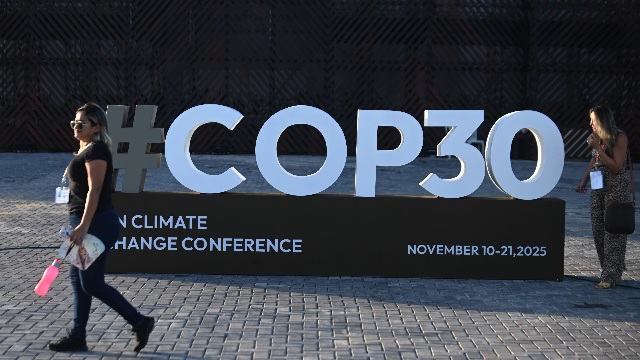
COP30开启“贝伦时间”:气候谈判从制定规则转向兑现承诺
2 1 Shi Ji Jing Ji Bao Dao· 2025-11-10 11:57
Core Points - The COP30 conference, taking place from November 10 to 21 in Belem, Brazil, marks a significant moment for global climate negotiations, coinciding with the 10th anniversary of the Paris Agreement and focusing on delivering results rather than just negotiating rules [1][2] - The conference aims to establish more ambitious Nationally Determined Contributions (NDCs), fulfill funding commitments, and initiate a global carbon market, which are crucial for maintaining the 1.5°C temperature control target [1][2][3] Group 1: Conference Objectives - COP30 is seen as a pivotal moment for implementing the Paris Agreement, with a focus on delivering concrete outcomes, including the submission of 2035 NDCs and the practical establishment of climate financing goals [2][3] - The conference agenda includes the launch of a global carbon market, which is designed to facilitate cost-effective emissions reductions, contingent on fair and transparent rule design [3][4] Group 2: China's Role and Contributions - China is actively participating in COP30, emphasizing the importance of multilateralism and international cooperation in addressing climate change, and has submitted its 2035 NDC to the UN Framework Convention on Climate Change [6][7] - The Chinese government has highlighted its achievements in green transformation and is committed to leading developing countries in implementing their NDCs, despite challenges posed by unilateralism and the absence of certain major players in climate negotiations [4][6][7] Group 3: Urgency and Challenges - The urgency of the climate crisis is underscored by recent reports indicating that 2025 could be one of the hottest years on record, emphasizing the need for accelerated action [6] - The conference faces challenges, including the need for deep reforms in climate financing mechanisms to meet the demands of developing countries, as current systems are inadequate [3][4]
谁在损害全人类为气候所作的努力?
Ke Ji Ri Bao· 2025-11-10 09:54
Group 1 - The article highlights the U.S. government's criticism of China regarding climate change while ignoring its own environmental policies that undermine global efforts [1][2] - China is portrayed as a proactive player in combating climate change, with a large population and a relatively low per capita carbon emission compared to the U.S., which has the highest per capita emissions [1][4] - The U.S. has implemented policies that weaken environmental regulations and promote fossil fuel development, which have drawn widespread criticism and are seen as detrimental to global climate efforts [2][3] Group 2 - The Trump administration's energy policies have included declaring a national "energy emergency," accelerating fossil fuel infrastructure approvals, and rolling back regulations on coal-fired power plants [3][5] - The U.S. has withdrawn from the Paris Agreement, which the Trump administration claims imposes unfair burdens on the economy, further isolating itself from international climate commitments [3][5] - Recent legislation has removed incentives for renewable energy, such as the elimination of tax credits for electric vehicles and the freezing of funds for clean energy projects, which could hinder the growth of the renewable energy sector [5][6] Group 3 - The U.S. has pressured international organizations like the International Energy Agency (IEA) to shift focus away from climate goals, raising concerns about its role in global energy transitions [7][8] - Environmental organizations have criticized the U.S. for neglecting scientific consensus on climate change, warning that this could exacerbate the impacts of climate change on humanity and the economy [8]