全球碳市场

Search documents
2025从NDC和全球碳市场角度:如何看待光伏行业的未来趋势
Sou Hu Cai Jing· 2025-12-30 03:20
Group 1 - The core viewpoint of the report emphasizes that the future of the photovoltaic (PV) industry is significantly influenced by Nationally Determined Contributions (NDCs) and the global carbon market, indicating a shift in growth logic [1][2] - The long-term growth of the PV industry is primarily driven by global climate action, particularly through ambitious NDCs submitted by major economies like China and the EU, which provide sustained policy support and market space for renewable energy [2][3] - Despite short-term concerns about overcapacity, the long-term demand based on NDC commitments remains solid, with China's annual new PV installation capacity expected to stay high [2][3] Group 2 - The report highlights that the deepening of electricity market reforms presents significant opportunities for the PV industry, as market mechanisms can effectively guide the integration of PV with storage, grid, and demand-side resources, optimizing the economic and reliability aspects of the power system [3][4] - The transition to a market-oriented environment will enhance the environmental value of green electricity, with the ongoing development of the global carbon market facilitating economic returns from low-carbon attributes [3][4] Group 3 - Technological innovation is identified as the key driver for market differentiation and healthy industry clearing, with a shift from scale expansion to a focus on improving conversion efficiency and reducing system costs [4][6] - The report notes that N-type silicon battery technologies are rapidly replacing traditional P-type batteries, while perovskite/silicon tandem battery technologies are seen as potential leaders for the next generation of industry transformation [4][6] Group 4 - From a global perspective, the report indicates that once the share of wind and solar power in the system exceeds a critical threshold (15%-20%), the shape and investment focus of the power system will change, necessitating significant upgrades and interconnections in the grid [5][6] - The future growth of the PV industry will be closely tied to the construction of new power systems, with increased investments in grid infrastructure and cross-regional carbon market mechanisms creating conditions for broader PV adoption and value realization [5][6] Group 5 - Overall, the future development of the PV industry transcends mere manufacturing cost competition, embedding itself within the larger narratives of global climate governance, power system transformation, carbon pricing mechanisms, and ongoing technological revolutions [6][9] - The industry's competitiveness will increasingly depend on technological leadership, system integration capabilities, and the ability to capitalize on channels for realizing green value [6][9]


碳市场全球协作升级 多国共建“碳排放权交易市场开放联盟”
Jin Rong Shi Bao· 2025-11-25 02:06
Core Insights - The establishment of the "Open Alliance for Carbon Emission Trading Markets" by China, the EU, and Brazil aims to enhance international cooperation in carbon markets, creating a framework for coordinating carbon pricing mechanisms and emission trading systems globally [1][3] Group 1: Alliance Formation and Objectives - The alliance seeks to create a transparent and credible global compliance carbon market network, facilitating international exchanges and cooperation in carbon market governance [1] - Participants in the alliance include both developed and developing countries, showcasing a trend of bridging cooperation in carbon market governance [3] Group 2: Global Carbon Market Developments - The COP29 conference marked a significant breakthrough in global carbon market collaboration, with consensus reached on the creation of carbon credit standards under the Paris Agreement [2] - The UNFCCC is advancing the development of approximately 19 methodologies for the Paris Agreement carbon credit mechanism, with several expected to be approved by mid-2026 [3] Group 3: Challenges in Carbon Market Integration - The establishment of a unified global carbon market faces challenges due to significant differences in economic development stages, energy structures, and emission reduction costs among countries [5] - The existence of 80 different carbon pricing tools globally, including 37 emission trading systems and 43 carbon taxes, complicates the integration of carbon markets [5] Group 4: Future Directions and Recommendations - Experts suggest a gradual approach to global carbon market collaboration, emphasizing the need for international rule-making and mutual recognition of standards [6][7] - China's role is highlighted as crucial in connecting developed and developing nations, leveraging its experience in renewable energy and carbon market development [8]
如何看待光伏行业的未来趋势 | 投研报告
Zhong Guo Neng Yuan Wang· 2025-11-19 08:30
Group 1 - The core viewpoint of the article emphasizes that the electricity market reform is beneficial for the photovoltaic (PV) industry, particularly in the context of declining electricity prices and the need for better integration with the energy system [1] - The demand for the photovoltaic industry is not as pessimistic as it may seem, driven by the Nationally Determined Contributions (NDC) from China and the EU, with an expectation of 250 GW of new PV installations in China by 2026 [1] - The integration of PV with other system components is essential, as the rapid increase in system costs at a 15% penetration rate of wind and solar power necessitates a collaborative approach to development [1] Group 2 - The establishment of a global carbon market, with 11 countries including China and the EU joining Brazil's carbon market alliance, will enhance the value of green energy and align green prices with carbon prices [1] - The ultimate market clearing will require technological iterations, with silicon-perovskite tandem cells being identified as a promising direction for future development [1]
从NDC和全球碳市场角度:如何看待光伏行业的未来趋势
China Post Securities· 2025-11-18 08:49
Investment Rating - The report maintains a strong buy rating for the photovoltaic industry [1] Core Insights - The demand for the photovoltaic industry is not as pessimistic as perceived, driven by the Nationally Determined Contributions (NDC) with an expected 250 GW of new installations in China by 2026 [2] - Market reforms in the electricity sector are beneficial for photovoltaics, as they will enhance the integration of solar power with other system components and improve the pricing signals for green energy [2] - The ultimate market clearing will depend on technological iterations, with silicon-perovskite tandem cells being a promising direction [2] Summary by Sections Section 1: Growth Potential from NDC - The growth of the photovoltaic industry is closely linked to global climate cooperation, with significant contributions from NDC 3.0 submissions by countries like China and the EU [10][14] - The report anticipates that China will achieve 250 GW of new photovoltaic installations in 2026, contrary to industry pessimism [21] - The relationship between NDC submissions and photovoltaic growth is strong, indicating a positive outlook for the industry [19] Section 2: Marketization and System Integration - The report emphasizes that marketization is essential for the photovoltaic sector to adopt a systems engineering approach and achieve integrated development [39] - The core framework of electricity market reform focuses on pricing mechanisms and the integration of green electricity [42] - The establishment of a global carbon market is expected to enhance the pricing of green energy and improve the operational conditions for photovoltaic assets [45] Section 3: Technological Iteration for Market Clearing - The report highlights that the current surplus in advanced production capacity necessitates a shift towards technological differentiation for market clearing [51] - The photovoltaic industry is undergoing significant technological advancements, with a focus on improving efficiency and reducing costs [63] - The report discusses the efficiency limits of various photovoltaic technologies, indicating a trend towards higher efficiency through innovations like tandem cells [58][70]
COP30开启“贝伦时间”:气候谈判从制定规则转向兑现承诺
2 1 Shi Ji Jing Ji Bao Dao· 2025-11-10 11:57
Core Points - The COP30 conference, taking place from November 10 to 21 in Belem, Brazil, marks a significant moment for global climate negotiations, coinciding with the 10th anniversary of the Paris Agreement and focusing on delivering results rather than just negotiating rules [1][2] - The conference aims to establish more ambitious Nationally Determined Contributions (NDCs), fulfill funding commitments, and initiate a global carbon market, which are crucial for maintaining the 1.5°C temperature control target [1][2][3] Group 1: Conference Objectives - COP30 is seen as a pivotal moment for implementing the Paris Agreement, with a focus on delivering concrete outcomes, including the submission of 2035 NDCs and the practical establishment of climate financing goals [2][3] - The conference agenda includes the launch of a global carbon market, which is designed to facilitate cost-effective emissions reductions, contingent on fair and transparent rule design [3][4] Group 2: China's Role and Contributions - China is actively participating in COP30, emphasizing the importance of multilateralism and international cooperation in addressing climate change, and has submitted its 2035 NDC to the UN Framework Convention on Climate Change [6][7] - The Chinese government has highlighted its achievements in green transformation and is committed to leading developing countries in implementing their NDCs, despite challenges posed by unilateralism and the absence of certain major players in climate negotiations [4][6][7] Group 3: Urgency and Challenges - The urgency of the climate crisis is underscored by recent reports indicating that 2025 could be one of the hottest years on record, emphasizing the need for accelerated action [6] - The conference faces challenges, including the need for deep reforms in climate financing mechanisms to meet the demands of developing countries, as current systems are inadequate [3][4]
COP30六大看点:“行动”号角吹响,全球气候治理迎终考
2 1 Shi Ji Jing Ji Bao Dao· 2025-10-27 09:51
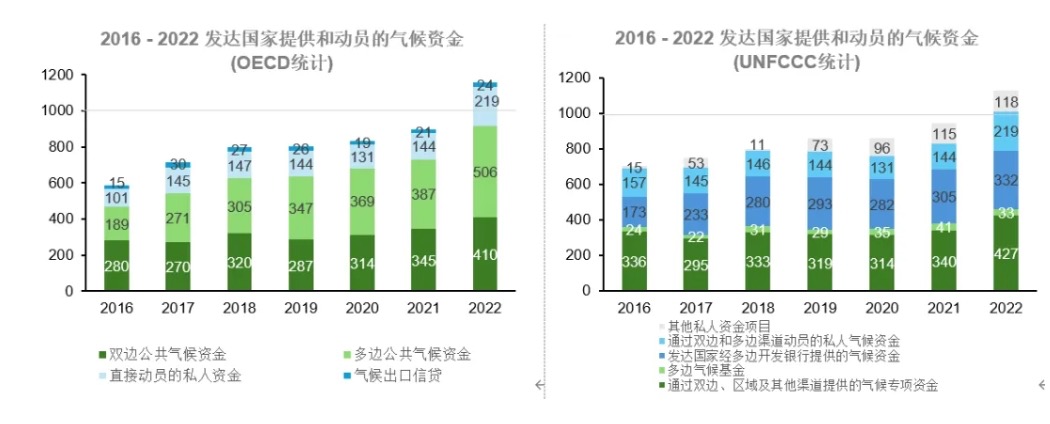
Core Viewpoint - The COP30, taking place in the Amazon rainforest, aims to transform climate commitments into actionable results, focusing on ambitious climate action plans, funding commitments, and the initiation of a global carbon market to maintain the 1.5°C temperature control target [1][2]. Group 1: Key Highlights of COP30 - COP30 is seen as a critical moment for translating the "Baku Climate Solidarity Pact" from consensus to action, with a focus on three main areas: ensuring equitable and transparent financing, refining international carbon market rules, and encouraging countries to submit more ambitious Nationally Determined Contributions (NDCs) [3][4]. - The year 2025 marks a milestone for the Paris Agreement, requiring countries to submit new, more ambitious NDCs. Currently, only 62 countries have submitted their NDCs, representing about 32% of the total parties, indicating a significant gap in ambition and progress [5][6]. - Brazil proposes a voluntary alliance to connect existing carbon pricing systems, which could enhance liquidity and reduce transaction costs in the global carbon market, thus supporting countries in achieving their NDC targets [7][8]. Group 2: Funding and Financial Mechanisms - The annual climate funding target set at $300 billion falls short of the estimated $1.3 trillion needed by developing countries, highlighting a significant funding gap for climate action [9][11]. - Innovative financing mechanisms are necessary to mobilize private capital effectively, including the establishment of frameworks to track financing progress and the promotion of blended finance and green bonds [12]. - The COP30's focus on nature and biodiversity emphasizes the need for integrated policies that link climate action with biodiversity conservation, potentially creating unified financing mechanisms [13]. Group 3: China's Role in Global Climate Governance - China's new NDC aims for a 7%-10% reduction in net greenhouse gas emissions by 2035, showcasing its commitment to global climate leadership and sustainable development [14].