金融强国建设

Search documents
金融监管总局举行学习贯彻党的二十届四中全会精神宣讲报告会
Jin Rong Shi Bao· 2025-11-12 01:01
Core Viewpoint - The meeting held by the Financial Regulatory Bureau emphasized the importance of implementing the spirit of the 20th Central Committee's Fourth Plenary Session, focusing on the strategic planning for the 14th Five-Year Plan and the upcoming 15th Five-Year Plan, which aims to solidify the foundation for achieving socialist modernization [1][2]. Group 1: Meeting Significance - The 20th Central Committee's Fourth Plenary Session is deemed crucial as it convenes at a key moment for advancing socialist modernization, providing a top-level design and strategic framework for the next five years [2]. - The session's outcomes serve as a mobilization and deployment for advancing Chinese-style modernization, offering a scientific guide for economic and social development [2]. Group 2: Implementation and Responsibilities - The Financial Regulatory Bureau is tasked with enhancing awareness of the "two establishments," strengthening the "four consciousnesses," and ensuring the "two safeguards" to align actions with the directives from the session [2][3]. - There is a call for a comprehensive and systematic approach to learning and implementing the session's spirit, with an emphasis on deepening understanding and promoting diverse thematic activities [3]. Group 3: Financial Regulatory Focus - The Bureau aims to maintain centralized leadership from the Party on financial work, emphasizing strict governance and risk prevention while promoting high-quality development [2]. - The focus will be on effectively preventing and resolving financial risks in key areas, optimizing the financial institution system, and advancing the construction of a strong financial nation [2].
金融监管总局:有效防范化解重点领域金融风险 全面加强金融监管
Zheng Quan Shi Bao Wang· 2025-11-11 12:01
人民财讯11月11日电,11月11日,金融监管总局举行学习贯彻党的二十届四中全会精神专题宣讲电视电 话报告会,党委书记、局长李云泽作宣讲报告。李云泽指出,要始终坚持党中央对金融工作的集中统一 领导,持之以恒推进全面从严治党,牢牢把握防风险、强监管、促高质量发展工作主线,有效防范化解 重点领域金融风险,全面加强金融监管,优化金融机构体系,统筹做好金融"五篇大文章",推动金融强 国建设取得新的重大进展。 ...
光大银行“云缴费”:2025年已服务人数超30亿人次
Zhong Guo Jing Ying Bao· 2025-11-10 09:53
Core Insights - "Yun Payment" by Everbright Bank has served over 3 billion users by 2025, becoming the most frequently used inclusive finance product in the market [1] - The service has integrated over 19,000 online payment services, including utilities, education, and social security, and is connected to more than 900 partner institutions [1] - The product supports medical and pension insurance collection for urban and rural residents in 28 provinces and has served over 260 million users for social security collection [1] - Everbright Bank aims to align with the "14th Five-Year Plan" for financial work, focusing on key responsibilities and contributing to the construction of a modern financial system in China [1]

“光大云缴费”2025年服务人次超30亿次
Ren Min Wang· 2025-11-10 09:19
Group 1 - The core viewpoint of the articles highlights the convenience and extensive reach of China Everbright Bank's "Everbright Cloud Payment" platform, which facilitates medical insurance payments for residents across various provinces [1] - The platform supports medical and pension insurance collection services for urban and rural residents, as well as flexible employment individuals in 28 provinces, enhancing public satisfaction and security [1] - "Everbright Cloud Payment" has served over 3 billion users in 2025, offering more than 19,000 online payment services, and has integrated with over 900 partner institutions, showcasing its significant impact on society [1] Group 2 - The bank's leadership emphasizes the importance of aligning with the "14th Five-Year Plan" to achieve key financial goals and tasks, focusing on improving people's livelihoods and contributing to the construction of a modern financial system in China [2]
大咖云集!这场盛会,重磅升级!
券商中国· 2025-11-10 05:41
新形式,新期待。 2025年11月19日至20日,深圳——这座将举办2026 APEC会议的活力之城,将迎来一场重磅金融盛会。 由深圳市人民政府主办的"第十九届深圳国际金融博览会"与由证券时报社主办的"2025中国金融机构年会"将同时举行,两大品牌活动首次强强联合,活动名称也蝶 变为"第十九届深圳国际金融博览会暨2025中国金融机构年会"。 "十五五"规划建议明确提及,要"加快建设金融强国""大力发展科技金融、绿色金融、普惠金融、养老金融、数字金融"。落实好这一战略擘画,更好推动金融业高 质量发展,是金融机构肩负的崇高责任与光荣使命。金融行业以"国之大者"为经,以"民之关切"做纬,积极践行金融"五篇大文章",以创新之墨挥毫作答,这是深 化金融供给侧改革的生动实践。来自银行、保险、券商、公募、信托、期货公司的精英翘楚将齐聚盛会,开展头脑风暴,凝聚行业发展智慧,践行金融为民理念。 具体来看,出席主论坛的嘉宾有深圳市政府领导,证券时报社领导,中国金融电子化集团领导,中保投资党委书记、董事长贾飙,南方基金党委书记陈莉等;信托 业主题演讲嘉宾有华润信托党委书记、董事长胡昊,建信信托党委书记、董事长李军;期货业主题演讲嘉 ...


河北理财网:河北资本与产业促进会+招商银行|河北这场对接会解企业融资难
Sou Hu Cai Jing· 2025-11-10 05:34
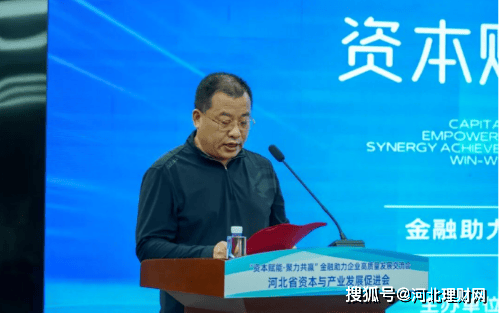
Core Insights - The event "Capital Empowerment: Collaborative Win-Win - Financial Support for High-Quality Development of Enterprises" was successfully held in Shijiazhuang, aiming to create a precise platform for industry-finance connection and inject strong financial momentum into member enterprises and cooperative enterprises of business associations [1][8] - The meeting emphasized the importance of finance in the context of the "14th Five-Year Plan" and the direction set by the 20th National Congress of the Communist Party of China, calling for enterprises to embrace capital and for financial institutions to deepen their services [5][9] Group 1 - The event attracted numerous representatives from enterprises, industry experts, and financial institution leaders, indicating strong interest and participation from various stakeholders [3] - The president of the Hebei Capital and Industry Development Promotion Association highlighted the role of finance as a core element in supporting enterprise transformation and high-quality development [5] - A team from China Merchants Bank Shijiazhuang Branch presented systematic financial service solutions, showcasing how they can provide tailored financial support to optimize resource allocation and enhance operational efficiency for enterprises [6] Group 2 - The event included a practical matching session, with the promotion association establishing a demand matching ledger and assigning dedicated account managers from China Merchants Bank for one-on-one follow-ups to ensure timely responses to enterprise needs [8] - The successful hosting of this event marks a significant step for Hebei Province in "financial support for the real economy," with plans to continue innovating service models and collaborating with more financial institutions [8] - Professor Tian Xiaolin, an economist, was invited to interpret the spirit of the 20th National Congress and analyze opportunities and challenges for enterprises, emphasizing the importance of cash flow protection, technological innovation, and exploring overseas markets [9]

宏伟蓝图指明方向 全国性AMC明确高质量发展新方位
Zhong Guo Zheng Quan Bao· 2025-11-09 20:14
Core Insights - The 20th Central Committee's Fourth Plenary Session outlines a grand blueprint for economic and social development during the "14th Five-Year Plan" period, aiming for the basic realization of socialist modernization by 2035, guiding national Asset Management Companies (AMCs) to focus on their main responsibilities and serve the real economy [1] Group 1: AMC's Role and Responsibilities - National AMCs are actively enhancing their capabilities in supporting enterprise risk alleviation, asset disposal, and revitalization of existing assets, fulfilling their role as a financial stabilizer [1][3] - The "14th Five-Year Plan" period saw AMCs like China Orient successfully assist companies like Zhongli Group in restructuring, alleviating nearly 10 billion yuan in debt, and preserving over 2,600 jobs [2][3] - AMCs are increasingly focusing on investing in distressed companies that still hold social significance and align with industrial development directions, leveraging their professional advantages to provide rescue financing [2][3] Group 2: Financial Data and Performance - From early 2021 to mid-2023, China Cinda acquired over 900 billion yuan in financial non-performing assets, significantly contributing to financial risk resolution [3] - In the first half of 2023, CITIC Financial Asset's acquisition of non-performing debt exceeded 120 billion yuan, supporting the stable operation of the financial system [3] - The annual report from the Credit Reference Center indicates a rapid expansion of AMCs in the personal financial non-performing asset sector, with cumulative acquisitions surpassing 10 billion yuan since 2021 [3] Group 3: Strategic Focus for the Future - AMCs are set to enhance their risk prevention and resolution capabilities, actively participating in the reform of small financial institutions and addressing local government debt risks [4] - The development of technology finance, green finance, inclusive finance, and digital finance is emphasized as crucial for building a strong financial nation [4] - AMCs are committed to supporting the development of new productive forces and modern industrial systems, with specific initiatives in sectors like semiconductor manufacturing and renewable energy [5][6]
上海国际金融中心一周要闻回顾(11月3日—11月9日)
Guo Ji Jin Rong Bao· 2025-11-09 04:50
Group 1 - The eighth Hongqiao International Economic Forum held multiple sub-forums focusing on financial support for global trade, supply chain stability, and cross-border trade development, highlighting the importance of financial cooperation in international markets [1][2][3] - China Bank and the Hong Kong Trade Development Council signed a strategic cooperation memorandum to assist enterprises in expanding into international markets [1] - The launch of the "Digital Trade" ecological alliance by the Bank of Communications aims to enhance cross-border trade quality [2] Group 2 - The Shanghai Futures Exchange revised its guidelines for using government bonds as margin, facilitating futures companies in managing collateral [7] - Shanghai banks are innovating in financial services, such as the launch of the "Xinyu" cross-border products by Shanghai Rural Commercial Bank to support enterprises in global markets [11] - The signing of a strategic cooperation framework agreement between Shanghai United Assets and Macau Financial Assets Exchange aims to enhance cross-border asset trading and technological collaboration [9] Group 3 - The China Export-Import Bank introduced a tailored financial service plan for the eighth China International Import Expo, focusing on providing efficient cross-border financial services [14] - The Shanghai Financial Regulatory Bureau reported a total asset balance of 28.59 trillion yuan in the banking sector as of September 2025, reflecting a year-on-year growth of 6.25% [30] - The Shanghai Stock Exchange successfully recorded the first cross-border share pledge registration, enhancing the efficiency of cross-border transactions [20]


中国太保优化进博会保障方案 持续升级服务 搭建交流平台
Ren Min Ri Bao· 2025-11-08 22:07
Group 1 - The core viewpoint of the articles highlights China Pacific Insurance (Group) Co., Ltd. (China Taibao) actively participating in the China International Import Expo (CIIE) by providing comprehensive insurance solutions and safety management to ensure the event's smooth operation [2][3] - China Taibao has enhanced its one-stop comprehensive insurance plan, increasing the insurance coverage to over 1.28 trillion yuan, which includes coverage for organizers, exhibitors, buyers, and supply chain service providers [2] - The company has organized various volunteer teams for risk assessment, emergency rescue, and technology support during the CIIE, demonstrating its commitment to safety and risk management [2] Group 2 - During the CIIE, China Taibao is hosting a series of exchange and seminar activities aimed at promoting high-quality development in the insurance industry and better serving the real economy [3] - The company is collaborating with Fudan University to release research findings on long-term care insurance, sharing international market experiences in this field [3] - The theme of the 2025 China Taibao Customer Festival, which debuted at the CIIE, is "Gathering from All Directions, Leading the Future," showcasing the integration of trade and culture through high-level artistic performances [2]

一周保险速览(10.31—11.7)
Cai Jing Wang· 2025-11-07 09:37
Industry Focus - Major insurance companies in China, including China Life, Ping An, and China Taiping, are aligning their strategies with the spirit of the 20th National Congress, focusing on high-quality development and supporting the real economy, technological innovation, advanced manufacturing, green development, and small and medium enterprises [1] - China Ping An is enhancing its "comprehensive finance + medical and elderly care" strategy, while China Taiping is leveraging insurance funds for long-term capital to support the Guangdong-Hong Kong-Macao Greater Bay Area and Hong Kong's international financial center [1] Insurance Companies' Solvency - As of Q3 2025, the solvency indicators of many insurance companies have shown fluctuations due to changes in assessment interest rates, with 4 out of 173 companies failing to meet solvency standards, a decrease of 1 from the previous quarter [2] - Huazhong Insurance successfully upgraded from Class C to Class B, achieving a "hat removal" [2] - The overall risk rating is improving, with A and B class companies making up the vast majority [2] Investment Trends - Insurance funds have increased their equity market allocation, with total holdings exceeding 650 billion yuan, focusing on sectors such as finance, manufacturing, and public utilities [3] - The five major listed insurance companies reported a 33.5% year-on-year increase in net profit for the first three quarters, benefiting from market recovery [3] - Insurance capital is expected to continue increasing its allocation to A-shares, providing long-term financial support to the market [3] Upcoming Insurance Products - As November approaches, several insurance companies are preparing for the 2026 "opening red" campaign, with a focus on dividend insurance products due to their potential for customer returns and cost advantages for insurance companies [4] - Major insurers are promoting dividend-type pension and increasing whole life insurance, while smaller companies are limited to ordinary products due to bank channel preferences [4] Private Equity Investments - Insurance funds are actively investing in high-tech sectors such as robotics through private equity funds, with significant involvement in companies like Yushut Technology and Yundong Technology [5] - This investment strategy aligns with the long-term capital characteristics of insurance funds and helps mitigate early-stage investment risks while enhancing returns [5] - Insurance-related private equity funds are focusing on national strategic areas such as artificial intelligence, semiconductors, and new energy, collaborating with government and professional institutions [5] Company Dynamics - China Life has surpassed Allianz to become the world's largest life insurance company, with a reserve scale of 798.07 billion USD according to S&P Global Market Intelligence [6] - Guotai Junan and China Taiping have established a new technology equity investment fund with a registered capital of 1.5 billion yuan [8] - Beijing法巴天星财产保险股份有限公司 has received an insurance license from the National Financial Regulatory Administration [9] Personnel Changes - Ji Yuhua has been appointed as the Party Secretary of Dajia Insurance Group, bringing extensive regulatory experience [10] - Hu Wei, a veteran with a technology background from Ping An, has been appointed as the new General Manager of Huatai Insurance after a 20-month vacancy [11] - Liu Yuanzhang is no longer serving as the assistant to the president, board secretary, and co-secretary of China Reinsurance due to a job transfer [12]