
报行合一

Search documents
9家银行系险企上半年净利润合计约86亿元
Zheng Quan Ri Bao· 2025-08-20 16:42
Core Viewpoint - The banking insurance companies have shown strong performance in the first half of the year, with significant growth in both insurance business income and net profit, benefiting from their brand and channel advantages [1][2][3]. Group 1: Financial Performance - In the first half of the year, nine banking insurance companies achieved a total insurance business income of 301.16 billion yuan, representing a year-on-year growth of 12.4% [2]. - The total net profit for these companies reached 8.595 billion yuan, with a year-on-year increase of 1.2% [2]. - Among the top performers, China Post Life Insurance Co., Ltd. and ICBC-AXA Life Insurance Co., Ltd. ranked in the top three for both insurance business income and net profit [2][3]. Group 2: Market Position and Competitive Advantage - Five banking insurance companies ranked among the top ten in insurance business income, while four made it to the top ten in net profit among 60 disclosed non-listed life insurance companies [3]. - The strong performance of banking insurance companies is attributed to their brand advantages, as they are backed by major banks, which enhances consumer trust [3]. - The channel advantages allow banking insurance companies to leverage their parent banks' resources for better integration and transformation of the bancassurance model [3][4]. Group 3: Industry Trends and Future Outlook - The bancassurance channel is undergoing a transformation, especially after the implementation of the "reporting and operation integration" policy and the cancellation of the "1+3" policy, which has led to a more competitive market environment [4][5]. - Eight out of nine banking insurance companies reported a year-on-year increase in insurance business income, with the highest growth rate of 36.5% recorded by a specific company [4]. - The ongoing regulatory changes are expected to enhance market vitality and promote innovation in service models, leading to higher quality development in the bancassurance sector [5].
59家公司上半年收入同比增长约4.7%——非上市人身险公司业绩向好
Jing Ji Ri Bao· 2025-08-18 21:16
Core Insights - The non-listed life insurance companies have shown significant improvement in their mid-year performance, with a total insurance business income exceeding 760 billion yuan, a year-on-year growth of approximately 4.7% [1] - The net profit reached nearly 30 billion yuan, doubling compared to the same period last year, indicating a steady recovery in the industry [1] - Over 60% of the companies reported profits, with both the number and scale of profitable enterprises significantly increasing [1] Market Landscape - The leading companies in the market remain stable, with Taikang Life, Zhongyou Life, and Xintai Life ranking as the top three in premium income [1] - Taikang Life leads with 130.973 billion yuan, while Zhongyou Life surpassed 100 billion yuan with a year-on-year growth of 12.07% [1] - Bank-affiliated life insurance companies like Jianxin Life and Nongyin Life saw premium growth exceeding 20%, while foreign companies like MetLife experienced over 50% growth [1] - Some companies, such as Hengqin Life and China United Insurance, faced declines of over 20% due to adjustments in channels and products [1] Profitability - Taikang Life topped the profitability chart with a net profit in the hundred billion range, followed by Zhongyou Life with a net profit of 5.177 billion yuan [1] - Other companies like ICBC-AXA, Zhongyi Life, and CITIC Prudential achieved net profits exceeding 1 billion yuan, with CITIC Prudential turning from loss to profit, indicating a broad and deep recovery in profitability [1] Industry Trends - The insurance industry, including listed companies, achieved original insurance premium income of 3.74 trillion yuan, a year-on-year increase of 5.3%, with life insurance premium income at 2.77 trillion yuan, up 5.4% [2] - The recovery in performance is attributed to improved investment returns, as many insurance companies increased their stock and fund allocations, leading to better overall investment income [2] - The industry is entering a "repricing" era for liabilities, with the predetermined interest rate for ordinary life insurance products dropping to 1.99%, prompting a new round of structural adjustments [2] Company Performance - Zhongying Life reported an insurance business income of 14.268 billion yuan, a year-on-year increase of 31%, and a net profit of 681 million yuan [3] - The significant growth in net profit and the narrowing of losses reflect the dual impact of improved investment and cost optimization [3] - The industry is transitioning from high-speed growth to high-quality development, with leading companies leveraging their advantages to grow stronger, while smaller companies must accelerate their transformation in capital strength, governance, and investment strategies [3] Future Outlook - The life insurance industry will continue to face challenges from low interest rates and a scarcity of quality assets [3] - To maintain growth resilience, the industry must focus on asset-liability management, optimizing duration and funding costs with flexible liabilities like dividend insurance [3] - Companies with strong capital and stable operations are expected to leverage their solid solvency and cash flow advantages in the upcoming competitive landscape [3]
人身险银保渠道深度研究 - 三十年演进与价值跃迁
2025-08-18 01:00
Summary of Conference Call Records Industry Overview - The insurance industry in China is experiencing significant changes, particularly in the life insurance sector, with a notable increase in stock allocations and a shift in product offerings towards dividend insurance [1][9][12]. Key Points and Arguments Investment Asset Allocation - As of mid-2025, the total investment assets of the insurance industry reached 36.2 trillion yuan, a 9% increase from the beginning of the year, with projections to reach 37 to 38 trillion yuan by the end of 2025 [3]. - The proportion of stocks in investment assets has risen to 8.8%, up 1.2 percentage points from the start of the year, while the fund allocation has decreased to 4.5%, down 0.4 percentage points [4][5]. - Bonds remain the primary asset class, accounting for 51.9% of the total allocation, with a 1.6 percentage point increase since the beginning of the year [7]. Changes in Product Offerings - There is a clear shift from traditional insurance products to dividend insurance, which helps reduce liability costs and shorten liability duration [9]. - The new single premium from the insurance channel has benefited from declining bank deposit rates and increased trading volumes in the A-share market [12]. Market Dynamics - The optimism among investors regarding the stock market is expected to positively impact the investment returns and net profits of insurance companies, with third-quarter profits likely to exceed initial expectations [16][17]. - The "reporting and banking integration" policy has improved the profitability and cash value rates of insurance products, leading to a growth rate in new single premiums that outpaces the industry average [12][30]. Challenges and Risks - The transition to dividend insurance faces challenges, particularly with new single premiums not exceeding 50%, as traditional insurance remains more accepted in the market [10]. - The upcoming adjustments in traditional insurance rates may enhance customer acceptance of risk products [11]. Future Outlook - The overall outlook for the insurance market in 2025 and 2026 is optimistic, driven by a potential influx of funds from maturing bank deposits and a preference for guaranteed return products among consumers [15]. - The insurance sector is expected to continue evolving, with strategic partnerships and product diversification being key areas of focus [38]. Additional Important Insights - The recent acquisition activities by major insurance companies, such as China Ping An's stake in Taikang and China Life, indicate a robust financial position and a significant scale of equity allocation [8]. - The insurance channel's development has gone through several phases, with the current focus on digital transformation and operational efficiency [22][29]. - The regulatory environment is tightening, particularly with the "reporting and banking integration" policy, which aims to standardize fee structures and improve market transparency [30][32]. This summary encapsulates the critical insights from the conference call records, highlighting the evolving landscape of the insurance industry in China and the strategic directions being pursued by major players.
上半年寿险驱动保费增长5.1% 险资持续加仓股票
Di Yi Cai Jing· 2025-08-18 00:14
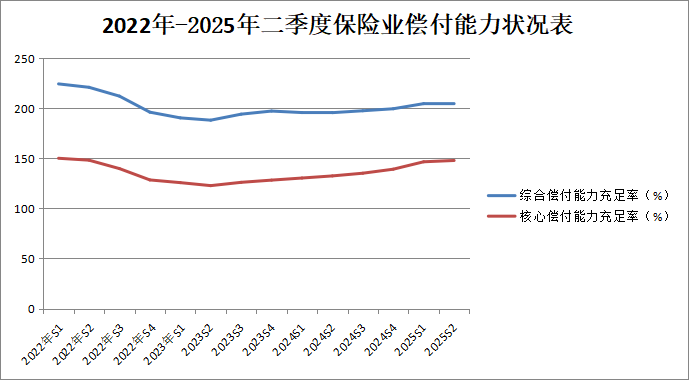
Core Insights - The insurance industry is experiencing a significant increase in stock investment ratios, driven by low interest rates and regulatory encouragement for long-term capital market participation [1][6][2] - Life insurance premiums have shown robust growth, with a 21% increase in June, following a 24% rise in May, indicating strong demand for insurance savings products [3][4] - The overall insurance industry reported a total premium income of 3.7 trillion yuan in the first half of 2025, reflecting a year-on-year growth of 5.1% [3][4] Investment Trends - The proportion of insurance funds allocated to stocks has risen from 6.74% at the end of last year to 8.47% this year, with stock investments increasing by 47.57% year-on-year [2][5][6] - By the end of the second quarter, the balance of stock investments reached 3 trillion yuan, marking an 8.92% increase from the previous quarter [6][5] Premium Growth - Life insurance premium growth is primarily driven by the integration of banking and insurance services, with significant contributions from bank distribution channels [3][4] - The property insurance sector also saw a premium growth rate of 5.1% in the first half of the year, with auto insurance showing a notable increase [4] Solvency and Financial Health - The solvency ratios of the insurance industry have stabilized, with the comprehensive solvency adequacy ratio at 204.5% and the core solvency adequacy ratio at 147.8% as of the end of the second quarter [8][10] - The industry has been actively increasing capital through debt issuance and capital increases, with 13 companies announcing capital plans totaling 50 billion yuan in the first half of the year [10][9]
上半年寿险驱动保费增长5%,险资持续加仓股票
Di Yi Cai Jing· 2025-08-17 12:08
Core Insights - The insurance industry has shown steady growth in the first half of 2025, driven by sustained demand for insurance savings and the implementation of the "reporting and operation integration" policy [1][2] - Key indicators such as total assets and premium income have increased, with total assets growing by 9.2% year-on-year and total premium income rising by 5.1% [1][2] - The industry's risk resilience has strengthened, with stable solvency indicators, and an increase in stock asset allocation by insurance funds [1][4] Premium Growth - In the first half of 2025, the original insurance premium income reached 3.7 trillion yuan, a year-on-year increase of 5.1%, with claims and benefits paid amounting to 1.3 trillion yuan, up 9% [2] - The growth in premium income is primarily driven by life insurance, with a significant increase in new policy numbers [2] - The life insurance premium growth is attributed to the integration of banking and insurance channels and a decrease in bank deposit rates, which has maintained customer demand for insurance savings [2][3] Investment Trends - Insurance funds have increased their stock investments, with stock allocation rising from 6.74% to 8.47% year-on-year, reflecting a proactive approach in capital market positioning [1][4][5] - The total stock investment balance reached 3 trillion yuan by the end of the second quarter, marking a 47.57% year-on-year increase [5] - The shift towards equities is driven by low interest rates and regulatory encouragement for long-term funds to enter the market [5] Solvency and Capital Adequacy - The solvency adequacy ratio for the insurance industry has stabilized, with the comprehensive solvency adequacy ratio at 204.5% and the core solvency adequacy ratio at 147.8% by the end of the second quarter [6][8] - Despite a general decline in solvency ratios due to stricter capital recognition under the "Solvency II" phase II, recent capital raising efforts have helped improve these ratios [8][9] - The industry has seen 13 companies announce capital increase plans in the first half of the year, totaling 50 billion yuan [8]

东吴证券:未来银保新业务价值率及新单规模或超越个险 渠道内部寻求多元化产品发展
智通财经网· 2025-08-14 02:43
Core Viewpoint - The report from Dongwu Securities indicates that the Chinese bancassurance channel has evolved through five major stages over nearly 30 years and is currently in the "New Bancassurance" development phase, with expectations that new business value rates and new single scale may surpass individual insurance channels in the future [1][2] Stage Development Summary - Stage 1: Initial Exploration Period (1996-2000) - The bancassurance channel began with the first collaboration between Ping An and Agricultural Bank, establishing a cooperative model [1] - Stage 2: Rapid Growth Period (2001-2010) - The introduction of dividend insurance products aligned well with banking operations, leading to significant growth, with premium income reaching 458.4 billion yuan in 2011, 6.4 times that of 2004 [1] - Stage 3: Market Correction Period (2011-2016) - Regulatory policies limited bank cooperation and led to a decline in market share for bancassurance as individual insurance channels grew rapidly [2] - Stage 4: Policy-Driven Long-Term Development (2017-2023) - Regulatory guidance shifted focus to long-term products, with the emergence of increasing whole life insurance dominating the market, maintaining premium income above one trillion yuan [2] - Stage 5: New Bancassurance Development Period (2024-Present) - The full implementation of the "Report and Action Together" policy is expected to optimize costs and enhance product innovation, with projected premium income of approximately 756.8 billion yuan in 2024 [2] Key Drivers of Development - The bancassurance channel holds significant importance in global life insurance markets, with nearly half of the penetration rates exceeding 50% in major European markets due to favorable regulatory environments and deferred tax policies [3] - International bancassurance models can be categorized into four types based on capital ties and cooperation depth: agreement agency model, strategic alliance model, capital cooperation model, and financial group model [3] - The development of bancassurance in Europe has progressed through three stages, integrating banking and insurance operations through capital movements and diversifying product offerings [3] Company Strategies - China Life is actively expanding bank cooperation and enhancing professional team development while enriching its bancassurance product system to maintain market leadership [6] - Ping An leverages group synergies to create a new bancassurance model, expanding quality bank partnerships and focusing on wealth management [7] - China Pacific Insurance is deepening its "Long Voyage Action" to build differentiated competitive advantages through value-oriented strategies [7] - New China Life Insurance is implementing tiered strategies in bancassurance to reduce sales costs, with new business value in this channel expected to grow fivefold in 2024 [7] - Future development of the bancassurance channel should focus on breaking existing models, seeking integrated cooperation, and diversifying product offerings [7]

平安举牌太保!保险巨头互买点燃行情,保险证券ETF(515630)冲击4连涨
Xin Lang Cai Jing· 2025-08-14 02:10
Group 1 - The China Securities Insurance Index (399966) increased by 0.91% as of August 14, 2025, with notable gains from companies such as Great Wall Securities (up 5.52%) and China Pacific Insurance (up 4.13%) [1] - China Ping An increased its stake in China Pacific Insurance by approximately 1.74 million shares at a price of HKD 32.07 per share, totaling around HKD 55.84 million, bringing its ownership to about 5.04% of China Pacific's H-shares [1] - The Insurance Securities ETF (515630) rose by 0.98%, marking its fourth consecutive increase, with the latest price reported at CNY 1.44 [1] Group 2 - Guojin Securities highlighted a recent industry meeting organized by Bank of China Insurance, emphasizing the integration of individual insurance channels and agency channels, and imposing constraints on the allocation of fixed costs [2] - The initiative aims to prevent unhealthy competition due to unreasonable cost settings and mitigate the risk of cost discrepancies, potentially leading to increased industry concentration as smaller insurers may face reduced cost allocation [2] - The top ten weighted stocks in the China Securities Insurance Index as of July 31, 2025, accounted for 63.18% of the index, with major companies including China Ping An and CITIC Securities [3]


分红险渠道之争:银保领跑,代理与中介求突围
Xin Lang Cai Jing· 2025-08-11 01:43
原标题:分红险渠道之争:银保领跑,代理与中介求突围|转型分红险② 智通财经记者 | 吕文琦 今年上半年,保险业一个不容忽视的变化悄然发生——银保渠道在销售端的地位发生了质变。过去常被 贴上"规模贡献渠道"标签的银行代理销售,如今不仅在保费规模上稳居首位,还在价值贡献上实现了跃 升,成为推动险企新单价值增长的重要引擎。 尤其令人意外的是,原本更多依赖代理人渠道的分红型寿险,在银保渠道热销,不仅成为部分银行理财 经理的"主推产品",甚至在部分银行的月度销售榜上占据半壁江山。 这一现象背后,不仅有产品端调整和渠道端转型的原因,更折射出保险销售生态的重构。 银保渠道重回C位 智通财经从业内了解到,2025年上半年,人身险业银保渠道新单规模保费同比小幅下滑,较2024年全年 的较大降幅已明显收窄。而新单期缴保费实现了正增长,扭转了去年的下滑态势。 以目前唯一公开披露各渠道详细保费信息的太保寿险来看,太保寿险上半年累计实现原保险保费收入 1680.09亿元,同比增长9.7%。 在渠道结构方面,银保渠道尤其抢眼,上半年实现保费370.53亿元,同比增长74.6%,占总保费中的 22.05%,几乎达到了2024年全年银保保费 ...

港险将推报行合一;平安、国寿等五大上市险分红近千亿;泰康、友邦等接盘160亿购物中心|13精周报
13个精算师· 2025-08-09 02:07
Regulatory Dynamics - Seven departments are promoting long-term funds from government investment funds and insurance companies to focus on future manufacturing, information, materials, and other sectors under controllable risks [5][9] - Two departments announced the resumption of value-added tax on interest income from newly issued government bonds and financial bonds starting August 8 [6] - The China Insurance Asset Management Association may be renamed to include banking insurance asset management [8] - Hainan encourages increasing the proportion of loans to the manufacturing sector and developing multi-level capital markets and industrial insurance [9] - Shanghai's seven departments issued measures to promote the joint development of medical insurance and commercial insurance, supporting innovative drugs and medical devices [10][11] Company Dynamics - Hongkang Life increased its stake in Zhengzhou Bank to 14.03% by acquiring 675,000 shares [17] - Hongkang Life also increased its stake in Honghua Wisdom Energy by acquiring 458,000 shares [18] - Ping An Insurance increased its stake in Postal Savings Bank by acquiring 9.357 million shares [19] - Sunshine Life reduced its stake in Victory Shares to 4.72% by selling 0.5% of its shares [20] - Taiping Life's investment in China Power Construction has turned profitable after two years, with a 3.5 billion yuan investment [22] - China Life, along with other partners, established a 5 billion yuan equity investment fund in Hebei [23] - TaiKang Life is leading a consortium to acquire three shopping centers for 16 billion yuan [24] - Zhongyou Life reported insurance business revenue of 118 billion yuan in the first half of the year, with two listed companies targeted for investment [25][26] Industry Dynamics - 58 non-listed life insurance companies reported a combined net profit of 28.6 billion yuan in the first half of the year, a year-on-year increase of 242% [44] - 76 property insurance companies achieved a net profit of over 9.2 billion yuan in the first half of the year, with significant growth attributed to improved underwriting and investment returns [45] - The five major listed insurance companies announced a total dividend of 907.89 billion yuan for 2024, a year-on-year increase of 20.21% [46] - 143 insurance companies disclosed their solvency reports, with five companies failing to meet standards [47][48] - Four problematic insurance companies faced severe penalties, including license revocation and operational bans [49] - *ST Tianmao is likely to voluntarily delist, marking the third such case this year [50] - Citigroup reported that policies promoting the high-quality development of commercial health insurance in Shanghai will benefit companies like Heng Rui Pharmaceutical [51] Product and Service Innovations - Sunshine Life launched the "Beautiful Life" silver-haired product system, enhancing coverage for the elderly [59] - The first "loan + insurance" climate loan product was launched in Chengdu, integrating banking and insurance services [60]


寿险公司的负债成本改善几何?
Guolian Minsheng Securities· 2025-08-08 12:21
Investment Rating - The report maintains an "Outperform" rating for the insurance industry [1]. Core Insights - The report highlights that the improvement in liability costs for life insurance companies is expected to alleviate the pressure from interest rate differentials, driven by regulatory guidance and market conditions [15][19]. - The report emphasizes the significant decline in the break-even yield for new business value (NBV) and value of in-force (VIF) across various life insurance companies, indicating a trend of improving profitability [10][14]. Summary by Sections Current Liability Costs of Life Insurance Companies - The break-even yield for NBV has marginally decreased for major life insurance companies in 2024, influenced by lower guaranteed rates and improved channel cost efficiency [10][14]. - The NBV break-even yields for major companies in 2024 are as follows: China Life (2.43%), Ping An Life (2.42%), and China Pacific Life (2.60%) [9]. - The VIF break-even yields show a mixed trend, with China Life at 2.44% and Ping An Life at 2.50% in 2024, reflecting varying performance across companies [12][14]. Future Liability Cost Trends - Regulatory initiatives are pushing for a unified commission structure across distribution channels, which is expected to lower channel costs and improve liability costs [25][29]. - The continuous reduction in the guaranteed rates for life insurance products since August 2023 is anticipated to further decrease the liability costs for new and existing policies [29][30]. - Life insurance companies are actively adjusting their product offerings, focusing on dividend products to enhance profitability and reduce fixed liability costs [36][39]. Investment Recommendations - The report recommends maintaining an "Outperform" rating for the insurance industry, citing improvements in liability costs and potential for enhanced net profit due to favorable investment conditions [45][48]. - Specific companies highlighted for investment include China Pacific Insurance, China Life, and Ping An Insurance, based on their strong fundamentals and ability to adapt to market changes [48].