新能源产业

Search documents
龙蟠科技(02465)发布中期业绩,股东应占亏损8419.4万元,同比收窄61.6%
智通财经网· 2025-08-20 12:11
Core Viewpoint - Longpan Technology (02465) reported a revenue of 3.622 billion RMB for the six months ending June 30, 2025, reflecting a year-on-year growth of 1.5% while the loss attributable to shareholders narrowed by 61.6% to 84.194 million RMB, with a basic loss per share of 0.12 RMB [1] Group 1: Financial Performance - Revenue for the reporting period was 3.622 billion RMB, showing a year-on-year increase of 1.5% [1] - The loss attributable to shareholders was 84.194 million RMB, which is a reduction of 61.6% compared to the previous year [1] - Basic loss per share was reported at 0.12 RMB [1] Group 2: Business Strategy and Market Position - The company is committed to its mission of building a better global life through core materials in green new energy, supporting the sustainable development of the new energy industry [1] - The company is pursuing a dual-track approach in its industrial layout, focusing on both new energy and traditional businesses [1] - In the field of automotive environmental fine chemicals, the company continues to innovate based on traditional products such as lubricants, coolants, brake fluids, and exhaust treatment fluids, diversifying its offerings to adapt to industry changes and maintain market leadership [1] Group 3: Operational Insights - Despite ongoing market competition leading to continued net losses, the company has implemented a series of proactive measures to improve the capacity utilization rate of its lithium iron phosphate factory [1] - The company has a healthy order backlog, and the sales volume of its main products is steadily increasing [1]

每日速递 | 蔚蓝锂芯:上半年锂电池出货量约3.1亿颗
高工锂电· 2025-08-20 10:46
Group 1 - The core viewpoint of the article highlights the significant developments in the lithium battery industry, including production increases and strategic partnerships among key players [2][3][4][5][6][7][9][11][13]. Group 2 - Blue Lithium's battery shipment volume reached approximately 310 million units in the first half of the year, with a target of over 50% growth for the full year [2]. - CATL established a new subsidiary in Xiamen with a registered capital of 2 billion yuan, focusing on battery manufacturing and sales [3]. - Tailan New Energy signed a contract for a solid-state battery production base in Hubei, marking a significant expansion of its manufacturing network [4]. - BYD launched a range of lithium batteries for electric two and three-wheelers, with prices ranging from 1,298 yuan to 6,998 yuan [6]. - A new project in Kashgar aims to produce 60 million cylindrical power batteries annually, with a total investment of 15 million yuan [7]. - Gree's partnership with China Huadian Group focuses on building low-carbon and zero-carbon industrial parks, promoting a "green + circular" cooperation model [9]. - A project in Hunan for producing 10,000 tons of porous carbon for silicon-carbon anode materials is under environmental assessment, with a total investment of 10 million yuan [11]. - Tianyuan Co. announced that its 900,000 tons/year phosphate mining project has entered trial production, which is expected to enhance future operational performance [13].






国轩高科大动作频频
鑫椤锂电· 2025-08-20 07:35
Group 1 - The core viewpoint of the article highlights the strategic advancements of Guoxuan High-Tech in solid-state battery technology and its expansion into the small power battery market, indicating a strong focus on innovation and market growth [1][4]. Group 2 - Guoxuan High-Tech has established a "Solid-State Battery Materials Joint Innovation Laboratory" in collaboration with Beijing University of Chemical Technology, aiming to integrate engineering practices and research advantages to develop core materials for solid-state batteries [1]. - The company has officially launched the design work for a 2GWh production line for its first-generation all-solid-state batteries, with a reported yield rate of 90% for the pilot production line [1]. Group 3 - The company has completed the main structure of its new energy vehicle verification and energy storage research and development base, which covers an area of approximately 126.7 acres with a total investment of about 1 billion yuan, expected to have a total construction area of around 180,000 square meters [2]. Group 4 - Guoxuan High-Tech's subsidiary, Hefei Guoxuan Jitai Battery Technology Co., Ltd., has signed a cooperation agreement with Lujiang High-tech Zone to enter the small power battery market, aiming to create a new growth driver for the company [4]. - The chairman of Guoxuan High-Tech stated that the current daily electricity consumption of new energy vehicles in China is only 330 million kWh, representing 1.2% of the national average daily electricity consumption, indicating significant market potential for energy storage batteries and small power batteries [4].

紧抓新能源产业机遇科力远上半年扣非净利大增266.69%
Xin Lang Cai Jing· 2025-08-19 21:04
Core Insights - Company reported a significant increase in revenue driven by growth in HEV power battery, consumer batteries, and energy storage sectors, achieving a revenue of 1.822 billion yuan in the first half of 2025, representing a year-on-year increase [1] - The company is focusing on core business while pursuing technological innovation, engaging in R&D for solid-state and semi-solid batteries, and collaborating with leading hydrogen production companies [1] - HEV power battery business saw a substantial increase in sales volume, with foam nickel for HEV achieving sales of 1.3484 million square meters, a year-on-year growth of 41%, generating approximately 118 million yuan in sales revenue [1] - The lithium battery materials segment has developed an integrated model from lithium resource development to lithium carbonate production, enhancing business resilience against industry cycles [1] Business Growth - Consumer battery business is experiencing rapid growth, with the company deepening its presence in sectors such as two-wheeled vehicles, mobile charging cabinets, power banks, and smart home devices, establishing long-term strategic partnerships with leading enterprises [2] - In the energy storage sector, the company is leveraging a large energy storage ecosystem innovation model to drive business development, with significant projects underway in Hebei, including 200MW/400MWh and 100MW/200MWh independent energy storage projects [2] - The company aims to achieve steady growth in revenue from energy storage products and station operations through rolling development, investment, construction, and capitalization of energy storage stations [2] Technological Advancements - The company has made significant progress in dry electrode technology during the first half of 2025, with expectations for further advancements driven by terminal demand from independent energy storage stations [2] - The company has introduced a three-dimensional porous foam copper-manganese alloy for SOFC (Solid Oxide Fuel Cell) applications, achieving localization of key components and has completed sample submissions to seven clients [2] - The increase in performance is attributed to the collaborative efforts across multiple sectors, with downstream orders boosting HEV product shipments and strengthening the economic viability of lithium battery materials [2]

凯盛新材: 西南证券股份有限公司关于山东凯盛新材料股份有限公司2025年半年度持续督导跟踪报告
Zheng Quan Zhi Xing· 2025-08-19 16:34
Group 1 - The report indicates that Southwest Securities has effectively supervised the information disclosure of Kaisheng New Materials, with no instances of delayed reviews [1] - The company has established and is executing relevant regulations to prevent resource occupation by related parties and manage fundraising [1] - The company has not yet initiated the construction of a new lithium salt project for lithium batteries, which is expected to produce 10,000 tons per year [1] Group 2 - The company has fulfilled its commitment regarding the lock-up of shares and measures to mitigate the dilution of immediate returns [2] - There are no reported issues requiring attention or regulatory measures taken against the company [2] - The company plans to conduct training sessions in the second half of the year [2]


紧抓新能源产业机遇 科力远上半年扣非净利大增266.69%
Zheng Quan Ri Bao· 2025-08-19 12:11
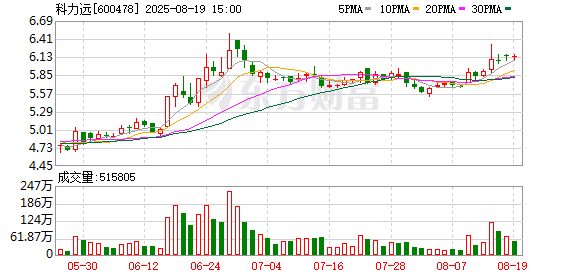
Core Viewpoint - The company, Hunan Keli Yuan New Energy Co., Ltd., reported significant growth in its 2025 semi-annual report, driven by the expansion of HEV power battery, consumer batteries, and energy storage sectors, achieving a revenue of 1.822 billion yuan, a year-on-year increase of 23.21% [2] Group 1: Financial Performance - The net profit attributable to shareholders reached approximately 51.22 million yuan, a year-on-year increase of 187.23% [2] - The net profit after deducting non-recurring gains and losses was 47.29 million yuan, up 266.69% year-on-year [2] - The net cash flow from operating activities amounted to 278 million yuan, an increase of 134.39% year-on-year [2] Group 2: Business Segments - The HEV power battery business saw a significant increase in sales volume due to higher order volumes from major customers, with sales of foam nickel for HEV reaching 1.3484 million square meters, a year-on-year increase of 41%, generating sales revenue of approximately 118 million yuan, up 30% [2] - Sales revenue from HEV positive and negative electrode plates was approximately 634 million yuan, reflecting a year-on-year growth of 36% [2] - The consumer battery segment also maintained rapid growth, achieving sales revenue of 542 million yuan, a year-on-year increase of 28% [3] Group 3: Technological Innovation and Development - The company is focusing on technological innovation, having made breakthroughs in dry electrode technology and is working on solid-state and semi-solid-state battery research [3] - The company has established partnerships with leading hydrogen production companies for the development of electrolysis water hydrogen production materials, opening up growth opportunities [2] - The company aims to achieve market application of semi-solid-state battery products by the end of 2025 to 2026, while accelerating the transformation of solid-state battery results [3] Group 4: Energy Storage Initiatives - The company has successfully connected independent energy storage power stations in Hebei, with a total capacity of 300 MW/600 MWh, which has exceeded investment return expectations [3] - The company plans to achieve steady growth in revenue from energy storage products and power station operations through continuous development and investment in energy storage stations [3] - The company is also focusing on the solid oxide fuel cell (SOFC) technology route, having developed a three-dimensional porous foam copper-manganese alloy for SOFC stack applications [3]
四川探获资源量超1.3亿吨磷矿 普查成果通过评审,矿床规模达大型
Zhong Guo Zi Ran Zi Yuan Bao· 2025-08-19 03:48
Core Insights - The "Ma Jing Zi Dong Phosphate Mine Survey Project" in Leibo County has discovered over 130 million tons of phosphate resources, classifying it as a large-scale deposit [1] - The project was conducted by the Seventh Geological Brigade of the Sichuan Geological Bureau and took one year to complete, with field acceptance achieved by the end of May [1] - The demand for phosphate resources has surged due to the growth of the new energy industry, prompting Sichuan to discover eight medium to large phosphate mines since the start of the 14th Five-Year Plan, adding 1.75 billion tons of phosphate resources [1] Industry Developments - Sichuan has established a multi-channel investment mechanism for mineral exploration, being the first in the country to implement a revenue-sharing incentive mechanism for mining rights transfer [1] - The province is actively seizing opportunities from the new round of mineral exploration breakthroughs, enhancing its geological survey capabilities [1]
A股终于熬出头了,下一个十年押注什么?
Ge Long Hui· 2025-08-18 12:16
Core Viewpoint - The A-share market has reached significant milestones, with the Shanghai Composite Index breaking through 3731.69 points, marking a nearly ten-year high, and the total market capitalization exceeding 100 trillion yuan, indicating a strong bullish trend in the market [3][12][23]. Market Performance - The Hang Seng Index reached a peak of 25680 points, while the Shanghai Composite Index and Shenzhen Component Index also saw substantial gains, with the former up 0.85% and the latter up 1.73% on a recent trading day [3][4]. - A total trading volume of 2.76 trillion yuan was recorded, the third highest in history, with 4034 stocks rising and 123 hitting the daily limit [4][24]. Sector Analysis - Key sectors attracting significant capital inflow include software, communication equipment, electronic components, and cultural media, each seeing net inflows exceeding 10 billion yuan [4][5]. - The liquid cooling concept and film industry stocks have shown remarkable performance, with several stocks hitting the daily limit [6][7]. Historical Context - Over the past decade, the A-share market has experienced significant volatility, with multiple corrections exceeding 20%. However, since the low point in September last year, the Shanghai Composite Index has risen over 35% [12][15]. - The best-performing sectors in the last decade include computer, new energy, communication, non-ferrous metals, electronics, military industry, and biomedicine, while traditional sectors like real estate and retail have lagged [15][20]. Future Investment Opportunities - Potential high-growth sectors for the next decade include AI, robotics, new energy, semiconductor chips, biomedicine, silver economy, and low-altitude economy, with significant market potential projected for each [20][21][22]. - The AI industry is expected to reach a market demand of 5.6 trillion yuan by 2030, while the robotics market could also reach a trillion yuan [20][21]. - The silver economy is projected to reach 25 trillion yuan by 2030, driven by the growing demand from the aging population [22]. Institutional Confidence - Institutional confidence in the A-share market is increasing, with predictions of the Shanghai Composite Index potentially reaching over 5000 points in the next year [23].

A股终于熬出头了,下一个十年押注什么?
格隆汇APP· 2025-08-18 12:03
Core Viewpoint - The A-share market has reached significant milestones, with the Shanghai Composite Index breaking through 3731.69 points, marking a nearly ten-year high, and the total market capitalization exceeding 100 trillion yuan, indicating a strong bullish trend in the market [3][4][7]. Market Performance - The Hang Seng Index reached a year-to-date high of 25680 points before experiencing a slight pullback, with a cumulative decline of 1.8% over two days, yet market enthusiasm remains high [2]. - A-share market recorded a trading volume of 2.76 trillion yuan, the third-largest in history, with 4034 stocks rising and 123 hitting the daily limit [3][4]. - The North Star 50 Index surged by 6.79%, closing at 1576 points, also a historical high [3]. Sector Analysis - Key sectors attracting significant capital inflow include software, communication equipment, electronic components, and cultural media, each with net inflows exceeding 10 billion yuan [4][5]. - The liquid cooling concept and film industry stocks saw substantial gains, with several stocks hitting the daily limit [6]. - The military equipment sector has regained investor interest, with multiple stocks experiencing significant price increases [7]. Historical Context - Over the past decade, the A-share market has experienced significant volatility, with at least four instances of declines exceeding 20% [12]. - Since the low point in September last year, the Shanghai Composite Index has risen over 35%, while the ChiNext Index has increased by 70% [12]. Future Investment Opportunities - Potential sectors for investment over the next decade include AI, robotics, renewable energy, semiconductor chips, biomedicine, the silver economy, and low-altitude economy [21][22][20][23]. - The AI industry is projected to reach a market demand of 5.6 trillion yuan by 2030, with significant growth potential in related sectors [21]. - The renewable energy sector is expected to see substantial growth due to global climate initiatives, with the electric vehicle market alone projected to exceed 2 trillion yuan by 2030 [21]. - The silver economy, driven by the growing elderly population, is estimated to reach a market size of 25 trillion yuan by 2030 [22]. Institutional Confidence - Institutional funds have shown strong confidence in the market, with net inflows of 800.5 billion yuan recorded, indicating a bullish sentiment among investors [24]. - Analysts predict that the Shanghai Composite Index could potentially reach 5000 points within the next year, reflecting growing optimism about the market's future [26].





悦达投资2025年中报简析:净利润增27.62%,盈利能力上升
Zheng Quan Zhi Xing· 2025-08-16 22:46
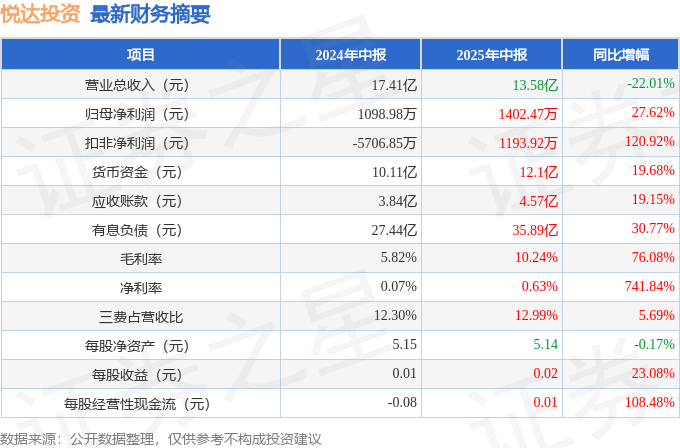
Core Viewpoint - The recent financial report of Yueda Investment (600805) shows a decline in total revenue but an increase in net profit, indicating a mixed performance with improved profitability metrics despite lower sales figures [1] Financial Performance - Total revenue for the first half of 2025 was 1.358 billion yuan, a decrease of 22.01% year-on-year - Net profit attributable to shareholders was 14.02 million yuan, an increase of 27.62% year-on-year - In Q2 2025, total revenue was 675 million yuan, down 30.15% year-on-year, while net profit was -1.80 million yuan, up 60.64% year-on-year - Gross margin increased by 78.33% year-on-year to 10.24%, and net margin rose by 762.6% to 0.63% [1] Cost and Efficiency Metrics - Total selling, administrative, and financial expenses amounted to 176 million yuan, accounting for 12.99% of revenue, an increase of 5.69% year-on-year - Earnings per share rose by 23.08% to 0.02 yuan, while operating cash flow per share increased by 108.48% to 0.01 yuan [1] Business Model and Investment Returns - The company's return on invested capital (ROIC) was 0.89%, indicating weak capital returns, with a historical median ROIC of 1.46% over the past decade - The company has experienced four years of losses since its listing, suggesting a generally poor financial track record [3] Strategic Focus and Projects - In 2024, the company is focusing on the development of the renewable energy sector, with several projects including a 378MW photovoltaic project and a 160MW/320MWh energy storage project successfully launched [4][5] - The company aims to enhance its market share and profitability in the energy sector by increasing power generation capacity and improving energy management efficiency [5] Recent Developments and Future Outlook - In Q1 2025, the company reported a revenue of 683 million yuan, with a year-on-year increase of 25.08% after excluding the impact of the divested subsidiary - The company anticipates continued growth in its renewable energy and textile sectors, with significant contributions from various projects [6] - The company has successfully launched multiple wind and solar storage projects since its strategic shift in 2022, positioning itself to capitalize on national carbon reduction initiatives [7]