
生物制造

Search documents
2026:让每一滴汗水都能被看见
Xin Lang Cai Jing· 2026-01-02 18:29
Core Viewpoint - The article highlights China's economic resilience and growth potential in 2025, projecting a GDP growth of around 5%, positioning it among the leading economies globally [3][4]. Group 1: Economic Performance - In 2025, China's GDP is expected to grow by approximately 5%, maintaining its position among major global economies [3]. - The strong performance reflects the resilience of the Chinese economy, driven by innovation from entrepreneurs and the hard work of millions of laborers [3]. Group 2: New Productive Forces - The core industries of artificial intelligence are rapidly expanding, with significant breakthroughs in quantum computing and deep-sea exploration [4]. - The digital economy's core industries are increasingly contributing to GDP, indicating a shift from factor-driven to innovation-driven growth [4]. Group 3: Domestic Demand - The total retail sales of consumer goods are steadily increasing, supported by policies like "trade-in" for automobiles and home appliances [4]. - The introduction of the "Private Economy Promotion Law" is expected to stabilize over 180 million business entities, enhancing the market environment [4]. Group 4: Open Cooperation - Despite global trade protectionism, China's foreign trade has shown resilience, with a 3.6% year-on-year increase in total goods trade in the first eleven months [4]. - The proportion of trade with Belt and Road Initiative countries exceeds half of the total foreign trade, indicating a robust open economy [4]. Group 5: Future Strategies - In 2026, the focus will be on expanding domestic demand to stimulate a virtuous cycle of consumption and investment [5][6]. - The government plans to implement proactive fiscal policies and maintain a moderately loose monetary policy to support economic stability and growth [5]. Group 6: Technological Innovation - The strategy for 2026 emphasizes self-reliance in technology, targeting key areas such as artificial intelligence, integrated circuits, and biotechnology [6]. - The aim is to enhance the role of enterprises in technological innovation and increase R&D investment intensity [6]. Group 7: Overall Outlook - The development blueprint for 2026 emphasizes strategic determination, comprehensive reform, and high-quality opening-up to navigate challenges [7]. - The collective effort of all contributors is essential for achieving high-quality development and advancing towards modernization [7].


中国科技馆推出跨年演讲,前瞻2030年科学文化新图景
Xin Jing Bao· 2025-12-31 05:39
Core Viewpoint - The event "Waiting for 2030: Science and Culture New Year's Speech" will be held online, inviting public engagement in deep thinking and forward-looking dialogue towards 2030 [1] Group 1: Education - The first chapter "New Thoughts on Education" will address educational transformations in the era of artificial intelligence, discussing the relationship between talent cultivation and material innovation, the importance of fostering scientific spirit, and the value of sports in education [1] Group 2: Emerging Industries - The second chapter "Emerging Industries" will analyze development trends in new industries, with keywords including brain-computer interfaces, low-altitude economy, and biomanufacturing [1] Group 3: Future Insights - The third chapter "Future Intelligence" will lead the audience to the forefront of technology, featuring Yang Liwei discussing the latest advancements in the aerospace sector and Academician Lu Lin focusing on "Sleep and Health in the Digital Age," examining the balance of body and mind in a tech-driven life [1]
中国海油化学结合行业学贯全会精神
Zhong Guo Hua Gong Bao· 2025-12-31 02:54
Core Insights - The article discusses a recent collective study session held by China National Offshore Oil Corporation (CNOOC) focusing on the spirit of the 20th Central Committee's Fourth Plenary Session and Xi Jinping's economic thoughts [1] Group 1: Company Initiatives - CNOOC emphasizes the importance of understanding and implementing the spirit of the 20th Central Committee's Fourth Plenary Session as a significant political task for the current and future periods [1] - The company plans to increase research and development investments in the field of biomanufacturing, aiming to explore new technologies and processes such as bio-based materials and synthetic biology [1] Group 2: Industry Trends - Biomanufacturing is identified as a crucial component of China's new productive forces, creating new tracks and business models, and is expected to synergize with traditional petrochemical and agricultural industries [1] - The article highlights the need for collaboration among government, industry, academia, and research to enhance research capabilities and the conversion of scientific achievements, thereby injecting new momentum for high-quality development [1]

2026年新年献词|顺流逆流,守护我们内心的罗盘!
Zheng Quan Shi Bao Wang· 2025-12-31 02:44
Core Insights - The article reflects on the past year, emphasizing the intertwining of technology and personal experiences as society navigates through challenges and opportunities in 2026 [3][4][6]. Group 1: Technological Developments - The emergence of DeepSeek marked the beginning of a transformative year characterized as the "year of large models" and "year of applications," indicating a significant shift in AI's role across various industries [3]. - AI technologies are reshaping production and sales logic, bringing them closer to individual lives, highlighting the importance of emotional value and personalized connections in consumer services [3][4]. Group 2: Economic Environment - The global macroeconomic landscape is marked by unilateralism and geopolitical tensions, which test the resilience of economies, with China expected to achieve record import and export figures [4]. - The capital market has become a keen observer of these changes, with the Shanghai Composite Index surpassing 4000 points for the first time in a decade, and the total market capitalization of A-shares exceeding one trillion yuan [5]. Group 3: Consumer Trends - There is a growing demand for services that provide emotional resonance and tangible experiences, as seen in cultural events and consumer behaviors that prioritize personal connections over digital interactions [3][5]. - New consumption models that cater to offline experiences and emotional companionship are being revalued in the market, indicating a shift in consumer preferences [5]. Group 4: Future Outlook - The essence of resilience is portrayed as a proactive growth mindset, embracing future challenges with clarity and caution, reflecting a long-term commitment to innovation and development [6]. - The narrative emphasizes the importance of collective effort and shared experiences as society moves into 2026, suggesting that the future is shaped by collaborative actions and mutual support [7].
“网上链博”平台升级为企业提供精准供需匹配 让全球观众随时随地“云参展”
Yang Shi Wang· 2025-12-30 05:23
Group 1 - The Fourth Global Supply Chain Promotion Expo will be held in Beijing from June 22 to June 26, 2026, with preparations underway and a new AI section being introduced for the first time [1] - The expo will continue the previous edition's focus on innovation, showcasing a complete ecosystem for the transformation and application of innovative achievements, with emphasis on future economic growth points such as quantum technology, biomanufacturing, hydrogen energy, nuclear fusion, brain-machine interfaces, embodied intelligence, and sixth-generation mobile communication [5] - The AI section will feature leading domestic and international AI enterprises and their ecosystem partners, presenting a comprehensive view of the AI industry from data collection to intelligent analysis and practical applications [8] Group 2 - The expo will also focus on the development of strategic emerging industries such as new energy, new materials, aerospace, and low-altitude economy, organizing domestic and international leading enterprises for concentrated displays in advanced manufacturing sectors [9] - The event aims to showcase China's development of new productive forces driven by technological innovation and guided by high quality, while upgrading the "Online Chain Expo" platform to provide precise supply-demand matching and decision support for enterprises, allowing global audiences to participate remotely [9]
多地积极培育未来产业 10只潜力股浮现
Zheng Quan Shi Bao· 2025-12-29 19:15
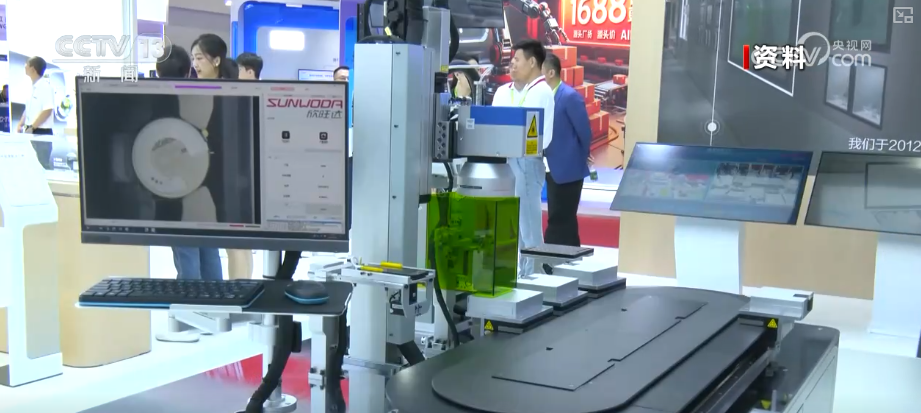
Group 1 - The core focus of the news is on the development and support of future industries in China, as highlighted by the "14th Five-Year Plan" which emphasizes nurturing emerging industries and exploring diverse technological routes and business models [3] - Various cities, including Beijing, Shenzhen, and Shanghai, are actively promoting future industries through initiatives and financial measures, with Beijing supporting 83 potential future industry companies and facilitating over 2 billion yuan in financing for 60 companies [4][5] - The future industries mentioned have significantly outperformed the market, with specific indices showing substantial annual growth, such as the nuclear fusion index rising over 83% and the 6G index increasing by more than 80% [5] Group 2 - Future industries are characterized by strong growth momentum, driven by disruptive technologies, with a projected median net profit of over 650 billion yuan for related companies by 2025, indicating a year-on-year growth of over 20% [6] - Specific companies within the future industries are expected to see remarkable profit increases, with over 60 companies projected to achieve net profit growth exceeding 100% by 2025, including notable firms like Foton Motor and Sino Medical [6][7] - A subset of companies has shown a decrease in shareholder numbers, indicating potential for price recovery, with 10 companies identified as having significant rebound potential due to their stock performance being below 19% for the year [8][9]

枣庄推出“十大行动”,打造新能源产业制造基地和大运河文化旅游名城
Sou Hu Cai Jing· 2025-12-29 15:20
Core Insights - The economic performance of Zaozhuang in 2025 is projected to be strong, with significant growth in key economic indicators during the "14th Five-Year Plan" period [1] - The city aims to transition into a resource-based, green, and low-carbon development model, focusing on industrial enhancement and transformation strategies [1] Group 1: Economic Performance - From January to November, 14 out of 16 major economic indicators in Zaozhuang ranked in the top 10 of the province, with 9 indicators in the top 5 and 7 in the top 3 [1] - The GDP growth rate reached 5.7%, consistently exceeding the provincial average for 15 consecutive quarters [1] - General public budget revenue increased by 4.5%, surpassing the provincial average by 3.2 percentage points, ranking first in the province [1] Group 2: Strategic Focus for 2026 - In 2026, Zaozhuang will prioritize industrial economy, urban construction, public welfare, and workforce development [2] - The city will enhance four pillar industries: new energy, chemical new materials, high-end equipment, and modern light industry, while also fostering three emerging industries: artificial intelligence, low-altitude economy, and biomanufacturing [2] - 2026 has been designated as the "Year of Serving Enterprises," aiming to create a favorable business environment for investment and operations [2]
连续5日成交破3亿!卫星产业ETF(159218)持续火爆揽金,千亿创投基金助力航空航天发展
Sou Hu Cai Jing· 2025-12-29 06:23
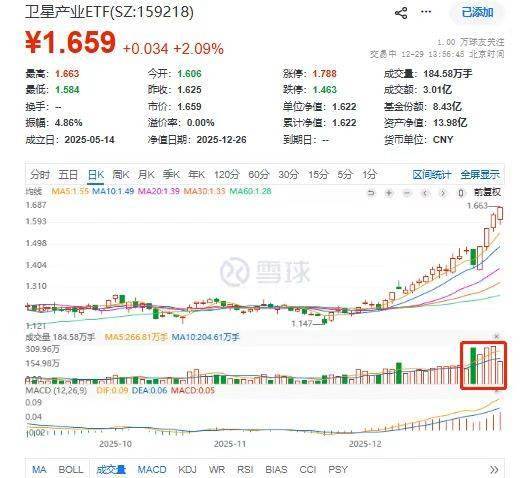
Group 1 - The satellite industry ETF (159218) has increased by 2.15%, marking a four-day rise, with China Satellite rising by 8.75% and a net inflow of over 44 million during trading [1] - The National Venture Capital Guidance Fund has officially launched, focusing on early-stage projects in integrated circuits, artificial intelligence, aerospace, low-altitude economy, biomanufacturing, and future energy, with a total government investment of 100 billion [1] - The fund's three-tier structure aims to leverage social capital participation, potentially mobilizing a trillion-scale funding [1] Group 2 - The A-share market is expected to experience its last three trading days of the year, with a focus on structural opportunities in a fluctuating market [1] - Industry experts suggest that the market's structural characteristics are likely to continue, with trading volume being a key signal for market trends [1] - Recent hot topics such as commercial aerospace may continue to gain traction in the market [1]


新三板挂牌仅3天,这家非粮生物制造企业冲刺北交所!
合成生物学与绿色生物制造· 2025-12-29 03:33
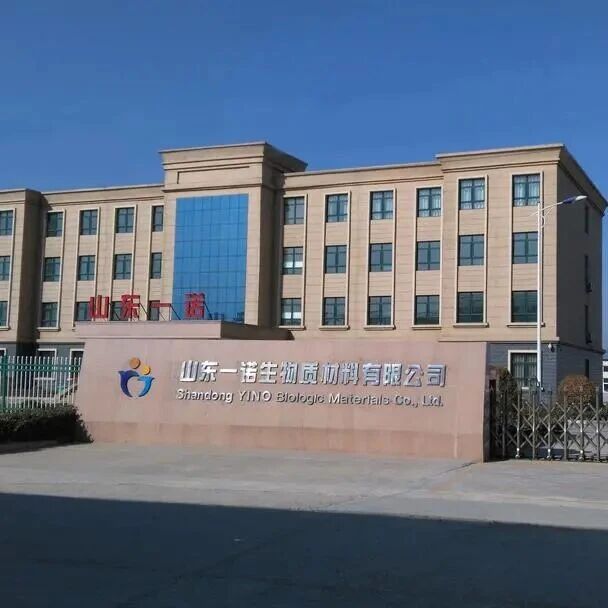
Core Viewpoint - Yinuo Biotech, a company focused on converting agricultural waste into high-value bio-based materials, has recently been listed on the New Third Board and is preparing for a listing on the Beijing Stock Exchange, highlighting its active engagement in the capital market [2]. Group 1: Company Overview - Yinuo Biotech was founded in 2015 and is led by Liu Zhanjie, who focuses on transforming corn cobs into valuable bio-based compounds such as furfural and its derivatives [4]. - The company's traditional product, furfural, has accounted for over 50% of its revenue in recent years, while 2-methyl tetrahydrofuran and 1,2-pentanediol are significant contributors to its gross profit [4]. Group 2: Industry Recognition - Yinuo Biotech has achieved "national and provincial dual champion" status, with its core product 2-methyl tetrahydrofuran recognized as a manufacturing champion at both levels, following the earlier recognition of furfural [5]. - The company’s 1,2-pentanediol product was awarded the title of "Innovative Product of the Year" by the China Petroleum and Chemical Industry Federation in 2024, underscoring its technological innovation and industrial value [4]. Group 3: Environmental Impact and Sustainability - Yinuo Biotech's production of 2-methyl tetrahydrofuran, derived from corn cobs, contributes to significant reductions in carbon footprints for downstream clients, aligning with the green and low-carbon goals of the high-end chemical industry in Shandong Province [5]. - The company has established a circular economy system by fully utilizing corn cobs and optimizing production processes, providing a sustainable development model for the bio-based materials industry [5]. Group 4: Research and Development - Yinuo Biotech emphasizes technological innovation and project development, collaborating closely with research institutions such as the Chinese Academy of Sciences and Shanghai Jiao Tong University to advance its product offerings [6].
国资委:超前谋划具身智能、生物制造、海洋能、绿色船舶等前沿赛道
Sou Hu Cai Jing· 2025-12-29 02:20
Core Viewpoint - The State-owned Assets Supervision and Administration Commission emphasizes the role of central enterprises in building a modern industrial system, focusing on the real economy and core responsibilities while promoting intelligent, green, and integrated development [1] Group 1: Strategic Focus - Central enterprises must optimize the layout of state-owned economy and cultivate new productive forces tailored to individual enterprises [1] - The implementation of the "14th Five-Year Plan" is seen as an opportunity to accelerate the transformation and upgrading of traditional industries [1] Group 2: Technological Advancement - There is a strong push to deepen and expand the "Artificial Intelligence +" initiative through equipment upgrades, technological breakthroughs, product enhancements, and brand building [1] - The goal is to increase the supply of high-end products and services, thereby enhancing the competitiveness of traditional industries in the global division of labor [1] Group 3: Emerging Industries - Greater emphasis will be placed on developing emerging and future industries, including new energy, new energy vehicles, new materials, aerospace, low-altitude economy, quantum technology, and 6G [1] - The initiative includes proactive planning for cutting-edge sectors such as embodied intelligence, biomanufacturing, marine energy, and green shipping [1] Group 4: Capital Operation - The establishment of market-oriented and professional state capital operation platforms is a priority [1] - A comprehensive industrial investment and financing system covering seed, angel, growth, and mother funds will be constructed to support the development of the real economy [1]