电动汽车

Search documents
随着全球需求激增,阿根廷关注铜开发机会
Wen Hua Cai Jing· 2025-09-23 01:55
Core Insights - Argentina is seeking to exploit its significant copper reserves, estimated at 75 million tons, as global copper demand is projected to increase by 70% by 2050, reaching over 50 million tons per year [1][2] - The country currently produces about 4,000 tons of copper annually, compared to Chile's 5.5 million tons, indicating a substantial gap in production potential [1] - The International Energy Agency (IEA) warns that by 2025, copper supply may fall 30% short of global demand if current project development rates continue [1][2] Industry Potential - Argentina's mining sector has a historical investment portfolio of approximately $30 billion, with over 100 projects, half of which are copper-related [1] - The government analysis suggests that eight copper projects could collectively contribute $15.4 billion in mining export value by 2030, more than tripling the export value expected in 2024 [2] - Major mining companies like Glencore are planning significant investments, with Glencore aiming to produce nearly 1 million tons of copper annually from its El Pachon and Agua Rica projects over the next 10-15 years [3][4] Government Initiatives - The introduction of the RIGI program offers investors substantial tax, trade, and foreign exchange benefits over 30 years, attracting over $30 billion in investments, primarily in mining [4] - The Argentine government is focusing on expanding the mining sector, particularly copper and lithium, as part of broader economic reforms [3][5] - However, the success of these initiatives depends on consistent policies and social acceptance, as past policy fluctuations have hindered investment levels [5]

日产新款LEAF产量减半,远景动力电池良率偏低
日经中文网· 2025-09-20 00:33
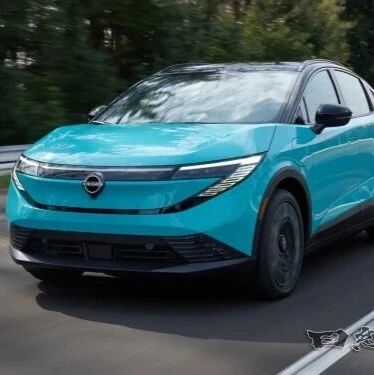
Core Viewpoint - Nissan has significantly reduced the production plan for its new electric vehicle "LEAF" due to delays in battery procurement and lower-than-expected battery yield from its supplier, AESC, which poses challenges for the company's operational recovery [2][4][5]. Group 1: Production and Supply Chain Issues - The production plan for the new LEAF has been cut to less than half of the original plan for the months of September to November due to battery supply delays [2][4]. - The production plan for the new LEAF at the Tochigi plant has been adjusted for the fiscal year 2025, with significant reductions in production expected for September and October, with some months seeing declines of several thousand units [4]. - The battery yield from AESC has not met expectations, impacting Nissan's ability to secure sufficient battery supply, which may affect actual sales performance [4][5]. Group 2: Market Performance and Strategic Direction - Nissan is facing declining sales in the U.S. market, with a projected consolidated loss of 670.8 billion yen for the fiscal year 2024, compared to a profit of 426.6 billion yen in the previous year [5]. - The new LEAF is positioned as a key model for improving Nissan's performance, with the company implementing factory restructuring and layoffs as part of its strategy to enhance long-term performance [5]. - Nissan's global new car sales fell to 1.61 million units in the first half of 2025, a 6% year-on-year decrease, marking a 16-year low, and the company has dropped out of the top ten in global new car sales [7]. Group 3: Competitive Landscape - Nissan, once a leader in the EV market, is losing market presence due to the rise of competitors like Tesla and BYD, particularly in the U.S. market [7]. - The domestic market in Japan is becoming increasingly competitive, with Honda launching its lightweight electric vehicle "N-ONE e:" and BYD planning to introduce a lightweight electric vehicle by fiscal year 2026 [7].


NIO's New Dawn: Why Wall Street's Bullish Turn Signals a Comeback
MarketBeat· 2025-09-19 15:44
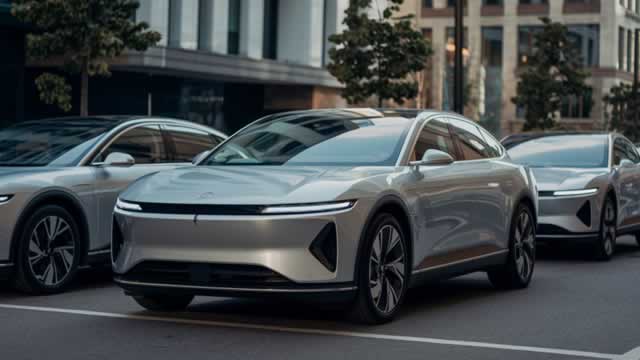
Core Viewpoint - NIO's stock has recently surged to a new 52-week high of $7.71, driven by positive analyst endorsements and record operational results, indicating a sustainable shift in the company's direction [1][2][3] Analyst Upgrades - A series of positive analyst actions, including UBS upgrading NIO from Neutral to Buy with a price target of $8.50, reflects a broader re-evaluation of the company's potential [3][4] - The consensus price target has risen to $7.40, indicating a significant improvement in sentiment since the last earnings report [5] Financial Position - NIO completed a $1.16 billion equity offering to address concerns over its high cash burn rate and significant leverage, as indicated by a debt-to-equity ratio of 1.89 [7][8] - This capital injection is intended for high-value initiatives, providing a longer operational runway and financial stability critical for long-term growth [8] Operational Performance - NIO reported revenue of $2.65 billion in its second quarter, a 9.0% year-over-year increase, and achieved a record 31,305 vehicle deliveries in August 2025, a 55.2% increase from the previous year [10][11] - The successful execution of a multi-brand strategy, including the launch of the ONVO brand, is contributing significantly to delivery totals and is positioned to compete with industry leaders [11][12] Future Outlook - Management has issued strong guidance for the third quarter, projecting between 87,000 and 91,000 vehicle deliveries, indicating continued momentum [11] - The combination of renewed analyst confidence, a fortified balance sheet, and record consumer demand suggests that NIO is positioned for sustained growth [13][14]

特朗普寻求加快大型电力项目,以满足AI需求
Hua Er Jie Jian Wen· 2025-09-18 20:21
Group 1 - The core initiative is the "Speed to Power" program launched by the U.S. Department of Energy to address the significant increase in electricity demand driven by AI and data centers [1][2] - The program aims to mobilize technical expertise and billions of dollars in funding to expedite large-scale electricity and grid projects [1][2] - The U.S. Department of Energy is soliciting information from state energy offices, utility companies, and other stakeholders to identify projects that can be fast-tracked [1][2] Group 2 - The Trump administration is showing strong support for fossil fuel policies, directing coal and natural gas plants that were set to close to continue operations [3] - The U.S. Energy Information Administration projected a 20% increase in coal consumption at power plants in Q1 2025 compared to the same period in 2024 [3] - There is a prediction that 38 coal plants originally scheduled for closure by 2028 will remain operational due to the administration's directives [3] Group 3 - Renewable energy projects are facing significant obstacles from the government, contrasting sharply with the support for fossil fuels [4] - The Trump administration has cut most subsidies for renewable energy, citing instability and high costs associated with solar and wind energy [4] - A $4.9 billion loan guarantee for a transmission line project intended to deliver power from Kansas wind and solar projects to the Midwest and East was canceled by the Department of Energy [4]
铝的长期展望_正梦游进入 20 多年来最大的供应缺口-Global Commodities_ Aluminium long-term outlook_ sleepwalking into the biggest deficits in over 20 years _ Sleepwalking into the biggest deficits in over 20 years
2025-09-18 13:09
Aluminium Industry Research Summary Industry Overview - The aluminium market is projected to face significant deficits over the next 1-5 years, with a long-term bullish outlook driven by structural demand growth and constrained supply [3][4][7]. Key Points Supply and Demand Dynamics - Current aluminium prices around $2,500 per tonne are deemed too low to stimulate sufficient supply growth, leading to unsustainable deficits if prices do not rise [3][7]. - A price increase above $3,000 per tonne is necessary to incentivize over 10 million tonnes of supply growth by 2030, with potential demand-destruction prices around $4,000 per tonne [3][7]. - The era of rapid aluminium capacity expansion has ended, with primary production growth now limited, while demand is expected to continue increasing, particularly with cyclical demand returning [7][12]. Market Tightness - The aluminium market is showing signs of tightness, with physical balance indicators indicating repeated deficits as inventories reach multi-year lows [13][14]. - Genuine stockouts and backwardation are more likely in aluminium than in copper due to the slower response of aluminium scrap to price increases [6][12]. China's Role in the Aluminium Market - China's aluminium supply growth has effectively plateaued, with government policies limiting capacity expansion and environmental regulations making new investments unattractive [15][17][22]. - The country is unlikely to raise its capacity cap, maintaining a de facto ceiling of 45 million tonnes, which constrains future supply growth [17][22]. - China's domestic primary aluminium production growth is projected to reach zero by 2027, increasing reliance on imports to meet demand [49][50]. Emerging Demand Drivers - New demand segments such as AI-driven data centers, robotics, and electric vehicles are expected to significantly boost aluminium consumption [6][54][69]. - The electrical sector in China, driven by decarbonization efforts, is a key growth area for aluminium demand, particularly in power transmission and generation [52][65]. Indonesia's Aluminium Capacity Expansion - Indonesia is emerging as a critical growth region for primary aluminium capacity, with expected capacity reaching 2.3 million tonnes by 2029 [35][32]. - The expansion of aluminium projects in Indonesia is heavily dependent on access to affordable and reliable power, which poses regulatory and financing challenges [33][35]. Risks and Challenges - Several downside risks could derail the bullish outlook, including weaker demand recovery, unexpected supply surges, and technological advancements in scrap recovery [76][77]. - The potential for China to overproduce or for Indonesia to oversupply could undermine the market's balance [78][79]. Price Forecasts - The forecast scenarios suggest that aluminium prices will need to rise significantly to balance supply and demand, with projections indicating prices could exceed $3,000 to $4,000 per tonne in the coming years [3][7][12]. Conclusion - The aluminium market is poised for significant changes driven by structural demand growth and supply constraints, particularly influenced by China's policies and emerging technologies. Investors should closely monitor price movements and market dynamics to identify potential opportunities and risks in the aluminium sector.
福特德国裁员启动,首次1000人
Zhong Guo Qi Che Bao Wang· 2025-09-18 01:12
此次科隆工厂的裁员,是福特2024年11月官宣的欧洲大规模裁员计划的一部分。当时福特宣布,由于经济逆风、欧洲地区电动汽车需求疲软、政府对 电动汽车转型支持不力,以及来自中国对手的竞争激烈等因素,福特计划到2027年底在欧洲裁员4000人,包括在德国裁员2900人,在英国裁员800人,在 其他欧洲国家裁员300人。其中,在德国的裁员,主要集中在科隆工厂。 9月16日,福特汽车宣布,由于欧洲电动汽车市场需求疲软,该公司的德国科隆工厂将于2026年初裁员1000人。科隆工厂自2026年1月起,将从每日两 班制调整为一班制。 事实上,很长一段时间以来,福特欧洲业务一直处于亏损状态。高昂的成本结构,特别是德国的劳动力和能源成本,以及电动汽车研发所需的大量投 入,给福特带来了巨大的财务压力。当然,不止是福特,迄今为止,电动汽车业务实现盈利的车企少之又少。福特不得不通过裁员等措施来削减运营开 支,以期实现欧洲业务的扭亏为盈。相比之下,美国同行通用汽车多年前就抛弃了欧洲业务,将旗下欧洲品牌欧宝和沃克斯豪尔出售给了Stellantis。 欧洲业务低迷,叠加美国特朗普政府关税政策影响,以及高额召回成本,今年第二季度,福特录得净亏 ...


“欧洲企业又叫屈:中国给稀土吧”
Sou Hu Cai Jing· 2025-09-17 06:02
Group 1 - The EU is considering sanctions against Chinese and Indian companies under the pretext of "Russia-related" activities, influenced by the Trump administration's pressure [4][5] - The European Chamber of Commerce in China reported that strict controls on rare earth exports from China are causing significant supply bottlenecks for European companies, leading to increased operational disruptions [1][3] - The approval rate for export licenses from China for European companies is less than 25%, exacerbating the supply chain issues faced by these businesses [1] Group 2 - The EU relies almost entirely on China for rare earth imports, with nearly 100% of its rare earth needs sourced from China, highlighting the dependency on Chinese supply for critical metals [4] - The Chinese government has stated that its export control measures are in line with international practices and are not discriminatory against specific countries [4] - The ongoing trade tensions have led to complaints from European manufacturers about potential production halts due to delays in obtaining necessary materials from China [3][4]

2025年全球创新指数发布 中国首次跻身前十
Zhong Guo Xin Wen Wang· 2025-09-16 21:20
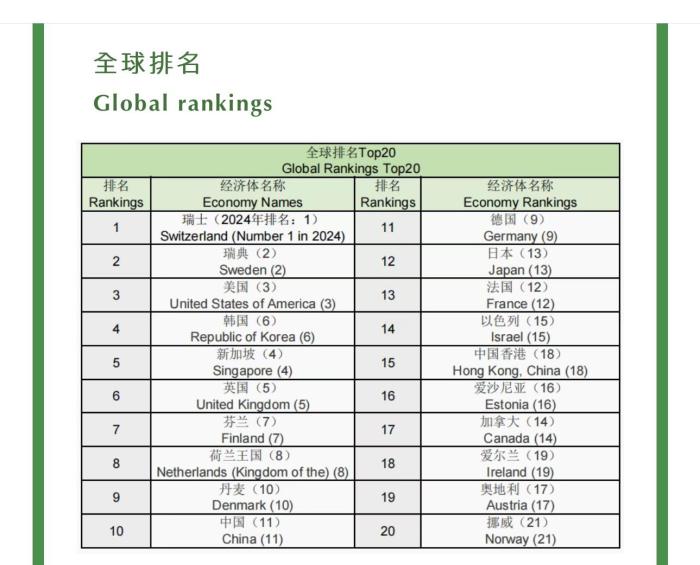
Core Insights - The 2025 Global Innovation Index (GII) indicates that China has entered the top ten for the first time, ranking 10th, while Switzerland, Sweden, the United States, South Korea, and Singapore occupy the top five positions [1][2]. Group 1: Global Rankings - The top five economies in the 2025 GII are Switzerland, Sweden, the United States, South Korea, and Singapore [2]. - The rankings from 6th to 10th place include the United Kingdom, Finland, the Netherlands, Denmark, and China [2]. - Emerging economies such as China, India, Turkey, Vietnam, the Philippines, Indonesia, and Morocco are showing continuous improvement in their rankings [2]. Group 2: Regional Insights - Southeast Asia, East Asia, and Oceania remain key drivers of global innovation, with six economies from this region in the top 25 [3]. - South Korea and Singapore lead in corporate R&D, education, and innovation infrastructure, while China maintains a strong position among middle-income economies [3]. - China has 24 of the world's top 100 innovation clusters, highlighting the region's central role in global innovation dynamics [3]. Group 3: Innovation Trends - The GII highlights significant growth in robotics and connectivity technologies, with an expansion of high-speed rail networks as a new indicator for 2025 [3]. - However, the adoption of robotics and electric vehicles has noticeably slowed down [3]. Group 4: Overall Observations - The GII reflects that economies viewing innovation as a fundamental engine for resilience, growth, and competitiveness are making the fastest progress [4]. - Despite some encouraging signs of recovery in innovation applications and impacts, the global innovation engine is not operating at full speed due to slowed R&D investments and reduced venture capital activity [4]. - The GII has been published annually since its inception in 2007, ranking approximately 140 economies based on a rich dataset of 78 indicators [4].
本田推出新EV“N-ONE e:” 续航295公里
日经中文网· 2025-09-15 08:00
Group 1 - The core viewpoint of the article is that Honda has launched a new electric vehicle (EV) named "N-ONE e:" which features a range of 295 kilometers [2] Group 2 - The new EV "N-ONE e:" is positioned to cater to the growing demand for electric vehicles in the market [2] - The vehicle's specifications highlight its competitive range, which is crucial for consumer adoption [2] - Honda's entry into the EV market with "N-ONE e:" reflects the company's strategy to enhance its electric vehicle offerings and align with global sustainability trends [2]


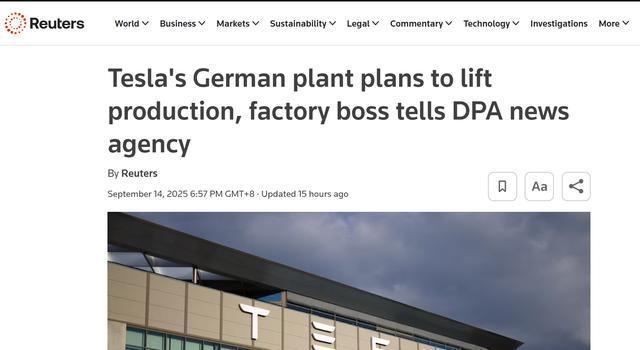
特斯拉德国工厂拟增产电动汽车 区域销量表现分化
Huan Qiu Wang Zi Xun· 2025-09-15 04:20
Group 1 - Tesla's German factory plans to increase electric vehicle production due to "excellent sales data" [1] - The factory, located in Grünheide, is a production base for the Model Y and has adjusted its production plans for Q3 and Q4 [1] - The factory manager remains optimistic about future market prospects, expecting positive signals from all supplied markets, though specific production targets were not disclosed [1] Group 2 - Tesla's sales performance in Europe shows a mixed trend, with a 39% year-on-year decline in new car registrations in Germany last month and a cumulative drop of 56% for the first eight months of the year [2] - Other European countries like France, Belgium, Denmark, and Sweden also experienced significant sales declines in August [2] - In contrast, Norway saw a 21% year-on-year increase in Tesla's new car registrations last month, with a cumulative growth of 26% for the year [2] - CEO Elon Musk attributed the sales weakness in some markets to updates and adjustments of the popular Model Y, which temporarily affected production pace [2]