业务聚焦

Search documents
CRO龙头股,连发两则重磅公告
财联社· 2025-10-26 12:39
Core Insights - WuXi AppTec (603259.SH) reported a significant increase in net profit for the first three quarters, reaching 12.076 billion yuan, a year-on-year surge of 84.84%, exceeding market expectations [1] - The company announced the sale of two clinical research subsidiaries for 2.8 billion yuan, aiming to focus on its CRDMO core business [1] - WuXi AppTec raised its full-year revenue guidance for 2025 to a range of 43.5 billion to 44 billion yuan, reflecting strong operational resilience and confidence in growth post-strategic focus [1] Financial Performance - For the first three quarters, WuXi AppTec achieved operating revenue of 32.857 billion yuan, a year-on-year increase of 18.61% [1] - The net profit for the third quarter alone was 3.515 billion yuan, with revenue of 12.057 billion yuan, showing year-on-year growth rates of 53.27% and 15.26% respectively [1] - The growth in profit is attributed to the company's focus on the CRDMO business model, operational efficiency improvements, and increased capacity from late-stage clinical and commercial projects [1] Investment Gains - WuXi AppTec has realized significant investment gains from the phased sale of shares in its associate company, WuXi AppTec Holdings, contributing approximately 4.351 billion yuan to net profit for the 2025 fiscal year [2] - The company sold shares in WuXi AppTec Holdings multiple times, generating investment income of about 1.297 billion yuan and 1.847 billion yuan from different transactions [2] Order Backlog - As of the end of September, WuXi AppTec's order backlog reached 59.88 billion yuan, reflecting a year-on-year growth of 41.2% [3] Strategic Focus - WuXi AppTec has raised its full-year performance guidance for 2025, expecting a revenue growth rate adjustment from 13%-17% to 17%-18% [4] - The company plans to focus on its core CRDMO business, aiming to enhance operational efficiency and increase adjusted non-IFRS net profit margins [4] - The capital expenditure forecast for 2025 has been revised down to 5.5 billion to 6 billion yuan, while free cash flow expectations have been raised to 8 billion to 8.5 billion yuan [4] Asset Divestiture - The divestiture of the clinical research subsidiaries is part of WuXi AppTec's strategy to concentrate on drug discovery, laboratory testing, and process development within the CRDMO sector [5]



千百度(01028)拟出售玩具零售业务的全部权益
智通财经网· 2025-09-29 13:36
Core Viewpoint - The company has agreed to sell its entire equity interest in Toy Kingdom Hong Kong Limited, which holds all the rights to the toy retail business, to Glens Hill Limited, indicating a strategic shift away from the toy retail sector [1][2]. Group 1: Sale Agreement - The sale agreement is set to be completed by September 29, 2025, after which the company will no longer have any interest in the toy retail business [1]. - The decision to sell is part of the company's broader strategy to focus on its core footwear retail and wholesale business, particularly enhancing its online sales channels [2]. Group 2: Financial Impact - The toy retail business has contributed less than 6% to the company's revenue annually from 2020 to 2024, indicating its limited importance to overall financial performance [2]. - The toy retail segment has been operating at a loss in 2021 and 2022, with profitability fluctuating around the breakeven point in 2023 and 2024, contributing minimally to the company's profits [2]. - The sale is expected to alleviate the financial burden related to the net liabilities of the target group by approximately RMB 6.5 million, thereby improving the company's overall financial condition [2].
*ST摩登(002656) - 002656*ST摩登投资者关系管理信息20250919
2025-09-19 09:20
Group 1: Company Performance and Strategy - The company aims to enhance its core competitiveness through strategic upgrades and cost control, focusing on high-growth and high-value sectors [2][4] - The company reported a revenue target of 300 million for the year, with confidence in achieving this goal despite challenges [3][5] - The company is actively working on business focus and cost management to improve performance and maintain shareholder value [4][5] Group 2: Shareholder and Governance Issues - The company assures compliance with information disclosure regulations to maintain transparency and accuracy [3][4] - The freezing of shares held by major shareholders will not affect the company's control or ongoing operations significantly [4][5] - The company is addressing potential conflicts of interest between major shareholders and the company itself [4][5] Group 3: Future Outlook and Developments - The company is considering potential asset injections from Ruiyang Group to enhance its growth trajectory [5] - The management is focused on resolving historical issues and improving operational performance [5][6] - The company plans to disclose its third-quarter revenue figures in accordance with regulatory requirements [5][6]

东吴水泥(00695)拟出售东方诚正稀土100%股权
智通财经网· 2025-09-12 13:11
Group 1 - The company, Dongwu Cement, has entered into a sale agreement with Jia Yi Holdings to sell its entire stake in the target company, Dongfang Chengzheng Rare Earth, for HKD 10 million, effective September 12, 2025 [1] - Following the completion of the sale, Dongwu Cement will no longer hold any shares in the target company, which will cease to be a subsidiary, thus its financial performance will not be included in the consolidated financial statements of the group [1] - The target company is involved in the production and sales of magnetic materials and other application products, including high-performance sintered neodymium-iron-boron permanent magnetic materials and permanent motors [1] Group 2 - The group acquired a majority stake in a company engaged in the production and sales of rare earth permanent magnetic materials in 2023, which later became the selling group; however, the selling group's financial performance has been poor over the past two years, with post-tax losses of approximately HKD 9.15 million and HKD 27.77 million for the years ending December 31, 2023, and December 31, 2024, respectively [2] - The losses were primarily due to the downward trend in magnetic material prices and insufficient production scale of the selling group [2] - The company believes that the sale will allow it to concentrate financial resources on its cement business, improve cash flow liquidity and financial flexibility, streamline operations, and enhance overall financial performance [2] - The company will actively explore diverse investment opportunities, closely monitor and seek potential strategic cooperation opportunities, and promote the development of its international trade segment [2] - The company will continue to focus on its existing core business, aiming to improve profitability and operational efficiency through asset structure optimization and capital operations, thereby enhancing overall competitiveness [2]
固生堂:EBITDA大增37.3% 成长潜力持续释放
Zhi Tong Cai Jing· 2025-08-29 11:18
Core Insights - The company reported a significant increase in net profit, reaching 150 million yuan, a year-on-year growth of 41.6% [1] - EBITDA reached 270 million yuan, reflecting a year-on-year increase of 37.3%, indicating strong operational efficiency and cost control [1] - The impressive performance is attributed to the dual strategies of cost reduction and business focus, enhancing profitability and operational resilience [1] Financial Performance - Revenue for the first half of 2025 was 1.49 billion yuan, representing a growth of 9.5% [2] - Growth drivers included the "same city expansion + new city development" strategy, with new branches entering profitability and contributing stable revenue [2] - The number of repeat patients increased by 14.8% due to refined operational tools and AI health assistants, further boosting overall performance [2] Profitability and Efficiency - The company's gross profit margin improved to 30.6%, benefiting from a decrease in expense and cost ratios due to scale growth [2] - High-margin self-priced product revenue surged by 209.1%, alongside significant growth in self-funded projects like traditional Chinese medicine therapies [2] - Administrative and sales expense ratios decreased, contributing to the 37.3% growth in EBITDA, showcasing enhanced profitability [2] Future Outlook - The company is positioned to continue delivering high profit growth and quality optimization, supported by national policies promoting the traditional Chinese medicine industry [2]
固生堂(02273):EBITDA大增37.3% 成长潜力持续释放
智通财经网· 2025-08-29 08:27
Core Insights - The company reported a significant increase in net profit, reaching 150 million yuan, a year-on-year growth of 41.6% [1] - EBITDA also saw a substantial rise to 270 million yuan, up 37.3% year-on-year, indicating strong operational efficiency and cost control [1] Financial Performance - Revenue for the first half of 2025 was 1.49 billion yuan, reflecting a growth of 9.5% [2] - The growth was driven by the "same city expansion + new city development" strategy, with new branches entering profitability and contributing stable revenue [2] - The number of repeat patients increased by 14.8% due to refined operational tools and AI health assistants, further boosting overall performance [2] Cost Management and Efficiency - The company achieved improved profitability through deep optimization of operational processes and effective cost reduction strategies [1] - The gross profit margin increased to 30.6%, supported by a 209.1% rise in revenue from high-margin self-priced products [2] - Administrative and sales expense ratios decreased, contributing to the high growth in EBITDA [2] Strategic Focus - The company is concentrating resources on core business areas and high-potential regions, reducing investment in smaller, less efficient stores [1] - This strategic focus allows for better allocation of resources, enhancing overall profitability and supporting sustainable growth [2] Future Outlook - With the national push for the development of traditional Chinese medicine, the company is expected to continue its dual-driven approach of high profit growth and quality optimization, creating sustainable value for investors [2]
美晨科技上半年实现营收8.63亿元 非轮胎橡胶业务收入增长17.15%
Zheng Quan Shi Bao Wang· 2025-08-26 07:41
Core Viewpoint - Meichen Technology (300237) reported a revenue of 863 million yuan for the first half of 2025, reflecting a year-on-year growth of 1.41%, while the net profit attributable to shareholders was -91.68 million yuan, a significant reduction from -190 million yuan in the same period last year [1] Group 1: Business Performance - The main business segments of Meichen Technology include non-tire rubber and landscaping, with the non-tire rubber segment generating 840 million yuan in revenue, a year-on-year increase of 17.15% [1] - The landscaping business continues to incur losses due to intensified market competition and lower-than-expected project payments, prompting the company to consider divesting this segment to focus on non-tire rubber [1] Group 2: Research and Development - The company collaborates with South China University of Technology on research related to vibration reduction products and electric vehicle thermal management systems, aiming to reserve cutting-edge technologies and lead industry development [1] - Meichen Technology emphasizes "material technology driving product enhancement," with over 200 advanced special rubber formulations and innovations in production processes, including automation and lean production lines, to improve efficiency and reduce costs [2] Group 3: Intellectual Property and Standards - As of the first half of 2025, the company has applied for 423 patents, with 354 granted, including 43 invention patents, and has maintained 149 effective patents [2] - The company has also submitted 105 innovation projects in Shandong Province and has played a leading role in formulating one international standard, revising eight national standards, and drafting one group standard [2]

69.92%!中海信托2025上半年营收激增 挂牌转让国联期货股权
Jing Ji Guan Cha Bao· 2025-08-14 03:23
Company Overview - Zhonghai Trust achieved operating revenue of 459 million yuan in the first half of 2025, representing a year-on-year increase of 69.92% [2] - The company was established in July 1988 and is a non-deposit financial institution jointly invested by China National Offshore Oil Corporation and CITIC Group, with a registered capital of 2.5 billion yuan [2] Share Transfer - Zhonghai Trust is transferring its 39% stake in Guolian Futures Co., Ltd., corresponding to 175.5 million shares, with a minimum transfer price of 422 million yuan [1] - This is not the first attempt to sell this stake; the initial attempt in 2023 had a minimum price of 411 million yuan but failed due to lack of market interest [1] - The transfer aims to help Zhonghai Trust focus its business and optimize its asset structure [1] Industry Context - The overall trust industry showed a slight decline in key profitability indicators, with operating revenue down by 1.98%, total profit down by 3.72%, and net profit down by 2.83% year-on-year [2] - The industry is characterized by "overall slight decline, structural differentiation" according to research from Yunnan Trust [2]
盒马宣布:再开近100家!
Jing Ji Wang· 2025-08-07 09:48
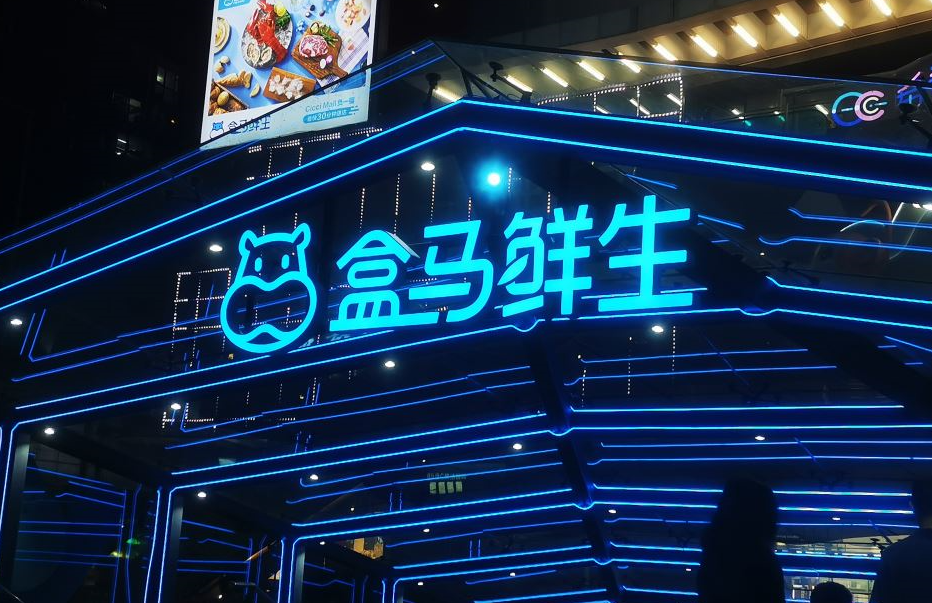
Core Viewpoint - Hema is shifting its focus to its main business formats, Hema Fresh and community discount stores, while closing its membership stores, indicating a strategic realignment to enhance growth and profitability [1][3][4]. Group 1: Business Strategy - Hema plans to open nearly 100 new Hema Fresh stores and enter over 50 new cities in the current fiscal year, demonstrating confidence in the domestic consumption market [1]. - The company has achieved profitability for the first time in the last fiscal year, with a GMV of 750 billion yuan, ranking third among supermarkets in China [3][4]. - Hema's CEO, Yan Xiaolei, has set a target for GMV to reach 100 billion yuan within three years, focusing on Hema Fresh and Hema NB as core business formats [4]. Group 2: Membership Store Closure - Hema has decided to close all membership stores, which were previously seen as a secondary growth avenue, to concentrate on its main business lines [3]. - The closure of membership stores is part of a proactive business adjustment strategy that began earlier in the year [3]. - Customer service representatives confirmed that membership benefits will still be available at regular Hema Fresh stores, ensuring continuity for existing members [3]. Group 3: Market Expansion and Collaboration - Hema is leveraging Alibaba's consumer platform to expand its customer base, including a new initiative that allows Taobao 88VIP members to access Hema membership benefits [5]. - The integration with Taobao has led to a significant increase in membership growth, indicating a successful collaboration [5]. - Hema has also appeared prominently on the homepage of Taobao's flash purchase section, enhancing its visibility and customer reach [6].
盒马宣布:再开近100家!
证券时报· 2025-08-07 09:12
Core Viewpoint - Hema is shifting its focus to its main business formats, Hema Fresh and Hema Neighbor Business, while closing its membership stores, which were previously seen as a second growth curve. The company aims to open nearly 100 new Hema Fresh stores in the upcoming fiscal year and is optimistic about the domestic consumption market [2][3][5]. Group 1: Business Strategy - Hema Fresh has over 420 stores as of March 31, 2025, and ranks third in China's supermarket sector with a GMV of 75 billion yuan, following Walmart China and RT-Mart [5]. - The company has achieved its first annual profit in the last fiscal year, indicating a more stable and rapid development due to strategic focus [5][6]. - Hema's CEO, Yan Xiaolei, has set a target for the company to reach a GMV of 100 billion yuan within three years [6]. Group 2: Store Operations - Hema is closing its X membership stores, which were intended to compete with Costco, as part of a strategic adjustment to concentrate on its core business formats [3][5]. - The closure of membership stores is a proactive business adjustment that began earlier in the year, with the company emphasizing that Hema Fresh stores will continue to operate [5][6]. Group 3: Market Expansion - Hema is leveraging Alibaba's consumer platform to expand its customer base, including a recent collaboration with Taobao 88VIP to offer Hema X membership experience cards [7]. - Hema has also appeared prominently on Taobao's homepage, enhancing its visibility and driving more traffic to its stores [8].