
中成药集采

Search documents
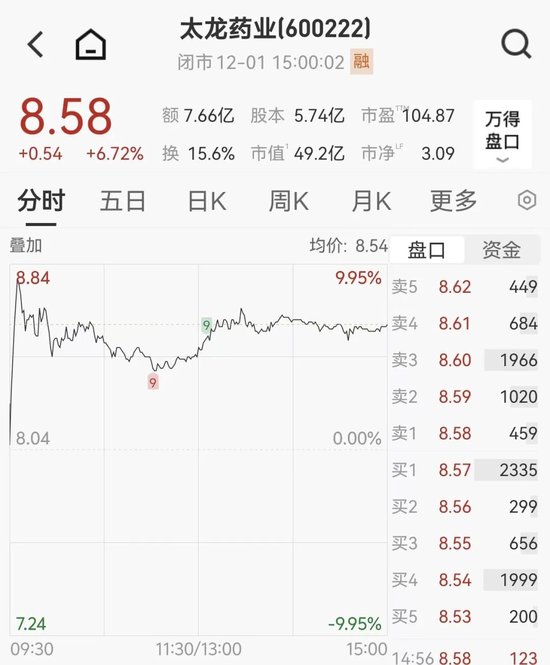
盘中涨停!太龙药业控制权拟变更,明起停牌
Zhong Guo Zheng Quan Bao· 2025-12-01 14:53
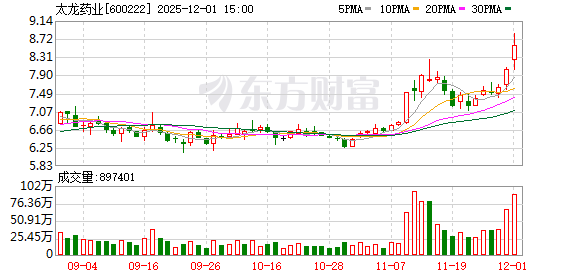
Core Viewpoint - TaLong Pharmaceutical is undergoing a potential change in control as its major shareholder, Zhengzhou TaiRong Industrial Investment Co., Ltd., is planning to transfer shares, leading to a suspension of trading starting December 2, 2023 [1][2]. Group 1: Shareholder Changes - Zhengzhou TaiRong Industrial Investment Co., Ltd. currently holds 82.44 million shares, accounting for approximately 14.37% of TaLong Pharmaceutical, making it the largest shareholder [4]. - The actual controller of TaLong Pharmaceutical is the Zhengzhou High-tech Zone Management Committee [4]. - The share transfer was previously completed on January 24, 2022, at a price of 9.7 yuan per share, totaling around 800 million yuan [4]. Group 2: Business Overview - TaLong Pharmaceutical's main business includes drug manufacturing and research services, focusing on traditional Chinese medicine, CXO, and health sectors [5]. - The company reported a revenue of 1.187 billion yuan for the first three quarters of 2025, a year-on-year decrease of 11.47%, and a net profit of 25.3255 million yuan, down 12.36% [5]. - The decline in revenue is attributed to the ongoing standardization work for its main products in the national collection of traditional Chinese medicine, which has not yet fully covered the market [5]. Group 3: Future Strategies - The company is working on the standardization of products selected for the national collection, with plans to manage inventory effectively during the peak sales season for respiratory medications in the fourth quarter [6]. - TaLong Pharmaceutical aims to enhance operational efficiency and expand market share by improving supply chain management and controlling raw material costs [6].


盘中涨停!这家公司控制权拟变更,明起停牌
Zhong Guo Zheng Quan Bao· 2025-12-01 14:45
Core Viewpoint - Tai Long Pharmaceutical (600222) is undergoing a potential change in control due to the share transfer plan by its controlling shareholder, Zhengzhou Tai Rong Industrial Investment Co., Ltd. [1] Group 1: Share Transfer and Control Change - Zhengzhou Tai Rong Industrial Investment Co., Ltd. is planning to transfer shares, which may lead to a change in the company's control [1] - The stock of Tai Long Pharmaceutical was suspended from trading starting December 2, with an expected suspension period of no more than two trading days [1] - As of September 30, 2025, Tai Rong holds 82.44 million shares, accounting for approximately 14.37% of the company, making it the largest shareholder [1] Group 2: Financial Performance - For the first three quarters of 2025, Tai Long Pharmaceutical reported revenue of 1.187 billion yuan, a year-on-year decrease of 11.47%, and a net profit attributable to shareholders of 25.33 million yuan, down 12.36% year-on-year [2] - The decline in revenue is attributed to the company's main products participating in the national collection of traditional Chinese medicine, which has not yet fully covered the bidding work [2] Group 3: Business Operations and Strategy - Tai Long Pharmaceutical's main business includes drug manufacturing and research services, focusing on traditional Chinese medicine, drug formulations, and drug circulation [2] - The company aims to enhance its capabilities in funding, resources, and industrial integration through Tai Rong, promoting strategic development in traditional Chinese medicine, CXO, and health sectors [2] - The company is currently advancing the bidding work for selected products in the national collection of traditional Chinese medicine, with plans to manage inventory and supply chain effectively during the peak sales season for respiratory medications [3]
盘中涨停!这家公司控制权拟变更 明起停牌
Zhong Guo Zheng Quan Bao· 2025-12-01 14:44
Core Viewpoint - TaLong Pharmaceutical is undergoing a potential change in control due to the share transfer plan by its controlling shareholder, Zhengzhou TaiRong Industrial Investment Co., Ltd. [2] Group 1: Share Transfer and Control Change - Zhengzhou TaiRong Industrial Investment Co., Ltd. is planning to transfer shares, which may lead to a change in the company's control [2] - As of September 30, 2025, TaiRong holds 82.44 million shares, accounting for approximately 14.37% of the total shares, making it the largest shareholder [2] - The actual controller of TaLong Pharmaceutical is the Zhengzhou High-tech Zone Management Committee [2] Group 2: Financial Performance - For the first three quarters of 2025, TaLong Pharmaceutical reported revenue of 1.187 billion yuan, a year-on-year decrease of 11.47% [3] - The net profit attributable to the parent company for the same period was 25.3255 million yuan, down 12.36% year-on-year [3] - The decline in revenue is attributed to the ongoing standardization work for the company's main products in the national Chinese medicine procurement, which has not yet fully covered the market [3] Group 3: Business Operations and Strategy - TaLong Pharmaceutical's main business includes drug manufacturing and research services, focusing on Chinese medicine oral preparations and covering various therapeutic areas [3] - The company is actively working on the national Chinese medicine procurement process, with plans to manage inventory and supply chain effectively during the peak sales season for respiratory medications [4] - Strategies include enhancing supply chain management, controlling raw material costs, and expanding market share through multi-channel cooperation [4]
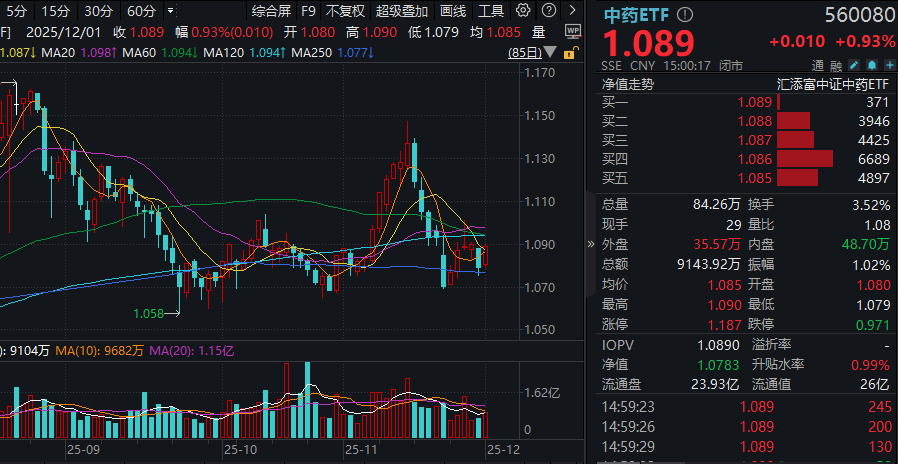
流感进入高峰期,抗流感中药销量大增!以岭药业中药创新药首发!规模领先的中药ETF(560080)放量收涨近1%,最新单日“吸金”超2400万!
Sou Hu Cai Jing· 2025-12-01 09:50
Group 1 - The core viewpoint of the news highlights the active performance of the traditional Chinese medicine (TCM) sector, particularly in the context of the flu season, with the TCM ETF (560080) rising nearly 1% and experiencing a significant increase in trading volume [1][3] - Recent data from the CDC indicates that the positive rate of flu virus tests in emergency departments nationwide has approached 45%, with some regions experiencing high levels of flu activity, leading to a surge in sales of cold-related medications [3][10] - The TCM ETF (560080) has seen a net inflow of over 24 million yuan as of November 28, with its latest scale reaching 2.581 billion yuan, leading its peers in the same category [1][3] Group 2 - The performance of individual stocks within the TCM ETF has been notable, with several flu-related stocks experiencing significant gains, such as Guangdong Wannianqing hitting the daily limit and Tai Long Pharmaceutical rising over 6% [3][4] - The TCM ETF's index has a TTM price-to-earnings ratio of 24.86, indicating it is cheaper than 79% of the time over the past decade, suggesting a favorable valuation for potential investment [5] - The TCM index has shown negative returns year-to-date, with a decline of 2.24% in 2023, and a historical trend of alternating between gains and losses over the past several years [7][8] Group 3 - The TCM industry is expected to see a short-term easing of pressure due to inventory clearance, with a positive outlook for demand recovery towards the end of the year [10] - Recent price governance initiatives across various regions aim to create a more unified and competitive market for TCM products, focusing on high-priced traditional Chinese medicines [10][11] - The ongoing price governance and centralized procurement processes are likely to reshape competition in the industry, favoring companies with strong clinical value, cost control, and market coverage capabilities [11]

多地启动中成药价格治理,供给侧改革推动行业竞争要素重构
Xiangcai Securities· 2025-11-30 12:33
Investment Rating - The industry rating is maintained at "Overweight" [8] Core Views - The market performance of the traditional Chinese medicine (TCM) sector showed a slight increase of 1.29%, which is the smallest among secondary sub-sectors [1] - The price governance of Chinese patent medicines is being actively implemented across multiple regions, aiming to create a unified and competitive drug market [4][5] - The valuation metrics for the TCM sector indicate a PE (ttm) of 27.72X and a PB (lf) of 2.33X, with both metrics showing slight increases compared to the previous week [2] Market Performance - The TCM sector reported a market index of 6501.99 points, reflecting a 1.29% increase over the last week [1] - The overall pharmaceutical and biological sector index rose to 8430.03 points, with a 2.67% increase [1] Valuation Metrics - The TCM sector's PE (ttm) is at 27.72X, up by 0.36X week-on-week, with a one-year maximum of 30.26X and a minimum of 24.72X [2] - The PB (lf) stands at 2.33X, increasing by 0.02X from the previous week, with a one-year maximum of 2.54X and a minimum of 2.17X [2] Supply Chain Insights - The market for TCM raw materials has shown signs of recovery, with a price index of 225.55 points, reflecting a 0.4% increase from the previous week [3] - The market sentiment for TCM raw materials is improving, with increased foot traffic and positive investment sentiment [3] Policy and Regulatory Environment - Multiple regions have initiated price governance for Chinese patent medicines, focusing on high-priced products with significant price discrepancies [4][5] - The ongoing supply-side reforms are expected to reshape competitive factors within the industry, with a shift from channel-driven to value and cost-driven competition [5] Investment Recommendations - The report suggests focusing on three main investment themes: price governance, consumption recovery, and state-owned enterprise reform [11] - Specific recommendations include companies with strong R&D capabilities, unique products, and those less affected by centralized procurement [12]


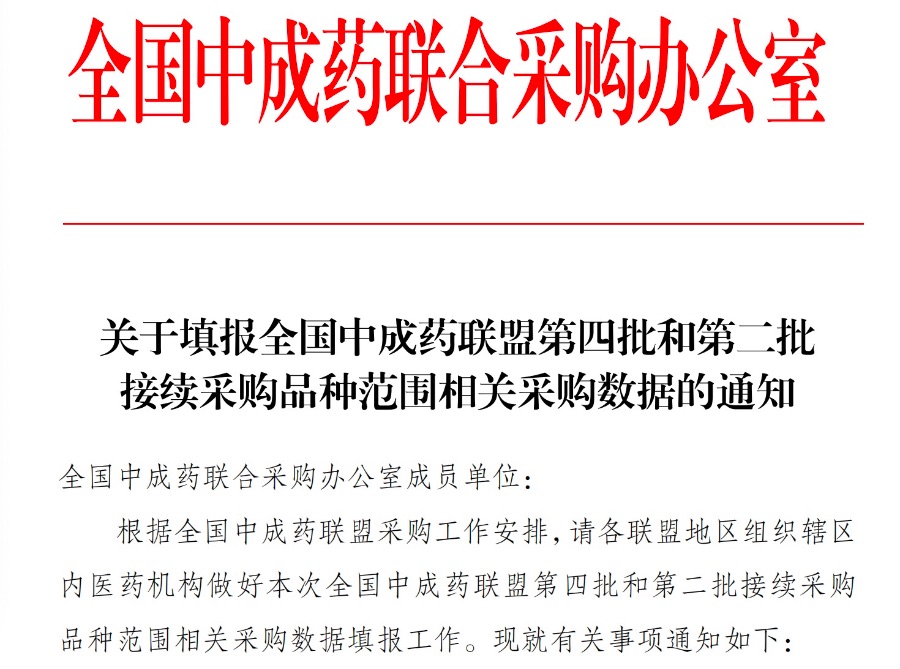
第四批中成药集采或将到来,90个药品面临价格厮杀
21世纪经济报道· 2025-11-06 10:14
Core Viewpoint - The article discusses the upcoming fourth batch of traditional Chinese medicine (TCM) procurement, highlighting the challenges and changes in the procurement process, including the inclusion of unique products and OTC varieties, as well as the complexities of pricing and quality evaluation in TCM procurement [4][11][12]. Group 1: Procurement Details - The fourth batch of TCM procurement will involve 90 drugs divided into 28 procurement groups, which is an increase in the number of groups compared to previous batches [6]. - The previous batches involved 17 groups with 76 drugs, 16 groups with 42 drugs, and 20 groups with 95 drugs, indicating a trend of increasing complexity in the procurement process [6]. - The procurement will officially start on November 10, with data submission required by November 21 [4]. Group 2: Unique Products and Challenges - The current procurement includes several unique products, such as Yindan Xinnao Tong soft capsules and Yinxin Ertianshu injection, which have faced challenges in previous procurement rounds due to high concentration and pricing difficulties [8][11]. - The high concentration of unique products in TCM leads to challenges in competitive pricing, as many unique products lack substitutes, making it difficult for companies to lower prices [8][12]. Group 3: Quality and Pricing Issues - TCM procurement faces difficulties in achieving complete coverage, competitive pricing, and quality evaluation due to the vast number of products and significant price discrepancies among similar products [11][12]. - For instance, the price of Chuanxinlian tablets varies significantly, with the lowest price at 0.072 yuan and the highest at 1.09 yuan, a difference of over 15 times [12]. - The article emphasizes the need for a comprehensive quality evaluation system for TCM, which includes production quality, clinical recognition, and safety monitoring to ensure consistent quality across different manufacturers [13].

第四批中成药集采或将到来,90个药品面临价格厮杀
2 1 Shi Ji Jing Ji Bao Dao· 2025-11-06 07:45
Core Insights - The fourth batch of traditional Chinese medicine (TCM) centralized procurement is set to begin, following the successful conclusion of the 11th batch of national drug procurement at the end of October [1][4] - A notification regarding the procurement data for the fourth batch has been circulated, confirming the authenticity of the document, although the final version is still pending official release [4][5] - The procurement will involve 90 drugs across 28 procurement groups, primarily focusing on oral medications, with some injections and external medications included [4][5] Procurement Details - The procurement process will start with data submission from medical institutions by November 21, 2023, indicating a structured timeline for the upcoming procurement [4][5] - The list of drugs includes unique products such as Yindan Xinnao Tong soft capsules and Ginkgo biloba injections, as well as several OTC (over-the-counter) products [4][5][6] - Compared to previous batches, the number of procurement groups has increased, with the fourth batch involving more groups than the first and second batches, but similar to the third batch [5][6] Challenges in TCM Procurement - The complexity of TCM procurement includes difficulties in quality evaluation, pricing negotiations, and competition, which pose significant challenges [5][7] - The unique nature of TCM products, including many that have been recently launched, complicates the procurement process, as new drugs are not typically included in chemical drug procurement [5][6] - The high concentration of unique products in the TCM market leads to challenges in price negotiations, as many products lack substitutes, reducing the incentive for companies to lower prices [6][7] Quality Control Measures - A comprehensive quality evaluation system is proposed to ensure that selected TCM products meet safety and efficacy standards, addressing the lack of clear quality evaluation criteria [8][9] - The procurement process will implement strict quality control measures, including a "one-vote veto" system for products failing quality checks, and a more rigorous monitoring mechanism for selected drugs [8][9] - The ongoing optimization of procurement rules is expected to accelerate market reshuffling, encouraging companies to focus on product quality and efficacy rather than marketing [9]
沃华医药依赖营销驱动销售费占营收52% 赵丙贤离婚案耗时16年“分手费”5.4亿
Chang Jiang Shang Bao· 2025-11-06 00:03
Core Viewpoint - The court ruling on the property division between Zhao Bingxian and his ex-wife Lu Juan has significant implications for Wohuayi Pharmaceutical, leading to a change in the actual controller of the company and raising concerns about its operational stability and financial performance [1][2][3]. Group 1: Legal and Ownership Changes - The Beijing Third Intermediate People's Court upheld the first-instance ruling, mandating an equal division of shares in Zhongzheng Wanrong Investment Group between Zhao Bingxian and Lu Juan, which affects the control of Wohuayi Pharmaceutical [2][3]. - Following the ruling, Zhao Bingxian's ownership in Zhongzheng Wanrong Investment Group decreased from 80% to 50%, resulting in the company having no actual controller [2][3]. - Despite the legal changes, Zhao Bingxian continues to hold key positions within both Zhongzheng Wanrong Investment Group and Wohuayi Pharmaceutical, ensuring that business operations remain unaffected [2][3]. Group 2: Financial Performance - Wohuayi Pharmaceutical's total market value reached 3.584 billion yuan, with Zhao Bingxian's "divorce settlement" amounting to 540 million yuan based on the court's decision [1][2]. - The company has experienced a decline in revenue and net profit over the past four years, with revenues of 943 million yuan, 1.015 billion yuan, 910 million yuan, and 764 million yuan from 2021 to 2024, reflecting year-on-year changes of -6.30%, 7.65%, -10.38%, and -16.02% respectively [4]. - The net profit attributable to shareholders has also decreased significantly, with figures of 163 million yuan, 107 million yuan, 58.77 million yuan, and 36.40 million yuan during the same period, showing declines of 8.66%, 34.28%, 45.27%, and 38.05% [4]. Group 3: Research and Development - Wohuayi Pharmaceutical has not introduced any new drug approvals or unique products in over five years, relying on existing products for revenue generation [7]. - The company reported a sales expense to revenue ratio of approximately 52% in the first three quarters of 2025, which is about 12 times its research and development expenses [9]. - Sales expenses from 2021 to 2024 were 422 million yuan, 521 million yuan, 492 million yuan, and 389 million yuan, with a notable increase in 2025's first three quarters to 322 million yuan, reflecting a year-on-year growth of 6.47% [8][9].

市场波动加剧,资金布局“补涨”!中药ETF(560080)连续16日“吸金”超6亿元,最新规模首超30亿元!机构:看好中药下半年经营改善
Xin Lang Cai Jing· 2025-10-23 07:42
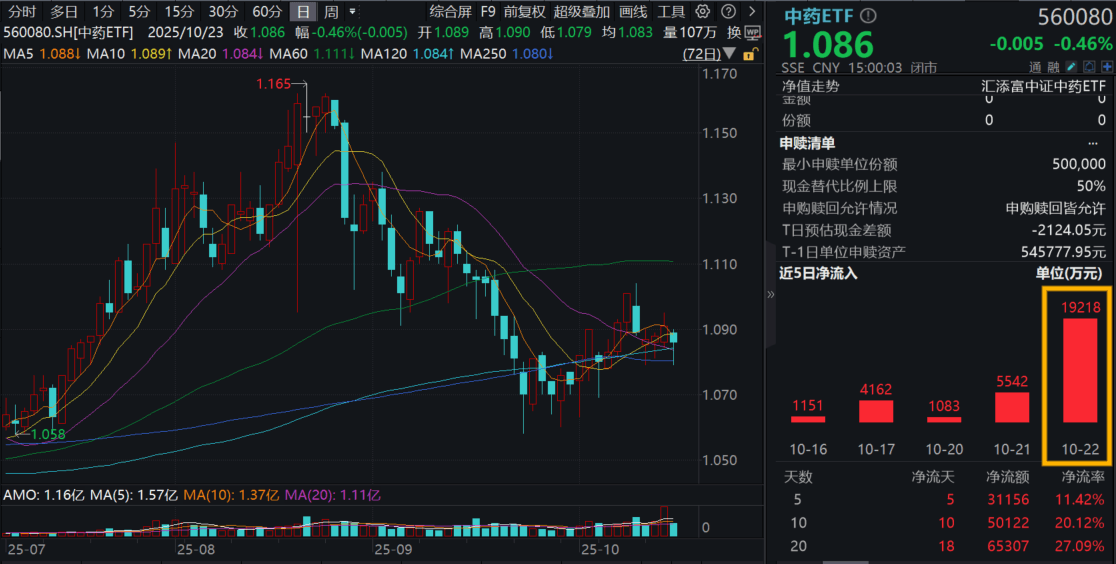
Core Viewpoint - The Chinese medicine sector is experiencing a mixed performance, with the Chinese medicine ETF (560080) showing significant net inflows and a growing fund size, despite the overall index performance being negative for the year [1][4]. Group 1: Market Performance - The Chinese medicine ETF (560080) saw a slight decline of 0.46% with a total trading volume of 116 million yuan on the day [1]. - The ETF has attracted a net inflow of 192 million yuan yesterday, ranking it among the top 9 in the market, and has seen a total net inflow exceeding 600 million yuan over the past 16 days [1]. - The Chinese medicine index has a year-to-date return of -2.53%, with a decline of 8.13% projected for 2024 [3]. Group 2: Valuation Metrics - As of October 22, the TTM price-to-earnings (PE) ratio of the Chinese medicine ETF (560080) is 25.22, indicating that the index is cheaper than 77% of the time over the past decade [4]. - The current PE ratio is close to the calculated opportunity value, suggesting a favorable valuation for potential investment [4]. Group 3: Company Performance - The component stocks of the Chinese medicine ETF exhibited mixed results, with companies like Yunnan Baiyao and Pianzaihuang showing slight increases, while others like Zhongsheng Pharmaceutical and Darentang experienced declines exceeding 4% [5]. - The performance of major brands in the OTC market is expected to improve, with companies like Huazhong Sanjiu, Dong'e Ejiao, and Yunnan Baiyao being highlighted as stable performers [8]. Group 4: Industry Outlook - The Chinese medicine sector is under short-term pressure due to various factors, but there is optimism for operational improvements in the second half of the year [7]. - The market is closely monitoring the impact of external policies, including price governance and the collection of traditional Chinese medicine, which may influence future performance [7][9]. - The industry is expected to benefit from a recovery in consumer demand, driven by macroeconomic improvements and an aging population [10].


中药行业深度报告解读
2025-10-19 15:58
Summary of the Chinese Medicine Industry Conference Call Industry Overview - The conference call focused on the Chinese medicine industry, particularly the impact of price reductions and procurement policies on listed companies and market dynamics [1][3][4]. Key Points and Arguments 1. **Price Reduction Impact**: The third round of centralized procurement for traditional Chinese medicine has resulted in an average price reduction of 63%. However, the impact on key products of listed companies is limited [1][3]. 2. **Future Procurement Policies**: The upcoming revision of the essential drug list, expected by the end of 2025 or in 2026, may include more traditional Chinese medicine products, potentially accelerating market growth [1][5]. 3. **Raw Material Price Trends**: Prices of traditional Chinese medicinal materials have been rising since November 2022 but are expected to return to previous levels by the second half of 2024. This fluctuation may affect gross margins for downstream companies [1][6]. 4. **Inventory and Demand**: Inventory levels for cold and respiratory traditional Chinese medicine products have been largely cleared, indicating that future shipments will depend more on terminal demand [1][7]. 5. **Mergers and Acquisitions**: The industry is experiencing frequent mergers and acquisitions, with companies like China Resources Group's Dong'e Ejiao and Jiangzhong Pharmaceutical actively pursuing consolidation to enhance industry concentration [1][8]. 6. **Hospital Revenue Trends**: Revenue from hospital-based traditional Chinese medicine has been declining, but the rate of decline is slowing, with profits performing better than revenues [2][13]. 7. **Investment Opportunities**: Companies with high R&D investments, such as Kangyuan Pharmaceutical and Tian Shi Li, are expected to benefit from innovative products contributing to revenue growth [1][13]. 8. **Dividend Policies**: Listed companies in the traditional Chinese medicine sector generally have high dividend payout ratios, with some exceeding 80%, indicating strong cash flow and potential for sustained high dividends [3][17]. 9. **Risks and Challenges**: The industry faces risks related to the potential underperformance of the new essential drug list, declining raw material prices affecting profitability, and intensified competition altering market dynamics [1][19]. Additional Important Insights - **Focus on Unique Products**: Companies with unique insurance products, such as Jiangzhong Pharmaceutical and Darentang, are expected to maintain a favorable competitive landscape and advantageous payment conditions [3][14]. - **Emerging Companies**: Companies like Tai Chi Group and Yiling Pharmaceutical, which are showing signs of recovery, are worth monitoring as they navigate through inventory adjustments and market demand shifts [1][18]. - **Government Reforms**: The potential for new five-year strategic plans for state-owned enterprises may provide fresh momentum for the industry, particularly for companies like Dong'e Ejiao and Jiangzhong Pharmaceutical [1][10][11]. This summary encapsulates the critical insights from the conference call, highlighting the current state and future outlook of the Chinese medicine industry, along with potential investment opportunities and risks.
