
中蒙俄经济走廊

Search documents
哈尔滨国际陆港集结中心正式启用运营
Jing Ji Guan Cha Bao· 2025-09-24 01:53
Core Viewpoint - The Harbin International Land Port Assembly Center has officially commenced operations, enhancing logistics capabilities and supporting the Belt and Road Initiative as well as the China-Mongolia-Russia Economic Corridor [1] Group 1: Infrastructure Development - The Harbin International Land Port is designed as a multi-modal international logistics hub integrating road, rail, water, and air transport [1] - The center's launch is a strategic move to serve national opening-up policies and is seen as a powerful engine for the comprehensive revitalization of Heilongjiang Province [1] Group 2: Operational Models - The center will utilize the "TIR+" operational model to facilitate two-way trade through road ports such as Heihe and Suifenhe [1] - Future operational expansions will include various models such as "TIR+ general trade import and export," "TIR+ 9610," "TIR+ cold chain," and "TIR+ container" [1] Group 3: Regional Significance - Harbin is positioned as a key city for cooperation with Russia and an important hub in Northeast Asia, making the development of a high-capacity international land port essential [1] - The new logistics hub is expected to strengthen Heilongjiang's role as a gateway for northern opening-up initiatives [1]
伊金霍洛旗:打造绿色低碳智慧物流新标杆
Yang Guang Wang· 2025-09-22 02:22
Core Insights - The Erdos Airport Logistics Distribution Center is a key component of the Erdos Airport Logistics Park, focusing on building a green, low-carbon, and intelligent logistics system supported by digital supply chain platforms [1][3] Group 1: Infrastructure and Investment - The logistics center covers a total area of 104,000 square meters with an investment of 790 million yuan, featuring eight standardized warehouses and supporting facilities [1] - The center incorporates green technologies, including a rooftop CdTe photovoltaic system with a total capacity of 1.36 MW, and utilizes graphene electric heating and pure electric delivery vehicles [1] Group 2: Logistics Strategy and Operations - The logistics park aims to enhance logistics efficiency by integrating dispersed logistics resources and attracting enterprises in five core sectors: new energy equipment logistics, mining spare parts logistics, complete vehicle logistics, express logistics, and cold chain logistics [2][4] - The logistics hub is designed to facilitate a "gathering first, then distributing" model to achieve economies of scale [2] Group 3: Regional Connectivity and Economic Impact - The logistics park is strategically located at the intersection of major transportation networks, enhancing its role as a logistics hub connecting various regions, including the Beijing-Tianjin-Hebei, Yangtze River Delta, and Pearl River Delta [2][3] - The park is positioned as a "gateway node" for Erdos to connect with international markets, contributing to regional economic growth and serving as a logistics hub for the Belt and Road Initiative [3] Group 4: Industry Collaboration and Future Development - The logistics park has successfully attracted leading companies in various sectors, including Envision Energy and Chery Automobile, enhancing its operational capabilities [4] - Future plans include accelerating the construction of a national-level airport logistics hub in the western region, driven by leading enterprises and technological innovation [4]



中蒙俄经济走廊建设迈出新步伐
Jing Ji Ri Bao· 2025-09-18 22:04
Core Insights - The meeting between the leaders of China, Russia, and Mongolia highlights the steady development and tangible results of trilateral cooperation, with a focus on high-quality development of the China-Mongolia-Russia Economic Corridor [1] Trade and Economic Cooperation - Bilateral and multilateral trade between China, Russia, and Mongolia has shown significant growth, with China-Russia trade increasing from $69.5 billion in 2016 to $244.8 billion in 2024, an annual growth rate of 17.0% [1] - In 2024, China-Mongolia trade is projected to reach $18.62 billion, a year-on-year increase of 10.1%, surpassing the overall growth rate of China's foreign trade by 5 percentage points [1] - China remains the largest trading partner for both Russia and Mongolia, with trade accounting for over 30% of Russia's total foreign trade and nearly 70% of Mongolia's total foreign trade [1] Investment Trends - Chinese investment in Russia remains stable at over $10 billion, covering traditional sectors such as mining, agriculture, and manufacturing, with notable growth in research and technology services [2] - In Mongolia, Chinese foreign investment stock reached $5.44 billion, representing 16.3% of the total foreign investment in the country, primarily concentrated in the mining sector [2] Infrastructure Development - The China-Mongolia-Russia Economic Corridor has made significant progress in infrastructure connectivity, with national-level ports along the corridor accounting for about one-third of the total in the country [2] - By 2024, the cargo volume at key ports like Manzhouli and Erenhot is expected to exceed 45 million tons, with over 7,700 trains operating on the China-Europe Railway Express [2] Open Platforms and Future Prospects - Various open platforms are being established to enhance cooperation, including the China-Mongolia Erenhot-Zamyn-Uud Economic Cooperation Zone and multiple customs special supervision areas [3] - The potential for cooperation in infrastructure, energy development, modern agriculture, cross-border tourism, and digital economy is significant, with a call for deeper strategic alignment and policy communication among the three countries [3]
通过验收!阿尔山公路口岸成为常年开放的国际性陆路口岸
Yang Shi Xin Wen· 2025-09-18 06:06
Core Points - The Alshan Highway Port in Inner Mongolia has passed a joint acceptance inspection, confirming its readiness for expanded opening [1] - The port is a key node in the "Belt and Road" initiative and the China-Mongolia-Russia Economic Corridor, facilitating trade between China and Mongolia [1] Summary by Sections Port Expansion and Inspection - A joint acceptance group from national departments conducted an on-site inspection of the Alshan Highway Port on September 17, concluding that it meets the necessary conditions for expanded opening [1] - The port is located 45 kilometers northwest of Arxan City, along the China-Mongolia border, and corresponds to the Mongolian port of Songbei'er [1] Trade and Economic Impact - The port was included in the national port opening annual review plan for March 2024, with approval for expansion granted by the State Council in July 2024 [1] - In 2024, the cumulative import and export trade volume at the port is expected to exceed 130 million yuan, a 75-fold increase year-on-year [1] - Cross-border tourism is projected to surpass 10,000 visitors, an increase of 8.7 times, and cross-border vehicle traffic is expected to exceed 1,000 trips, a growth of 2.5 times [1] Operational Changes - Following the acceptance, the port's opening period will extend from 8 months a year to year-round operation, making it the fourth international land port in Inner Mongolia to operate year-round [1] - This change is expected to significantly enhance trade and cooperation between China and Mongolia, marking a new stage in regional openness and collaboration [1]
阿尔山公路口岸扩大开放工作通过国家验收将成为内蒙古第4个常年开放的国际性陆路口岸
Nei Meng Gu Ri Bao· 2025-09-18 01:19
Core Insights - The Alshan Road Port has passed the national acceptance inspection, confirming its readiness for expanded opening, which aligns with national requirements [1][2] - The port is a crucial land route connecting China and Mongolia, facilitating trade, tourism, and regional economic development [1] - Following the acceptance, the port's opening period will extend from 8 months to year-round, marking it as the fourth international land port in Inner Mongolia to operate year-round [2] Summary by Sections Port Expansion and Infrastructure - The Alshan Road Port is located 45 kilometers northwest of Arxan City, serving as a key land port between China and Mongolia [1] - Inner Mongolia has invested nearly 700 million yuan in the port's construction, improving infrastructure and service capabilities [1] Trade and Economic Impact - In 2024, the port's cumulative import and export trade volume is expected to exceed 130 million yuan, a 75-fold increase year-on-year [2] - Cross-border tourism is projected to surpass 10,000 visitors, an increase of 8.7 times, and cross-border vehicle traffic is expected to exceed 1,000 trips, growing by 2.5 times [2] Regional Cooperation - The port's year-round operation will enhance trade and cooperation between China and Mongolia, marking a significant step in the opening up of the eastern Mongolia region [2]
提前49天突破2000万吨!策克口岸煤炭进口稳中向好
Yang Guang Wang· 2025-09-10 08:33
Core Insights - The coal import volume at the Ceke Port in Inner Mongolia's Alxa League has exceeded 20 million tons as of September 8, 2024, achieving this milestone 49 days earlier than the previous year, with a year-on-year growth of 18.5% [1] Group 1: Import Volume and Efficiency - The increase in coal import volume is attributed to improved customs clearance efficiency and innovative customs service models [1] - New services such as "enterprise coordinators" and "one-stop service packages" have been implemented to address urgent business needs, transforming the process from multiple visits to a "zero-run" approach [1] - The upgraded government cloud system has significantly enhanced vehicle recognition and customs clearance efficiency, working in conjunction with new transportation modes like AGV unmanned vehicles and smart heavy trucks [1] Group 2: Customs Oversight and Environmental Protection - The Ejin Customs has successfully supervised the return of 836.45 tons of non-compliant imported coal, valued at nearly 240,000 yuan, marking the first return operation of 2025 [4] - This action reflects the customs' commitment to comprehensive supervision and the implementation of green development principles [4] - The Ceke Port plays a crucial role in the Belt and Road Initiative and the China-Mongolia-Russia Economic Corridor, ensuring the smooth operation of the energy supply chain while safeguarding ecological security [6]

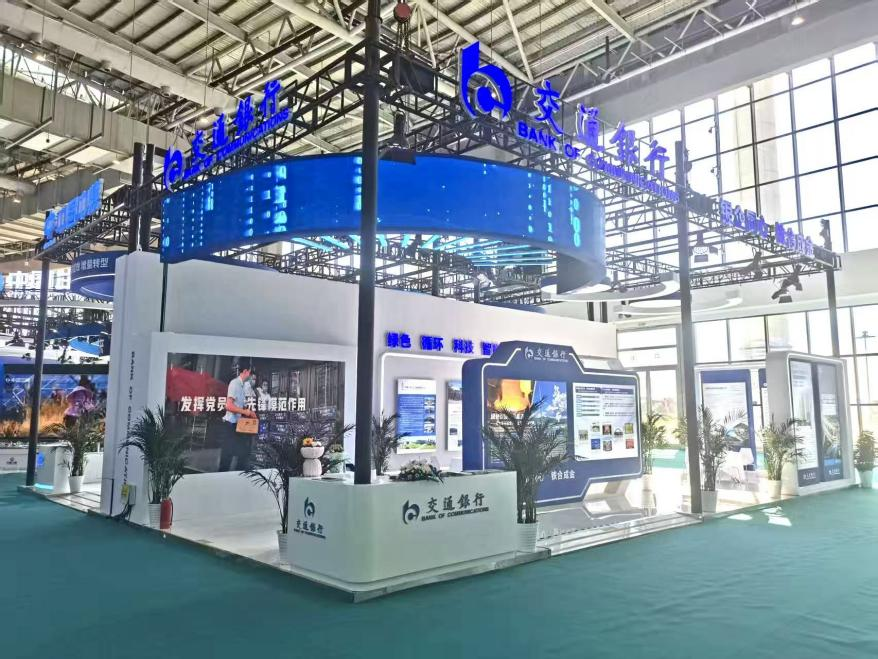
聚焦中蒙博览会 交行内蒙古分行护航区域协同与高质量发展
Zhong Guo Jin Rong Xin Xi Wang· 2025-08-28 09:18
Group 1 - The fifth China-Mongolia Expo, themed "Deepening Mutual Cooperation and Promoting Win-Win Cooperation," has commenced in Hohhot, Inner Mongolia, focusing on the Belt and Road Initiative and the China-Mongolia-Russia Economic Corridor [1] - The expo aims to enhance economic and trade cooperation between China and Mongolia, while also expanding practical collaboration with Northeast Asia, Central Asia, Southeast Asia, and countries like Uruguay and Kenya [1] - The Bank of Communications Inner Mongolia Branch has actively participated in the expo for two consecutive years, leveraging financial power to support regional cooperation and local economic development [1][3] Group 2 - The Bank of Communications Inner Mongolia Branch views participation in the China-Mongolia International Expo as a key strategy to align with market demands and national strategies [3] - The bank focuses on key development areas such as cross-border trade, infrastructure construction, new energy development, and agricultural modernization, providing tailored financial services to meet diverse corporate needs [3] - In 2023, the bank has issued over 35 billion yuan in various loans, primarily directed towards major project construction and leading enterprise development in Inner Mongolia [3] Group 3 - As Inner Mongolia continues to develop as a crucial northern opening hub, the Bank of Communications Inner Mongolia Branch plans to leverage the expo to enhance cross-border and industrial financial services [4] - The bank aims to deepen communication and collaboration with domestic and international enterprises, continuously innovating financial products and service models [4] - The goal is to contribute significantly to the modernization of Inner Mongolia through enhanced financial capabilities [4]

第五届中国—蒙古国博览会 深化互利合作 推进合作共赢
Ren Min Ri Bao· 2025-08-24 22:03
Core Insights - The China-Mongolia Expo has become a significant international platform for enhancing economic and trade partnerships between China and Mongolia since its inception in 2015, with four successful editions held so far [1] - The fifth edition of the expo is scheduled to take place from August 25 to 29, 2025, in Hohhot, Inner Mongolia, co-hosted by the Ministry of Commerce of the People's Republic of China, the People's Government of Inner Mongolia Autonomous Region, and the Ministry of Food, Agriculture, and Light Industry of Mongolia [1] - The theme for this year's expo is "Deepening Mutual Cooperation to Promote Win-Win Cooperation," featuring four main components: high-level exchanges, economic and trade negotiations, cultural exchanges, and exhibitions [1] Industry and Event Details - The expo aims to create a new platform for China's northern opening, a new link for regional industrial and supply chain cooperation, and a new support point for Northeast Asia regional cooperation [1] - The exhibition will focus on achieving breakthroughs in "internationalization, specialization, digitalization, and quality," with a total exhibition area of 43,200 square meters at the Chulu Chuan International Exhibition Center [1] - The expo will include themed exhibitions and product displays, striving to establish a brand exhibition characterized by unique exhibits, effective cooperation, and tangible benefits for the public [1]
二连浩特机场开启航空口岸高质量发展新篇
Zhong Guo Min Hang Wang· 2025-07-10 09:51
Core Viewpoint - The opening of the Erlianhot Airport as an international air port marks a significant milestone in the development of border trade and connectivity between China and Mongolia, enhancing the region's role in national and international economic corridors [1][4][10]. Group 1: Historical Context - Erlianhot is the largest land port for China’s opening to Mongolia and is the closest border city to Ulaanbaatar, Mongolia [4]. - The airport's journey began in 2004, with local efforts to monitor weather conditions for site selection, leading to the establishment of the airport in 2010 [4][5]. - The airport received temporary international flight approval in 2013, facilitating air connections to Ulaanbaatar and other international destinations [4][5]. Group 2: Development Milestones - In 2016, Erlianhot Airport was included in the national port development plan, achieving targets for domestic and international passenger volumes [5]. - By 2019, the airport was officially recognized as a "first-class air port," laying the groundwork for its future international operations [5]. - The airport was formally approved for international operations by the State Council in 2021, with plans for further development and upgrades [5][9]. Group 3: Future Prospects - The airport is set to enter a critical phase of formal international operations by 2025, with ongoing efforts to enhance infrastructure and operational capabilities [9]. - The opening of the international air route has established a new transportation framework, integrating air, rail, and road connections, thus improving regional accessibility [10]. - Erlianhot Airport is positioned as a key gateway for international trade and cooperation, particularly in the context of the Belt and Road Initiative and the China-Mongolia-Russia Economic Corridor [10].
2025中国产业转移发展对接活动(内蒙古)启幕 20个重点项目签约 “含绿量”“含新量”凸显
Shang Hai Zheng Quan Bao· 2025-06-10 18:05
Core Viewpoint - The event held in Inner Mongolia highlights the region's potential for industrial transfer, focusing on green and innovative development across various sectors, including new energy equipment, new materials, and low-altitude economy [1][2]. Group 1: Industrial Development - Inner Mongolia is leveraging its unique resource endowments, particularly in wind and solar energy, to attract industrial transfer and promote green development [2]. - The establishment of the Inner Mongolia Northern Jiaxuan Technology Co., Ltd. aims to create a production base for rare earth permanent magnet motors, with plans to develop a thousand-unit production line and a research center [3]. - The region is expected to generate an output value exceeding 500 billion yuan in new materials, focusing on green alloy materials and aluminum-based new materials [4]. Group 2: Strategic Location and Infrastructure - Inner Mongolia's geographical advantages include connections to Northeast China, Beijing-Tianjin-Hebei, and international markets through multiple ports, enhancing its role as a strategic hub for economic corridors [5]. - The region is positioned as a key player in the "Belt and Road" initiative, with companies like Jiangsu Jiaxuan utilizing Inner Mongolia as a base for expanding into the Mongolian and Russian markets [5]. Group 3: Policy and Environment - The Inner Mongolia government is committed to optimizing the business environment by introducing new policies and support measures to facilitate industrial development and attract investment [7]. - A significant investment fund has been established to support high-quality industrial development, ensuring that companies can benefit from favorable policies [7]. - Continuous improvements in infrastructure and resource allocation are being implemented to meet the needs of enterprises and enhance their operational efficiency [7].
