人工智能基础设施

Search documents
尽管新兴市场外国直接投资普遍下滑,麦肯锡仍将智利作为投资战略要地
Shang Wu Bu Wang Zhan· 2025-10-17 03:23
Core Insights - Despite a global decline in foreign direct investment (FDI), Chile is strategically positioned to attract FDI due to its traditional strengths in minerals and energy sectors [1] - The report highlights a shift in global FDI towards future-oriented industries such as artificial intelligence infrastructure, semiconductors, electric vehicles, and critical minerals, which accounted for 75% of investments since 2022 [1] - Chile's average annual FDI is projected to reach $12 billion between 2022 and 2025, representing a 31% increase compared to the 2015-2019 period, with 91% directed towards energy, mining, and advanced technology sectors, significantly exceeding the global average of 75% [1] - McKinsey suggests that Chile has the potential to evolve from a mere resource exporter to a global provider of energy transition solutions, emphasizing the need to attract more investments to enhance capabilities in refining, advanced manufacturing, and technology services [1] Investment Trends - The global FDI landscape is shifting towards industries that shape the future, with a notable focus on sectors like AI, semiconductors, and electric vehicles [1] - Chile's investment appeal is bolstered by its exports of key minerals such as copper and lithium, alongside the development of renewable energy projects [1] Future Outlook - Chile is positioned to strengthen its role as a regional hub for sustainable mining and clean energy, contingent upon attracting further investments [1] - The emphasis on enhancing capabilities in refining and advanced manufacturing is critical for Chile to solidify its status in the global energy transition [1]
“AI基建潮”蔓延至欧洲,微软签订140亿美元“欧洲AI云大单”,租赁11.6万块英伟达GB300 GPU
美股IPO· 2025-10-15 12:32
Core Insights - Nscale has entered into a significant agreement with Microsoft, potentially worth up to $14 billion, to deploy over 116,000 NVIDIA GB300 chips in the U.S. and Portugal, accelerating global AI infrastructure development [1][3] - Despite market concerns about a potential bubble, Nscale is rapidly emerging due to its high-efficiency AI factories and plans to go public in the second half of next year [1][3] Agreement Details - The new deal includes approximately 104,000 GB300 chips to be deployed in Texas and an additional 12,600 GPUs at the Start Campus data center in Portugal, building on a previous $6.2 billion contract for 52,000 GPUs in Norway [3][5] - The deployment in Portugal is expected to be operational by early 2026, with the data center designed to support over 130 kW cabinet power density to meet advanced AI workload requirements [5] NVIDIA's Role - NVIDIA plays a crucial role as both the chip supplier and a significant investor in Nscale, reflecting its strategy to accelerate the AI ecosystem by investing in its customers [4][9] - NVIDIA's backing has significantly boosted investor confidence in Nscale, leading to a rapid increase in funding and valuation [9] Nscale's Growth and Challenges - Nscale has raised $1.5 billion in new funding within a month, achieving a valuation of approximately $3 billion, despite being only a year old [7] - The CEO of Nscale, Josh Payne, highlighted the high capital expenditure intensity of the business and the ongoing need for financing [8] Market Dynamics - Payne noted that the biggest risk in the current market is not a lack of demand but rather a "power shortage," with nearly all capacity sold out for the next 12 months [9] - The company is expanding its footprint in Europe, particularly in Portugal, which is a leader in renewable energy, with projections showing renewable energy could account for 81% of the country's power consumption by Q1 2025 [12][10] Strategic Partnerships - Nscale is also collaborating with Microsoft to build the largest AI supercomputer in the UK and has formed a joint venture with Aker ASA, indicating its growing influence in the global AI infrastructure sector [12]



AI重磅!两大巨头牵手!
证券时报· 2025-10-04 11:01
Core Viewpoint - A new wave of "AI infrastructure" development is emerging globally, driven by major tech companies and strategic partnerships aimed at enhancing AI capabilities and applications [1][3]. Group 1: Partnerships and Collaborations - Nvidia and Fujitsu have entered into a partnership to develop AI infrastructure in Japan, focusing on various sectors including healthcare and manufacturing, with a goal to establish this by 2030 [2][3]. - OpenAI, Oracle, and SoftBank announced plans to build five new AI data centers in the U.S., with a total investment exceeding $400 billion and a planned power capacity of nearly 7 GW over the next three years [4]. Group 2: Investment and Capacity Expansion - Alibaba is investing 380 billion yuan (approximately $53 billion) over three years to enhance its AI infrastructure, aiming for advancements in superintelligent AI [4]. - Samsung and SK Group are collaborating with OpenAI to increase advanced storage chip supply and expand data center capacity in South Korea, targeting a monthly production capacity of 900,000 DRAM wafers [5]. Group 3: Global AI Infrastructure Trends - The global AI infrastructure development is accelerating, with significant investments from tech giants, indicating that computational power is becoming a core strategic resource in the AI competition [5][6]. - The competition in AI is shifting from "single card performance" to "system-level efficiency," with Chinese companies leveraging cluster construction and open-source ecosystems to gain an edge in AI infrastructure [5].



民生证券:当下AI叙事逻辑仍不变 重点聚焦AI基建侧
Zhi Tong Cai Jing· 2025-09-21 07:28
Group 1 - The current focus of AI infrastructure investment is shifting from cloud vendor spending to AIDC cloud computing centers, with companies like Oracle, Coreweave, Nebius, AppliedGigital, and Iris Energy having a first-mover advantage in GPU cards [1] - Minsheng Securities suggests focusing on AIDC chain companies such as Runze Technology (300442.SZ) and Runjian Co., Ltd. (002929.SZ), as well as optical module companies like Dekoli (688205.SH), Shijia Photon (688313.SH), Zhongji Xuchuang (300308.SZ), Xinyi Sheng (300502.SZ), and Tianfu Communication (300394.SZ) [1] Group 2 - Nvidia is investing £500 million (approximately $683 million) in Nscale, a UK-based company, which will participate in a £11 billion AI infrastructure project [2] - Oracle expects a revenue growth of 14% to 16% year-over-year for Q2 of FY2026, driven by strong cloud performance, with Q1 cloud infrastructure revenue reaching $3.3 billion, a 55% increase [2] - Nebius has secured a significant agreement with Microsoft worth nearly $20 billion, which will provide $17.4 billion to Nebius, with an option for an additional $2 billion in services [3] - Global cloud infrastructure service spending is projected to reach $95.3 billion by Q2 2025, reflecting a 22% year-over-year growth [3] - Microsoft plans to increase its annual AI capital expenditure to $120 billion, up from $88 billion the previous year, while Meta anticipates spending between $66 billion and $72 billion in 2025 for generative AI infrastructure [3] - Google is also increasing its capital expenditure by 13% to $85 billion this year, with further increases expected in 2026 due to strong demand for cloud products and services [3]
科技风起:从昇腾迭代路线图看国产算力发展趋势
Changjiang Securities· 2025-09-19 02:42
Investment Rating - The report suggests a positive outlook for the industry, indicating that the performance of related stocks is expected to outperform the benchmark index over the next 12 months [17]. Core Insights - Huawei's roadmap for AI chips, supernodes, and computing clusters is anticipated to lead a new paradigm in China's AI infrastructure, with supernodes becoming the new norm in AI infrastructure construction [5][11]. - The domestic computing power is constrained by manufacturing processes, but the development of "supernode + cluster" computing solutions is expected to continuously meet computing power demands [5][11]. - The introduction of supernodes is expected to enhance demand and value across multiple computing segments, including increased interconnectivity, liquid cooling value, and the transition from traditional product manufacturers to system solution providers [5][11]. Summary by Sections Event Description - On September 18, 2025, during the Huawei Connect 2025 conference, Huawei announced its AI chip roadmap, including the launch of the Ascend 950PR chip in Q1 2026, the Ascend 950DT chip in Q4 2026, the Ascend 960 chip in Q4 2027, and the Ascend 970 chip in Q4 2028 [8]. Event Commentary - Huawei's recent announcements include the launch of the Atlas 950 SuperPoD and Atlas 960 SuperPoD, supporting 8192 and 15488 Ascend cards respectively, and the introduction of new supernode clusters, Atlas 950 SuperCluster and Atlas 960 SuperCluster, with computing power exceeding 500,000 and reaching one million cards [11]. - The report emphasizes that supernodes are rapidly becoming a new standard in AI infrastructure, with Huawei leveraging its communication capabilities to overcome key bottlenecks and support large model training and inference [11]. - The domestic semiconductor industry is accelerating the iteration of domestic technologies, with improvements in advanced manufacturing processes and increasing localization of supporting equipment and materials [11]. Investment Opportunities - The report suggests focusing on investment opportunities in the following areas: leading domestic AI chip companies like Cambricon, high-end CPU and DCU leaders, supernode server manufacturers such as FiberHome and Digital China, supernode-related partners of Huawei, and suppliers in the advanced semiconductor manufacturing chain [11].
英伟达FY26Q2业绩点评:AI基建CapEx持续增长,中国潜在市场或达500亿美元 | 投研报告
Zhong Guo Neng Yuan Wang· 2025-08-29 01:40
Core Insights - Nvidia's Q2 revenue reached $46.7 billion, a year-over-year increase of 56% and a quarter-over-quarter increase of 6%, surpassing market expectations of $46.06 billion [1][2] - Non-GAAP gross margin was 72.7%, down 3.0 percentage points year-over-year but up 11.7 percentage points quarter-over-quarter; after excluding the impact of H20, the gross margin was 72.3% [1][2] - Net profit for the quarter was $25.78 billion, a 52% increase year-over-year and a 30% increase quarter-over-quarter, exceeding market expectations of $23.46 billion [1][2] - Non-GAAP diluted EPS was $1.05, reflecting a 54% increase year-over-year and a 30% increase quarter-over-quarter [1][2] Performance Guidance - The company expects Q3 revenue to be $54 billion, with a fluctuation of 2% [2] - Projected GAAP and non-GAAP gross margins are 73.3% and 73.5%, respectively, with a fluctuation of 50 basis points [2] - The company anticipates a non-GAAP gross margin of around 70% by the end of the year [2] Revenue Breakdown - Data center revenue for Q2 was $41.1 billion, up 56% year-over-year and 5% quarter-over-quarter [2] - Gaming and AIPC revenue was $4.3 billion, reflecting a 49% increase year-over-year and a 14% increase quarter-over-quarter [2] - Professional visualization revenue was $600 million, up 32% year-over-year and 18% quarter-over-quarter [2] - Automotive and robotics revenue reached $590 million, a 69% increase year-over-year and a 3% increase quarter-over-quarter [2] Blackwell Platform - The Blackwell platform significantly contributed to revenue, with a 17% quarter-over-quarter growth, accounting for nearly 70% of data center computing revenue [2] - The GB200NVL system is widely adopted and deployed among CSPs and consumer internet companies [2] - The company has successfully transitioned factory production to support GB300 capacity enhancement, with current weekly production at approximately 1,000 racks [2] H20 and China Market - Nvidia did not sell H20 chips to the Chinese market in Q2, resulting in a $4 billion reduction in H20 sales [3] - The company released $180 million worth of inventory to customers outside of China during Q2 [3] - Nvidia sees a potential opportunity of $50 billion in the Chinese market if competitive products can be introduced [3] - AI infrastructure capital expenditure is still in its early stages, expected to reach $3-4 trillion by 2030 [3]
英伟达FY26Q2业绩点评:AI基建CapEx持续增长,中国潜在市场或达500亿美元
Xinda Securities· 2025-08-28 11:21
Investment Rating - The industry investment rating is "Positive" [2] Core Insights - NVIDIA's Q2 FY26 revenue reached $46.7 billion, a year-over-year increase of 56% and a quarter-over-quarter increase of 6%, exceeding market expectations of $46.06 billion [2] - The company expects Q3 FY26 revenue to be around $54 billion, with GAAP and non-GAAP gross margins projected at 73.3% and 73.5%, respectively [2] - NVIDIA's AI infrastructure capital expenditure (CapEx) is still in its early stages, with expectations to reach $3-4 trillion by 2030 [2] Summary by Sections Performance Overview - NVIDIA's Q2 FY26 net profit was $25.78 billion, a year-over-year increase of 52% and a quarter-over-quarter increase of 30%, surpassing market expectations of $23.46 billion [2] - Non-GAAP diluted EPS for the quarter was $1.05, reflecting a year-over-year increase of 54% and a quarter-over-quarter increase of 30% [2] Revenue Breakdown - Data center revenue for Q2 was $41.1 billion, up 56% year-over-year and 5% quarter-over-quarter [2] - Gaming and AI PC revenue was $4.3 billion, a year-over-year increase of 49% and a quarter-over-quarter increase of 14% [2] - Automotive and robotics revenue reached $590 million, a year-over-year increase of 69% and a quarter-over-quarter increase of 3% [2] Market Potential - NVIDIA did not sell H20 chips to the Chinese market in Q2, resulting in a $4 billion reduction in H20 sales [2] - The potential market opportunity in China could reach $50 billion if NVIDIA can successfully penetrate with competitive products [2] Future Outlook - The Blackwell platform contributed significantly to revenue, with a quarter-over-quarter growth of 17%, accounting for nearly 70% of data center computing revenue [2] - The company is ramping up production of the GB300 system, with current weekly production at approximately 1,000 racks [2] - Recommendations for investment focus include both overseas and domestic AI companies [2]
全国首单算力资产RWA发行,资产规模数千万元
Guo Ji Jin Rong Bao· 2025-08-11 02:04
Group 1 - The core viewpoint of the news is that Aored (600666) has successfully completed the first issuance of Real World Assets (RWA) based on AI server assets, supported by Ant Group, with an asset scale of several million yuan [1] - The underlying assets of the RWA project are AI servers held by Aored's subsidiary, Shenzhen Zhisuankeli Digital Technology Co., Ltd., marking the first RWA of computing power assets in the country [1] - The collaboration on the RWA project is significant for promoting the digitalization of AI infrastructure assets and exploring new ways to circulate the value of computing power assets [1] Group 2 - RWA refers to the digital representation of asset rights stored, circulated, and traded on the blockchain, which addresses the challenges of physical asset verification and transaction difficulties [1] - Aored's computing power business aligns well with the requirements for RWA asset on-chain, allowing for real-time insights into server operations and ensuring transparent and verifiable returns [1] - The RWA issuance involved strict screening of the on-chain assets for compliance, quality, and authenticity, ensuring data traceability [2] Group 3 - Aored leveraged Ant Chain technology to secure the operational information of AI servers on-chain, ensuring data security, transparency, and immutability [2] - The RWA was issued through compliant channels overseas, effectively attracting foreign capital and opening new pathways for cross-border financing [2]

83亿美元!OpenAI,大消息
Zheng Quan Shi Bao· 2025-08-01 14:59
Group 1 - OpenAI has raised $8.3 billion in funding, with a current valuation of $300 billion, significantly outpacing competitors [1][2] - The recent funding round did not include SoftBank, which previously led a $40 billion investment round in March, raising concerns about the status of their partnership [1][4] - The "Stargate" project, aimed at building AI infrastructure, is reportedly facing delays and disagreements between OpenAI and SoftBank, leading OpenAI to seek alternative power support [3][4] Group 2 - OpenAI's new data center project, "Stargate Norway," is a collaboration with Aker and Nscale, marking its first venture into Europe [2] - The "Stargate" initiative was initially launched in the U.S. with a planned investment of $500 billion over four years, but progress has stalled [2][3] - Competitors like Anthropic are also raising significant funds, with a potential $5 billion round that could increase its valuation to $170 billion, highlighting the competitive landscape in AI [5][6]
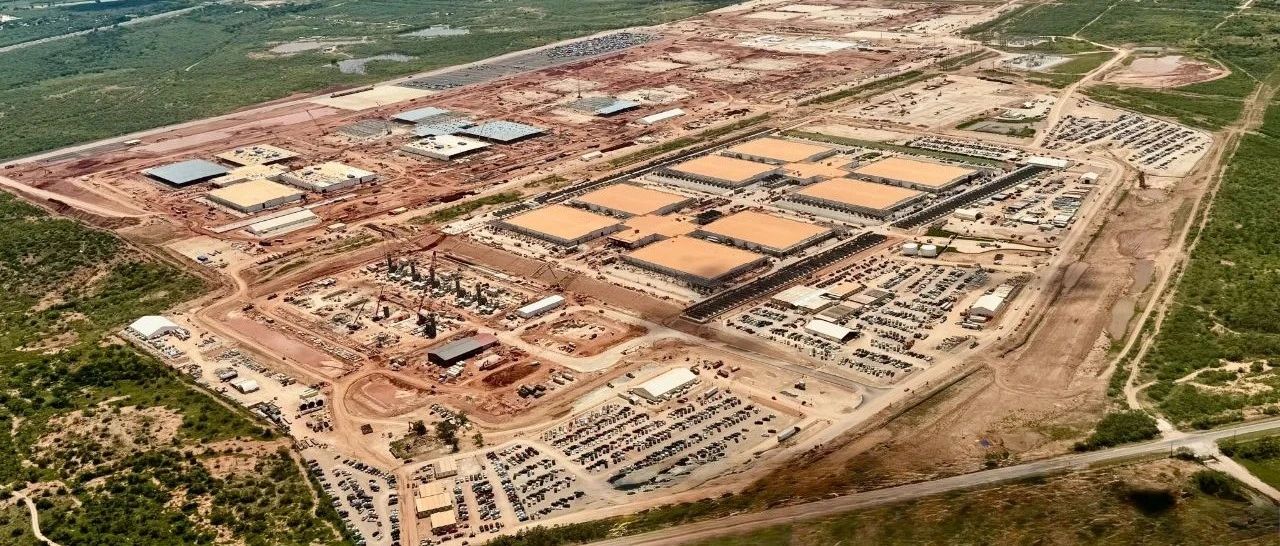
刚刚,OpenAI星际之门要建5GW数据中心,马斯克祭出AI基建5年计划
机器之心· 2025-07-23 01:04
Core Viewpoint - OpenAI and SoftBank are experiencing disputes over the Stargate project, leading to a significant reduction in their recent plans, despite earlier commitments to invest $100 billion [1][2]. Group 1: Project Developments - The Stargate project aims to build a small data center by the end of this year, likely in Ohio, as opposed to the previously ambitious goals [2]. - OpenAI announced a partnership with Oracle to develop an additional 4.5 GW of data center capacity, bringing the total capacity from this collaboration to over 5 GW [3][4]. - The Stargate I data center in Abilene, Texas, is nearing completion, with some facilities already operational [9]. Group 2: Capacity and Infrastructure - The 5 GW data center will operate over 2 million chips, with OpenAI planning to deploy 1 million GPUs by the end of the year [6]. - OpenAI aims to invest $500 billion over four years to build 10 GW of AI infrastructure in the U.S., with expectations to exceed initial commitments due to strong partnerships [7]. Group 3: Strategic Partnerships - OpenAI is collaborating with Oracle, SoftBank, and CoreWeave to meet its growing computational needs, with Microsoft continuing to provide cloud services [11]. - The Stargate project is recognized as a critical initiative for driving innovation, economic growth, and national competitiveness, supported by global partners and government recognition [12]. Group 4: Competitive Landscape - Elon Musk's xAI is also advancing its AI capabilities, with plans for a new supercluster featuring 550,000 GPUs, significantly enhancing its computational power [14][16]. - The competitive landscape is intensifying, with Musk's plans indicating a target equivalent to 50 million H100 units of AI computing power within five years [16].