人才竞争

Search documents
“十四五”亮点:输送5500万人才!中国建成规模最大且高质量教育体系
Xin Hua Wang· 2025-10-23 04:11
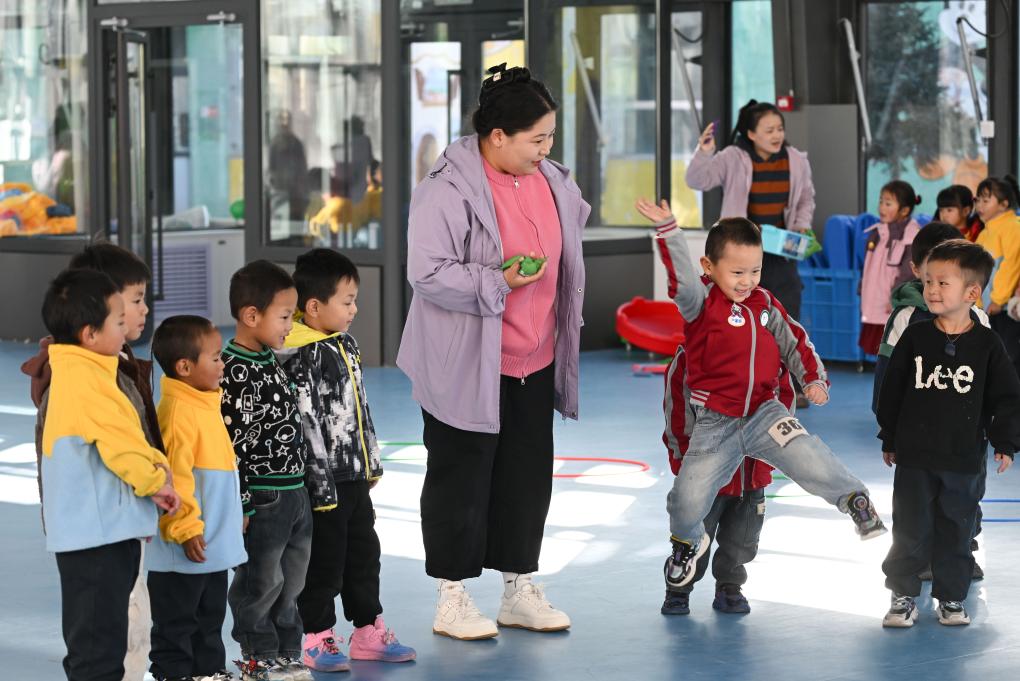
Group 1 - The core viewpoint emphasizes that education is crucial for national development and people's livelihoods, with significant achievements in various educational sectors during the "14th Five-Year Plan" period [1] - Higher education has produced 55 million talents, with a gross enrollment rate of 92% in preschool education and basic balance achieved in compulsory education across 2,895 counties [1] - The government is progressively implementing free preschool education, benefiting approximately 12 million children this autumn semester, and the enrollment rate for disabled children's compulsory education has reached 97% [1] Group 2 - The article highlights that the competition in today's world is fundamentally a competition for talent and education, with significant advancements in space exploration linked to educational development [2] - During the "14th Five-Year Plan" period, universities received over 75% of national natural science awards and technology invention awards, and over 55% of technology progress awards, particularly excelling in life sciences, quantum technology, and artificial intelligence [2] - Vocational education is crucial for industrial innovation, supplying over 70% of new high-quality skilled talents for modern industries, supporting the transition from "Made in China" to "Created in China" [2]
新华鲜报·“十四五”亮点丨输送5500万人才!中国建成规模最大且高质量教育体系
Xin Hua She· 2025-10-23 01:32
Group 1 - The education system in China has become the largest and highest quality during the "14th Five-Year Plan" period, contributing to the supply of 55 million talents to society [1] - The gross enrollment rate for preschool education has reached 92%, and 97% of disabled children have access to compulsory education [3] - The government has increased support for education in underdeveloped areas, making educational public services more inclusive and high-quality [3] Group 2 - The competition in the modern world is fundamentally a competition for talent and education, with significant achievements in various fields such as life sciences, quantum technology, and artificial intelligence during the "14th Five-Year Plan" [5] - Over 75% of national natural science awards and technical invention awards, as well as 55% of scientific and technological progress awards, have been awarded to universities [5] - Vocational education contributes over 70% of the newly added high-quality skilled talents for modern industries, supporting the transition from "Made in China" to "Created in China" [6] Group 3 - The education system aims to cultivate well-rounded individuals through a comprehensive development framework that includes moral, intellectual, physical, aesthetic, and labor education [3] - The focus on teacher ethics and reducing their burdens has led to a new atmosphere in teaching, with a significant reduction in social affairs in schools by over 65% [3] - The integration of vocational and general education is essential for nurturing skilled workers and craftsmen, which is crucial for China's modernization [6]

“十四五”亮点丨输送5500万人才!中国建成规模最大且高质量教育体系
Xin Hua She· 2025-10-23 01:23
Core Insights - Education is a crucial aspect of national strategy and people's livelihood, with significant achievements in higher education, early childhood education, and compulsory education during the "14th Five-Year Plan" period [1][3]. Group 1: Education Achievements - A total of 55 million talents have been trained through higher education, with a gross enrollment rate of 92% in preschool education, and basic balance achieved in compulsory education across 2,895 counties [1]. - Approximately 12 million people benefited from the implementation of free preschool education in the current academic year, and the enrollment rate for disabled children's compulsory education reached 97% [3]. Group 2: Teacher Development - Emphasis on cultivating the spirit of educators, promoting ethical standards, and reducing teachers' burdens by cutting social affairs in schools by over 65% [3]. - A new approach to teacher development is being adopted, focusing on moral integrity, dedication, and comprehensive education [3]. Group 3: Integration of Education and Innovation - The competition in the modern world is fundamentally about talent and education, with significant contributions from educational institutions in various fields, including space exploration and technology [5]. - Over 75% of national natural science awards and 55% of technological advancement awards were obtained by higher education institutions during the "14th Five-Year Plan" period, particularly in life sciences, quantum technology, and artificial intelligence [5]. Group 4: Vocational Education - Vocational education plays a vital role in driving industrial innovation, supplying over 70% of new high-quality skilled talents for modern industries [7]. - The integration of vocational and general education is essential for cultivating skilled workers and supporting China's modernization efforts [7].
K签来了,我们准备好开放了吗?
36氪· 2025-10-17 09:47
Core Viewpoint - The introduction of the K visa by the Chinese government signals a shift in talent strategy, aiming to attract foreign young scientific and technological talent to enhance China's competitive edge in global technology markets [6][16][44]. Group 1: K Visa Introduction - The K visa is designed for foreign young scientific and technological talents who have graduated from renowned universities or research institutions, allowing them to engage in educational, technological, and cultural exchanges without needing a domestic employer [8][6]. - The K visa initiative has sparked significant discussion on social media, particularly regarding concerns about job competition for domestic graduates [5][4]. Group 2: Global Talent Competition - The K visa reflects a broader trend where countries are competing for high-skilled talent, as evidenced by various nations implementing policies to attract foreign researchers and professionals [13][19]. - The U.S. tightening of H-1B visa regulations has created a "talent vacuum," prompting countries like China to seize the opportunity to attract skilled workers [13][38]. Group 3: Domestic Talent Landscape - China faces a paradox of talent surplus and shortage, with a record number of graduates entering the job market while industries like AI and high-end manufacturing report significant talent shortages [19][20]. - The demand for AI professionals in China is projected to reach 6 million by 2030, with a potential shortfall of 4 million, highlighting the urgent need for skilled talent [20][19]. Group 4: Talent Retention Challenges - The K visa aims to address the issue of retaining foreign talent, as previous policies have often relied on short-term incentives that do not foster long-term commitment [42][44]. - The success of the K visa will depend on China's ability to create a conducive environment for foreign talents, including transparent research management and stable legal frameworks [43][44].

全球人才流动格局生变,中国免签政策开启引才新篇章
Sou Hu Cai Jing· 2025-10-17 02:18
Core Insights - The global talent mobility landscape is shifting significantly, with China expanding its visa-free policies while the US is tightening its visa regulations [1][2][3] Group 1: China's Visa Policies - China has unilaterally implemented visa-free policies for 43 countries, including Spain, and introduced the K visa for foreign youth tech talent, which offers more entry convenience [1][2] - The K visa does not require a domestic employer and provides multiple entry options, reflecting China's commitment to attracting international talent [2][7] - The Chinese government is actively constructing a competitive talent system, with over 50 new immigration management policies introduced during the 14th Five-Year Plan [7][8] Group 2: US Visa Policies - The US has increased the H-1B visa application fee to $100,000, aimed at preventing the replacement of local workers with cheaper foreign labor [2][3] - The success rate for H-1B visa applications has dropped below 20%, raising concerns among tech companies about labor costs [2][3] Group 3: Remote Work and Global Talent - The COVID-19 pandemic has accelerated the adoption of remote work, leading to over 50 countries offering remote work visas, catering to digital nomads [5][14] - Countries like Portugal, Estonia, and Dubai have introduced attractive remote work visa options, indicating a shift towards attracting global digital workers [5][14] Group 4: Future Trends in Talent Mobility - The competition for talent is intensifying, with countries adopting more flexible and diverse short-term stay and work policies [14][15] - The decision-making factors for talent mobility have expanded beyond salary to include living conditions, career development, and social integration [14] - The global talent map is becoming more diverse and personalized, with multiple destinations now competing for tech talent, contrasting with the past dominance of Silicon Valley [14][15]

从目前情况来看,我国正在形成的5大趋势,大家要提前做好准备!
Sou Hu Cai Jing· 2025-09-29 13:23
Group 1: Economic Growth and Trends - The economy is stabilizing with a GDP growth of 5.3% year-on-year in the first half of 2025, driven by five key trends: digital transformation, green development, consumption upgrade, intensified talent competition, and adjustments in the global landscape [1][3][10] Group 2: Digital Transformation - The "Digital China Construction 2025 Action Plan" aims for the core industries of the digital economy to account for over 12% of GDP by the end of the year, with significant applications of industrial internet and AI in manufacturing [3][6] - The implementation of cloud computing and big data tools for small and medium enterprises is underway, enhancing production efficiency and reducing costs [5][6] Group 3: Green Development - The "2024-2025 Energy Conservation and Carbon Reduction Action Plan" is effectively promoting green industrial transformation, focusing on optimizing energy structure and developing clean energy sources [8][10] - Green finance is gaining momentum, with a comprehensive product system for loans, insurance, and bonds supporting green industries [8] Group 4: Consumption Upgrade - Consumer confidence is gradually improving, with final consumption expenditure contributing over 80% to GDP growth, indicating a shift towards quality consumption and personalized services [10][12] - The cross-border e-commerce sector has seen a significant increase in import and export volumes, reflecting a change in consumer preferences towards quality and comfort [12] Group 5: Talent Competition - The competition for AI talent is intensifying, with a record number of university graduates entering the job market, necessitating companies to invest in skill enhancement to retain talent [14][16] Group 6: Globalization Adjustments - Traditional export models of Chinese enterprises are losing competitiveness, prompting a shift towards new globalization models amidst a cyclical adjustment in the global economy [16][18] - The global economic focus is shifting towards emerging markets, requiring China to enhance its competitiveness and adapt to new challenges [18][20]

忍无可忍,无须再忍:马斯克第六次起诉!
Xin Lang Ke Ji· 2025-09-29 00:43
Core Viewpoint - The ongoing legal battle between Musk's xAI and OpenAI has escalated, with xAI accusing OpenAI of systematically poaching employees and stealing trade secrets, marking the sixth lawsuit in a year and a half [1][12]. Summary by Relevant Sections Allegations and Lawsuits - xAI has filed a lawsuit in federal court, claiming that OpenAI has engaged in a "disturbing pattern" of actions that violate confidentiality agreements, attempting to gain unfair advantages in AI development by luring away key employees [3][11]. - Musk expressed his frustration on his platform, stating that after multiple warnings, legal action was the only option left [3][12]. - The lawsuit details accusations against OpenAI for deliberately recruiting xAI's core staff, including engineers who have access to critical technology and strategic plans [4][5]. Employee Cases - The lawsuit specifically names two engineers, including Xuechen Li, who allegedly downloaded xAI's entire codebase before leaving for OpenAI, and another engineer, Jimmy Fraiture, who also copied technical documents [4][7]. - xAI has successfully obtained a temporary restraining order against Li, preventing him from working at OpenAI or any AI company and requiring him to surrender personal devices for investigation [6][12]. Competitive Landscape - The legal conflict highlights the intense competition in the AI sector, with xAI accusing OpenAI of stealing information to maintain its market dominance, particularly as xAI's Grok model is reported to rival OpenAI's offerings [10][11]. - Musk's xAI has quickly risen in the AI industry, raising significant funds and attracting talent from major tech companies, positioning itself as a formidable competitor to OpenAI [17][20]. Historical Context - The lawsuits represent a significant shift in the relationship between Musk and OpenAI, which he co-founded. Disagreements over the company's direction and its transition to a profit-driven model have fueled Musk's legal actions [18][22]. - Musk's previous lawsuits against OpenAI and its partners, including Microsoft and Apple, reflect ongoing concerns about monopolistic practices in the AI industry [19][21].

一线城市五折租房,大厂集体杀入长租公寓
Sou Hu Cai Jing· 2025-09-26 03:54
Core Insights - The article discusses the emerging trend of major tech companies in China building employee housing to address the challenges of high rent and long commutes in first- and second-tier cities [3][5][20] - Companies like JD.com, Xiaomi, Huawei, and Tencent are investing heavily in employee apartments, offering benefits such as free or significantly reduced rent to attract and retain talent [6][12][15] Group 1: Employee Housing Initiatives - JD.com has launched a free accommodation program for interns in Beijing, allowing them to live without paying rent or additional fees [3][5] - Xiaomi's Beijing Youth Apartment offers rent as low as 1,999 yuan per month, significantly below the market rate, with some units priced at 1,599 yuan [6][12] - Huawei and Tencent have also developed large-scale employee housing projects, with Huawei's Qingpu R&D center and Tencent's "Penguin Island" providing thousands of units for employees [12][15] Group 2: Strategic Asset Development - The construction of employee housing is seen as a strategic asset for tech companies, with significant investments in land and development [12][14] - JD.com has spent over 3.1 billion yuan on land for its "JD Youth City," which will include nearly 5,000 apartments [12][14] - Tencent's investment in "Penguin Island" includes plans for a large tech ecosystem with residential, office, and cultural spaces [15] Group 3: Employee Benefits and Talent Retention - The trend of building employee housing reflects a shift in how companies view employee benefits, moving from traditional perks to housing solutions [5][20] - The availability of affordable housing is crucial for attracting talent, especially in high-cost cities, as it alleviates the burden of housing costs on employees [20][25] - Companies aim to enhance employee satisfaction and retention through these housing initiatives, which also contribute to a sense of community among employees [20][26] Group 4: Operational Management - Major tech companies typically partner with large construction firms for the development of these housing projects, ensuring professional management and quality [16] - Some companies manage their employee housing directly, while others outsource management to specialized firms [16] - The operational strategies vary, with a focus on creating a supportive living environment that aligns with the company's values and enhances employee experience [26][28]




一线城市五折租房,大厂集体杀入长租公寓
盐财经· 2025-09-21 09:44
Core Viewpoint - The article discusses the trend of major tech companies in China building employee apartments to provide affordable housing solutions for their employees, particularly in first and second-tier cities, where housing costs are high [7][8][10]. Group 1: Employee Housing Initiatives - Companies like JD.com and Xiaomi have launched employee housing projects, offering free or significantly discounted rent to interns and young employees, which helps alleviate the burden of high living costs in cities like Beijing [7][12][19]. - JD.com has opened a free apartment for interns, while Xiaomi's youth apartments are priced at around 1999 yuan per month, significantly lower than the market rate [10][12]. - The trend of tech giants building employee apartments is not isolated; other companies like Huawei and OPPO are also investing heavily in employee housing [8][10][19]. Group 2: Strategic Asset and Investment - The construction of employee apartments is seen as a strategic asset for these companies, with significant investments in land and development, such as JD.com's acquisition of land for 3.112 billion yuan for its "JD Youth City" project [18][19]. - The article highlights that these companies are not merely acting as landlords but are strategically positioning themselves in the real estate market, with substantial investments in property that can serve as a long-term asset [16][22]. Group 3: Talent Attraction and Retention - The primary motivation behind these housing initiatives is to attract and retain talent in a competitive job market, as providing housing benefits can significantly enhance employee satisfaction and loyalty [32][38]. - The article notes that the availability of affordable housing can influence the decision of skilled workers to relocate to cities with high living costs, thereby impacting talent mobility [33][37]. - Companies are increasingly recognizing the importance of housing benefits as part of their overall employee value proposition, which can help them stand out in the talent market [32][38].

SK海力士大规模招聘!
国芯网· 2025-09-18 13:35
Group 1 - SK Hynix is achieving its highest performance since its establishment and plans to recruit hundreds of new employees in the second half of the year, with competition rates expected to exceed 100:1 [1][4] - The recruitment period for new employees is set from September 22 to October 1, focusing on core functions such as design, equipment, R&D processes, and mass production technology [3] - Last year's average annual salary at SK Hynix was 117 million KRW, and the company recently distributed performance bonuses exceeding 100 million KRW per person, indicating a thriving talent market [3][4] Group 2 - SK Hynix has been actively recruiting semiconductor talent since March, ensuring a steady influx of experienced employees while preparing for large-scale recruitment this month [4] - The acceptance rate for new employees in the second half of last year was 2.04%, translating to a competition ratio of approximately 50:1, which is expected to intensify this year [4] - A representative from SK Hynix emphasized that securing top talent is crucial for the company's competitiveness and aims to cultivate talent in line with its status as a full-stack AI memory supplier [4]