
价格治理

Search documents
与时俱进推进价格法修订 不断提升价格治理水平
Ren Min Ri Bao· 2025-07-24 22:14
Core Viewpoint - The revision of the Price Law is timely and aims to enhance the legal framework for price governance in response to evolving market conditions and regulatory practices [2][3][6] Group 1: Legislative Background - The Price Law, implemented in 1998, has provided essential legal support for the healthy development of the economy and society, necessitating updates to address new challenges and improve governance tools [2][3] - The revision aims to align with the construction of a high-level socialist market economy and improve the macroeconomic governance system [2] Group 2: Government Pricing System - The revision maintains the existing framework of the Price Law while focusing on widely agreed-upon content to enhance legislative efficiency [2][3] - The government pricing system is refined to allow for the establishment of pricing mechanisms rather than fixed price levels, enabling more flexible responses to market supply and demand [3] Group 3: Regulation of Unfair Pricing Practices - The revision emphasizes the need for improved regulation of market prices to ensure orderly price formation and address issues like price dumping, price gouging, and price collusion [4][5] - New provisions are introduced to regulate unfair pricing behaviors in the context of the digital economy, addressing the use of data and algorithms in pricing strategies [4][5] Group 4: Addressing "Involution" Competition - The revision expands the scope of low-price dumping regulations to include services and third-party pricing rules, providing legal support for combating "involution" competition [5][6] - The proposed changes reflect the commitment to create a fairer and more dynamic market environment while maintaining market order and stimulating innovation [6]
显微镜下的中国经济(2025年第26期):财税体制改革在价格治理中能发挥什么作用
CMS· 2025-07-14 08:31
Group 1: Tax System Reform and Economic Impact - The VAT has become the largest tax type in China, maintaining a stable share of 35-40% since 2016, with a compound growth rate of -7.4% in 2022, 4.5% in 2023, and 17.0% in 2024, indicating a significant acceleration in growth[3] - In 2024, VAT revenue accounted for 49.5% of local fiscal revenue, the highest in history, reflecting the declining support of land finance for local governments[3] - The average share of VAT revenue in local fiscal income from 2016 to 2022 was 45.3%, increasing to over 49% from 2023, coinciding with a period of negative domestic price levels[3] Group 2: Price Control and Market Dynamics - The current fiscal and tax system may create unreasonable incentives for local governments to stimulate production, which could hinder the establishment of a unified national market[3] - Shifting the consumption tax collection point from production to sales could enhance local governments' focus on consumption, as local sales would directly impact their tax revenue[3] - Optimizing the fiscal and tax system can reduce local governments' supply impulses and increase their emphasis on consumption, potentially alleviating price pressures from both supply and demand sides[3] Group 3: Risks and Challenges - Risks include geopolitical tensions, domestic policy implementation falling short of expectations, and potential global recession alongside unexpected monetary policies from major economies[3]
中药行业周报:时临中报季,关注中药板块业绩表现-20250713
Xiangcai Securities· 2025-07-13 11:51
Investment Rating - The industry maintains an "Overweight" rating, suggesting a positive outlook for investment opportunities in the Chinese medicine sector [6]. Core Insights - The Chinese medicine sector saw a 1.08% increase last week, with the overall pharmaceutical sector experiencing a general upward trend [2]. - The price-to-earnings (PE) ratio for the Chinese medicine sector is 27.86X, reflecting a slight increase, while the price-to-book (PB) ratio stands at 2.31X, also showing a minor rise [3]. - The market for Chinese medicinal materials is currently in a low season, with a slight decline in price indices due to increased rainfall in southern regions [4]. - As of July 12, 2025, three out of five listed companies in the Chinese medicine industry reported positive net profit growth, with the lowest growth rate at 24.3% [5]. Summary by Sections Market Performance - The Chinese medicine sector index closed at 6451.72 points, up 1.08% last week, while the overall pharmaceutical index rose by 1.82% [2][17]. Valuation - The PE ratio (ttm) for the Chinese medicine sector is 27.86X, up 0.29X week-on-week, with a one-year maximum of 30.13X and a minimum of 22.58X. The PB ratio (lf) is 2.31X, up 0.03X, with a one-year maximum of 2.65X and a minimum of 1.99X [3][19]. Industry Trends - The Chinese medicine sector is entering the mid-year reporting season, with a focus on performance metrics such as inventory and accounts receivable [5]. - The report highlights three main investment themes: price governance, consumption recovery, and state-owned enterprise reform, indicating potential growth areas within the sector [6][9]. Investment Recommendations - Recommended companies include those with strong R&D capabilities and unique products, as well as those less affected by price collection policies. Specific companies highlighted are Zhaoli Pharmaceutical, Pizaihuang, and Shouxiangu [10].


湘财证券晨会纪要-20250620
Xiangcai Securities· 2025-06-20 02:58
Industry Overview - The Chinese medicine sector experienced a decline of 0.32% last week, while the overall pharmaceutical sector showed mixed performance with a 1.4% increase in the pharmaceutical and biological index [3][4] - The performance of the Chinese medicine sector is relatively weak compared to other pharmaceutical sub-sectors, with chemical pharmaceuticals showing the best performance with a 3.53% increase [3][4] Company Performance - Top-performing companies in the Chinese medicine sector include Kanghui Pharmaceutical, Enwei Pharmaceutical, Kangyuan Pharmaceutical, Zhongsheng Pharmaceutical, and Zhendong Pharmaceutical [4] - Underperforming companies include Wanbangde, Longjin Retreat, Biological Valley, Guangyuyuan, and Jiu Zhitang [4] Valuation Metrics - The price-to-earnings (PE) ratio for the Chinese medicine sector is 27.68X, reflecting a decrease of 0.1X week-on-week, with a one-year maximum of 30.13X and a minimum of 22.58X [5] - The price-to-book (PB) ratio stands at 2.29X, down 0.01X from the previous week, with a one-year maximum of 2.65X and a minimum of 1.99X [5] - The current PE is at the 29.83% percentile since 2013, while the PB is at the 5.56% percentile during the same period [6] Raw Material Market - The market for raw Chinese medicinal materials is under pressure, with a total index price of 241.57 points, reflecting a 0.7% decrease week-on-week [7] - Among the twelve categories of medicinal materials, five categories saw price increases while seven experienced declines, with the plant leaf category showing the largest drop [7] Policy and Market Dynamics - The third batch of national collection for traditional Chinese medicine began implementation in April 2025, with at least 19 provinces releasing results [8] - The collection involves 20 product groups and 95 products, with 174 selected drugs, indicating a trend towards price rationalization in the sector [8] - There is a need for further optimization of selection rules due to insufficient completion rates in local collections [8] Investment Recommendations - The report maintains an "overweight" rating for the industry, suggesting three main investment themes: price governance, consumption recovery, and state-owned enterprise reform [9][10][11] - Price governance focuses on the impact of collection and negotiation on drug prices, with a recommendation to pay attention to companies with strong R&D capabilities and unique products [9] - Consumption recovery is driven by macroeconomic improvement and aging population, favoring companies with brand and material advantages [10] - State-owned enterprise reform presents opportunities for performance improvement and efficiency gains in the Chinese medicine sector [11] - Recommended investment targets include Zoli Pharmaceutical, Pian Zai Huang, and Shou Xian Gu, which are expected to benefit from these trends [11]
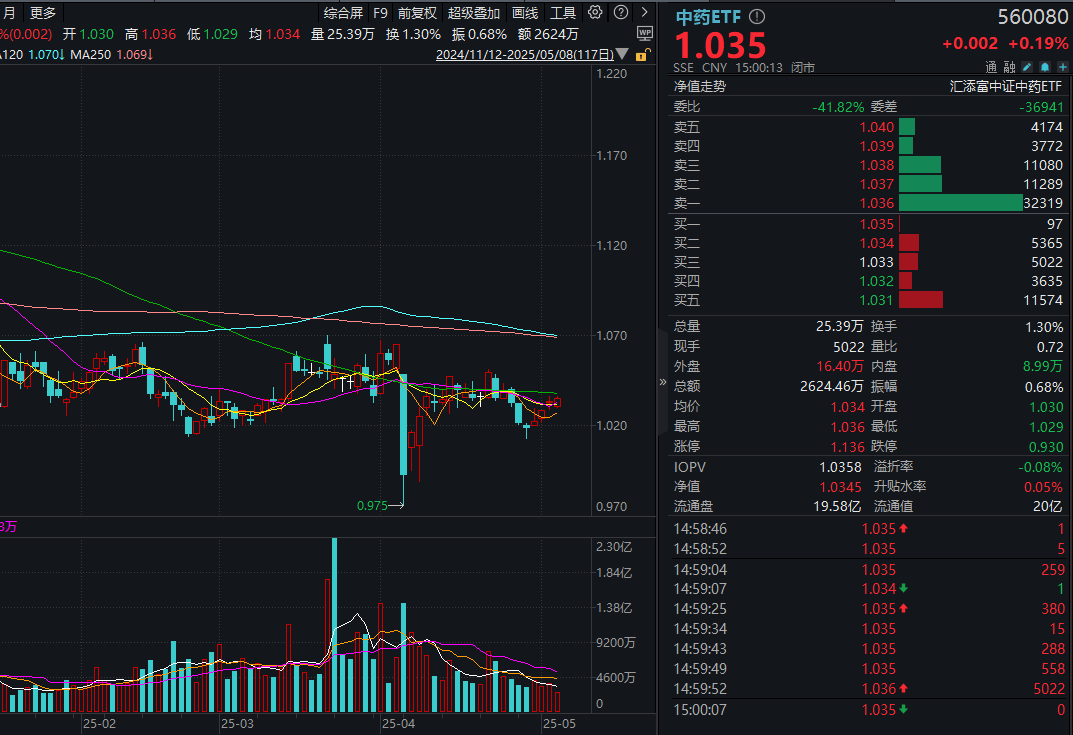
深挖一季报,中药板块表现如何?中药ETF(560080)能否走出箱体震荡?机构:把握国企改革等三大关键点
Sou Hu Cai Jing· 2025-05-08 07:49
Core Viewpoint - The Chinese medicine sector is experiencing a mixed performance, with some companies showing significant profit growth while facing challenges from high inventory and pricing pressures. The outlook for 2025 appears more optimistic due to easing macroeconomic factors and supportive policies [3][5][6]. Group 1: Market Performance - The A-share market saw major indices rise, with the Chinese Medicine ETF (560080) increasing by 0.19% and trading volume exceeding 26 million yuan, indicating active trading [1]. - Among the 49 constituent stocks of the Chinese Medicine ETF, 24 reported positive net profit growth, representing approximately 49% of the total [3]. Group 2: Company Performance - Notable profit growth was observed in companies such as Jilin Aodong (+260%), Jiaying Pharmaceutical (+197%), and Buchang Pharmaceutical (+170%) [3]. - The financial performance of several companies showed varied results, with Jilin Aodong reporting a 27.7% decline in revenue but a 259.8% increase in net profit [4]. Group 3: Industry Outlook - The Chinese medicine industry is expected to face challenges in 2024 due to high baselines and inventory digestion, but a recovery is anticipated in 2025 as macroeconomic conditions improve [5]. - Policy support, including the March 2025 guidelines for enhancing Chinese medicine quality, is expected to stimulate innovation and improve market conditions [5][6]. Group 4: Valuation and Investment Opportunities - The current valuation of the Chinese Medicine Index is at a price-to-earnings ratio of 25.77, which is below the 74.1% threshold of the past decade, indicating a relatively low valuation [8]. - Investors are encouraged to consider the Chinese Medicine ETF (560080) for potential rebound opportunities in the market [10].

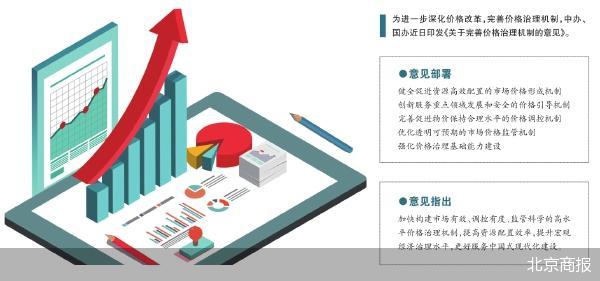
事关物价 两办发文强化价格治理
Bei Jing Shang Bao· 2025-04-02 16:00
价格治理是宏观经济治理的重要内容。4月2日,中共中央办公厅、国务院办公厅发布《关于完善价格治 理机制的意见》(以下简称《意见》),为进一步深化价格改革,完善价格治理机制提供指引。《意 见》提出,要加强价格政策与财政、货币、产业、就业等宏观政策协同发力,提升价格总水平调控效 能。同时,《意见》强调,坚持社会主义市场经济改革方向,能由市场形成价格的都交给市场,促进先 进优质生产要素高效顺畅流动,有效服务全国统一大市场建设。 让更多价格由市场形成 为进一步健全促进资源高效配置的市场价格形成机制,《意见》明确,深化价格市场化改革。分品种、 有节奏推进各类电源上网电价市场化改革,稳妥有序推动电能量价格、容量价格和辅助服务价格由市场 形成,探索建立促进改革平稳推进的配套制度。健全跨省跨区送电市场化价格形成机制。加快完善电网 代理购电制度,推动更多工商业用户直接参与市场交易。进一步完善成品油定价机制,深化天然气价格 市场化改革。加快完善煤炭市场价格形成机制。鼓励供需双方按照市场化原则协商确定水利工程供水价 格,积极推进新建水利工程提前明确量价条件。放开具备竞争条件的民航国内航线旅客运输价格。 《意见》提出,加快重点领域市场 ...
中药行业周报:基层中医药覆盖面持续扩展,看好基层渗透率提升带来的需求增长-20250319
Xiangcai Securities· 2025-02-20 02:28
Investment Rating - Industry rating: "Overweight" (maintained) [2] Core Views - The market performance of traditional Chinese medicine (TCM) sector shows a 0.8% increase last week, while the overall pharmaceutical sector continues its rebound [1][4] - The expansion of grassroots TCM services is expected to drive demand growth, with the number of TCM clinics increasing from over 3,000 in 2015 to 42,000 in 2024, achieving nearly full coverage in community health service centers and township hospitals [8] - The TCM sector is experiencing a dual scenario of price governance and consumer recovery, presenting both pressures and opportunities [9] Summary by Sections Market Performance - Last week, the TCM index closed at 6446.65 points, up 0.8%, while the pharmaceutical sector index rose to 7368.1 points, an increase of 2.71% [4][14] - The relative performance of TCM compared to the CSI 300 index shows a decline of 2% over the past month and 17% over the past year [3][4] Valuation - The TCM sector's PE (ttm) is 26.87X, up 0.22X week-on-week, with a one-year maximum of 30.13X and a minimum of 22.58X. The PB (lf) is 2.32X, also up 0.02X week-on-week, with a one-year maximum of 2.65X and a minimum of 1.99X [6] - The TCM sector has a valuation premium of 110.86% compared to the CSI 300 index [6] Upstream TCM Materials - The TCM materials price index decreased slightly to 255.65 points, down 0.2% week-on-week, influenced by the Spring Festival market closure [7] Investment Suggestions - The report suggests focusing on companies with strong R&D capabilities and unique products that can benefit from price governance and consumer recovery [9][10] - Key investment themes include price governance, consumer recovery, and state-owned enterprise reform, with recommendations to pay attention to companies with strong brand power and product advantages [11]