光储充一体化

Search documents
电力托起产业链,温州制造的增长动能从哪里来?
Zhong Guo Xin Wen Wang· 2025-11-28 10:09
Core Insights - The article discusses how electricity is becoming a critical factor in the industrial development of Wenzhou, transforming from a mere energy supply to an integral part of the entire production process [1][4]. Group 1: Electricity's Role in Manufacturing - Wenzhou's manufacturing sector, known for its diverse industrial clusters, has a high demand for reliable electricity, with the local power company achieving a supply reliability rate of 99.99% through tailored solutions [1][2]. - The shift towards digitalization, intelligence, and sustainability in manufacturing increases the complexity of electricity requirements, prompting the local power company to develop a precise service system [1][2]. Group 2: Innovative Power Supply Solutions - The power company has implemented a "synchronous planning" approach, allowing for rapid electricity connection approvals, reducing the time from 45 days to 7 days for new projects [2]. - A dedicated power supply plan was created for a solar component production base, ensuring continuous operation through real-time voltage adjustments [2]. Group 3: Cost-Effective Electricity Access - The power company has introduced a "three-zero" service for low-voltage users, allowing small businesses to connect to the grid with zero investment, saving over 14 million yuan for more than 11,000 low-voltage users by 2025 [3]. - A differentiated metering service was launched to help individual businesses separate their production and living electricity costs, further reducing expenses [3]. Group 4: Economic Impact of Electricity Services - Wenzhou's export total exceeded 120 billion yuan in the first half of the year, with the average time for foreign trade enterprises to receive power reduced by 4.8% year-on-year [4]. - The integration of electricity services into industrial planning and economic governance has provided new momentum for the local economy, demonstrating the significant contribution of electricity to manufacturing growth [4].
充电基础设施年底将破2000万台,低价竞争如何破局?
Nan Fang Du Shi Bao· 2025-11-28 03:40
Core Insights - The 8th Shenzhen International Charging and Swapping Exhibition showcased over 300 innovative products, attracting more than 2,000 channel guests and over 50,000 attendees, with a strong enthusiasm for procurement and active discussions on technology and business [2][4] - The exhibition focused on the entire industry chain of charging, swapping, and energy storage, highlighting cutting-edge technologies such as ultra-fast charging, integrated solar storage, and vehicle-to-grid (V2G) interactions [4][6] - The number of registered charging operators in China exceeds 30,000, with leading operators like Telai Electric and Star Charging capturing 62% of the market share, indicating a trend towards consolidation in the industry [6][8] Industry Trends - The number of electric vehicles in China has surpassed 40 million, with charging infrastructure reaching 18.063 million units, expected to exceed 20 million by the end of the year [4] - The industry is facing challenges such as unclear discharge pricing mechanisms, reliance on subsidies, and compatibility issues with V2G technology [8] - The push for large-scale V2G pilot applications is deemed essential for efficient collaboration between electric vehicles and the grid, enhancing user experience and supporting grid stability [6][8] Technological Innovations - Companies are focusing on integrating microgrids with charging stations to enhance energy management and reduce costs, with innovations in direct current (DC) and alternating current (AC) systems to minimize energy loss [10][12] - Star Charging has introduced lightweight liquid-cooled charging guns to improve user experience, alongside software enhancements for faster charging initiation [13][14] - Yuyou Green Energy is addressing common industry pain points such as short lifespan and high maintenance costs of charging stations through high-protection technology, significantly reducing operational costs [14][15] Competitive Landscape - The competition in the charging module sector is intensifying, with both large conglomerates and specialized manufacturers vying for market share [15][19] - Companies like Yingfeiyuan are leveraging early investments in liquid cooling technology and V2G systems to maintain a competitive edge, focusing on long-term technological advancements [19][20] - The industry is witnessing a shift towards comprehensive energy solutions that integrate charging, energy storage, and generation capabilities, aiming for a multi-functional approach to energy management [20]

开鑫充有限合伙完成2100万元A轮融资 卓领投资布局充电基础设施赛道
Zheng Quan Ri Bao Wang· 2025-11-25 11:42
Core Viewpoint - Kaixin Charging (Hangzhou) Management Consulting Partnership has completed a 21 million yuan Series A financing, indicating strong market recognition of its unique business model and investment value in the new energy infrastructure sector [1] Group 1: Company Overview - Kaixin Charging Limited Partnership adopts an innovative "investment + construction + operation" integrated development model, creating a complete industrial service chain [1] - The company focuses on the new energy vehicle charging facilities sector, aiming to build a leading green energy infrastructure investment and operation management platform in China [1] - Kaixin Charging has established a competitive advantage through a professional investment decision-making mechanism, a mature construction management system, and refined operational capabilities [1] Group 2: Market Context - The charging infrastructure sector is entering a golden development period due to the continuous growth of new energy vehicles and the advancement of "dual carbon" policies [2] - Kaixin Charging is strategically focusing on urban public charging stations and dedicated charging stations in logistics parks, enhancing the quality and efficiency of its investment portfolio [2] Group 3: Investment and Future Strategy - The company plans to accelerate the charging network layout in key regions such as the Yangtze River Delta and the Pearl River Delta, with a goal of adding 20-30 charging stations within the year [2] - Upgrading the intelligent operation management system through big data analysis to improve station operational efficiency and user experience is a priority [2] - The company aims to explore innovative business models such as integrated solar storage and V2G, while establishing standardized investment evaluation and operational management systems [3]
物产环能(603071):区域垄断筑城河,双轮驱动求稳进
Huafu Securities· 2025-11-18 08:03
Investment Rating - The report assigns a "Buy" rating to the company with a target price of 20.67 CNY, based on a 16x PE for 2025 [5][7]. Core Insights - The company, a state-owned enterprise in Zhejiang, operates in both trade and industrial sectors, focusing on coal circulation, cogeneration, and renewable energy [1][15]. - The coal circulation business is the primary revenue driver, contributing 93% of total revenue in 2024, while cogeneration and renewable energy contribute 7% and 0.1%, respectively [1][25]. - The company has a strong competitive position in the coal circulation market, with a stable sales volume exceeding 50 million tons annually and a well-established procurement and sales network [3][39]. Summary by Sections Company Overview - The company is a large state-owned listed enterprise in Zhejiang, focusing on energy trade and industrial operations, with a history dating back to 1950 [15][17]. Coal Circulation Business - The coal circulation business is characterized by stable profitability and significant scale, with a sales volume of 3,190 million tons in 2025H1, reflecting a 14.1% year-on-year increase [3][51]. - Revenue from coal circulation was 169.3 billion CNY in 2025H1, down 7.7% year-on-year, while gross profit was 6.1 billion CNY, with a gross margin of 3.6% [3][25]. Cogeneration Business - The cogeneration segment benefits from regional monopoly advantages, with six cogeneration plants in Zhejiang, providing a total heating capacity of 19.63 million tons and generating 3.176 billion kWh of electricity [4][68]. - The company plans to enhance its cogeneration capacity with the upcoming acquisition of Nan Taihu Technology, expected to contribute significantly to future earnings [4][76]. Financial Forecast and Investment Recommendations - The company is projected to experience revenue growth rates of -16.9%, +1.4%, and +0.2% from 2025 to 2027, with net profit growth rates of -2.4%, +13.1%, and +4.7% respectively [5][6]. - The report emphasizes the company's ability to stabilize earnings through its integrated coal and heat business model, which mitigates the impact of coal price fluctuations [5][6].

“超充”网络助推“物流之都”绿色转型
Qi Lu Wan Bao· 2025-11-11 14:47
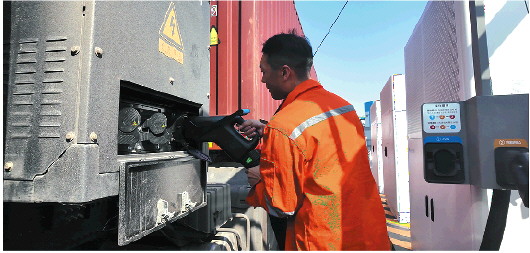
Core Insights - The article highlights the rapid advancements in charging technology for electric heavy-duty trucks in Linyi, China, showcasing the potential for green transformation in logistics [2][3][4] Group 1: Charging Technology and Efficiency - The new charging station in Linyi allows a 28-ton electric heavy-duty truck to fully charge in under 30 minutes, significantly improving efficiency compared to previous charging times of at least one hour for similar vehicles [3][4] - The charging station utilizes Huawei's liquid-cooled megawatt charging technology, capable of delivering up to 1.44 MW, which supports dual-gun charging for faster energy replenishment [4][6] Group 2: Economic Impact - Transitioning from diesel to electric heavy-duty trucks can save operational costs between 100,000 to 130,000 yuan annually for a truck operating 100,000 kilometers per year [4][5] - The increased charging efficiency reduces waiting times, allowing drivers to maximize their operational hours and minimize downtime [4][6] Group 3: Market Potential and Growth - Linyi has a substantial logistics vehicle fleet of 749,000, including 492,000 cargo vehicles and 167,000 heavy-duty trucks, indicating a strong demand for charging infrastructure [2][6] - The market for electric heavy-duty trucks is expected to grow significantly, with sales projected to reach 79,710 units by mid-2025, reflecting a year-on-year increase of 184.68% [6][9] Group 4: Infrastructure Development - The Linyi charging station is part of a broader initiative to create a green smart charging network across the city, integrating solar power and energy storage systems to enhance sustainability [7][8] - The city is also focusing on expanding its photovoltaic capacity, with multiple solar projects underway to increase the share of green electricity in logistics operations [10]
“逐光”建筑美学 森特股份的BIPV扩围之路
Shang Hai Zheng Quan Bao· 2025-11-05 18:41
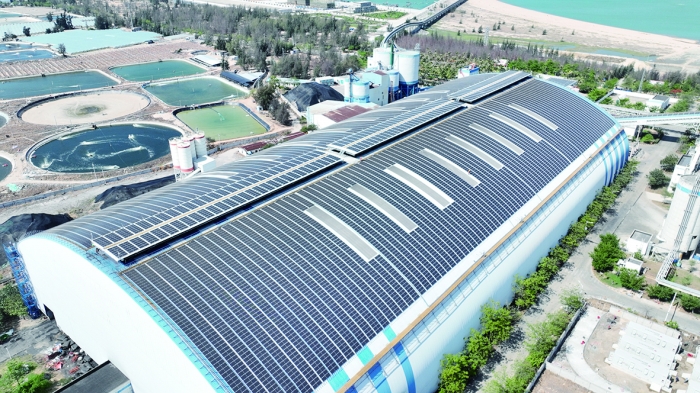
Core Viewpoint - Sente Group is transitioning from a metal enclosure system provider to a leader in the BIPV (Building Integrated Photovoltaics) sector, aiming to integrate green energy solutions into various industries, thereby establishing a clear path for sustainable development [2] Group 1: BIPV Technology and Strategic Partnerships - Sente Group has formed a strategic partnership with Longi Green Energy, launching the "Longi & Sente" dual-brand strategy to enhance BIPV product offerings, with the latest "Longi Sente BIPV 5.0" released in the first half of this year [3] - The collaboration between Sente Group and Longi Green Energy is characterized by a complementary relationship, combining expertise in architecture and photovoltaics, which has significantly advanced the BIPV industry [3] - In the first three quarters of this year, Sente Group reported a net profit attributable to shareholders of 96.28 million, a year-on-year increase of 30.16%, primarily driven by the growth of its BIPV business [3] Group 2: Product Features and Market Applications - Sente Group's BIPV solutions come with a 25-year warranty and include safety features such as leak-proofing, high wind resistance, and A-level fire protection, ensuring the longevity of both the building and the photovoltaic system [3] - The economic advantages of Sente Group's BIPV solutions are notable, with installation capacity exceeding conventional methods by 30% to 50%, alongside high conversion efficiency and low degradation rates [3] - The company has successfully implemented BIPV solutions in various projects, including those for Shandong Heavy Industry Group and Baowu Steel, with significant environmental benefits such as a reduction of 23,200 tons of CO2 emissions from a specific project [7] Group 3: Expansion into Smart Energy and International Markets - Sente Group is actively expanding into the smart energy sector, focusing on integrated solutions for solar energy, storage, and charging, as evidenced by partnerships with companies like Telai Electric and Charoen Pokphand Group [5] - The company has launched a 2880 kW solar-storage-charging project in Inner Mongolia, showcasing advanced charging capabilities that significantly reduce energy replenishment time for electric mining trucks [5] - Sente Group is optimistic about its international market prospects, leveraging its experience in Southeast Asia and the Middle East to export comprehensive green energy solutions to countries involved in the Belt and Road Initiative [6]


霍普股份全资子公司签订储能系统采购合同 金额5.2亿元
Zheng Quan Shi Bao Wang· 2025-10-31 13:53
Group 1 - The core point of the news is that Hopu Co., Ltd. has signed a procurement contract for a 200MW/800MWh independent energy storage demonstration project with China Energy Construction Group Gansu Electric Power Design Institute, valued at 520 million yuan, with delivery scheduled between April 1 and April 30, 2026 [1] - The contract is expected to improve the company's operational status if executed smoothly, as both parties have the capability to fulfill the contract [1] - The company has reported a revenue of 78.01 million yuan for the first three quarters of 2025, a year-on-year decrease of 1.54%, and a net loss of 31.48 million yuan, compared to a loss of 58.76 million yuan in the same period last year [2] Group 2 - The company's main business segments are "Architectural Design" and "Green Energy," with its energy storage business including Energy Management Contracts (EMC) and Energy Storage System Integration (EPC) [2] - The company is facing temporary pressure on orders and revenue in the architectural design segment due to industry conditions, prompting it to deepen existing customer cooperation and expand new customer groups [2] - In the green energy segment, the company focuses on an integrated solution of solar energy, storage, and charging, establishing a comprehensive service system that promotes continuous revenue growth [2]
市场占有率证明:反映了企业品牌在市场中的竞争地位-权威机构中金企信
Sou Hu Cai Jing· 2025-10-28 10:02
Core Insights - The article emphasizes the importance of market share certification for companies, which directly impacts their competitiveness and ability to secure resources and attention [2][13][15] Group 1: Market Share Certification - Market share certification is crucial for companies applying for titles such as "single champion," "specialized and innovative," and "small giant," as it influences their weight in applications [2] - Professional market share certification addresses various challenges faced by companies, such as lack of data sources and reliable evidence, thereby enhancing competitiveness and ensuring accuracy [2][16] Group 2: Charging Station Market - The charging station sector is evolving into a strategic energy hub, driven by the global energy transition and carbon neutrality goals, with the number of electric vehicles in China expected to exceed 40 million by 2025 [9] - By 2025, support for community charging stations in coastal areas is projected to reach 68%, a 42 percentage point increase from 2020, highlighting the growing importance of this infrastructure [9] - Safety concerns are paramount, with 70% of users prioritizing equipment with protective features, and older communities particularly worried about equipment aging [9] Group 3: Future Developments - Future community charging stations are expected to become core energy management hubs, integrating photovoltaic generation and storage systems to reduce electricity costs and participate in green electricity trading [10] - V2G technology will enable electric vehicles to act as distributed energy storage units, contributing to grid stability and forming "virtual power plants" [10] - The integration of 5G and IoT technologies will enhance smart management systems, allowing real-time interaction between charging stations, the grid, vehicles, and users, thereby optimizing energy distribution efficiency [10]
马鞍山经开区:科达智慧能源光储充一体化项目建成
Ren Min Wang· 2025-10-23 00:58
Core Insights - The Keda Smart Energy Company has completed the construction and production of its integrated building photovoltaic demonstration park project, with a total investment of 300 million yuan and covering an area of approximately 81 acres [1] - The project focuses on "Building Integrated Photovoltaics (BIPV)" and serves as a multifunctional smart park that integrates BIPV production, testing, and office functions [1] - The company has established a presence in multiple provinces in China and several countries abroad, serving over 3,000 clients, with a cumulative scale of energy storage and EPC exceeding 200 MW and annual electricity trading reaching 15 billion kWh [1] - The company also holds three distribution network operation projects and has invested in the construction of 32 charging stations, establishing a strong brand benchmark in the industry [1] Investment and Project Development - The Economic Development Zone has implemented a "seven uncompleted" project service concept, continuously enhancing resource guarantees and service efficiency to promote the early commencement, production, and effectiveness of key projects [1] - From January to September 2025, the completion of key project investments reached 9.3 billion yuan, with an investment completion rate of 92.80% [1] - A total of 35 projects, including Xinyi Phase II, Pulit Materials, and Tiangong Technology, have commenced construction, achieving a construction rate of 106% [1] - Additionally, 19 projects, such as Hongchuang Sterile Packaging, Huiyuan Food Packaging, and Wanzhi New Energy, have been completed and put into production, with a completion rate of 119% [1]
赣锋锂业子公司引入6.64亿战投!
起点锂电· 2025-10-18 10:18
Core Viewpoint - The article discusses the upcoming CINE2025 Solid-State Battery Exhibition and Industry Annual Conference, highlighting the strategic investment by Wanxin Green Energy in Ganfeng Lithium's subsidiary, Shenzhen Yichu, to enhance its operational capabilities and market position [2][3][4]. Event Overview - The CINE2025 event will take place from November 6-8, 2025, at the Guangzhou Nansha International Convention Center, featuring over 200 exhibitors, 2000 participating companies, and 20,000 professional attendees [2]. - The event will also include the 2025 Qidian Solid-State Battery Golden Ding Award Ceremony and the SSBA Solid-State Battery Industry Alliance Council [2]. Strategic Investment - Ganfeng Lithium announced a strategic investment from Wanxin Green Energy, acquiring a 44.2361% stake in Shenzhen Yichu for 664 million yuan, with Ganfeng retaining a 40.0399% stake [3][4]. - This investment aims to meet Shenzhen Yichu's funding needs and optimize its equity structure, supporting Ganfeng's integrated lithium ecosystem [4]. Shenzhen Yichu's Business Development - Shenzhen Yichu, established on May 16, 2024, has signed over 30 independent shared energy storage projects across China, with a total layout exceeding 18.1 GWh and investments exceeding 3.6 billion yuan [4][5]. - The company aims to become a leading independent energy storage operator and service provider, with goals to sign 30 GWh, start 20 GWh, and connect 10 GWh to the grid in the second half of 2025 [5]. Financial Performance - In the first half of 2025, Shenzhen Yichu reported revenues of 93.3962 million yuan and a total profit of 171 million yuan, with an asset-liability ratio of 55.49% [5]. - Ganfeng Lithium's transition towards energy storage is crucial for mitigating lithium price volatility and enhancing its service offerings in the renewable energy sector [6]. Market Position - Ganfeng Lithium ranked 12th in global energy storage battery shipments in the first half of 2025, reflecting its growing presence in the energy storage market [7][8]. - The company has launched a 587Ah high-capacity energy storage cell with an energy density of 440 Wh/L and a cycle life exceeding 6000 cycles, indicating advancements in product development [9].