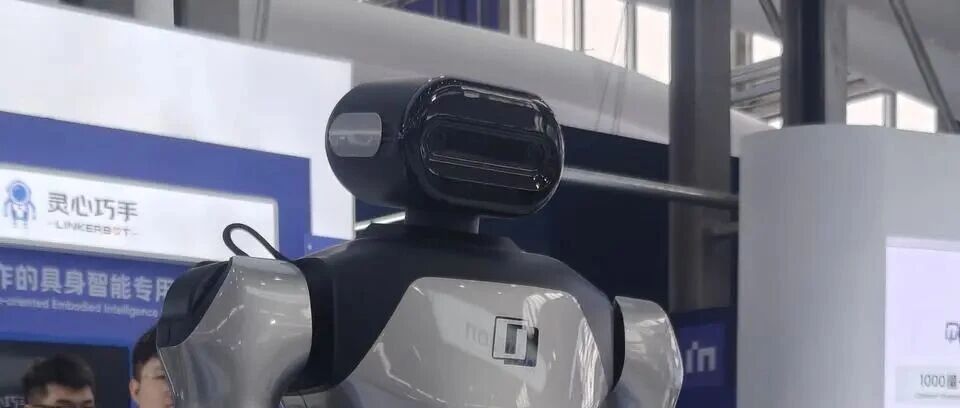
具身大模型

Search documents
众擎机器人赵同阳:不愿被定义为专注做“本体”的公司
Xin Jing Bao· 2025-09-25 03:21
Core Insights - The article discusses the evolution and potential of humanoid robots, highlighting the advancements in technology and the aspirations of the industry to integrate these robots into everyday life [1][2]. Company Overview - Zhao Tongyang, the founder of Zhongqing Robotics, has a history of working in the robotics sector, initially focusing on IoT before pivoting to humanoid robots [2][3]. - The company made its debut at the 2025 Alibaba Cloud Conference, showcasing its capabilities through a performance that demonstrated the robot's coordination and balance [2]. Funding and Partnerships - Zhongqing Robotics has successfully completed two rounds of financing in July 2023, with significant investments from Xiaopeng Motors and JD.com, among others [4][5]. - A strategic partnership was established with Duolun Technology, which plans to purchase at least 2,000 humanoid robots over three years for applications in road safety and data collection [5]. Technology and Development - The company positions itself as a full-stack self-research entity, focusing on both hardware and software, aiming to create robots that exhibit human-like characteristics [6]. - The current focus is on enhancing the physical capabilities of robots before advancing their intelligence, addressing issues related to agility, coordination, and stability [6][12]. Market Strategy - The company plans to begin large-scale deliveries in October 2023, with an expected production capacity of 500 units per month by the end of the year [13][14]. - Zhongqing Robotics aims to explore various application scenarios beyond education and research, seeking to commercialize its technology effectively [15]. Competitive Landscape - The founder emphasizes the importance of not being defined solely as a hardware company, highlighting the uniqueness of Zhongqing Robotics compared to competitors like Yuzhu [9]. - The company is cautious about engaging in price wars, focusing instead on delivering value through its products [16].

具身智能绕不开的“四数”为什么这么难:数采、数据飞轮、数据工厂、仿真合成数据
具身智能之心· 2025-09-23 00:03
Core Viewpoint - The article discusses the evolution and significance of embodied intelligence, emphasizing its philosophical roots and the necessity of physical interaction for intelligent systems [4][5][7]. Group 1: Historical Development - The concept of embodied intelligence traces back to philosophical and cognitive science developments, highlighting the importance of physical interaction in cognitive processes [4]. - Key experiments, such as Richard Held's "passive movement cat" study, demonstrate the intrinsic link between perception and action, reinforcing the idea that active engagement with the environment is crucial for learning [5]. - The shift from traditional views of intelligence as disembodied computation to a more integrated approach that includes physical embodiment is outlined [6][7]. Group 2: Current Trends in Embodied Intelligence - The construction of immersive environments for embodied intelligence is essential, requiring the integration of physical properties and sensory feedback [9][10]. - The development of large-scale, systematic robot training facilities is identified as a critical infrastructure for advancing embodied intelligence [12]. - Various high-level robot training platforms are emerging across China, indicating a rapid growth in this sector [12]. Group 3: Data Collection and Training - High-quality, diverse behavioral data is crucial for the development of embodied intelligence, focusing on visual, interaction, and semantic understanding data [15][17]. - The article outlines the importance of structured data collection methods, including teleoperation and wearable devices, to enhance the training of robots [19][20]. - A systematic approach to data collection is emphasized, with a focus on stability in object grasping tasks, leading to improved predictive capabilities in robotic systems [22][23][25]. Group 4: Future Directions and Challenges - The integration of embodied intelligence with large models is seen as a key pathway for advancing robotic technology, emphasizing the need for a collaborative framework between edge and cloud computing [26][29]. - The article discusses the necessity of building a comprehensive training ecosystem that combines real and virtual environments to facilitate effective learning and adaptation [34][35]. - The future of embodied intelligence relies on diverse embodied agents and a robust learning and evolution framework to ensure continuous improvement and adaptability [31][36]. Group 5: Practical Applications - Embodied intelligence is being applied in various sectors, including logistics, consumer electronics, and healthcare, showcasing its potential to address real-world challenges [30][33]. - The establishment of training centers and collaborative platforms is crucial for fostering innovation and standardization in the field of embodied intelligence [42][45]. - The article highlights the importance of open-source ecosystems and collaborative efforts among industry players to drive advancements in embodied intelligence [74].

90后北大博导造机器人 美团、宁德时代抢着投
经济观察报· 2025-09-15 13:42
Core Viewpoint - The article highlights the advancements and challenges in the Chinese robotics industry, focusing on two prominent figures, Wang Xingxing and Wang He, who are making significant contributions to the field. Wang Xingxing is known for his technical prowess, while Wang He emphasizes the practical application of humanoid robots in real-world scenarios [2][3]. Group 1: Key Figures and Their Contributions - Wang Xingxing, founder of Yushu Technology, gained fame for his robots performing on a national stage, showcasing nine years of technical development [2]. - Wang He, an assistant professor at Peking University and founder of Galaxy General, is recognized for his methodical approach in transitioning humanoid robots from labs to practical applications [2][3]. - Both figures are respected in the industry, with Wang Xingxing noted for his technical breakthroughs and Wang He for his forward-thinking strategies [3]. Group 2: Industry Developments and Innovations - Galaxy General has made significant strides since its establishment in May 2023, completing two rounds of substantial financing, including an 11 billion RMB round led by CATL and Puxuan Capital, marking the largest single financing in the domestic embodied intelligence sector [3]. - The company launched the "Galaxy Space Capsule," a humanoid robot-operated smart retail system, which occupies less than 9 square meters and can serve over a thousand customers daily [5][9]. - Wang He believes that retail is the optimal entry point for robots due to its large market size and diverse tasks, with plans to expand the deployment of the Galaxy Space Capsule across major cities [5][9]. Group 3: Challenges and Solutions in Robotics - Wang He addressed the industry's "three mountains": cost, mass production, and data challenges, emphasizing that the true difficulty lies in delivering economic value rather than merely producing robots [5][6]. - The cost of a Galbot robot is currently lower than hiring a human for three years, making it an attractive option for businesses [10]. - Galaxy General is tackling the data scarcity issue in embodied intelligence by utilizing synthetic data for training, achieving significant efficiency improvements in robot learning processes [14][15].

拓斯达首款人形机器人产品已完成多轮验证
Bei Jing Shang Bao· 2025-09-14 12:37
Core Viewpoint - The company, Tuosida, is experiencing significant growth in its product-related business, driven by its strategic focus on product development and project reduction, with a notable increase in revenue and profit margins [1] Financial Performance - In the first half of 2025, Tuosida's product-related business revenue increased by 22.66% year-on-year, with a gross margin of 38.83%, showing a slight improvement [1] - Revenue from industrial robots specifically grew by 22.55% year-on-year [1] Product Development - Tuosida has made progress on its first humanoid robot, "Xiao Tuo," developed in collaboration with Zhipu, which features an embodied large model [1] - The robot has successfully completed multiple rounds of verification in injection molding workshops, capable of real-time detection of injection part quality and autonomous loading, achieving full-process automation from detection to operation [1] - The development of "Xiao Tuo" demonstrates the feasibility of humanoid robots in industrial applications and reflects the company's capability in creating a closed-loop system of technology, manufacturing, products, and scenarios [1]

银河通用张直政:具身大模型的发展需要上万亿条数据
Di Yi Cai Jing· 2025-09-11 07:33
Group 1 - The development of embodied large models may require trillions of data points, as stated by Zhang Zhizheng, co-founder of Galaxy General Robotics [1] - The challenge lies in the insufficient and unsustainable nature of real data collection, making synthetic data an inevitable choice [1]
抢跑IPO、猛投上下游 谁能赢下人形机器人的资本游戏?
Di Yi Cai Jing· 2025-09-10 13:27
Core Insights - The humanoid robot industry is actively preparing for IPOs, with at least four companies, including Yushu, aiming to enter the secondary market soon [1][2] - The competition for the title of "first humanoid robot stock" is intense, as companies seek to secure funding and establish a market presence [2][3] - The success of these IPOs could lead to increased investment in the humanoid robot sector, particularly in areas like embodied AI models [3] Group 1: IPO Preparations - Yushu has recently completed a name change and is in the final stages of preparing for its IPO, expected between October and December [2] - Other humanoid robot companies in Beijing and Shanghai are also preparing for IPOs, with many targeting the Hong Kong Stock Exchange due to differing regulatory processes compared to A-shares [2] - The urgency to go public is driven by the need for capital to support growth and development in the humanoid robot sector [2][3] Group 2: Market Performance - The humanoid robot index has seen a significant increase of 55.90% year-to-date, indicating strong market interest [3] - Companies associated with Yushu, such as Changsheng Bearings and Orbbec, have experienced substantial stock price increases, with gains of over 195% and 240% respectively [3] Group 3: Investment Strategies - Companies like Zhiyuan are forming investment funds to enhance their valuation narratives while also focusing on core business operations [4][5] - The strategy of investing in early-stage projects has been employed by Zhiyuan, which has invested in 15 projects over the past year [4] - There are concerns that excessive focus on investment could distract from core business objectives, potentially leading to misalignment between investment and operational cycles [5][6] Group 4: Ecosystem Development - The collaboration between investment and operational activities aims to create a robust ecosystem for humanoid robots, with companies leveraging their supply chains for competitive advantages [6] - Partnerships are being formed to enhance resource sharing and reduce costs, which could lead to improved operational efficiency [6]
抢跑IPO、猛投上下游,谁能赢下人形机器人的资本游戏?
Di Yi Cai Jing· 2025-09-10 13:17
Core Viewpoint - The humanoid robot industry is rapidly preparing for IPOs, with several companies aiming to enter the secondary market, highlighting the competitive landscape for the "first stock" in this sector [1][2]. Group 1: IPO Preparations - Yushu has recently changed its name and is on the verge of an IPO, with expectations to file between October and December 2023 [2]. - At least three other humanoid robot companies in Beijing and Shanghai are also preparing for IPOs, primarily targeting the Hong Kong Stock Exchange [2]. - The urgency for these companies to go public is driven by the need for capital to support growth and development in the humanoid robot sector [2][3]. Group 2: Market Dynamics - The humanoid robot index has increased by 55.90% year-to-date, indicating strong market interest [3]. - Companies like Changsheng Bearing and Aobo Zhongguang have seen significant stock price increases, with gains of over 195% and 240% respectively, reflecting investor enthusiasm for the sector [3]. Group 3: Investment Strategies - Companies are leveraging investments to enhance their valuation narratives, with firms like Zhiyuan establishing funds to invest in early-stage projects within the robotics ecosystem [4]. - Zhiyuan has invested in 15 early-stage projects over the past year, indicating a proactive approach to building a comprehensive investment portfolio [4]. - The dual strategy of investing while securing orders is seen as a way to create an ecological moat, although there are concerns about potential distractions from core business operations [4][12].
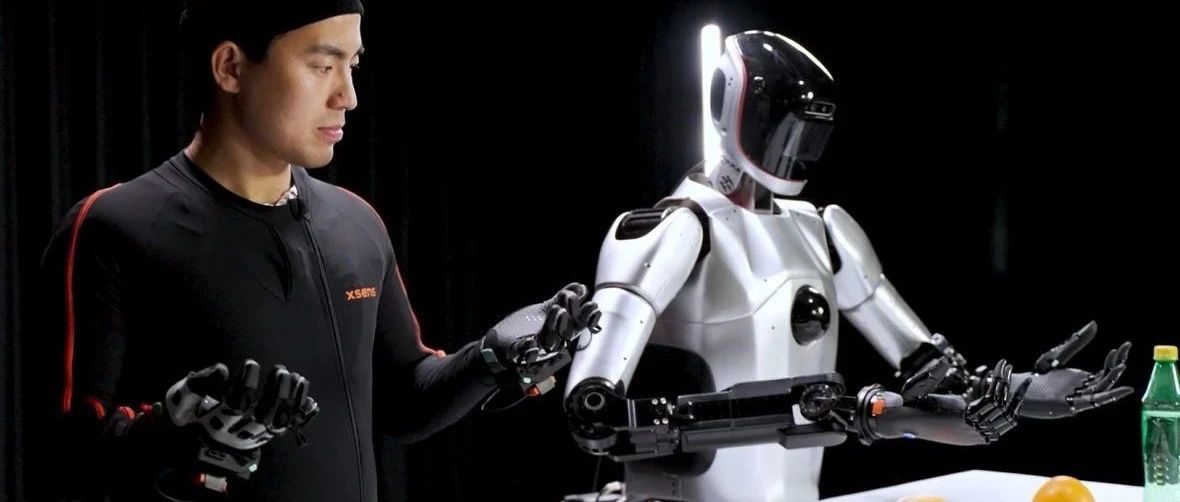
动捕设备能成为具身大模型的下一场蓝海吗?
机器人大讲堂· 2025-08-21 10:11
Group 1: Development of Embodied Intelligence - The concept of embodied intelligence dates back to the 1950s, with Turing laying the groundwork for its potential development [1] - Significant theoretical support was provided by researchers like Rodney Brooks and Rolf Pfeifer in the 1980s and 1990s, marking the early exploration and theoretical development phase [1] - The early 2000s saw the integration of interdisciplinary methods and technologies, leading to a more complete academic branch of embodied intelligence [1] - The rapid advancement of deep learning technology in the mid-2010s injected new momentum into the field, leading to increased industrial application since 2020 [1] Group 2: Large Models and Their Evolution - Large models refer to machine learning models with vast parameter counts, widely applied in NLP, computer vision, and multimodal fields [2] - The development of large models can be traced back to early AI research focused on logic reasoning and expert systems, which were limited by hard-coded knowledge [2] - The introduction of the Transformer model by Google in 2017 significantly enhanced sequence modeling capabilities, leading to the mainstream adoption of pre-trained language models [2] - The emergence of ChatGPT in late 2022 propelled advancements in the NLP field, with GPT-4 introducing multimodal capabilities in March 2023 [2] Group 3: Embodied Large Models - Embodied large models evolved from non-embodied large models, initially focusing on single-modal language models before expanding to multimodal inputs and outputs [4] - Google's RT series exemplifies embodied large models, with RT-1 integrating vision, language, and robotic actions for the first time in 2022, and RT-2 enhancing multimodal fusion and generalization capabilities in 2023 [4] - The future of embodied large models is expected to move towards more general applications, driven by foundational models like RFM-1 [4] Group 4: Data as a Core Barrier - The competition between real data and synthetic data is crucial for embodied robots, which often face challenges such as data scarcity and high collection costs [15] - The scale of embodied robot datasets is significantly smaller compared to text and image datasets, with only 2.4 million data points available [15] - Various organizations are expected to release high-quality embodied intelligence datasets in 2024, such as AgiBotWorld and Open X-Embodiment [15] Group 5: Motion Capture Systems - Motion capture technology records and analyzes real-world actions, evolving from manual keyframe drawing to modern high-precision methods [23] - The motion capture system consists of hardware (sensors, cameras) and software (data processing modules), generating three-dimensional motion data [23] - Different types of motion capture systems include mechanical, acoustic, electromagnetic, inertial, and optical systems, each with its own advantages and limitations [25] Group 6: Key Companies in Motion Capture Industry - Beijing Duliang Technology specializes in optical 3D motion capture systems, offering high-resolution and high-precision solutions [28] - Lingyun Technology is a professional supplier of configurable vision systems, providing optical motion capture systems with real-time tracking capabilities [29] - Aofei Entertainment focuses on motion capture solutions through investments in companies like Nuoyiteng, which offers high-precision products based on MEMS inertial sensors [30] - Liyade is a leading company in audiovisual technology, utilizing optical motion capture technology for various applications [31] - Zhouming Technology has developed a non-wearable human posture motion capture system that leverages computer vision and AI [32] - Xindong Lianke focuses on high-performance MEMS inertial sensors, expanding its business into motion capture hardware for robots [33]
股价一个多月涨10倍!
Jing Ji Wang· 2025-08-15 03:13
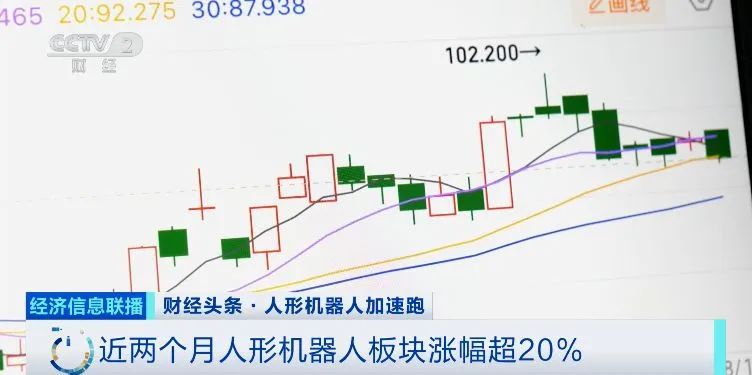
Group 1 - The 2025 World Humanoid Robot Games opened on August 14, highlighting the rapid development of China's humanoid robot industry, with significant advancements in research, manufacturing, and sales [1] - From the beginning of the year to date, there have been 96 investment and financing events related to humanoid robots in China, amounting to 26.549 billion yuan [1] - The humanoid robot sector has seen a stock market increase of over 20% in the past two months, with individual stocks like Changsheng Bearing rising approximately 670% since September last year [3] Group 2 - The only robot-themed ETF in the market, with a scale exceeding 10 billion yuan, has seen a nearly 13% increase since early June [5] - Government support and continuous R&D investments from companies have driven the rise in the humanoid robot sector, with various local policies providing industry and consumer subsidies [7] - Recent financing activities in the humanoid robot sector include a significant 1.1 billion yuan B-round financing by Galaxy General in June, marking the largest single financing in the field this year [9] Group 3 - The humanoid robot sector is gaining attention due to its integration of advanced technologies from artificial intelligence, mechanical engineering, and electronics, with expectations for rapid growth in demand across various applications [11] - The overall outlook for the humanoid robot industry remains positive, supported by the increasing market demand and continuous capital influx [9][11]
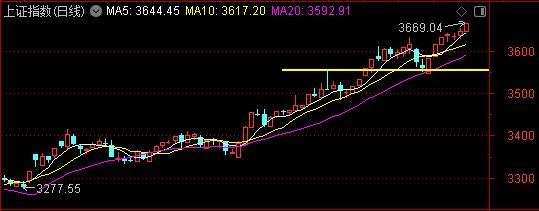
两大龙头大涨!产业链能否掀起炒作狂潮?
Mei Ri Jing Ji Xin Wen· 2025-08-12 10:43
Group 1 - The core viewpoint of the news highlights the significant rise in stock prices of two companies, Cambricon and Industrial Fulian, driven by expectations of global computing power demand [1] - Cambricon's stock price reached a historical high with a 20% increase, marking a 17-fold rise since its low in April 2022 [1] - Industrial Fulian's stock surged by 9.24%, achieving a market capitalization of 788.6 billion yuan [1] Group 2 - There is a substantial gap in market expectations regarding global computing power demand, with North American tech companies accelerating deployment driven by AI [2] - The construction of large computing clusters is essential for the next generation of model training and the transition towards AGI [2] - Recent financial reports from North American tech firms have confirmed the performance of computing power-related businesses, alleviating concerns about an AI bubble [2] Group 3 - The A-share market saw collective gains, with the Shanghai Composite Index rising 0.50%, nearing last year's peak [3] - The trading volume in the Shanghai and Shenzhen markets reached 1.8815 trillion yuan, indicating increased market activity [4] - A joint statement from China and the U.S. to pause the implementation of tariffs has positively influenced market sentiment [4] Group 4 - The artificial intelligence industry chain is experiencing widespread growth, with sectors like liquid cooling servers, CPO, PCB, and storage seeing significant gains [7] - The liquid cooling server sector is highlighted as being in a nascent stage, with expectations for large-scale deliveries in September [8] - PCB technology is expected to evolve with AI computing hardware, focusing on reducing dielectric constants and material breakthroughs [9] Group 5 - The sales of new energy vehicles in July reached 986,000 units, a year-on-year increase of 12.0%, with cumulative sales for the year at 6.455 million units, up 29.5% [11] - The automotive sector is anticipated to benefit from trends in autonomous driving and robotics, presenting new growth opportunities [11] - A new personal consumption loan subsidy policy is expected to stimulate consumer spending and market vitality [13]