减肥药市场

Search documents
罗氏(RHHBY.US)将以高达35亿美元收购89bio(ETNB.US) 加码减肥药市场
Zhi Tong Cai Jing· 2025-09-18 07:40
Core Viewpoint - Roche is acquiring 89bio for up to $3.5 billion, marking its entry into the weight loss drug and related therapies market [1][2] Group 1: Acquisition Details - Roche will pay $14.50 per share in cash for 89bio, with a total equity value of approximately $2.4 billion [1] - Shareholders will also receive a non-tradable or valuable right, potentially worth up to $6.00 per share, bringing the total deal value to about $3.5 billion [1] - 89bio's latest closing price was $8.08, with a market capitalization close to $1.2 billion [1] Group 2: Strategic Intent - Roche aims to catch up with Novo Nordisk and Eli Lilly, which produce blockbuster drugs Wegovy and Zepbound, respectively [2] - The company plans to accelerate the development of its experimental weight loss drugs, which have shown mixed results in smaller trials but are moving towards critical clinical development stages [2] - Roche's recent significant transactions have been related to obesity, including a $5.3 billion collaboration with Zealand Pharma A/S and a $3.1 billion acquisition of Carmot Therapeutics Inc. earlier this year [2] Group 3: Leadership and Timeline - Roche has appointed Morten Lammert, a former executive from Novo Nordisk, to lead its global cardiovascular, renal, and metabolic divisions to enhance its entry into the obesity treatment market [2] - The acquisition of 89bio is expected to be completed by the fourth quarter of 2025 [2]


全球制药业洞察 | 礼来或超越诺和诺德,占千亿美元减肥药市场的半壁江山
彭博Bloomberg· 2025-09-10 06:05
Core Viewpoint - The global weight loss drug market is projected to reach at least $100 billion by 2030, growing sixfold from 2024, with Eli Lilly expected to surpass Novo Nordisk in market share by 2025 [3][4][6]. Market Overview - The weight loss drug sales are anticipated to grow significantly from 2024 to 2030, reaching at least $100 billion, which is 7% higher than previous analyses [4]. - The analysis includes a broader range of drugs and adjusts treatment duration and epidemiological assumptions, expanding the target patient population [4]. - By 2030, the estimated number of treated patients is approximately 24 million in the U.S. and 22 million in Europe [4]. Competitive Landscape - Eli Lilly is expected to increase its market share from 43% to 53% by 2030, while Novo Nordisk's share is projected to decline from 57% to 33% [6]. - The market will see the entry of up to 24 new weight loss drugs by the end of 2030, compared to only six currently available [6]. Drug Class Insights - GLP-1 injection formulations are expected to dominate the market, with sales projected to reach approximately $81 billion from 2024 to 2030 [8][11]. - The sales peak for Eli Lilly's Zepbound/Mounjaro is expected to reach $40 billion, while Novo Nordisk's Wegovy is projected to peak at $20 billion [8][11]. Future Projections - By 2035, the weight loss drug market could grow to $167 billion, with a peak of $171 billion expected by 2036 [4]. - New GLP-1 injection drugs are anticipated to launch starting in 2026, with significant sales potential for drugs like Novo Nordisk's Cagrisema and Eli Lilly's Retatrutide [11].


暴涨5.85%!礼来口服减肥药在糖尿病患者中显效果,有望年内提交FDA审批
美股IPO· 2025-08-27 00:50
Core Viewpoint - Eli Lilly's oral weight loss drug Orforglipron has shown promising results, achieving an average weight loss of 10.5% in obese patients with diabetes, which is better than Novo Nordisk's oral drug that reported a 9.2% weight loss [1][3] Group 1: Drug Performance and Market Impact - The average weight loss for patients receiving the highest dose of Orforglipron was approximately 21 pounds, with significant improvements in blood sugar, blood pressure, blood lipids, and inflammation markers [3] - Following the announcement, Eli Lilly's stock surged by 5.85%, while Novo Nordisk's stock fell by over 3% [4] - Eli Lilly plans to submit a formal application to the FDA for Orforglipron by the end of this year, aiming for a market launch in 2026 [1][8] Group 2: Competitive Landscape and Market Potential - The global weight loss drug market is projected to reach $95 billion by 2030, with oral medications seen as key to unlocking a larger market compared to injectable drugs [7] - Injectable drugs are limited by high costs and cold chain storage requirements, while oral drugs are easier to distribute and have lower manufacturing costs, potentially reaching over 1 billion users globally [8] - Currently, no oral weight loss drug has been approved, making each trial result critical for market sentiment [8] Group 3: Company Actions and Investor Sentiment - After disappointing results from a previous trial, Eli Lilly executives and board members collectively purchased $4.5 million in company stock, marking the largest internal buyback since 2019 [6] - Eli Lilly's stock had previously dropped over 10% year-to-date, while Novo Nordisk's stock had plummeted over 43% [5]
大摩礼来总部调研:管理层对“减肥药市场”非常有信心
美股IPO· 2025-08-20 08:41
Core Viewpoint - Morgan Stanley believes that Eli Lilly's management sees the weight loss drug market evolving into a "super category" market, emphasizing the strategic value of the oral GLP-1 drug Orforglipron, which is expected to become a key successful product for the company [1][3]. Group 1: Market Outlook - Eli Lilly's management is extremely optimistic about the weight loss drug market, anticipating it will develop into a "super category" consisting of multiple drugs [3][6]. - The company is positioned favorably in this market due to its broad product portfolio across treatment lines, as management believes that current offerings like Semaglutide cannot meet global patient demand [6][10]. Group 2: Product Focus - The oral GLP-1 drug Orforglipron is highlighted as a new growth engine, with management expressing high confidence in its prospects, supported by favorable Phase III trial data [7]. - Orforglipron is expected to cover a significant range of weight loss effects, with management noting that only one-third of patients use the highest dose of existing injectable options [7]. Group 3: Pricing Strategy - Eli Lilly has established a clear tiered pricing strategy to address competition in the weight loss drug market, with Semaglutide positioned as a mid-tier product and Orforglipron priced slightly lower [8][9]. - The company anticipates that competitors will maintain disciplined pricing in the short term, although the behavior of later entrants remains uncertain [9]. Group 4: Market Access Strategy - Four key drivers for expanding market access for GLP-1 weight loss drugs have been identified: obtaining more indication approvals, favorable pharmacoeconomic studies, differentiated commercial benefit plans, and government coverage decisions [10]. - Eli Lilly aims to achieve broad coverage before the entry of generic Semaglutide, with management emphasizing the importance of innovation and a strong product portfolio in the face of anticipated generic competition [10].
大摩礼来总部调研:管理层对“减肥药市场”非常有信心
Hua Er Jie Jian Wen· 2025-08-20 06:55
Core Viewpoint - Morgan Stanley's analyst team expresses strong optimism regarding Eli Lilly's management outlook on the weight loss drug market, predicting it will evolve into a "super category" market [1][5][6] Market Positioning - Eli Lilly's CEO indicated that the weight loss drug market will develop into a "super category" consisting of multiple drugs, with the company positioned favorably due to its broad product portfolio across treatment lines [5][6] Product Pipeline and Development - Eli Lilly's management believes that semaglutide alone cannot meet global patient demand, leading to market segmentation based on weight loss and blood sugar control effects, different administration routes, and dosing frequency [6][9] - The company is developing a comprehensive product pipeline to address various market segments, claiming to have the largest and most successful R&D portfolio in its history [6][7] Key Product: Orforglipron - The oral GLP-1 drug Orforglipron is highlighted as a significant growth driver, with management expressing high confidence in its potential [7] - Orforglipron is expected to cover a wide range of weight loss effects, with management noting that only one-third of patients use the highest dose of Wegovy, indicating room for growth [7] Pricing Strategy - Eli Lilly has established a clear tiered pricing strategy for its weight loss drugs, with semaglutide as a mid-tier product, Orforglipron priced slightly lower, and high-efficiency injectables like Retatrutide positioned at the premium end [8] - The management anticipates that competitors will maintain disciplined pricing in the short term, but future entrants may introduce uncertainty [8] Market Access Strategy - The management identified four key drivers for expanding market access for GLP-1 weight loss drugs: obtaining more indication approvals, favorable pharmacoeconomic studies, differentiated commercial benefit plans, and government coverage decisions [9] - Eli Lilly aims to achieve broad coverage before the entry of generic versions of semaglutide, emphasizing the importance of innovation and a strong product portfolio [9]
280%+!暗盘涨疯了!“减肥药新贵”今日登陆港股
Zheng Quan Shi Bao· 2025-08-14 23:44
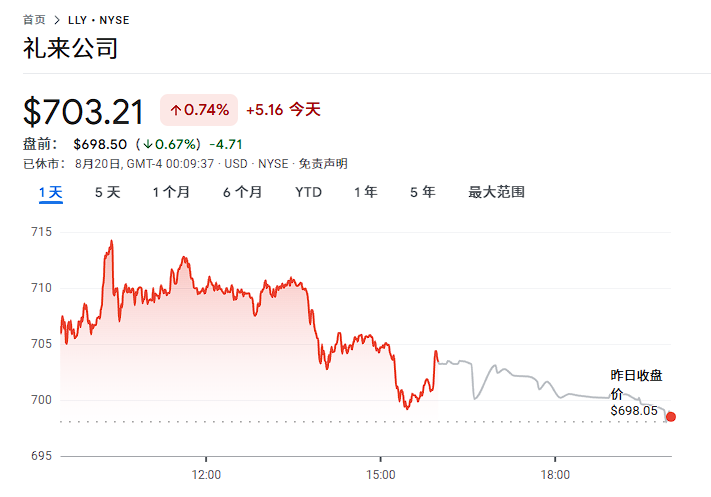
Core Viewpoint - Silver诺医药, a new player in the weight loss drug market, has shown impressive performance in the dark market, with its stock price surging over 280% during the pre-listing phase [1]. Fundraising and Financials - The company has raised approximately RMB 682.8 million in public fundraising and has attracted a total financing subscription amounting to RMB 302.66 billion [2]. - Silver诺医药 has completed four rounds of financing before its listing, accumulating around RMB 1.514 billion, with notable investors including KIP and Tongchuang Weiye [3]. - The company reported a revenue of approximately RMB 38.14 million in the first five months of the year, with a loss of nearly RMB 100 million [10]. Market Potential - The global and Chinese obesity or overweight patient population is projected to reach 3.575 billion and 639 million, respectively, by 2024 [7]. - The Chinese obesity drug market is expected to grow rapidly, reaching RMB 4.2 billion by 2024, with a compound annual growth rate (CAGR) of 30.6% from 2024 to 2028 [7]. - Silver诺医药's core product, Isupatide α, is anticipated to be a strong competitor in the domestic weight loss drug market [7]. Product Development - The company is focused on the discovery, development, and commercialization of innovative therapies for diabetes and other metabolic diseases, with Isupatide α being a key product [6]. - Isupatide α has received regulatory approval for treating type 2 diabetes (T2D) in China and is undergoing clinical trials for obesity treatment, with completion expected in Q4 2026 [6][7]. Research and Development - R&D remains the largest expenditure for Silver诺医药, with R&D costs of RMB 492.1 million in 2023 and RMB 102.5 million in 2024 [12]. - The company emphasizes the importance of R&D for its future, with a team of 37 members dedicated to various aspects of drug development [12]. Competitive Landscape - Silver诺医药 faces intense competition from several large pharmaceutical and biotech companies that have existing or developing drugs for similar indications [13]. - Currently, there are 11 GLP-1 receptor agonists approved globally for T2D treatment, with three long-acting human GLP-1 receptor agonists holding an 83% market share [13].
美银:市场“错杀”了礼来?
美股IPO· 2025-08-09 02:36
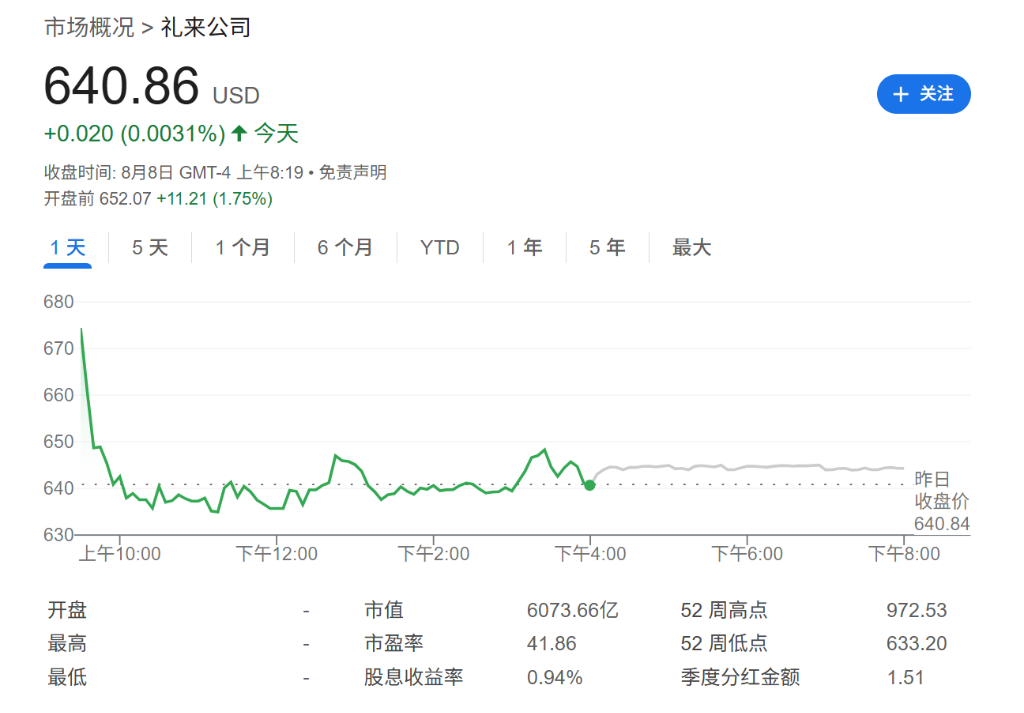
Core Viewpoint - Eli Lilly's stock price dropped 15% following its Q2 earnings report, driven by market concerns over future competition, pricing pressures, and threats from generics, despite the company's strong fundamentals and significant growth potential in the obesity drug market [1][3][4]. Financial Performance - Eli Lilly reported Q2 total revenue of $15.558 billion, a 38% year-over-year increase, exceeding Bank of America's expectations by 4% and market expectations by 6% [5]. - The obesity drug Mounjaro generated $5.199 billion in revenue, surpassing expectations by 16%, while Zepbound achieved $3.381 billion, exceeding expectations by 8% [5]. - Adjusted earnings per share were $6.31, exceeding Bank of America's expectations by 8% and market expectations by 13% [5]. - The gross margin reached 85.0%, up 3 percentage points from the previous year, driven by improved product mix and production efficiency [5]. Market Sentiment and Concerns - The market's negative reaction was attributed to heightened anxiety regarding the future of the obesity drug business, overshadowing the company's strong performance [6]. - Investors expressed significant concern during the earnings call about the competitive landscape for the oral obesity drug Orforglipron, despite management's satisfaction with its performance [7]. - Pricing trends and potential competition from generics, particularly semaglutide, were major discussion points, with analysts highlighting the risk of market disruption in 2026 [8]. Valuation and Growth Potential - Bank of America analysts reiterated a "buy" rating for Eli Lilly, citing the 15% stock price drop as a "special opportunity" [10]. - The company's revenue growth guidance for 2025 is approximately 35%, significantly outpacing the average growth rate of 4% for peers in the U.S. and European pharmaceutical sectors [12]. - Eli Lilly's valuation, based on the projected P/E ratio for 2026, is only twice that of the second-fastest growing competitor, indicating a significant value opportunity given its superior growth rate [13].
市场“错杀”了礼来?
Hua Er Jie Jian Wen· 2025-08-08 12:47
Core Viewpoint - Eli Lilly's stock plummeted 15% following its Q2 earnings report, but Bank of America believes this is a panic sell-off, asserting that the company's fundamentals remain strong [1][5]. Financial Performance - Eli Lilly reported Q2 total revenue of $15.558 billion, a 38% year-over-year increase, exceeding Bank of America's expectations by 4% and market expectations by 6% [4]. - The weight loss drug Mounjaro generated $5.199 billion in revenue, surpassing expectations by 16%, while Zepbound achieved $3.381 billion, exceeding expectations by 8% [4]. - Adjusted earnings per share were $6.31, exceeding Bank of America's expectations by 8% and market expectations by 13% [4]. - The gross margin reached 85.0%, up 3 percentage points from the previous year, driven by improved product mix and production efficiency [4]. Market Sentiment and Concerns - Despite strong financial results, market reaction was negative due to concerns over the future of the weight loss drug business, particularly regarding the competitive landscape and pricing pressures [5]. - Investors expressed anxiety over the prospects of the oral weight loss drug Orforglipron, with doubts about its positioning in a competitive market [5]. - Pricing trends and potential threats from generic competitors, particularly in the Canadian market, were highlighted as significant concerns [5]. Analyst Outlook - Bank of America reiterated a "buy" rating for Eli Lilly, setting a target price of $1,000, citing the significant mismatch between the company's growth potential and its current valuation [6]. - The report emphasized that Eli Lilly's revenue growth guidance for 2025 is approximately 35%, compared to an average growth rate of 4% for peers, indicating a substantial growth advantage [11]. - The valuation based on projected earnings for 2026 shows Eli Lilly's price-to-earnings ratio is only twice that of the second-fastest growing competitor, suggesting that there is value in the stock given its growth rate [11].
盘前重挫12%!礼来Q2营收大增38%并上调全年指引,但口服减肥药效果不及预期
美股IPO· 2025-08-07 12:34
Core Viewpoint - Eli Lilly reported strong Q2 earnings with revenue of $15.56 billion, a 38% year-over-year increase, exceeding market expectations of $14.7 billion, and raised its full-year revenue guidance to $60-62 billion [1][2][10] Financial Performance - Q2 revenue reached $15.56 billion, driven by sales growth of Zepbound and Mounjaro [2] - Reported EPS was $6.29, a 92% increase year-over-year, while non-GAAP EPS was $6.31, up 61% from the previous year [3][2] - Gross margin improved to 84.3%, up 3.5 percentage points due to better production costs and product mix [2] Key Product Developments - Mounjaro generated global revenue of $5.2 billion, a 68% increase, with U.S. sales of $3.3 billion and international sales of $1.9 billion [8][9] - Zepbound saw U.S. revenue of $3.38 billion, a 172% increase, although facing pricing pressure [8][9] - Verzenio revenue was $1.49 billion, reflecting a 12% year-over-year growth [8] Market Dynamics - Despite strong revenue growth, pricing pressures were evident, contributing to a 6% decline in growth due to an 8% price drop in the U.S. market [9] - The competitive landscape for GLP-1 drugs is changing, with increased pressure from insurance companies and government programs [9] R&D and Future Outlook - R&D expenses rose to $3.34 billion, a 23% increase, indicating continued high investment in pipeline development [10] - The company raised its 2025 revenue guidance by $1.5 billion to a range of $60-62 billion, reflecting management's confidence in business prospects [10] Orforglipron Clinical Trial Results - The experimental weight loss pill orforglipron showed only an 11% weight reduction in Phase III trials, below Wall Street expectations, leading to a significant drop in stock price [6][11] - The drug is expected to provide a cheaper oral option in the weight loss market projected to grow to $95 billion by 2030 [11][12] - Common side effects include nausea and vomiting, similar to existing GLP-1 drugs, but orforglipron did not cause liver issues, a concern with other weight loss drugs [11][12]
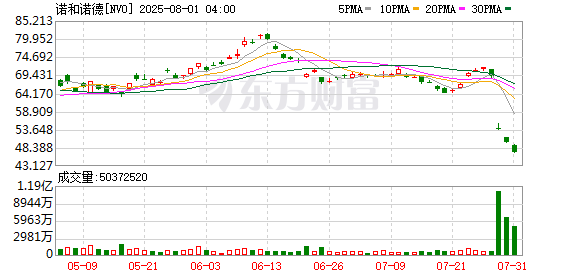
司美格鲁肽跌落神坛?诺和诺德下调业绩预期
Guang Zhou Ri Bao· 2025-08-01 02:00
Core Viewpoint - Novo Nordisk significantly lowered its full-year financial outlook and appointed Maziar Mike Doustdar as the new CEO, succeeding the current CEO [2] Financial Outlook - The company revised its full-year sales growth forecast from 13%-21% to 8%-14% [2] - The operating profit growth forecast was adjusted from 16%-24% to 10%-16% [2] - Following the announcement, the company's stock price dropped by 28%, resulting in a market value loss of approximately $93 billion [2] Reasons for Downgrade - The primary reason for the lowered performance expectations is the poor sales of "Wegovy" (weight loss version of semaglutide), attributed to slower-than-expected expansion in the U.S. obesity market and significant illegal circulation of generic GLP-1 drugs [2] - Additionally, "Ozempic" (diabetes version of semaglutide) is experiencing slowed growth due to increased competition in the U.S. GLP-1 diabetes drug market, leading patients to switch to competing products [2] - International market performance has also fallen short of expectations, with Wegovy's penetration in certain international markets being below company targets [2] Industry Perspective - Industry observers note that while the global obesity issue presents significant opportunities for the weight loss drug market, companies face intensified competition from multi-target drugs, a more complex payment environment, and stricter regulatory requirements [2] - There is an increasing sensitivity in the capital markets regarding the risks associated with pharmaceutical companies' reliance on single products [2]