功能饮料

Search documents
再上市找钱?东鹏饮料负债高企,被3200个经销商“掐住脖子”
Sou Hu Cai Jing· 2025-10-20 14:03
Core Viewpoint - Dongpeng Beverage has submitted a new listing application to the Hong Kong Stock Exchange after a previous attempt failed within six days, showcasing impressive growth metrics but facing potential challenges in sustaining this growth in a competitive market [3][15]. Group 1: Financial Performance - Dongpeng Beverage's revenue is projected to grow from 8.5 billion RMB in 2022 to over 15.8 billion RMB by 2024, with net profit increasing from 1.44 billion RMB to 3.33 billion RMB during the same period [3][4]. - In the first half of 2025, revenue reached 10.74 billion RMB, a year-on-year increase of 36.37%, but the growth rate has slightly declined compared to the same period in 2024 [3][4]. Group 2: Product Segmentation - The company's energy drink, Dongpeng Special Drink, remains the core product, accounting for 96.6% of revenue in 2022, which decreased to 77.9% in the first half of 2025, indicating a need for diversification [4][7]. - Other beverage products, such as sports drinks, have a much smaller market share, with revenue of 1.49 billion RMB in 2024, representing only 9.4% of total revenue [6][7]. Group 3: Distribution Channels - Dongpeng Beverage relies heavily on offline distribution channels, with 87.1% of revenue coming from distributors as of the first half of 2025, which poses risks related to dependence on these partners [7][9]. - The company has 3,200 distribution partners covering 4.2 million retail outlets, indicating a strong market presence but also a reliance on a single distribution model [7][9]. Group 4: Debt and Financial Structure - The company's debt levels are concerning, with a debt-to-asset ratio exceeding 50%, reaching 61.86% in the first half of 2025, indicating a reliance on debt financing [11][13]. - Short-term borrowings increased from 3.18 billion RMB in 2022 to 6.55 billion RMB in 2024, highlighting potential liquidity issues as current assets are insufficient to cover current liabilities [13][14]. Group 5: Market Position and Future Outlook - Dongpeng Beverage's growth story is challenged by increasing competition from established brands like Red Bull and the need for international expansion as domestic competition intensifies [15][16]. - The company stands at a critical juncture, where its reliance on a single product line and distribution model may hinder its long-term sustainability in the market [15][16].



广东老板靠“山寨”饮料起家,一年狂揽百亿
3 6 Ke· 2025-10-19 23:54
Core Viewpoint - Dongpeng Beverage is making a second attempt to list on the Hong Kong Stock Exchange to support its international business development after an initial application was invalidated in April 2023. The company has experienced rapid growth since its A-share listing in 2021, becoming a leader in the functional beverage sector [1][2]. Financial Performance - Dongpeng Beverage's revenue has shown significant growth from 2022 to 2025, with figures of 8.5 billion yuan, 11.257 billion yuan, and 15.83 billion yuan respectively, reflecting year-on-year growth rates of 21.81%, 32.44%, and 40.62%. In the first half of 2025, the company achieved a revenue of 10.737 billion yuan, a 36.37% increase year-on-year, and a net profit of 2.375 billion yuan, up 37.22% [1]. Market Position - As of October 17, 2025, Dongpeng Beverage's market capitalization reached 156.7 billion yuan. The founder, Lin Muqin, has seen his wealth grow significantly, ranking as the richest person in Guangdong's Chaoshan region with a net worth of 30.5 billion yuan in 2022 [1]. Strategic Focus - The company emphasizes growth as its core strategy, with Lin Muqin stating that this focus is ingrained in the company's culture. Dongpeng is diversifying its product offerings beyond its flagship Dongpeng Special Drink to include new products like "Brew Water" and "Dongpeng Coffee" to reduce reliance on a single product [4][5]. Competitive Landscape - The beverage industry is highly competitive, and Dongpeng is actively working to expand its market share. The company has seen its market share grow from 4.7% in 2012 to 16.7% in 2021, while Red Bull's market share declined from 82.1% to 53.3% during the same period [15]. Digital Transformation - Dongpeng has integrated digitalization into its operations, allowing for real-time data tracking of sales and inventory. This digital approach has improved the company's efficiency in managing promotional activities and understanding market dynamics [16][18].
东鹏募资合理性存疑:左手110亿理财,右手港股融15亿,股东套现忙
Xin Lang Cai Jing· 2025-10-16 02:33
Core Viewpoint - Dongpeng Beverage has submitted a second listing application to the Hong Kong Stock Exchange, aiming to raise 1.493 billion yuan for capacity expansion and global layout, despite holding over 10 billion yuan in cash and facing shareholder sell-offs and operational concerns [1][4]. Financial Performance - As of the end of 2024, the company reported total assets of 22.676 billion yuan and total liabilities of 14.985 billion yuan, resulting in a debt-to-asset ratio of 66.08%, significantly up from 57.01% in 2023 [2]. - Short-term borrowings reached 6.065 billion yuan, an increase of 80.14% year-on-year, with current liabilities accounting for 99.07% of total liabilities, indicating substantial short-term repayment pressure [2]. Shareholder Actions - Since 2022, the second-largest shareholder, Junzheng Investment, has cashed out nearly 4.2 billion yuan through five reduction plans, reducing its stake below the 1% disclosure threshold [2]. - The controlling family's associated parties have also sold shares, with Kunpeng Investment, holding over 63% of shares, cashing out approximately 1.9 billion yuan between March and May 2025, raising market concerns despite the company's claims of non-involvement in the sell-off [2]. Operational Risks - The company heavily relies on energy drinks, which account for over 80% of its revenue, posing a risk of instability if market growth slows or competition intensifies [3]. - Despite having 4.2 million terminal sales points, the reliance on a distribution model has led to high sales expenses, which increased by 37.09% year-on-year in 2024, with advertising and channel promotion costs rising over 54% [3]. Global Expansion Challenges - The planned fundraising includes investments in Southeast Asia and North America, but the company lacks international operational experience and faces competition from established brands like Red Bull [4]. - The company's research and development investments have not kept pace with revenue growth, and the high sugar content of core products may hinder future development as consumer preferences shift towards healthier options [4]. Market Confidence - Despite a revenue growth of 36.37% and net profit growth of 37.2% in the first half of 2025, investor confidence is wavering due to fundamental issues such as high debt levels and shareholder sell-offs [4]. - The company's strategy of high dividends, exceeding 2 billion yuan since its IPO, contrasts with its growth stage, raising concerns about its long-term sustainability in the competitive functional beverage market [4].
这家功能饮料龙头是现金大户,却要赴港上市融资,股东频频减持
Sou Hu Cai Jing· 2025-10-12 01:50
Core Viewpoint - Dongpeng Beverage, known as the "first stock of functional drinks," has submitted its application for a secondary listing in Hong Kong after a successful four-year run on the A-share market, with significant growth in stock price and market capitalization [1][3]. Company Overview - Dongpeng Beverage, officially Dongpeng Beverage (Group) Co., Ltd., was established in 1994 and has evolved into China's leading functional beverage company, with a product matrix that includes energy drinks, sports drinks, tea drinks, coffee drinks, plant protein drinks, and fruit and vegetable juices [3][4]. - The company has achieved a remarkable revenue growth rate, ranking first among the top 20 listed soft drink companies globally [3]. Market Position - Dongpeng Beverage has maintained the top position in China's functional beverage market for four consecutive years since 2021, with market share increasing from 15% in 2021 to 26.3% in 2024 [3][4]. - By retail revenue, the company is projected to be the second-largest functional beverage company in 2024, holding a market share of 23% [3]. Financial Performance - Revenue figures for Dongpeng Beverage during the reporting period are approximately 8.5 billion yuan in 2022, 11.26 billion yuan in 2023, 15.83 billion yuan in 2024, and 10.73 billion yuan in the first half of 2025, reflecting a 36.37% year-on-year growth [4]. - Net profit has increased from 1.441 billion yuan in 2022 to 3.326 billion yuan in 2024, with a compound annual growth rate of 52% [5]. - The company's net profit margin improved from 16.9% in 2022 to 21% in 2024, reaching 22.1% in the first half of 2025 [6]. Industry Growth - The Chinese soft drink industry is projected to reach a retail value of approximately 1.3 trillion yuan in 2024, with functional drinks being the fastest-growing segment, expected to grow at a compound annual growth rate of 8.3% from 2019 to 2024 [4][9]. - The energy drink sector is anticipated to reach a market size of 180.7 billion yuan by 2029, with a compound annual growth rate of 10.3% from 2025 to 2029 [9]. Strategic Expansion - Dongpeng Beverage plans to use proceeds from its Hong Kong IPO to expand production capacity, upgrade supply chain systems, enhance brand marketing, and explore international markets, including Southeast Asia, North America, Europe, and the Middle East [10]. - The company operates nine strategic production bases across major regions, with plans to increase capacity by 6.479 million tons following the completion of new facilities [10].

东鹏饮料冲刺港交所上市:卖功能饮料太赚钱,三年营收快翻番,净利翻一倍多
Sou Hu Cai Jing· 2025-10-10 11:02
Core Viewpoint - Dongpeng Beverage has submitted an application for a mainboard listing on the Hong Kong Stock Exchange, aiming to expand its overseas financing channels and enhance its brand's international influence [3]. Financial Performance - Revenue is projected to grow from RMB 85.0 billion in 2022 to RMB 158.3 billion in 2024, with net profit increasing from RMB 14.4 billion to RMB 33.26 billion during the same period [3][5]. - For the first half of 2025, revenue and net profit are expected to show year-on-year growth of 36.4% and 37.2%, respectively, indicating strong short-term momentum [3]. - Gross margin has steadily increased, with figures of 41.6%, 42.3%, and 44.1% for 2022, 2023, and 2024, respectively, reaching 44.4% in the first half of 2025 [3]. Market Position - Dongpeng Beverage ranks second in China's energy drink market with a market share exceeding 15%, following Red Bull China [3]. - The company has diversified its product offerings beyond energy drinks to include functional beverages, coffee, and bottled water [6]. Distribution and Expansion - The company has expanded its distribution channels, with over 6,000 distributors covering 31 provinces and regions by the end of 2023 [7]. - Dongpeng Beverage plans to use funds raised from the Hong Kong listing to enhance production capacity, strengthen supply chain management, and accelerate its expansion into Southeast Asian markets [9]. Strategic Intent - The listing is seen as a strategic move to transition from a domestic leader to an international beverage group, marking a new phase of capital competition in the functional beverage sector [9].
东鹏饮料,递交IPO招股书,拟赴香港上市,华泰国际、摩根士丹利、瑞银联席保荐 | A股公司香港上市
Xin Lang Cai Jing· 2025-10-09 05:54
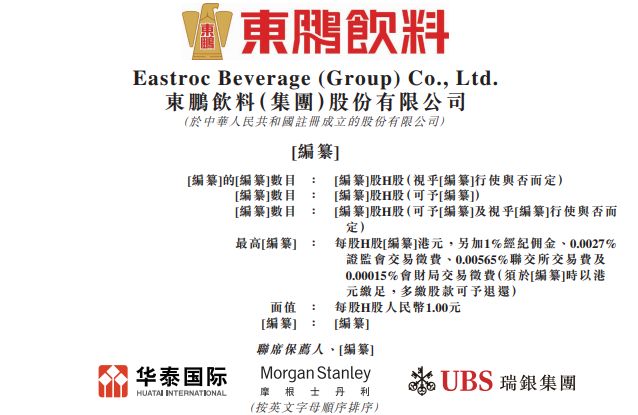
Core Viewpoint - Eastroc Beverage (Group) Co., Ltd. is planning to list on the Hong Kong Stock Exchange after previously submitting an invalid application in April 2025. The company is recognized as a leading functional beverage enterprise in China and aims to leverage its strong market position for growth [2][6]. Company Overview - Established in 1994, Eastroc Beverage is the first and a globally leading functional beverage company in China, with the fastest revenue growth among the top 20 listed soft drink companies worldwide [6]. - The company's brand, "Eastroc," has significant consumer recognition, with the slogan "When tired, drink Eastroc Special Drink" deeply ingrained in the market [6]. Market Position - According to a report by Frost & Sullivan, Eastroc Beverage has ranked first in the Chinese functional beverage market by sales volume for four consecutive years since 2021, with market share increasing from 15.0% in 2021 to 26.3% in 2024 [6]. Sales Network and Technology - As of June 30, 2025, Eastroc Beverage has established a comprehensive sales network covering over 4.2 million retail outlets across nearly 100% of China's prefecture-level cities. The company has implemented advanced technologies such as "one code for one product" and "five codes association" to enhance its digital operations [8]. - The company has connected with over 250 million consumers and collaborates with more than 3,200 distributors, creating a robust operational moat [8]. Production Capacity - Eastroc Beverage has strategically established nine production bases across key regions in China, including locations in Guangdong, Anhui, Guangxi, Chongqing, and Zhejiang. The product portfolio includes energy drinks, sports drinks, tea beverages, coffee drinks, plant-based protein drinks, and fruit and vegetable juices [8]. Financial Performance - The company's revenue for the years 2022, 2023, 2024, and the first half of 2025 was approximately RMB 85.00 billion, RMB 112.57 billion, RMB 158.30 billion, and RMB 107.32 billion, respectively. Corresponding net profits were RMB 14.41 billion, RMB 20.40 billion, RMB 33.26 billion, and RMB 23.75 billion [16][17]. Shareholder Structure - Prior to the Hong Kong listing, the major shareholder structure shows Lin Muqin holding 50.16% of the shares, with other family members and entities holding the remainder [11][12]. Management Team - The board of directors consists of 10 members, including 6 executive directors and 4 independent non-executive directors, with Lin Muqin serving as the chairman and president [14][15].
新股消息 | 东鹏饮料二次递表港交所 收入增速在全球TOP20软饮企业位列第一
Zhi Tong Cai Jing· 2025-10-09 00:19
Core Viewpoint - Dongpeng Beverage Group Co., Ltd. has submitted a listing application to the Hong Kong Stock Exchange, with Huatai International, Morgan Stanley, and UBS as joint sponsors. This follows a previous application submitted on April 3, 2025 [1]. Company Overview - Dongpeng Beverage is the leading functional beverage company in China, ranking first in revenue growth among the top 20 listed soft drink companies globally. The company's market share in the Chinese functional beverage market has increased from 15.0% in 2021 to 26.3% in 2024 [3]. - The company has established a strong brand presence over 30 years, providing high-quality beverages and achieving nearly 100% coverage of prefecture-level cities in China with over 4.2 million sales points as of June 30, 2025 [3]. Business Strategy - Dongpeng Beverage employs a refined channel management strategy and a unique "product + service" model, supported by a sales team of over 7,000. The company has implemented advanced tracking technologies to enhance product traceability and operational efficiency [4]. - The company has built a comprehensive digital operation system that connects with over 250 million consumers and interacts efficiently with over 4.2 million sales points and more than 3,200 distribution partners [4]. Industry Insights - The Chinese soft drink market is projected to reach approximately RMB 1.3 trillion in retail sales by 2024, making it the second-largest soft drink consumption market globally. The functional beverage segment is the fastest-growing, with a compound annual growth rate (CAGR) of 8.3% from 2019 to 2024 [5]. - The energy drink sector in China is expected to reach RMB 180.7 billion by 2029, with a CAGR of 10.3% from 2025 to 2029 [5]. Financial Performance - Dongpeng Beverage's revenue for the fiscal years 2022, 2023, 2024, and the first half of 2025 was approximately RMB 8.5 billion, RMB 11.26 billion, RMB 15.83 billion, and RMB 10.73 billion, respectively. The total comprehensive income for the same periods was about RMB 1.43 billion, RMB 2.06 billion, RMB 3.36 billion, and RMB 2.35 billion [7][8].
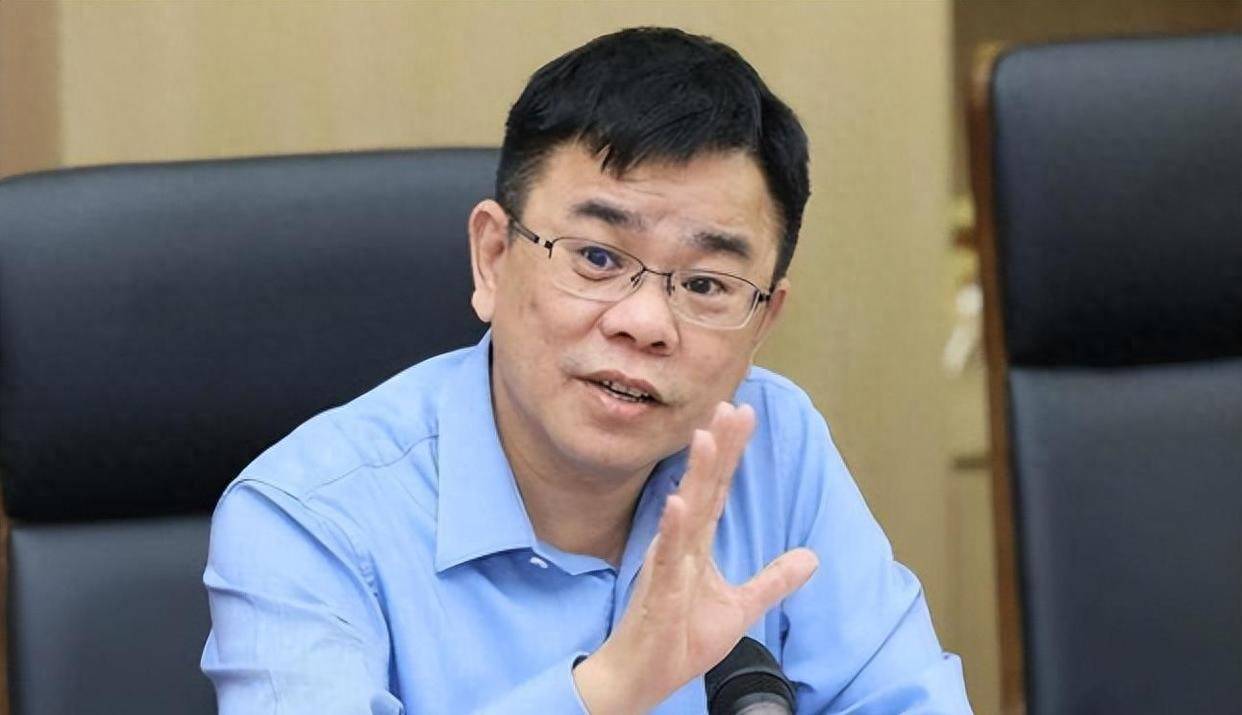
广东富豪的饮料帝国:半年狂赚107亿分红13亿,林氏家族独得8亿多
Sou Hu Cai Jing· 2025-09-21 10:28
Core Insights - The article highlights the success story of Lin Muqin, who transformed a struggling beverage factory into a billion-yuan empire, achieving a revenue of 10.737 billion yuan in the first half of the year [3][16]. Company Overview - Lin Muqin started as a technician in a construction company and later became the general manager of a failing state-owned beverage factory, which eventually became Dongpeng Beverage [8][9]. - In 2003, Lin seized the opportunity presented by state-owned enterprise reforms, investing 1.46 million yuan to take over the struggling factory with 19 other employees [9]. Business Strategy - Initially, Dongpeng focused on tea drinks but struggled with profitability, leading Lin to pivot to the energy drink market, launching Dongpeng Special Drink in 2009 at a lower price than competitors like Red Bull [10][12]. - The product was marketed aggressively, adopting a similar branding strategy to Red Bull, which drew criticism but ultimately helped the company survive and grow [12][13]. Market Positioning - Dongpeng targeted lower-tier cities and working-class consumers, utilizing innovative marketing strategies such as promotions and improved consumer experiences [14]. - The brand gained significant recognition after celebrity endorsements, notably from actor Nicholas Tse, which helped attract younger consumers [14]. Financial Performance - Dongpeng Beverage went public in 2021, achieving a market valuation exceeding 100 billion yuan, with Lin Muqin's personal wealth rising to 20 billion yuan [16]. - The company reported a revenue of over 10.7 billion yuan in the first half of the year, marking a year-on-year growth of over 40% [16]. Operational Insights - The company allocates over 1 billion yuan annually for sales expenses, while research and development spending remains relatively low at under 40 million yuan, indicating a focus on branding and distribution channels [17]. - The substantial cash dividend of 1.3 billion yuan reflects the company's strong cash flow and the family's significant control over strategic decisions [18]. Competitive Landscape - Dongpeng's success has inspired competitors like Dali Food's Lehu, which has adopted similar product offerings and pricing strategies, intensifying market competition [18]. - Despite facing criticism for being a "copycat," Lin Muqin acknowledges the importance of learning from industry leaders while also developing differentiated products over time [19]. Industry Context - The rise of Dongpeng Beverage is closely tied to the rapid expansion of the functional beverage market in China, with Lin's ability to understand and cater to the needs of lower-tier markets being a key factor in the company's success [20].
钟睒睒,半年净赚76亿
投中网· 2025-08-28 02:08
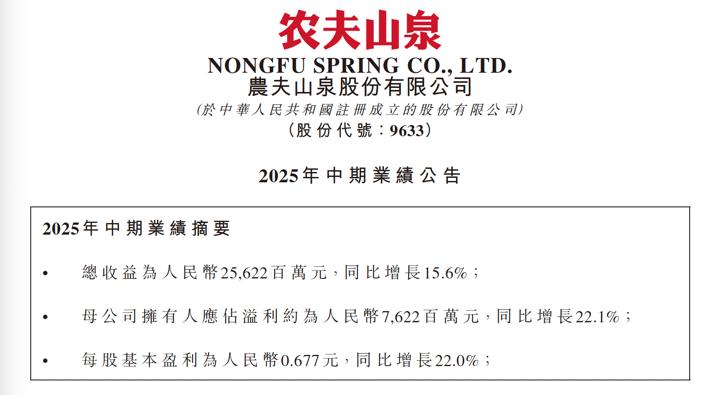
Core Viewpoint - Zhong Shanshan has resumed aggressive strategies, leading to a strong performance in the first half of 2025 for Nongfu Spring, with revenue reaching 25.622 billion yuan, a year-on-year increase of 15.6%, and net profit of 7.622 billion yuan, up 22.1% [6][7][20] Revenue Breakdown - The main revenue sources for Nongfu Spring remain tea beverages and packaged drinking water, accounting for over 70% of total revenue [6] - Tea beverage revenue reached 10.089 billion yuan, marking a significant increase from 8.43 billion yuan in the same period last year, with an additional 1.659 billion yuan in sales [6][7] - Packaged drinking water revenue showed signs of recovery, totaling 9.443 billion yuan, a 10.7% increase year-on-year, although it has not yet returned to the pre-2024 levels [6][7] Market Dynamics - The company has shifted from a defensive to an offensive strategy following last year's public relations issues, focusing on increasing sales of packaged water products [7][9] - Other beverage categories, such as functional drinks and fruit juices, also saw growth, with functional drinks generating 2.898 billion yuan (up 13.6%) and fruit juices 2.564 billion yuan (up 21.3%) [7] Competitive Landscape - The unsweetened tea market, previously experiencing rapid growth, is now facing a slowdown, with only a few brands, including Nongfu Spring, maintaining stable growth [9][10] - Despite being a leading player in the unsweetened tea segment, the company faces competition from promotional activities launched by rivals like Oriental Leaf [10][11] New Product Development - Nongfu Spring is entering the iced tea market with a new product, "Iced Tea," which emphasizes 100% tea leaf extraction and aims to compete with established brands like Yuanqi Forest [13][14] - The company plans to invest 2 billion yuan in research and promotion for this new product, which has already been paired with promotional activities to boost consumer engagement [13][20] Expansion Strategies - The company is enhancing its product offerings and distribution channels, including collaborations with Sam's Club for exclusive products [18][19] - Nongfu Spring has also begun its international expansion, entering the Hong Kong market with seven core brands, aiming for high-end brand validation and exploring further overseas opportunities [19][20]


钟睒睒渡劫:农夫山泉走出舆论与价格战的双重绞杀了吗?
3 6 Ke· 2025-08-27 11:28
Core Viewpoint - The company faced a significant crisis in 2024 due to a sudden wave of public criticism, leading to a sharp decline in sales and revenue, particularly in its core bottled water business, which saw a 21.3% year-on-year revenue drop. However, the company rebounded in the first half of 2025, reporting a 15.6% increase in total revenue and a 22.1% increase in net profit, surpassing market expectations [1][3][21]. Group 1: Bottled Water Business - The bottled water segment was severely impacted by both public opinion and aggressive price competition from rivals, prompting the company to launch a low-priced green bottle water product as a tactical response [4][5]. - The introduction of the green bottle water product aimed to disrupt competitors and penetrate previously inaccessible market segments, leading to a significant price war that forced competitors to react defensively [5][8]. - By mid-2025, the company shifted focus back to its core red bottle natural water, reducing subsidies for the green bottle and increasing the revenue share of red bottle water to over 80% [9][21]. Group 2: Tea Beverage Business - The tea beverage segment, particularly the "Oriental Leaf" brand, demonstrated strong growth, achieving a revenue of 10.1 billion RMB in the first half of 2025, a 19.7% increase year-on-year, and becoming the company's largest business segment [10][11]. - The tea business maintained a high operating profit margin of 48.4%, attributed to effective supply chain management and early investments in the tea production process [12][14]. - The company's proactive marketing strategies, such as the "One Yuan Enjoyment" campaign, helped maintain a market share of 70% in key regions for its tea products [12][14]. Group 3: Other Beverage Segments - The functional beverage segment reported a revenue of 2.9 billion RMB, a 13.6% increase, showcasing the company's strong channel capabilities despite facing tough competition [17][20]. - The juice beverage segment achieved a remarkable growth rate of 21.3%, with revenue reaching 2.6 billion RMB, indicating successful penetration into both high-end and mass-market segments [18][19]. - The company's dual strategy of targeting both premium and value markets in the juice category highlights its operational flexibility and platform capabilities [19][20]. Group 4: Financial Performance and Market Position - The company's financial results for the first half of 2025 indicated a successful recovery from the previous year's crisis, with a gross margin exceeding 60% and a net profit margin close to 30%, positioning it competitively against both domestic and international peers [23][24]. - The rapid recovery and strong financial metrics suggest that the company's true competitive advantage lies in its internal operational structure rather than just its access to natural resources [23][24]. - Following the release of the financial report, the company's stock price surged by 6%, reflecting positive market sentiment and confidence in its recovery strategy [21].