
区域发展

Search documents
固收:利率债交易与信用债配置思路
2025-11-26 14:15
Summary of Key Points from Conference Call Records Industry Overview - The focus is on the fixed income market, particularly interest rate bonds and credit bond allocation strategies [1][2][3]. Core Insights and Arguments - **Interest Rate Bonds Market**: The current market shows limited downward potential for interest rates, leading to a decrease in investor willingness to take long positions. The market is reacting less to positive factors [1][2]. - **Investment Strategy**: - For absolute return portfolios, a low duration defensive strategy is recommended, waiting for interest rate adjustments before considering new opportunities [1][3]. - For relative return portfolios, attention should be paid to the compression of spreads between government bonds and policy bank bonds [1][3]. - **Recommended Bonds**: - Long-term: 10-year policy bank bond 215 and 30-year government bonds are highlighted for their liquidity and potential capital gains [1][7]. - Short-term: 5-year policy bank bonds 208 and 203 are recommended, while avoiding certain convex positions due to low cost-effectiveness [1][8]. - **Hedging Strategy**: Utilizing government bond futures for hedging operations is advised, specifically buying policy bank bonds and hedging with 5-year or 10-year government bond futures to enhance cost-effectiveness [1][9]. Important but Overlooked Content - **Credit Bonds**: - Emphasis on focusing on economically strong provinces and cities for long-term credit bonds, while regions with insufficient growth momentum should prioritize bonds with maturities of three years or less [1][10][11]. - Specific attention to key industrial chains in provinces like Shandong and Sichuan, which are investing in renewable energy sectors such as photovoltaics and hydrogen energy [1][12][14]. - **Local Government Support**: The role of local governments in attracting investment and providing policy support is crucial for the development of local enterprises and industries [1][15]. - **Future Investment Opportunities**: Identifying investment opportunities based on local industrial development plans, particularly in emerging sectors like new energy and intelligent manufacturing, is essential for long-term growth [1][16][20]. Conclusion - The fixed income market is currently characterized by cautious investor sentiment due to limited interest rate movement. Strategic allocation in both long-term and short-term bonds, along with a focus on economically robust regions and sectors, is recommended for potential investment success.
以北外滩开发建设为引领 “十四五”地区生产总值年均增长4.8% 虹口实现区域发展能级新跨越
Jie Fang Ri Bao· 2025-11-13 01:35
Economic Growth - Hongkou District's GDP increased from 100 billion to 150 billion, with an average annual growth rate of 4.8% during the 14th Five-Year Plan period [1] - The district's general public budget revenue surpassed 20 billion, achieving an average annual growth of 15.0% [1] - Fixed asset investment rose from 20 billion to 30 billion, with an average annual growth of 7.8% [1] Urban Development - The North Bund area is undergoing significant development, with a new landmark growing at a rate of one meter per day, expected to exceed 100 meters by the end of the year [1] - The 3.4-kilometer waterfront area has been opened, enhancing the district's appeal as a tourist destination and aiming to create a national-level tourist resort [1] - The North Bund has established itself as a hub for high-end service industry development, free trade innovation, and equity investment [1] Cultural Initiatives - The district has completed historic old district renovations, transforming areas into integrated residential, commercial, and office spaces [2] - Hongkou District has revitalized 26.4 hectares of inefficient industrial land over the past five years, promoting overall regional renewal [2] - The district emphasizes its cultural heritage, with initiatives to enhance urban soft power through various cultural events and performances [2] Community Engagement - The establishment of the first cultural talent apartment in the city and the Peace Academy has significantly contributed to community engagement, attracting over 2 million visitors annually [3]
中央财经委员会办公室原副主任尹艳林:多维度锚定“十五五”经济发展新局面
Zhong Guo Zheng Quan Bao· 2025-11-09 23:58
Group 1: Economic Overview - The overall economic operation in China remains stable during the "14th Five-Year Plan" period, with a solid and steady advancement in high-quality development, showcasing strong resilience and vitality in multiple macro indicators [1][2] - The GDP growth for the first three quarters of 2025 is reported at 5.2% year-on-year, laying a strong foundation for achieving the annual target [1] - New economic drivers, particularly in equipment manufacturing and high-tech manufacturing, have shown robust growth, with significant increases in the production of smart products and green equipment [1] Group 2: Policy Impact - Demand-stimulating policies have effectively driven retail sales growth and facilitated large-scale equipment upgrades, creating a virtuous cycle of policy stimulation leading to increased demand, production growth, and subsequent investment [2] - The A-share market has seen a notable increase in trading volume and investor confidence since the introduction of a comprehensive set of measures on September 24 of the previous year [2] Group 3: Recommendations for the "15th Five-Year Plan" - The recommendations emphasize the importance of coordinated fiscal and monetary policies, enhancing the roles of various policies to promote an economy driven by domestic demand and consumption [2][3] - The focus on smart, green, and integrated development in the real economy aims to maintain a reasonable proportion of manufacturing and build a modern industrial system centered on advanced manufacturing [3] - Regional development strategies are highlighted to enhance the quality of development in key areas such as Beijing-Tianjin-Hebei, the Yangtze River Delta, and the Guangdong-Hong Kong-Macau Greater Bay Area [3]
多维度锚定“十五五”经济发展新局面
Zhong Guo Zheng Quan Bao· 2025-11-09 20:15
Core Viewpoint - The conference highlighted the resilience and vitality of China's economy during the "14th Five-Year Plan" period, with a focus on high-quality development and various macroeconomic indicators that support this outlook [1][2]. Macroeconomic Indicators - China's GDP grew by 5.2% year-on-year in the first three quarters of 2025, laying a solid foundation for achieving the annual target [2]. - The growth of new economic drivers, particularly in equipment manufacturing and high-tech manufacturing, outpaced overall industrial growth [2]. - Significant increases in the production of smart products and green equipment were noted, alongside a marked growth in the value added by the digital product manufacturing sector [2]. Policy Impact - Demand-stimulating policies have shown effectiveness, with the "Two New" policies driving retail sales growth and facilitating large-scale equipment upgrades, creating a positive cycle of policy stimulus leading to increased demand, production growth, and subsequent investment [2]. - The external trade sector demonstrated strong resilience, achieving record high import and export volumes despite a complex external environment, with diversified markets providing robust support [2]. Capital Market Performance - The A-share market has seen a significant increase in trading volume and investor confidence since the introduction of a comprehensive set of measures on September 24 of the previous year [2]. Recommendations for the "15th Five-Year Plan" - The proposed recommendations emphasize economic construction as the central theme, promoting high-quality development while adhering to the principle of prioritizing people's needs and showcasing a spirit of reform and innovation [2]. Macroeconomic Policy Suggestions - There is a call for enhanced coordination between fiscal and monetary policies, leveraging various policy tools to foster an economy driven by domestic demand and consumption [3]. - The need for proactive macroeconomic policies that are consistent and capable of counter-cyclical adjustments is emphasized [3]. Focus on Real Economy - The emphasis is on maintaining a reasonable proportion of manufacturing while building a modern industrial system centered around advanced manufacturing [3]. - Accelerating self-reliance in technology and enhancing independent innovation capabilities are seen as crucial for seizing technological development opportunities [3]. Regional Development Strategy - The strategy aims to leverage the synergistic effects of various regional development strategies to enhance the high-quality development momentum in key areas such as Beijing-Tianjin-Hebei, the Yangtze River Delta, and the Guangdong-Hong Kong-Macau Greater Bay Area [3]. Domestic Demand Expansion - The approach combines improving livelihoods and promoting consumption with investments in both physical and human capital, aiming to create a virtuous cycle between supply and demand [3]. Green Transition Initiatives - The focus on carbon peak and carbon neutrality aims to synergize efforts in reducing carbon emissions, pollution, and promoting green growth while ensuring ecological safety [3].
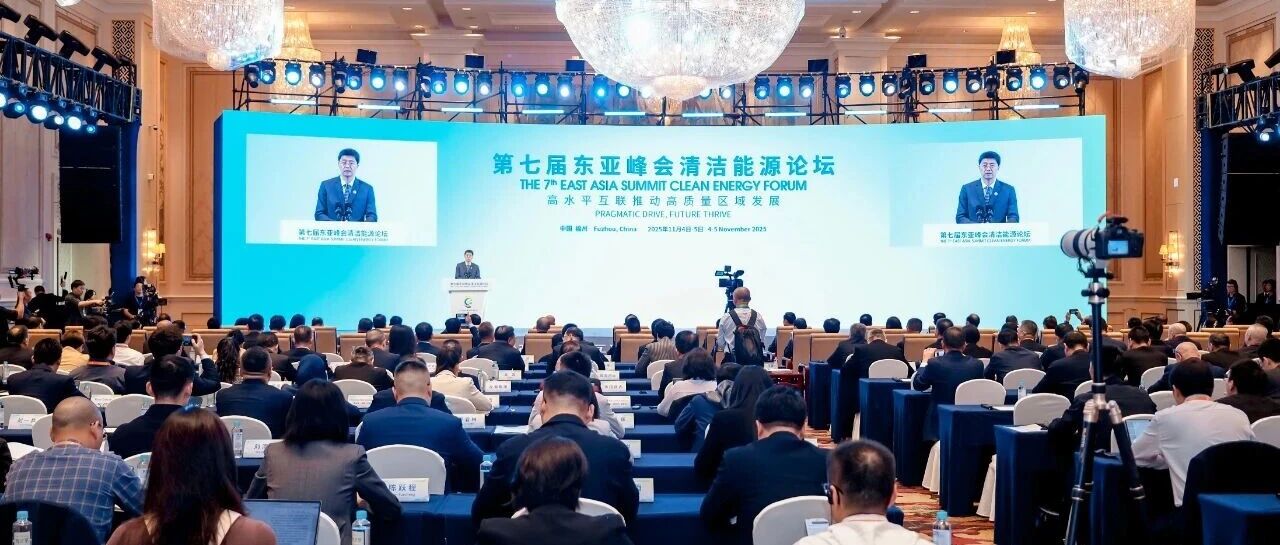
第七届东亚峰会清洁能源论坛在福州成功举办
国家能源局· 2025-11-04 08:50
Core Viewpoint - The forum emphasizes high-level connectivity to promote high-quality regional development, focusing on clean energy cooperation between China and ASEAN countries [1][3]. Group 1: Forum Overview - The 7th East Asia Summit Clean Energy Forum was held in Fuzhou, Fujian Province, co-hosted by the National Energy Administration of China, the Ministry of Energy and Water Management of Malaysia, and the Fujian Provincial Government [1]. - The forum lasted for two days and featured speeches from key officials, including the Deputy Director of the National Energy Administration of China and the Deputy Minister of Malaysia's Energy and Water Management [1]. Group 2: Achievements and Initiatives - The Deputy Director of the National Energy Administration highlighted the achievements of China-ASEAN cooperation in the clean energy sector and proposed initiatives for further collaboration [3]. - China and ASEAN are recognized as two of the most dynamic and potential-rich economies globally, with a commitment to advancing clean energy cooperation [3]. Group 3: Engagement and Outcomes - The forum facilitated in-depth exchanges among representatives from energy authorities, local governments, energy and power enterprises, financial institutions, and think tanks [5]. - A closed-door ministerial meeting on China-ASEAN energy cooperation was held for the first time, resulting in the release of a series of outcomes, including a report on renewable energy cross-border consumption [5]. - Key meetings were conducted between the Deputy Director and officials from Cambodia and Brunei to discuss energy matters [5].

广发证券:未来五年有哪些新重点:十五五和十四五规划建议稿的比较研读
Xuan Gu Bao· 2025-10-29 00:05
Core Insights - The "15th Five-Year Plan" emphasizes a shift towards high-quality development, focusing on effective demand and technological self-reliance, contrasting with the previous plan's broader economic growth goals [1][2][3] Development Environment - The "15th Five-Year Plan" acknowledges complex changes in the development environment, highlighting issues such as unilateralism and insufficient effective demand, indicating a stronger focus on total demand during this period [1][13][14] Development Goals - The plan sets seven specific goals, including significant achievements in high-quality development and a marked increase in technological self-reliance, with a clear target for improving the resident consumption rate [2][16][17] Industrial Development - Key changes in industrial development include a focus on optimizing traditional industries and nurturing emerging and future industries, with specific mention of sectors like quantum technology and hydrogen energy [3][18][19] Technological Innovation - The plan aims for decisive breakthroughs in critical core technologies through a new national system, emphasizing the importance of self-sufficiency in key areas such as integrated circuits and advanced materials [4][19][21] Expanding Domestic Demand - The strategy shifts to a dual approach of using new demand to drive new supply, with a focus on boosting consumption and effective investment, indicating a more proactive stance on domestic market dynamics [5][22][23] Institutional Reforms - The framework for institutional reforms is more focused, aiming to enhance the vitality of various business entities and improve macroeconomic governance, with specific measures for state-owned and private enterprises [6][24][25] Opening Up - The plan emphasizes the need for steady expansion of institutional openness, aligning with international high-standard trade rules and promoting the internationalization of the Renminbi [7][26][27] Rural Revitalization - The rural revitalization strategy remains consistent, with new measures to enhance rural infrastructure and public services, drawing on successful past initiatives [8][27] Regional Development - The plan highlights the importance of regional coordination and the role of key growth areas, promoting a more integrated approach to regional economic development [9][29][30] Green Development - The focus on green development is intensified, with a systematic approach to building a new energy system and achieving carbon peak and neutrality goals [9][31][32] Social Welfare - The plan prioritizes high-quality employment and income growth, with specific measures to enhance social security and address housing as a fundamental issue of public welfare [10][34][35]

【广发宏观郭磊】未来五年有哪些新重点:十五五和十四五规划建议稿的比较研读
郭磊宏观茶座· 2025-10-28 15:25
Core Viewpoint - The article discusses the key changes and focuses in the "15th Five-Year Plan" (2026-2030) compared to the "14th Five-Year Plan" (2021-2025), highlighting shifts in development goals, industry focus, and policy priorities. Development Environment - The "15th Five-Year Plan" emphasizes the complexity of the development environment, including unilateralism and hegemonism, while also recognizing favorable long-term trends. It highlights issues such as insufficient effective demand and pressures on employment and income growth, indicating a greater focus on total demand during this period [1][14][16]. Development Goals - The "15th Five-Year Plan" sets seven goals, with a clear emphasis on "significant achievements in high-quality development," which includes maintaining reasonable economic growth, improving total factor productivity, and increasing the resident consumption rate. The plan also introduces a new goal of significantly enhancing self-reliance in technology [2][17][18]. Industry Development - The plan includes a focus on optimizing traditional industries and nurturing emerging and future industries. It highlights the importance of traditional sectors like mining and manufacturing while also emphasizing new industries such as quantum technology and hydrogen energy [3][19][20]. Technological Innovation - The "15th Five-Year Plan" aims for decisive breakthroughs in key core technologies through a new national system and extraordinary measures, particularly in areas like integrated circuits and advanced materials. It also proposes increased R&D tax deductions and greater government procurement of innovative products [4][20][21]. Expanding Domestic Demand - The plan shifts from a supply-driven approach to one that emphasizes demand, aiming to stimulate consumption and investment. It includes measures to enhance consumer spending and streamline government investment processes [5][22][23]. Systemic Reform - The "15th Five-Year Plan" focuses on enhancing the vitality of various business entities and improving the market-oriented allocation of resources. It emphasizes the need for stronger protection of property rights and the optimization of asset structures [7][24][25]. Opening Up - The plan advocates for a steady expansion of institutional openness, aiming to align with international high-standard trade rules and enhance the internationalization of the Renminbi, reflecting a proactive approach in the context of global economic changes [8][26]. Rural Revitalization - The "15th Five-Year Plan" continues to prioritize rural revitalization, incorporating lessons from previous initiatives to improve rural infrastructure and public services, thereby promoting agricultural modernization [9][27][28]. Regional Development - The plan emphasizes the role of key regions in driving economic growth and proposes measures to enhance public services based on residency registration, reflecting a focus on urbanization and regional advantages [10][29]. Green Development - The "15th Five-Year Plan" aims to accelerate the establishment of a new energy system, focusing on increasing the share of renewable energy and implementing dual control over carbon emissions, indicating a commitment to sustainable development [11][30]. Social Welfare - The plan places a strong emphasis on high-quality employment and income distribution, introducing measures to enhance social security and housing supply, reflecting a shift in the perception of housing as a social issue [12][31][32].

这场学术会议连续三年在阳西县召开,有何深意?
Nan Fang Nong Cun Bao· 2025-10-27 05:02
Core Points - The article discusses the significance of the "Tangkou Conference" held in Yangxi County, emphasizing its role in promoting high-quality development and rural revitalization in the region [6][10][12] Group 1: Conference Overview - The "2025 Lingnan Academic Forum" took place on October 25-26, focusing on the implementation of the "Hundred-Thousand-Million Project" and promoting coordinated urban-rural development [6][10] - The conference gathered representatives from social science theory, research institutions, government departments, and grassroots organizations to discuss strategies for agricultural modernization and rural development [7][8][9] Group 2: Achievements and Goals - Yangxi County has made significant progress in the "Hundred-Thousand-Million Project," achieving an average annual growth of 9.8% in industrial added value over the past three years [24] - The county aims to establish itself as a key node on the West Coast, focusing on becoming a "Marine Strong County" and enhancing its livability and economic vitality [27][30] Group 3: Practical Applications and Innovations - The conference highlighted the transformation of Tangkou Town from a traditional agricultural area to a "selenium-rich industrial town," showcasing the integration of modern technology with traditional agriculture [70] - The establishment of collaborative platforms between academia and local governance aims to deepen the integration of academic research with policy practice, providing strong academic support for the "Hundred-Thousand-Million Project" [60][63] Group 4: Expert Insights and Recommendations - Experts discussed the importance of balancing public resources between urban and rural areas to promote coordinated socio-economic development [100] - Recommendations included enhancing the flow of resources between urban and rural areas and optimizing land management to support high-quality development [105][108]

GDP更新!我国50强城市排名出炉:西安增速12.21%,大连逆袭唐山,沈阳约4300亿!
Sou Hu Cai Jing· 2025-10-19 01:30
Core Insights - The new competitive landscape of China's top 50 cities by GDP in the first half of 2025 is shaped by national regional development strategies and urban industrial transformations, with cities like Xi'an, Dalian, and Shenyang showing significant growth and competitive dynamics [1][3][16] GDP Rankings and Growth Rates - Nine cities surpassed the trillion yuan GDP mark, with Shanghai (26,222.15 billion) and Beijing (25,029.2 billion) leading the list, followed by Shenzhen, Chongqing, and Guangzhou [3][4] - Xi'an achieved a remarkable growth rate of 12.21%, while other cities like Hangzhou (11.5%) and Shenyang (10.76%) also performed well; in contrast, Tianjin (3.09%) and Yulin (-0.55%) lagged behind [3][5] Xi'an's Economic Drivers - Xi'an's GDP reached 6,358.16 billion with a growth rate of 12.21%, benefiting from its strategic location as a national central city and the starting point of the Silk Road [8][9] - The city's economy is driven by "hard technology" and "cultural tourism," with high-tech industries accounting for over 55% of industrial output and tourism revenue growing over 20% [9][10] Dalian's Competitive Edge - Dalian's GDP was 4,647 billion with a growth rate of 9.01%, leveraging its coastal location as a Northeast Asia shipping hub [10][11] - The city has diversified its industrial base beyond steel, focusing on high-end equipment manufacturing and emerging industries like biomedicine, which saw growth rates exceeding 12% [10][11] Shenyang's Industrial Revival - Shenyang's GDP reached 4,293.23 billion with a growth rate of 10.76%, positioning itself as a benchmark for Northeast revitalization [13][15] - The city is enhancing its industrial foundation through upgrades in equipment manufacturing and digital economy sectors, supported by favorable policies and infrastructure improvements [13][15]

26优质项目落户番禺 总投资额约170亿元
Guang Zhou Ri Bao· 2025-10-13 08:30
Core Insights - The event "Investment Guangzhou New Future" held in Panyu District showcased 26 quality projects with a total investment of approximately 17 billion yuan, signaling Panyu's strong potential as an investment hub [1] - The focus of the promotion was on three key areas: Changlong Wanbo Business District, Guangzhou South Station Business District, and Guangzhou University Town (National Future Industry Technology Park), outlining a clear vision for Panyu's future industrial development [1] - Several key enterprise representatives acted as "Panyu Promotion Officers," sharing their confidence and expectations for investing in Panyu, while 15 business elites were appointed as "Investment Advisors" to contribute to the district's investment attraction efforts [1]