历史文化

Search documents
在河南 遇见上合丨郑州:文明与科技的古今交响
He Nan Ri Bao· 2025-07-26 23:34
Group 1 - The event highlighted the cultural and historical significance of Zhengzhou, showcasing its ancient heritage and modern advancements [1][2] - The Zhengzhou Shang Dynasty Ruins Museum served as a focal point for international guests, emphasizing the depth of Chinese history and culture [1] - Guests expressed admiration for the creative cultural products available at the Henan Museum, indicating a strong interest in Chinese cultural artifacts [1] Group 2 - The visit to Yutong Bus Park demonstrated the company's commitment to green and intelligent manufacturing, with automated buses impressing international attendees [2] - Yutong's global presence was acknowledged, with over 1,000 buses operating in Pakistan, highlighting its international reputation [2] - The overall experience provided guests with a comprehensive understanding of both the rich history and advanced manufacturing capabilities of Zhengzhou [2]
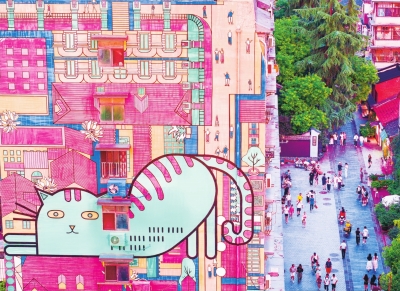
昙华林:一部“活”的近代史书
Chang Jiang Ri Bao· 2025-07-13 00:35
Core Viewpoint - The article highlights the cultural and historical significance of Tanhualin in Wuhan, showcasing its transformation into a vibrant artistic and commercial hub while retaining its historical essence [2][5][16]. Group 1: Visitor Statistics and Popularity - In 2024, Tanhualin is expected to attract over 10 million visitors, with an average of nearly 70,000 daily visitors during the "May Day" holiday, peaking at close to 100,000 [2]. - Tanhualin is frequently recommended in travel guides for Wuhan, appealing to various demographics with its artistic, retro, and nostalgic charm [2][3]. Group 2: Historical Background - The name "Tanhualin" is believed to derive from local residents who cultivated epiphytic flowers, or possibly from its historical ties to a Buddhist temple [4][5]. - Tanhualin has a rich history, dating back over 650 years, and has been a witness to significant events in Chinese history, including the founding of the Chinese Communist Party [14][16]. Group 3: Cultural Significance - Tanhualin is described as a "living" modern history book, featuring over 50 historical buildings that represent various aspects of Chinese modern history, including education, healthcare, and cultural exchanges [15][16]. - The area has been a gathering place for cultural elites and artists, especially during the Anti-Japanese War, contributing to its artistic atmosphere [8][9]. Group 4: Modern Commercialization - Tanhualin has seen a rise in trendy shops, including cafes, tea houses, and bookstores, catering to younger audiences while maintaining its unique character [18][21]. - Business owners are increasingly blending traditional elements with modern trends to attract visitors, reflecting a balance between commercial viability and cultural preservation [18][21]. Group 5: Community and Local Life - The local community remains integral to Tanhualin's charm, with long-time residents coexisting with new businesses, creating a unique blend of history and modernity [10][16]. - The area is also popular among families, with activities designed for children, enhancing its appeal as a family-friendly destination [16][17].

曾是世界上最大的城市,差点成了新中国首都,如今沦为四线小城
Sou Hu Cai Jing· 2025-06-28 08:06
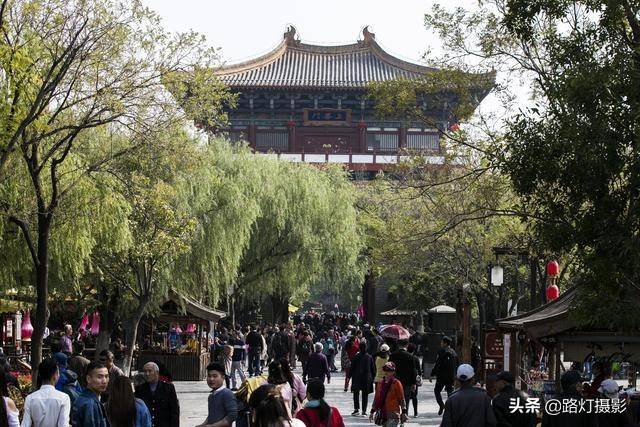
Core Viewpoint - The article discusses the historical significance and decline of Kaifeng, a city that was once the largest in the world and a candidate for the capital of New China, but has now fallen to a third or fourth-tier city status [5][13]. Historical Context - The selection of a capital city is a critical decision during regime changes, with the founding of New China in 1949 focusing national attention on this choice [7]. - Eleven cities were considered as candidates for the capital, including Kaifeng, which has a rich history as a capital for eight different dynasties [10][16]. Kaifeng's Historical Significance - Kaifeng has over 4,100 years of history and was known as "the ancient capital of eight dynasties," reflecting its cultural and historical importance [16][18]. - The city was once the world's largest, with a population exceeding one million during the Song Dynasty, showcasing its economic and cultural prosperity compared to contemporary European cities [21]. Reasons for Not Being Selected as Capital - Despite its advantages, such as cultural depth and strategic location, Kaifeng's economic weakness in 1949 and vulnerability to natural disasters, particularly flooding from the Yellow River, were significant drawbacks [23][27]. - The lack of natural defenses made it less suitable as a capital during times of conflict [25]. Decline to Third/Fourth-Tier City - The relocation of the provincial capital from Kaifeng to Zhengzhou in 1954 significantly weakened Kaifeng's development momentum, leading to population decline and reduced visibility [31]. - Restrictions on urban development to protect historical sites have also limited modern growth [33]. Cultural and Tourism Resources - Kaifeng is rich in cultural heritage, with numerous historical sites and annual events like the "China Kaifeng Chrysanthemum Cultural Festival" attracting tourists [35][36]. - The city is known for its unique cuisine, particularly dishes related to chrysanthemums and its famous steamed buns [38][39]. Future Outlook - Despite its current status, Kaifeng is poised to embrace new opportunities and challenges, with hopes of revitalizing its historical grandeur [40].
刘宁王凯会见哈尔滨工业大学党委书记陈杰、校长韩杰才
He Nan Ri Bao· 2025-06-18 10:37
Group 1 - The meeting between the leaders of Henan Province and Harbin Institute of Technology (HIT) emphasizes the importance of education and technology in driving regional development and innovation [2][3] - Henan Province is focusing on the implementation of national strategies to accelerate the rise of the central region, particularly through enhancing higher education and fostering innovation [2] - HIT has established a strong partnership with Henan, particularly through the HIT Zhengzhou Research Institute, leading to fruitful collaborations in talent cultivation, innovation research, and achievement transformation [2][3] Group 2 - HIT leaders expressed gratitude for the support from Henan and highlighted the favorable conditions for deepening cooperation, which aligns with the province's economic and social development goals [3] - The collaboration will focus on areas such as smart agriculture, cultural heritage, and aerospace, aiming to enhance international talent training and academic exchanges [3] - HIT aims to strengthen the long-term cooperation mechanism with Henan, promoting the integration of education and industry, and increasing the conversion of research achievements in the province [3]
文脉华章·文博日历丨长沙,一座没有围墙的博物馆!
Yang Shi Xin Wen· 2025-06-14 01:56
Core Points - The main event of the Cultural and Natural Heritage Day is being held in Changsha, which is described as a "museum without walls" [1][4] - Changsha is recognized as one of the first national historical and cultural cities in China, with a history dating back 150,000 to 200,000 years [4][5] - The city features numerous museums and cultural sites, showcasing a rich collection of historical artifacts and treasures [10][11] Summary by Categories Cultural Significance - Changsha is referred to as a "museum without walls," highlighting its extensive cultural heritage and historical significance [4][10] - The city has witnessed significant historical events from various dynasties, including the Qin, Han, Tang, and Song [4][5] Museums and Exhibitions - There are 32 state-owned museums and 20 private museums in Changsha, collectively housing numerous national treasures [10] - The article lists several must-see national treasures, including the "Su Sha Dan Yi" and the "T-shaped Silk Painting," which reflect ancient wisdom and cultural beliefs [11][13] Upcoming Exhibitions - Multiple special exhibitions are organized during the Cultural and Natural Heritage Day, including "Endless Yangtze River - The Yangtze and Chinese Civilization Exhibition" and "Searching for Ancient States in the Records of History" [39][41] - These exhibitions are free to the public and feature significant artifacts from various ancient cultures, enhancing the cultural experience for visitors [39][41][44]
名字超吉利的东北城市,给我香一跟头
3 6 Ke· 2025-06-11 11:19
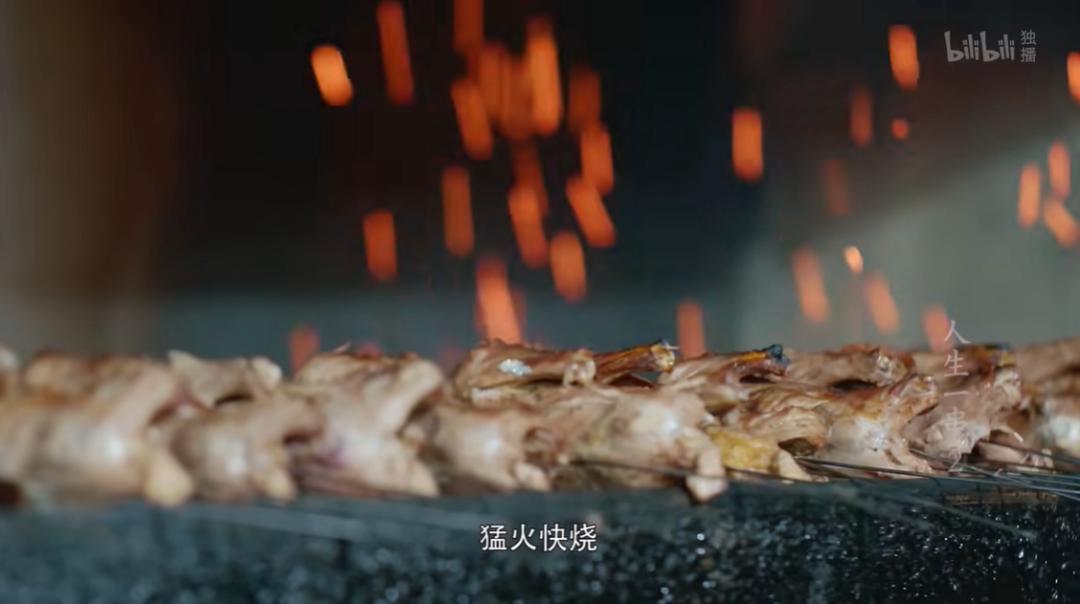
Group 1 - The article highlights the unique cultural and geographical significance of Siping, a city in Northeast China, known for its rich history and diverse cultural heritage [1][5] - Siping is recognized as a summer retreat due to its cooler climate compared to other tourist destinations, making it an attractive option for visitors seeking a quieter experience [2][4] - The city has a historical background as a strategic military location during the Chinese Civil War, which is commemorated through monuments and local narratives [3][5] Group 2 - Siping's culinary scene is diverse, featuring local specialties such as "Li Lian Gui Smoked Meat Pancake" and "Yitong Roast Pigeon," which reflect the region's rich food culture [6][7][8] - The city is known for its hearty and substantial food offerings, with a focus on local ingredients like corn, which is celebrated as a key agricultural product [13][15] - Siping is also the birthplace of the "Er Ren Zhuan" art form, showcasing the region's vibrant performing arts culture and its connection to local humor and storytelling [16][19][20] Group 3 - The article emphasizes the understated charm of Siping, portraying it as a city that thrives without flashy marketing, instead relying on its authentic cultural and historical roots [22] - The local community's creativity is highlighted through various forms of media, including short videos that blend humor with social commentary, showcasing the region's unique character [19][20] - Siping's identity is shaped by its historical significance, cultural diversity, and culinary richness, making it a noteworthy destination in Northeast China [1][5][22]
带孩子看看麦田里的历史
He Nan Ri Bao· 2025-06-01 23:42
Core Viewpoint - The article highlights the cultural and historical significance of the Song Dynasty tombs in Gongyi, Henan, particularly during the wheat harvest season, attracting numerous tourists and families to experience the blend of history and agriculture [2][4]. Group 1: Tourist Attraction - The Song Dynasty tombs, known as "Seven Emperors and Eight Tombs," are recognized as one of the most complete ancient tomb sculpture groups in China, often referred to as an "open-air stone sculpture museum" [2]. - Tourists from various regions, including families with children, visit the site to connect with history, as evidenced by parents dressing their children in traditional attire for photo opportunities [2][4]. - The presence of numerous vehicles, including tour buses, indicates a significant influx of visitors to the tombs during the wheat harvest season [2]. Group 2: Cultural Experience - Visitors express a desire to understand the historical context of what they learn in school, with parents taking their children to see the real-life representations of history [2][4]. - The combination of historical stone sculptures and the surrounding wheat fields creates a unique and picturesque environment, appealing to photography enthusiasts [4]. - The article emphasizes the importance of experiencing cultural heritage firsthand, as it fosters cultural confidence and a deeper connection to Chinese civilization [4].
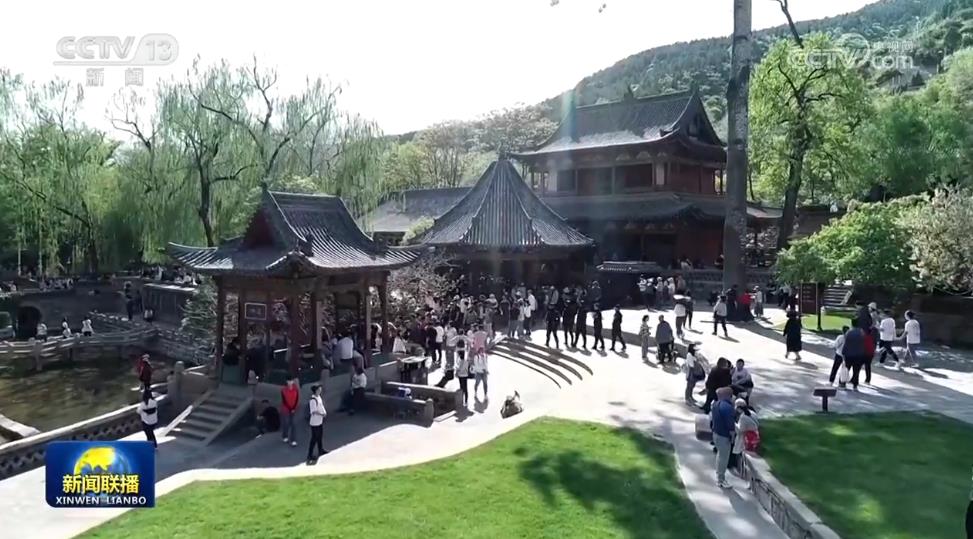
【文化中国行】山西晋祠:跨越千年的古建博物馆
Yang Shi Wang· 2025-05-25 12:27
Core Viewpoint - The news highlights the significance of Jinci Temple in Shanxi as a vital cultural and historical site, showcasing ancient Chinese architecture and art, and promoting traditional culture through various activities and preservation efforts [1][3][5]. Group 1: Historical and Cultural Significance - Jinci Temple is the largest and most well-preserved classical garden temple from the Tang and Song dynasties in China, with a history spanning over 857 years [3]. - The temple features various architectural styles, serving as a model for ancient Chinese architecture, and includes notable structures such as the Hall of Offerings, the earliest form of a cross-shaped bridge, and the Saint Mother Hall [3][5]. - The temple houses the earliest existing wooden dragon carvings and 43 painted clay sculptures from the Song dynasty, which are crucial for studying the era's court life and artistic development [5]. Group 2: Preservation and Cultural Activities - Jinci Museum actively engages in preventive and digital preservation of cultural relics, ensuring the historical information of artifacts is maintained [7]. - The museum hosts cultural events and activities, including the annual Jinci Temple Fair, which has been recognized as a national intangible cultural heritage since 2008, promoting traditional culture [7]. - The museum attracts over ten thousand young visitors annually and serves as an educational base for youth to foster an appreciation for traditional Chinese culture [7].