
商业诋毁

Search documents
乱张嘴?赔32万元!远度科技举报同行“伪造公章”等被打脸,“工业无人机第一股”纵横股份反击成功
Mei Ri Jing Ji Xin Wen· 2025-11-08 03:39
Core Viewpoint - The legal dispute between Zongheng Co., Ltd. and Yuandu Technology has concluded, with the court ruling in favor of Zongheng, determining that Yuandu's statements constituted commercial defamation [1][2][5]. Group 1: Legal Proceedings - The lawsuit originated from a statement made by Yuandu Technology in May 2024, accusing Zongheng's subsidiary of forgery and improper conduct in a bidding process [3][4]. - The court found that Yuandu failed to provide sufficient evidence to support its claims, particularly regarding the authenticity of a QQ account screenshot used as evidence [4][5]. - The court ruled that Yuandu's statements misled the public about Zongheng's relationship with local government and falsely accused Zongheng of misconduct, leading to a judgment of commercial defamation [5][6]. Group 2: Financial Implications - As a result of the ruling, Yuandu is required to publish a statement to mitigate the impact of its defamatory claims and compensate Zongheng and its subsidiary for economic losses and reasonable expenses totaling 320,000 yuan [5][6]. - Zongheng announced that the lawsuit's outcome would not negatively affect its daily operations or financial performance [6].



乱张嘴?赔32万元!远度科技举报对手“伪造公章”等被打脸 “工业无人机第一股”纵横股份反击成功!
Mei Ri Jing Ji Xin Wen· 2025-11-07 18:21
Core Viewpoint - The legal dispute involving Zongheng Co., known as the "first industrial drone stock," has concluded with a court ruling against Yuandu Technology, which was found to have engaged in commercial defamation against Zongheng Co. and its subsidiary, Dapeng Company [2][6][14]. Group 1: Legal Proceedings - The lawsuit originated from a statement made by Yuandu Technology in May 2024, accusing Dapeng Company of illegal activities, which Zongheng Co. refuted as malicious defamation [2][10]. - The Beijing Shijingshan District People's Court ruled that Yuandu Technology's claims were unfounded, particularly regarding the alleged forgery of company seals and improper relationships with local government [12][14]. - The court determined that Yuandu Technology's statements misled the public and lacked factual basis, leading to a judgment that required Yuandu Technology to publish a statement to mitigate the damage caused [12][14]. Group 2: Financial Implications - As part of the ruling, Yuandu Technology is required to compensate Zongheng Co. and Dapeng Company for economic losses and reasonable expenses totaling 320,000 yuan [14]. - Zongheng Co. announced that the lawsuit's outcome would not negatively impact its daily operations or financial performance [14]. Group 3: Evidence and Claims - The court found that the evidence provided by Yuandu Technology, particularly a QQ account screenshot, was insufficient and unverifiable, undermining their claims [11][12]. - The court highlighted that Yuandu Technology's assertions about Dapeng Company’s bidding violations and administrative penalties were not supported by evidence and exceeded normal commentary limits, constituting defamation [12][14].
“柴怼怼”恶意营销碰瓷“胖东来”,案件详情披露
第一财经· 2025-11-05 10:02
Core Viewpoint - The article discusses the arrest of a controversial internet celebrity known as "Chai Dui Dui" for allegedly producing and selling counterfeit products, highlighting the irony of a self-proclaimed "anti-fraud blogger" engaging in fraudulent activities [3][23]. Group 1: Background and Initial Actions - Chai Dui Dui, a self-identified anti-fraud influencer with over 200,000 followers, accused a well-known supermarket chain, Pang Dong Lai, of selling overpriced jade products without factual basis [3][4]. - His claims led to public scrutiny, with many accusing him of malicious marketing to gain followers and traffic [4][6]. Group 2: Investigation and Findings - Following Chai's accusations, local market regulators conducted surprise inspections at Pang Dong Lai, confirming that all jade products were clearly priced with a gross margin of less than 20% [7]. - While claiming to expose fraud, Chai Dui Dui was simultaneously promoting and selling his own jade products through live streams, asserting their high quality [9]. Group 3: Consumer Reactions and Legal Consequences - Consumers who purchased jade items from Chai's live streams reported that the products were dyed and lost color over time, leading to dissatisfaction and further investigations [11][13]. - Pang Dong Lai filed a lawsuit against Chai Dui Dui for commercial defamation and infringement of reputation rights, resulting in a court ruling that required the removal of infringing videos and the closure of related accounts [15][16][18]. Group 4: Regulatory Actions and Arrest - Chai Dui Dui's wife, who is the legal representative of a related company, faced fines for false advertising and selling unlabelled products [22]. - Following consumer complaints and investigations, Chai Dui Dui was arrested for allegedly producing and selling counterfeit jade products, with the case still under investigation [23].

李佳琦79元卖眉笔争议再起余波,“花西子”诉自媒体商业诋毁案二审开庭
Yang Zi Wan Bao Wang· 2025-10-17 14:33
Core Viewpoint - The controversy surrounding the Chinese cosmetics brand "Hua Xizi" escalated after a live-streaming incident involving popular host Li Jiaqi, leading to a lawsuit against a self-media entity for alleged commercial defamation [1][6]. Group 1: Incident Overview - On September 10, 2023, Li Jiaqi commented on the pricing of Hua Xizi's eyebrow pencil during a live stream, which sparked public outrage and trending topics online [2][4]. - Following the incident, Hua Xizi's parent company, Hangzhou Yige Cosmetics Co., Ltd., issued a public relations letter titled "A Letter" on September 19, 2023 [4][5]. - A self-media article criticized the PR letter, claiming it resembled a "primary school essay" and highlighted the departure of several PR staff members [4][5]. Group 2: Legal Proceedings - On December 9, 2024, Hua Xizi filed a lawsuit against the self-media entity for commercial defamation, seeking a total of 580,000 yuan in damages [1][6]. - The first-instance court ruled on June 27, 2025, ordering the self-media's sole shareholder, Zhao, to pay 300,000 yuan in damages and 20,000 yuan in reasonable expenses [7]. - Zhao appealed the decision, and the second-instance hearing took place on October 17, 2025, with new evidence submitted by Zhao's legal team [8][10]. Group 3: Court Findings - The court found that the self-media's article contained defamatory statements that harmed Hua Xizi's brand reputation, as it misrepresented the number of PR staff departures [7][8]. - The court noted that Zhao failed to verify the information provided by interviewees, which contributed to the misleading nature of the article [8][14]. - The court emphasized that commercial defamation requires proof of false information dissemination that damages commercial reputation, while Zhao argued for a reclassification of the case as a defamation of character [12][14]. Group 4: Implications for the Industry - The case highlights the challenges of balancing public commentary and commercial reputation in the digital age, particularly for brands in competitive industries like cosmetics [13][14]. - Legal experts suggest that self-media entities must exercise due diligence in verifying information to avoid potential legal repercussions related to defamation [14].

两家支付公司对簿公堂,跨境支付市场硝烟再起
Bei Jing Shang Bao· 2025-09-16 11:27
Core Viewpoint - The recent lawsuit between PingPong and XTransfer highlights the intensifying competition in the cross-border payment industry, revealing issues such as service homogenization and high compliance costs, indicating a need for clearer competitive boundaries in the sector [1][10][12]. Company Overview - PingPong, established in 2015, is a leading player in the cross-border payment sector, operating in over 200 countries and regions with more than 60 global payment licenses [4][5]. - XTransfer, founded in 2017, focuses on B2B foreign trade services and has recently obtained a domestic payment business license, enhancing its operational capabilities [5][10]. Legal Dispute - PingPong has filed a lawsuit against XTransfer and its affiliate, alleging "commercial defamation," with the court hearing scheduled for September 19, 2025 [3][12]. - The lawsuit stems from competitive actions that allegedly undermine PingPong's legitimate business activities, including spreading false information about its services [7][8]. Industry Context - The cross-border payment industry is experiencing fierce competition, with companies vying for licenses and market share, leading to a blurring of competitive boundaries [10][11]. - The industry faces challenges such as high compliance costs, service similarity, and the need for differentiation to maintain competitive advantages [12][13]. Market Dynamics - There are approximately 500,000 to 700,000 B-end sellers engaged in cross-border e-commerce in China, primarily small and medium-sized enterprises facing challenges in cross-border payments [5]. - The demand for digital payment solutions in emerging markets continues to rise, driving companies to seek growth opportunities abroad [12].

诋毁胖东来的网红“柴怼怼”,涉嫌销售伪劣产品被查
Guan Cha Zhe Wang· 2025-09-10 11:56
Core Viewpoint - The controversy surrounding the influencer "Chai Dui Dui" (real name Chai Xiangqian) and the company "Pang Dong Lai" has escalated, leading to legal actions and investigations regarding allegations of selling counterfeit products and defamation [1][2]. Group 1: Legal Actions and Allegations - Chai Dui Dui accused Pang Dong Lai of selling jade products at inflated prices, claiming the cost was only a few hundred yuan while selling for thousands or even tens of thousands [2]. - Pang Dong Lai filed a lawsuit against Chai Dui Dui for commercial defamation and infringement of reputation, seeking compensation of no less than 5 million yuan [2]. - Following the lawsuit, Chai Dui Dui expressed willingness to take responsibility for his statements and hoped for a court trial to reveal the truth about high-priced jade [2]. Group 2: Impact on Chai Dui Dui - Chai Dui Dui reported experiencing severe online harassment, including rumors, personal attacks, and harassment calls since the controversy began [3]. - In response to the complaints against his products, particularly a herbal tea claimed to treat various diseases, local authorities initiated investigations and found exaggerated claims, leading to legal actions against him [5]. - Chai Dui Dui's social media accounts were shut down following a campaign by the National Internet Information Office, which identified him as a typical case of online misconduct [3][5]. Group 3: Business Operations and Financial Data - Pang Dong Lai reported a sales figure of 21.9 million yuan for its Hetian jade in the first quarter, with a gross margin of 20%, which constituted only 3.6% of the jewelry department's sales and 0.34% of the group's total sales [2]. - Chai Dui Dui is associated with 25 companies, with 15 as a legal representative, indicating a significant business presence despite the controversies [5].

突发!网红“柴怼怼”等人被温州警方带走,已立案侦查
Mei Ri Jing Ji Xin Wen· 2025-09-10 07:58
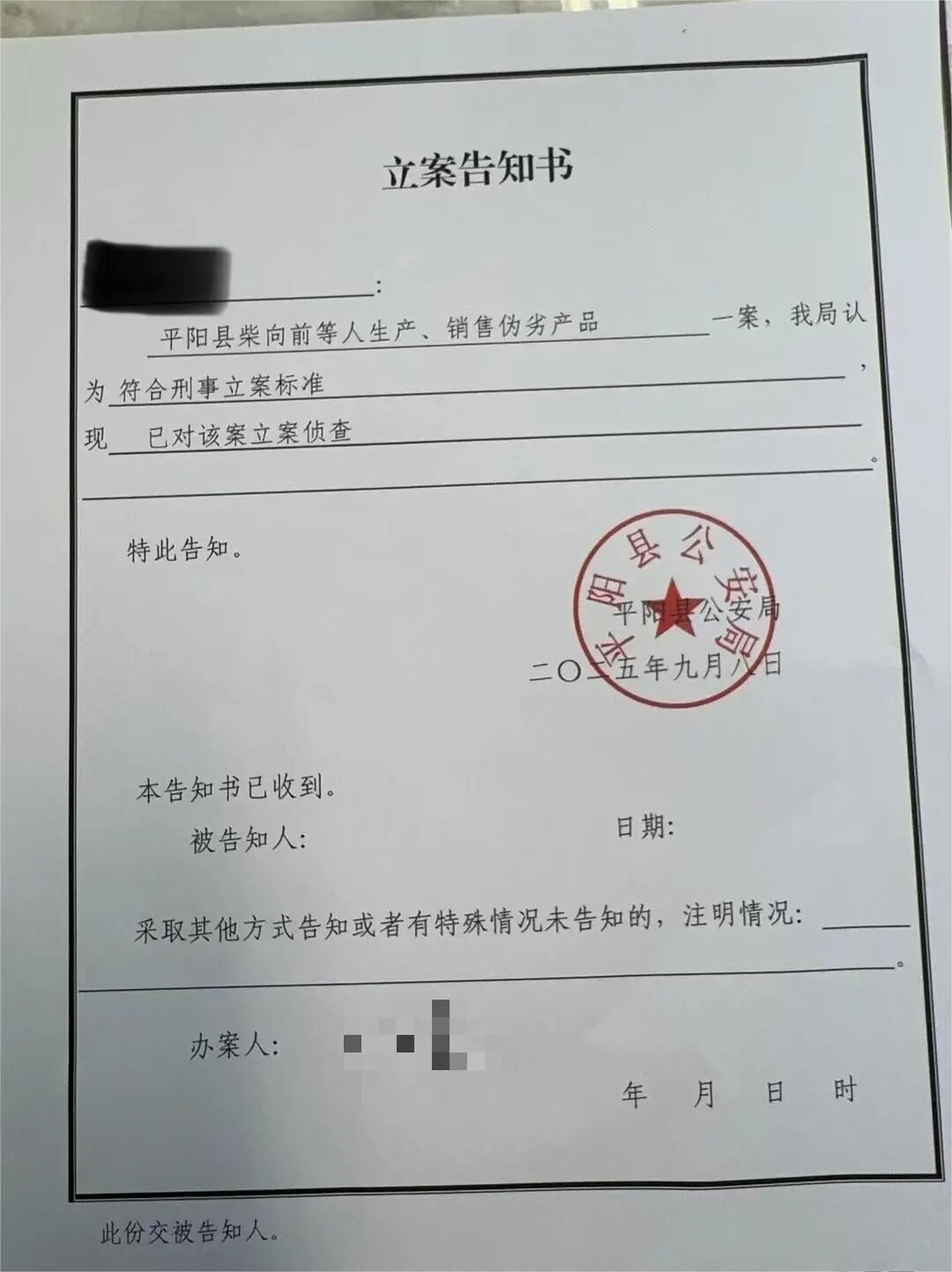
Group 1 - The influencer "Chai Dui Dui" (real name Chai Xiangqian) and associates are under investigation by the Pingyang County Public Security Bureau for allegedly producing and selling counterfeit products [1] - Multiple consumers have reported issues, leading to the police investigation, confirming the situation [1] - A consumer named Ms. Zhang is involved in two civil lawsuits against companies associated with "Chai Dui Dui," with hearings scheduled for September 11 [2] Group 2 - Ms. Zhang claims to have spent 3,596 yuan on "Qi Shi Tea" based on false health claims, leading to health complications and hospitalization [2] - She also alleges that after paying 8,000 yuan to join a wine sales program, she faced issues with refunds and product delivery [2] - Ms. Zhang is seeking triple compensation and 3,000 yuan for emotional distress in her lawsuits [3] Group 3 - The Pingyang County Market Supervision Administration previously fined the company associated with "Chai Dui Dui" 220,000 yuan for false advertising and selling unlabelled products [3] - The company has faced multiple legal challenges, including a defamation lawsuit from a competitor, "Pang Dong Lai," for disparaging remarks made by "Chai Dui Dui" [3][5] - The company has been penalized for advertising containing false content, resulting in fines totaling 6,000 yuan [7]
诋毁对家,广州一公司被罚25万
Nan Fang Du Shi Bao· 2025-09-06 03:04
Core Viewpoint - Usmile, a well-known oral care brand, has been fined 250,000 yuan for commercial defamation against Laifen, a competitor, due to misleading information disseminated through social media [1][2]. Group 1: Incident Details - Usmile's parent company, Guangzhou Xingji Yuedong Co., Ltd., was penalized by the Tianhe District Market Supervision Administration of Guangzhou for spreading misleading information about Laifen's electric toothbrushes [2][3]. - The misleading content included claims that Laifen's toothbrush heads were "all barbs" and "you dare to use this?" during a live broadcast on Douyin [2][3]. - The regulatory body determined that Usmile's actions violated Article 11 of the Anti-Unfair Competition Law of the People's Republic of China, which prohibits the fabrication and dissemination of false or misleading information that harms a competitor's commercial reputation [2][3]. Group 2: Company Background - Usmile was established in 2016, initially focusing on electric toothbrushes, and has since expanded its product line to include oral irrigators, toothpaste, and brush head accessories [4][6]. - Laifen Technology, founded in 2019, entered the electric toothbrush market in October 2023, having previously focused on hair dryers and shavers [6]. - Laifen reported revenues of 1.3 billion yuan in 2021 and 1.567 billion yuan in 2022, but is projected to incur a net loss of 80 million yuan for its toothbrush product line in 2024 [6].

称竞品电动牙刷全是倒刺!知名品牌被罚!
Qi Lu Wan Bao· 2025-09-05 12:21
Core Viewpoint - Usmile, a well-known oral care brand, has been fined 250,000 yuan for spreading misleading information that disparaged its competitor, Laifen Technology, in violation of China's Anti-Unfair Competition Law [1][2][3]. Company Overview - Usmile was founded in 2016 and initially focused on electric toothbrushes, later expanding its product line to include water flossers, toothpaste, and brush heads [4]. - Laifen Technology, established in 2019, initially developed hair dryers and only entered the electric toothbrush market in October 2023. The company also offers shavers and other products [6]. Financial Performance - Laifen Technology reported revenues of 130 million yuan in 2021 and 1.567 billion yuan in 2022. However, it is projected to incur a net loss of 80 million yuan for its toothbrush product line in 2024 [6]. - Usmile electric toothbrushes are priced between 399 and 798 yuan, while Laifen's electric toothbrushes range from 377 to 768 yuan [6]. Regulatory Action - The Guangzhou Tianhe District Market Supervision Administration determined that Usmile's actions constituted commercial defamation, leading to a fine of 250,000 yuan on July 28 [2][3].

天赐材料与永太科技陷“互诉战” 技术窃密对垒商业诋毁涉案9.44亿
Chang Jiang Shang Bao· 2025-07-06 22:39
Core Viewpoint - The ongoing legal battle between Tianqi Materials and Yongtai Technology revolves around allegations of trade secret infringement and defamation, with both companies filing lawsuits against each other, leading to a total claim amount of 944 million yuan [1][4]. Group 1: Legal Actions - Tianqi Materials has filed a civil lawsuit against Yongtai Technology and 12 related parties for trade secret infringement, with the Jiangxi Provincial High People's Court accepting the case [1][2]. - Yongtai Technology has countered by suing Tianqi Materials for defamation, seeking compensation of 57.5193 million yuan, with the courts also accepting this case [1][4]. Group 2: Allegations and Claims - Tianqi Materials accuses Yongtai Technology of illegally obtaining its lithium hexafluorophosphate production technology through a former employee, who allegedly violated confidentiality agreements [2][3]. - Yongtai Technology claims that its production processes and technologies are independently developed and that Tianqi Materials is engaging in malicious litigation to undermine its reputation and market position [5][6]. Group 3: Industry Context - Both companies operate in the competitive electrolyte materials sector, producing lithium hexafluorophosphate, which is critical for battery production [4][5]. - The legal disputes are occurring against a backdrop of intense competition in the new energy automotive market, which has seen significant fluctuations [5][6].

