国际贸易摩擦

Search documents
京城机电股份(00187)预计2025年度归母净亏损约4600万到5520万元 同比盈转亏
智通财经网· 2026-01-21 08:46
公司本期业绩出现亏损的主要原因如下:受国际贸易摩擦加剧影响,公司气体储运板块的出口业务承压 明显,面临较大的下行压力,致使部份产品销量和利润出现下滑。与此同时,氢能等新兴业务处于行业 培育初期,市场整体规模尚未达到预期,尽管公司相关业务收入实现同比增长,但受市场竞争日趋激烈 的影响,本期盈利水平仍低于预期。此外,为增强核心竞争力,公司在新产品研发及产业链布局等方面 持续加大投入,导致本期研发费用较去年同期有所增加。 智通财经APP讯,京城机电股份(00187)发布公告,经公司财务部门初步测算,预计公司2025年年度实现 归属于母公司所有者的净利润亏损约人民币4600万元到人民币5520万元,与上年同期相比,将出现亏 损。 预计公司2025年年度实现归属于母公司所有者的扣除非经常性损益的净利润亏损约人民币7460万 元到人民币8950万元。 ...
京城机电股份预计2025年度归母净亏损约4600万到5520万元 同比盈转亏
Zhi Tong Cai Jing· 2026-01-21 08:46
京城机电股份(00187)发布公告,经公司财务部门初步测算,预计公司2025年年度实现归属于母公司所 有者的净利润亏损约人民币4600万元到人民币5520万元,与上年同期相比,将出现亏损。预计公司2025 年年度实现归属于母公司所有者的扣除非经常性损益的净利润亏损约人民币7460万元到人民币8950万 元。 公司本期业绩出现亏损的主要原因如下:受国际贸易摩擦加剧影响,公司气体储运板块的出口业务承压 明显,面临较大的下行压力,致使部份产品销量和利润出现下滑。与此同时,氢能等新兴业务处于行业 培育初期,市场整体规模尚未达到预期,尽管公司相关业务收入实现同比增长,但受市场竞争日趋激烈 的影响,本期盈利水平仍低于预期。此外,为增强核心竞争力,公司在新产品研发及产业链布局等方面 持续加大投入,导致本期研发费用较去年同期有所增加。 ...
京城机电股份(00187.HK):预计2025年度净亏损4600万到5520万元
Ge Long Hui· 2026-01-21 08:43
格隆汇1月21日丨京城机电股份(00187.HK)发布公告,经公司财务部门初步测算,预计2025年年度实现 归属于母公司所有者的净利润亏损约人民币4,600万元到人民币5,520万元,与上年同期(法定披露数据) 相比,将出现亏损。预计公司2025年年度实现归属于母公司所有者的扣除非经常性损益的净利润亏损约 人民币7,460万元到人民币8,950万元。 公告表示,受国际贸易摩擦加剧影响,公司气体储运板块的出口业务承压明显,面临较大的下行压力, 致使部份产品销量和利润出现下滑。与此同时,氢能等新兴业务处于行业培育初期,市场整体规模尚未 达到预期,尽管公司相关业务收入实现同比增长,但受市场竞争日趋激烈的影响,本期盈利水平仍低于 预期。此外,为增强核心竞争力,公司在新产品研发及产业链布局等方面持续加大投入,导致本期研发 费用较去年同期有所增加。 ...
聚合顺(605166.SH):预计2025年净利润同比下降47%到57%
Ge Long Hui A P P· 2026-01-20 08:55
格隆汇1月20日丨聚合顺(605166.SH)公布,经财务部门初步测算,预计2025年年度实现归属于母公司所 有者的净利润13,000万元到16,000万元,同比下降47%到57%。经财务部门初步测算,预计2025年年度 实现归属于母公司所有者的扣除非经常性损益的净利润12,000万元到15,000万元,同比下降48%到 59%。 本期较上年同期相比,尼龙切片行业受产业链产能相对集中释放,行业一定程度出现了价格竞争激烈的 情况;受国际贸易摩擦持续影响,部分下游客户,尤其是面向高端市场的企业,其出口及生产节奏有明 显放缓,对高品质原材料PA6的需求出现阶段性下降。公司对应的高附加值PA6(尼龙切片)销售受到 直接冲击,主营业务利润同比出现较为明显的下滑。 ...

给美国子公司员工发百万年薪,普昂医疗销售费用率高于同行遭问询
Xin Lang Cai Jing· 2026-01-09 06:25
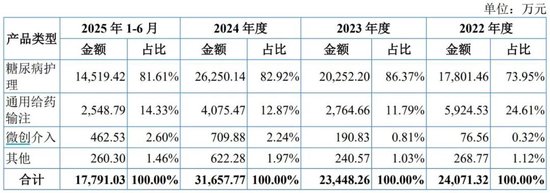
Core Viewpoint - Puang Medical is a key player in the diabetes care market, primarily producing insulin pen needles, with significant international sales, accounting for nearly 80% of its revenue. The company is preparing for an IPO to fund new manufacturing and R&D projects [2][14]. Group 1: Company Overview - Puang Medical specializes in diabetes care, general drug infusion, and minimally invasive medical devices, providing high-quality products for various applications [3][25]. - The company has established a strong international presence, exporting to over 70 countries, with notable clients including Walmart and Yifeng Pharmacy [2][12]. Group 2: Financial Performance - The company's revenue from diabetes care products has shown significant growth, with revenues of 1.78 billion, 2.03 billion, 2.63 billion, and 1.45 billion yuan for the years 2022 to 2025 H1, representing 73.95%, 86.37%, 82.92%, and 81.61% of total revenue respectively [4][27]. - The overall revenue for Puang Medical from 2022 to 2025 H1 was 2.42 billion, 2.36 billion, 3.18 billion, and 1.78 billion yuan, with net profits of 571.5 million, 459.04 million, 648.79 million, and 443.3 million yuan respectively [11][33]. Group 3: Product Details - The main product line includes insulin pen needles, insulin syringes, and blood collection devices, with insulin pen needles being the highest revenue-generating product, contributing 61.38%, 66.89%, 65.8%, and 65.8% of total revenue in respective years [5][27]. - The average selling price of the IPN product has decreased over the years, with prices dropping from 16.94 yuan per hundred units in 2022 to 13.95 yuan in 2025 H1 [6][29]. Group 4: Market Position and Competition - Puang Medical's insulin pen needles have a global market share of 7.52%, 7.98%, and 11.78% from 2022 to 2024, indicating a growing presence in the international market [5][27]. - The company faces challenges in maintaining competitive pricing due to increasing competition in the domestic market, which has led to a decline in average selling prices [6][30]. Group 5: Sales and Marketing Strategy - The company has a high sales expense ratio compared to peers, attributed to a larger sales team and increased operational costs in the U.S. market [15][37]. - Approximately half of the sales expenses are attributed to employee compensation, with significant increases noted following the establishment of its U.S. subsidiary [37][39].

犇星新材闯关北交所!期内毛利率持续下滑还涉巨额诉讼 曾有环保“前科”
Sou Hu Cai Jing· 2025-12-26 07:12
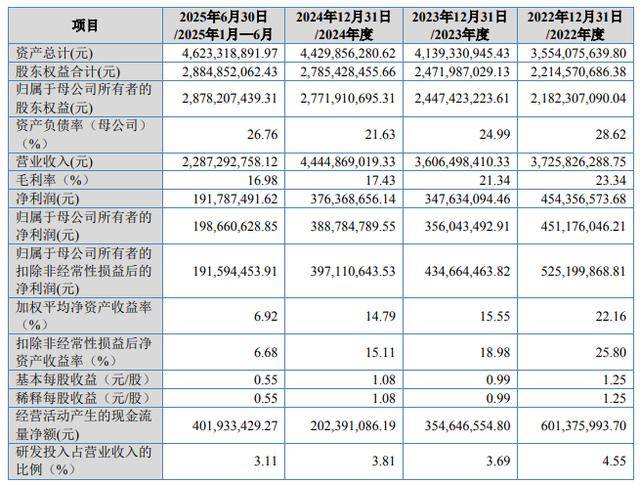
Core Viewpoint - Hubei Benxing New Materials Co., Ltd. plans to go public on the Beijing Stock Exchange, shifting from its initial plan to list on the Shenzhen Stock Exchange, with the aim of raising funds for various projects and expanding its operations in fine chemical products [1] Financial Performance - Revenue for the years 2022 to 2024 and the first half of 2025 is projected to be 3.726 billion, 3.606 billion, 4.445 billion, and 2.287 billion yuan respectively, while net profit for the same periods is expected to be 451 million, 356 million, 389 million, and 199 million yuan [1][2] - Total assets increased from approximately 3.554 billion yuan in 2022 to about 4.623 billion yuan by June 30, 2025, while total equity rose from approximately 2.215 billion yuan to about 2.885 billion yuan during the same period [2] - The company’s gross profit margin has been declining, recorded at 23.34%, 21.34%, 17.43%, and 16.98% over the respective years [3] Business Operations - Benxing New Materials specializes in the research, production, and sales of PVC heat stabilizers, pesticide active ingredients, and intermediates, with significant revenue derived from overseas markets, accounting for 44.21%, 30.24%, 28.30%, and 31.93% of total revenue during the reporting period [1][4] - The company’s main raw materials include tin ingots and various chemicals, with raw material costs significantly impacting the gross profit margin [3] Legal and Environmental Risks - The company is currently involved in a lawsuit concerning alleged commercial secret infringement, with potential damages of 160 million yuan, which could adversely affect its future operations [5] - Environmental risks are present due to the nature of the company’s products, which generate pollutants during production, although no significant incidents have been reported in the recent past [5][6]
美国对华硬壳胶囊“双反”终裁落地,中国药用辅料龙头涨停
Guan Cha Zhe Wang· 2025-12-23 11:57
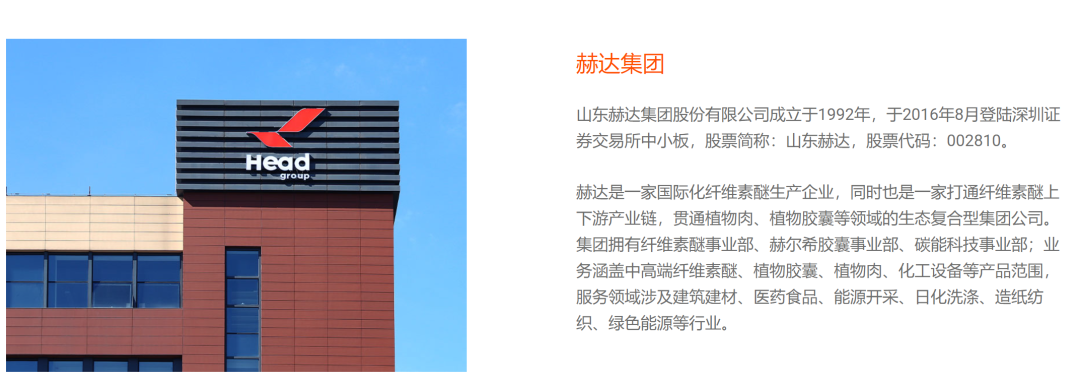
Core Viewpoint - After 13 months of international trade disputes, Chinese hard capsule manufacturers have received a favorable ruling from the U.S. Department of Commerce, significantly reducing anti-dumping and countervailing duties, which enhances their competitiveness in the U.S. market [1][4]. Group 1: Impact of Ruling on Shandong Heda - Shandong Heda's anti-dumping tax rate has dropped from 172.24% to 18.71%, a reduction of 153.53 percentage points, while the countervailing duty is set at 6.90% [1][6]. - The substantial decrease in tax rates not only restores the company's export competitiveness but also allows for the refund of previously paid high-rate deposits, positively impacting cash flow [1][10]. - Following the announcement, Shandong Heda's stock price surged, indicating market optimism regarding the ruling's implications [1][10]. Group 2: Background of the Investigation - The investigation began on November 13, 2024, when the U.S. Department of Commerce initiated anti-dumping and countervailing duty investigations on hard capsules from China, Brazil, India, and Vietnam [4][5]. - At the initial ruling stage, Shandong Heda faced a punitive tax rate of 172.24%, which raised concerns about its market viability in the U.S. [5][6]. - The U.S. market is crucial for Shandong Heda, with exports to the U.S. accounting for 62.38% of its total revenue from hard capsules [3][4]. Group 3: Future Strategies - Despite the favorable ruling, uncertainties remain as the U.S. International Trade Commission will announce its final determination on industry damage in February 2026, which could affect the enforcement of the anti-dumping duties [3][11]. - Shandong Heda has prioritized establishing a manufacturing facility in the U.S. as a strategic move to mitigate tariff risks and enhance its market presence [3][11]. - The company is also expanding its global footprint beyond the U.S., targeting markets in Germany, France, Italy, Canada, Brazil, India, and Japan, and has signed an exclusive agency agreement with IMCD to penetrate emerging markets [12].


股价涨停!美国对硬壳空心胶囊“双反”终裁落地:山东赫达反倾销税率大幅下降!公司回应将推进美国建厂以求避险
Mei Ri Jing Ji Xin Wen· 2025-12-22 05:55
Core Viewpoint - Shandong Heda has received a significant reduction in anti-dumping and countervailing duties from the U.S. Department of Commerce, which is expected to positively impact the company's financial performance and operational strategy [1][5][9]. Group 1: Anti-Dumping and Countervailing Duties - The final anti-dumping duty rate for Shandong Heda is set at 18.71%, a substantial decrease of 153.53 percentage points from the preliminary ruling [1][5]. - The countervailing duty rate for Shandong Heda is 6.90%, while other Chinese producers face rates ranging from 3.14% to 8.81% [5]. - The initial anti-dumping duty rate was 172.24%, indicating a significant improvement in the final ruling [5][6]. Group 2: Financial Implications - The reduction in duties will lead to a refund of previously paid high guarantee deposits, positively affecting the company's financial results [5][6]. - The sales of hard empty capsules to the U.S. accounted for 62.38% of the total revenue during the investigation period, highlighting the importance of this market for the company [6]. Group 3: Strategic Initiatives - In response to trade barriers, Shandong Heda is accelerating its plans to establish a manufacturing facility in the U.S. as part of its globalization strategy [7][10]. - The company aims to diversify its market presence beyond the U.S., with products already being sold in over 100 countries, including Germany, France, and Japan [10]. - The establishment of a U.S. plant is seen as a critical step to mitigate risks associated with international trade tensions and to enhance market penetration [10].
厦门港务回应深交所问询:标的资产受贸易摩擦影响有限 关联交易定价公允
Xin Lang Cai Jing· 2025-12-21 06:32
Core Viewpoint - Xiamen Port Development Co., Ltd. has responded to the Shenzhen Stock Exchange regarding the acquisition of assets and fundraising, highlighting the resilience of its operations despite external challenges such as international trade friction [1] Group 1: Business Performance - The main business of the target asset, Xiamen Container Terminal Group, focuses on container loading and storage, with over 70% of foreign trade revenue covering routes to Southeast Asia, North America, and Europe [2] - From January to August 2025, North American throughput decreased by 24.40% and revenue dropped by 16.75% due to tariffs and other factors, but revenue from Southeast Asia and Europe increased by 5.31% and 31.22% respectively, leading to an overall foreign trade revenue growth of 6.96% [2] - The top five customers maintained stable transaction growth, with a total transaction amount of 784 million yuan, a year-on-year increase of 6.63%, accounting for 42.02% of total revenue [2] Group 2: Related Transactions - The proportion of related party purchases was high at 61.72%, 57.82%, and 61.73% over the reporting periods, primarily from the controlling shareholder, Fujian Port Group, for port services [3] - Related sales accounted for 2.57%, 2.76%, and 2.33%, mainly for terminal leasing and management services, with pricing following market principles and showing no significant differences from non-related parties [3] Group 3: Profitability and Government Support - The comprehensive gross profit margin for the target asset was 35.56%, 35.23%, and 39.24%, which is higher than the average of comparable companies in the industry [4] - Government subsidies received were 127 million yuan, 190 million yuan, and 104 million yuan, with over 95% being regular subsidies related to the main business, indicating sustainability and no significant dependency [4] Group 4: Valuation and Financial Performance - The asset valuation method used was the asset-based approach, with a value of 8.826 billion yuan and a value-added rate of 17.78%, lower than the industry average of 28.40% [5] - As of August 2025, the target asset achieved operating revenue of 1.866 billion yuan, a year-on-year increase of 4.74%, and a net profit of 465 million yuan, meeting 72.06% of the annual forecast [5]

浙江恒威(301222) - 301222浙江恒威投资者关系管理信息2025-004
2025-12-12 07:44
Group 1: Company Overview - Zhejiang Hengwei Battery Co., Ltd. specializes in the research, production, and sales of high-performance environmentally friendly zinc-manganese batteries, with key products including LR03, LR6, LR14, LR20, and 6LR61 series alkaline batteries [2] - The company achieved a revenue of CNY 47,469.9 million and a net profit of CNY 6,123.72 million in the first three quarters of 2025 [2] Group 2: Performance Challenges - The decline in performance is attributed to several factors: 1. Increased international trade friction, particularly the US-China trade war, affecting US business operations [2] 2. Intensified competition in the zinc-manganese battery industry, leading to pressure on profit margins [2] 3. Changes in export tax rebate policies, with the rate reduced from 13% to 9%, impacting profit performance [2] Group 3: Domestic Market Development - The company is focusing on expanding its domestic business, collaborating with well-known enterprises in the electrical and e-commerce sectors [3] - There is significant potential for growth in the domestic market, with plans for refined management across various dimensions including product, business collaboration, sales channels, and feedback [3] Group 4: Production Capacity and Expansion - The production capacity utilization at the Jiaxing headquarters is high, with sufficient orders in hand [3] - The new production line at the Vietnam base is in the trial production phase, gradually ramping up capacity, with plans to achieve an annual production of 800 million alkaline batteries and 1.03 billion carbon batteries upon reaching full capacity [3] Group 5: Industry Landscape - The zinc-manganese battery industry is experiencing steady growth, with China being the largest producer globally, and domestic manufacturers achieving world-class production capacity and technology [4] - The global production capacity is concentrated in China, with major OEM manufacturers supporting retail brands and international companies like Duracell and Panasonic maintaining local production capabilities [4] Group 6: Future Strategies - The company plans to enhance its investment and acquisition strategies by closely monitoring national policies and industry trends, aiming to strengthen its core business while cautiously selecting suitable targets for investment [4]