
工伤保险

Search documents
“五险一金”对普通人到底有什么用?一文说清楚
Sou Hu Cai Jing· 2025-08-17 14:51
Group 1 - The concept of "Five Insurances and One Fund" includes pension insurance, medical insurance, unemployment insurance, work injury insurance, maternity insurance, and housing provident fund [7] - Pension insurance provides basic living security, allowing individuals to receive monthly pensions after contributing for 15-20 years and reaching retirement age [3][4] - Medical insurance can be used immediately after purchase, significantly reducing out-of-pocket expenses for medical treatments [5] Group 2 - Unemployment insurance in Shenzhen allows individuals who have contributed for at least one year to apply for benefits if they are involuntarily unemployed, with a maximum benefit period of 24 months [9][11][12] - Work injury insurance covers compensation for injuries sustained during work or commuting, including medical expenses and wage compensation during recovery [13][17] - The housing provident fund can be seen as an additional salary, as both employees and employers contribute, and it can be used for down payments on homes with lower interest rates compared to commercial loans [16][18]


劳资双方不缴纳社保的约定,无效!
Ren Min Ri Bao· 2025-08-04 01:02
Group 1 - The core viewpoint of the article emphasizes the invalidity of agreements between employers and employees to not pay social insurance, reinforcing that employees can terminate contracts and seek compensation if social insurance is not paid [3][4] - The new interpretation, effective from September 1, 2025, clarifies the legal consequences of such agreements and supports employees' rights to compensation [2][4] - The article highlights a case where an employee successfully claimed compensation after the employer failed to pay social insurance, illustrating the enforcement of this legal principle [3][4] Group 2 - The article discusses a case where an employee's refusal to sign a written labor contract does not obligate the employer to pay double wages, as the employee acted intentionally [5][6] - It clarifies that the employer is not liable for double wages if the employee deliberately avoids signing a contract, emphasizing the mutual nature of contract agreements [6] - The interpretation also specifies conditions under which employers must offer indefinite contracts after two fixed-term contracts, preventing evasion of legal obligations [6][8] Group 3 - The article addresses the responsibility of contractors in construction projects regarding work-related injuries, stating that contractors must pay for work injury insurance even if there is no direct employment relationship [9][10] - It emphasizes that the contractor's liability for work injury insurance is crucial for protecting workers' rights and ensuring timely compensation in case of accidents [10] - The interpretation aims to regulate subcontracting practices and uphold labor rights in the construction industry [10]
福利待遇、竞业限制等劳动争议案件上升,最高法发布司法解释—— 劳资双方不缴纳社保的约定,无效!(法治聚焦)
Ren Min Ri Bao· 2025-08-03 21:52
Group 1 - The core viewpoint of the article emphasizes the invalidity of agreements between employers and employees to not pay social insurance fees, reinforcing that such agreements do not hold legal weight and employees can terminate contracts and seek compensation [3][4][6] - The Supreme People's Court's interpretation clarifies that any agreement or promise by an employer or employee to not pay social insurance fees is invalid, and courts will support employees in seeking economic compensation for non-payment [4][6][10] - The article highlights a trend of increasing labor disputes related to welfare benefits, non-compete clauses, and social insurance, indicating a growing need for legal clarity in these areas [1][4] Group 2 - The article discusses a case where an employee, who voluntarily chose not to sign a written labor contract, was denied the right to claim double wages, as the employer was not liable due to the employee's intentional non-compliance [5][6] - It is noted that the interpretation specifies that if an employee intentionally or negligently fails to sign a written labor contract, the employer is not obligated to pay double wages [6][8] - The article also addresses non-compete agreements, stating that such agreements must align with the employee's knowledge of the employer's trade secrets and intellectual property, and any excessive restrictions are deemed invalid [7][8] Group 3 - The article outlines that in cases of subcontracting in the construction industry, the primary contractor remains responsible for paying work-related injury insurance, even if there is no direct labor relationship with the injured worker [9][10] - It emphasizes that the responsibility for labor remuneration and work injury insurance lies with the contractor, regardless of whether the subcontractor has the legal qualifications to operate [10] - The interpretation aims to address common issues in subcontracting practices, ensuring that workers receive timely compensation and protecting their legal rights [10]
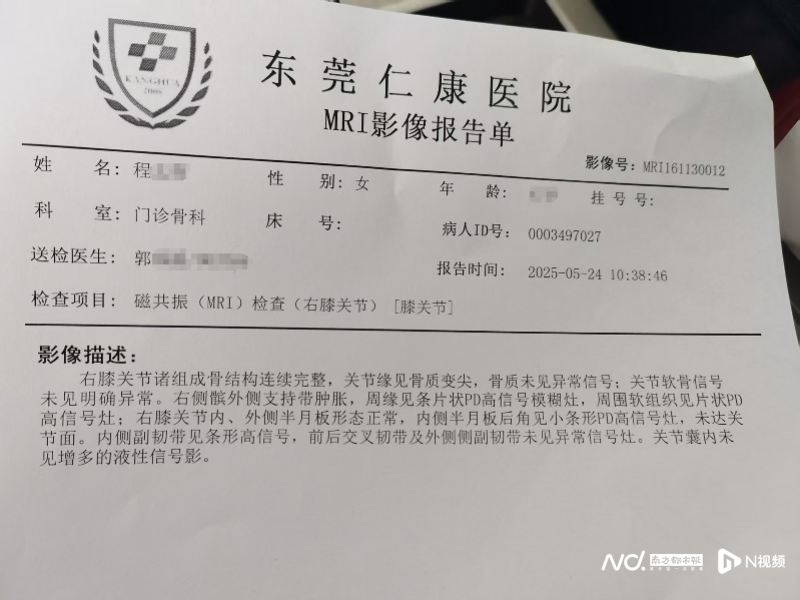
员工在岗受伤后无工伤保险?东莞人社局:参加社保为法定义务
Nan Fang Du Shi Bao· 2025-07-11 09:40
Core Viewpoint - The case highlights a dispute between an employee and the company regarding workplace injury, compensation, and social insurance obligations, with the local labor authority emphasizing the legal responsibilities of employers in providing social insurance and handling work-related injuries [1][14]. Company Summary - The company, Dongguan Zhenhua Fast Food Co., Ltd., claims that the employee, Ms. Cheng, signed an agreement to waive social insurance upon hiring, and they provided her with medical expenses and attempted to accommodate her work situation after her injury [9][10]. - The company asserts that there are no "light" positions available, and all roles require physical labor, which complicates the employee's request for a less demanding job [9]. - The company provided medical expenses totaling 1781.93 yuan to Ms. Cheng, which she confirmed receiving [10]. Industry Summary - The Dongguan Human Resources and Social Security Bureau stated that employers are legally obligated to participate in social insurance and cannot waive this responsibility through agreements with employees [14][15]. - The bureau emphasized that employers must apply for work injury recognition within a specified timeframe and that employees have the right to claim work injury benefits regardless of social insurance status [15]. - The bureau warned employers against neglecting their obligations to provide social insurance, highlighting the importance of protecting employees and mitigating risks associated with workplace injuries [15].
非全日制从业人员可以参加工伤保险吗?
蓝色柳林财税室· 2025-05-16 00:54
Group 1 - The definition of part-time employment is based on hourly pay, where the average daily working hours do not exceed four hours and the total weekly working hours do not exceed twenty-four hours [2] - Part-time workers can participate in work injury insurance, and if employed at multiple units, each unit must pay for work injury insurance separately [3] - The employer where the worker is injured is responsible for work injury insurance [4] Group 2 - There is no requirement for a written labor contract for part-time employment, but it is recommended to retain relevant documentation of agreements made [5][7] - Payment for part-time work must not be lower than the minimum hourly wage set by the local government, and the payment settlement period must not exceed fifteen days [10] Group 3 - Evidence of employment can include wage payment records, identity documents issued by the employer, recruitment records, attendance records, and testimonies from other workers [13]

商业险理赔后,用人单位可据此免除部分工伤赔偿吗?
Ren Min Wang· 2025-05-14 01:12
Core Viewpoint - The court ruled that employees have the right to claim work-related injury compensation from their employer even after receiving commercial insurance payouts for accidental injuries [1][2][3]. Group 1: Case Background - In January 2018, an employee named Zheng began working at an air conditioning repair center without a formal labor contract [1]. - The employer purchased accidental injury insurance for Zheng in April 2020, with a coverage amount of 200,000 yuan [1]. - Zheng died in an accident while working on November 3, 2020, leading to a dispute regarding the recognition of the labor relationship [1]. Group 2: Legal Proceedings - The arbitration committee confirmed the existence of a labor relationship between Zheng and the employer, which the employer contested in court [1][2]. - The court upheld the arbitration decision, and Zheng was recognized as having died from a work-related injury by the local human resources and social security bureau in September 2021 [1]. - The insurance company paid out the accidental injury insurance amount of 200,000 yuan to Zheng's relatives in December 2021 [1]. Group 3: Court's Ruling - The employer argued that the 200,000 yuan insurance payout should be deducted from the work-related injury compensation amount [2]. - The court ruled that the employer's obligation to provide work-related injury insurance is separate from any commercial insurance purchased, and thus the insurance payout should not be deducted from the compensation [2][3]. - The court ordered the employer to pay Zheng's relatives a total of over 870,000 yuan in funeral and work-related death compensation [2]. Group 4: Legal Interpretation - The court emphasized that work-related injury insurance is a mandatory part of the social insurance system, and employers cannot evade this obligation by providing commercial insurance [3]. - The ruling clarifies that commercial insurance benefits do not replace or offset the rights to work-related injury compensation under the law [3].
职工个人需要缴纳工伤保险费吗?
蓝色柳林财税室· 2025-05-07 14:42
Core Viewpoint - The article clarifies that workers' compensation insurance fees are paid by employers, not employees, and outlines the obligations of employers regarding this insurance [2][5][6]. Group 1: Payment Responsibilities - Workers' compensation insurance fees are solely the responsibility of the employer, calculated based on the total wages of employees multiplied by the applicable contribution rate [2]. - Employers are required by law to participate in workers' compensation insurance and pay the fees for all employees [5][6]. Group 2: Regulations for Non-Participating Employers - If an employer fails to participate in workers' compensation insurance and an employee suffers a work-related injury, the employer must pay for the benefits as stipulated by the workers' compensation regulations [7]. - The regulations specify that employers who later join the insurance scheme and pay any overdue fees and penalties will have the workers' compensation fund cover new claims [10].

我国基本养老保险参保人数超10.7亿人
news flash· 2025-05-03 10:43
Group 1 - The number of participants in the basic pension insurance system in China has exceeded 1.07 billion [1] - As of the end of March, the number of participants in unemployment and work injury insurance reached 244 million and 297 million respectively, with year-on-year increases of 2.56 million and 2.71 million [1] - The new type of work injury insurance for gig economy workers, such as delivery riders and ride-hailing drivers, has seen over 11.04 million participants in pilot areas by the end of March [1]