市场集中度

Search documents
七国集团公报草案承诺将解决经济过度失衡问题,呼吁分析市场集中度和供应链情况。
news flash· 2025-05-22 13:09
Group 1 - The G7 draft communiqué commits to addressing issues of economic imbalances and calls for an analysis of market concentration and supply chain conditions [1]
汽车价格战还要打多久?
芯世相· 2025-05-16 10:31
Core Viewpoint - The article discusses the ongoing price war in the automotive industry, particularly in the context of the rapid growth of new energy vehicles (NEVs) and the resulting market dynamics that lead to increased competition and market fragmentation [2][11][13]. Group 1: Price War Dynamics - In 2024, the number of discounted car models in China reached 227, which is 1.5 times that of 2023 and 2.3 times that of 2022, indicating a fierce price competition in the automotive sector [2]. - The price war is seen as a necessary outcome of industry development, driven by the increasing concentration of the market and the transition from a fragmented to an oligopolistic structure [4][9]. - The memory chip industry has previously experienced severe price wars, particularly during the 2008 financial crisis, leading to a significant reduction in the number of global producers [5][6]. Group 2: Market Structure and Competition - The automotive industry is undergoing a transformation where the entry of new players and the rise of NEVs are disrupting the traditional market structure, leading to a reallocation of market shares [19][20]. - The market share of the top five automotive companies has decreased from 74% to 55% over the past decade, reflecting a rapid fragmentation of the market [25]. - The competition in the NEV sector is particularly intense, with new entrants challenging established players, resulting in a significant shift in market dynamics [11][13]. Group 3: Implications of Price Wars - The ongoing price wars are indicative of a closing door for new entrants, as established players leverage their scale to maintain competitive advantages [29][30]. - The automotive industry is expected to undergo a consolidation phase, where the most competitive firms will survive while others may exit the market [30][31]. - The price war is not only a reflection of competition but also a strategy for leading firms to eliminate weaker competitors and establish a new market order [35][36]. Group 4: Future Outlook - The article suggests that the automotive industry may reach a turning point in 2-3 years, with predictions that over half of the current car manufacturers could be eliminated, leading to a return to normal profit levels [39][40]. - The transition to NEVs is seen as a critical opportunity for China's automotive industry to leapfrog traditional competitors, but it also raises concerns about the sustainability of market practices and employee welfare [42][43].




汽车价格战还要打多久?
创业邦· 2025-05-15 03:11
Core Viewpoint - The article discusses the intensifying price war in the automotive industry, particularly in the context of the rapid increase in the number of discounted models and the shift in market dynamics due to the rise of electric vehicles. It highlights the transition from a fragmented market to a more concentrated one, driven by technological disruption and competitive pressures [3][10][31]. Group 1: Price War Dynamics - In 2024, the number of discounted car models in China reached 227, which is 1.5 times that of 2023 and 2.3 times that of 2022 [3] - The price war in the automotive sector is seen as a necessary outcome of industry development rather than merely a result of "involution" [3][4] - Price wars often emerge when market concentration changes, leading to fierce competition among numerous players [4][5] Group 2: Market Structure Changes - The automotive industry is experiencing a shift from a fragmented market to a concentrated one, similar to the smartphone market's evolution [5][12] - The market share of the top five automotive companies has decreased from 74% to 55% over the past decade, indicating a rapid fragmentation [16] - The entry of new players and the challenge to established market structures have led to a reconfiguration of the competitive landscape [10][13] Group 3: Impact of Technological Disruption - The introduction of electric vehicles has disrupted the traditional automotive supply chain, leading to a reallocation of market power [10][13] - The transition to electric vehicles has created new components and eliminated old ones, allowing new competitors to enter the market more easily [13][14] - The competitive dynamics in the electric vehicle market are reminiscent of the smartphone industry's evolution, where technological advancements led to significant market restructuring [13][30] Group 4: Financial Implications - The automotive industry generated revenues of 1,064.7 billion yuan with a profit margin of only 4.3%, indicating the financial strain caused by the price war [22] - The price war is seen as a precursor to market consolidation, where the pressure on participants often signals the end of the market's fragmentation phase [24][28] - The leading companies, such as BYD, have managed to maintain or even increase their profit margins despite the price war, showcasing their cost control capabilities [25][26]

汽车价格战还要打多久?
36氪· 2025-05-14 09:39
Core Viewpoint - The article discusses the ongoing price war in the automotive industry, particularly in the context of new energy vehicles (NEVs) and traditional fuel vehicles, highlighting the impact of market concentration and competition dynamics on pricing strategies [2][3][16]. Group 1: Price War Dynamics - In 2024, the number of discounted vehicle models in China reached 227, 1.5 times that of 2023 and 2.3 times that of 2022, indicating a significant increase in price competition [2]. - The price war in the automotive sector is seen as a reflection of broader societal "involution," where companies are pressured to lower prices while simultaneously calling for a shift from price competition to value competition [2][3]. - The emergence of price wars is often linked to changes in market concentration, where industries transition from fragmented competition to oligopolistic structures, making price wars inevitable [4][5]. Group 2: Historical Context and Market Structure - The last major price war in the memory chip sector occurred during the 2008 financial crisis, leading to a significant market consolidation where only a few players remained [7][8]. - The smartphone market in China experienced a similar trajectory, with a vast number of models leading to intense price competition before consolidating into a few dominant brands [10][11]. - The automotive industry is currently witnessing a similar pattern, with the number of passenger vehicle models increasing from 515 in 2016 to 800 in 2019, leading to a fragmented market ripe for price wars [12][13]. Group 3: Impact of New Energy Vehicles - The competition between new energy vehicles and traditional fuel vehicles has intensified, with the rapid increase in market participants outpacing market growth, making price wars unavoidable [13][16]. - The shift towards electric vehicles is disrupting the long-standing market structure of the automotive industry, leading to a reallocation of market shares and the emergence of new competitors [24][30]. - As the market for electric vehicles expands, investment in both vehicle production and supply chains is expected to increase, further fragmenting the market [25]. Group 4: Future Outlook and Industry Consolidation - The article suggests that the ongoing price wars are indicative of an impending industry consolidation, where the most competitive players will survive while others may exit the market [39][40]. - The automotive market is not yet fully consolidated, but the new energy vehicle sector is showing signs of significant concentration, with the top ten companies holding approximately 78% of the market share [41]. - The article concludes that the price war, while brutal, is a necessary phase for the industry to achieve a more stable and profitable market structure in the future [45][50].

汽车价格战还要打多久?
远川研究所· 2025-05-13 12:37
Core Viewpoint - The article discusses the ongoing price war in the automotive industry, particularly in the context of the rapid growth of new energy vehicles (NEVs) and the resulting market dynamics. It highlights how the price war is a reflection of market concentration and the inevitable restructuring of the industry as it transitions from a fragmented to a more concentrated market structure [3][18][45]. Group 1: Price War Dynamics - In 2024, there are 227 models with price reductions in the domestic market, which is 1.5 times that of 2023 and 2.3 times that of 2022 [3]. - The price war in the automotive sector is characterized as a necessary outcome of industrial development rather than merely a social issue of "involution" [3][5]. - The emergence of price wars in manufacturing is often linked to changes in market concentration, transitioning from a competitive landscape to an oligopoly [5][9]. Group 2: Historical Context and Comparisons - The last significant price war in the memory chip sector occurred during the 2008 financial crisis, leading to a consolidation of major players [6][8]. - The smartphone market in China experienced a similar trajectory, with a vast number of models leading to intense price competition before consolidating into a few dominant brands [10][11]. - The automotive industry is undergoing a comparable transformation, with the rise of NEVs causing a disruption in the long-standing market order [18][26]. Group 3: Market Structure and Future Outlook - The market for NEVs is becoming increasingly concentrated, with the top ten companies holding approximately 78% of the market share, indicating a shift towards oligopoly [46]. - The article predicts that the automotive industry may reach a tipping point in 2-3 years, resulting in the elimination of over half of the existing car manufacturers [55]. - The ongoing price war is seen as a strategy by industry leaders to consolidate their positions and push out weaker competitors [44][50]. Group 4: Implications for Industry Players - The price war is expected to lead to a significant restructuring of the automotive industry, with new entrants and established players competing on a more level playing field due to technological advancements [26][28]. - The article emphasizes that the profitability of the automotive sector is under pressure, with an average profit margin of only 4.3% across the industry [41]. - The transition to NEVs is viewed as a critical opportunity for the Chinese automotive industry to leapfrog traditional competitors and reshape its market dynamics [58].

深度|木头姐:从滚动衰退到牛市?以AI为核心的技术发展已进入黄金时期,市场或进入超预期增长与低通胀并存的新常态
Z Potentials· 2025-05-10 04:39
Core Viewpoint - The article discusses the phenomenon of "rolling recession" and its implications for the labor market, automation, and economic outlook, emphasizing the cautious hiring practices of companies and the potential for increased automation to replace labor as profit margins shrink [2][11][20]. Group 1: Labor Market and Employment - The labor shortage post-pandemic has led companies to be more cautious in hiring, resulting in a phenomenon of labor "hoarding" [2]. - Companies are unlikely to lay off workers until their profits are significantly impacted, which is already occurring for some [2]. - The article suggests that if deflation becomes a significant theme, companies will accelerate the trend of replacing labor with capital [2]. Group 2: Automation and AI - The article addresses fears surrounding automation and AI, noting that while some jobs may be replaced in the short term, historically, technological advancements have created more jobs in the long run [3]. - The example of agricultural automation is cited, where initial job displacement was followed by increased productivity and job creation [3]. Group 3: Economic Outlook and Taxation - The article presents a perspective on tax policy through the lens of the Laffer Curve, suggesting that optimal tax rates can maximize government revenue [8][9]. - It highlights that despite discussions of recession, sectors like high-end consumption and government spending, which have supported economic growth, are now showing signs of decline [8][11]. - The article expresses optimism about the market's future, suggesting it is gradually overcoming pressures from interest rates, market concentration, and valuation issues [8][11]. Group 4: Rolling Recession and Monetary Policy - The article defines "rolling recession" and discusses its current state, indicating that real GDP has begun to decline, with negative growth reported in the first quarter [11][20]. - It notes that the Federal Reserve's aggressive interest rate hikes have led to stagnation in housing sales and manufacturing, contributing to the recession [21][27]. - The article emphasizes that consumer confidence has plummeted across all income levels, with low-income consumers particularly affected [38][39]. Group 5: Market Dynamics and Future Trends - The article predicts that truly disruptive innovations will see significant market value growth over the next five years, while traditional market segments may experience limited growth [8][61]. - It discusses the potential for a new market environment characterized by fluctuating interest rates and lower-than-expected inflation, drawing parallels to historical economic conditions [64][66]. - The article concludes with a positive outlook for the market, suggesting that it is moving towards a productivity-driven recovery that could end the current rolling recession [8][11].

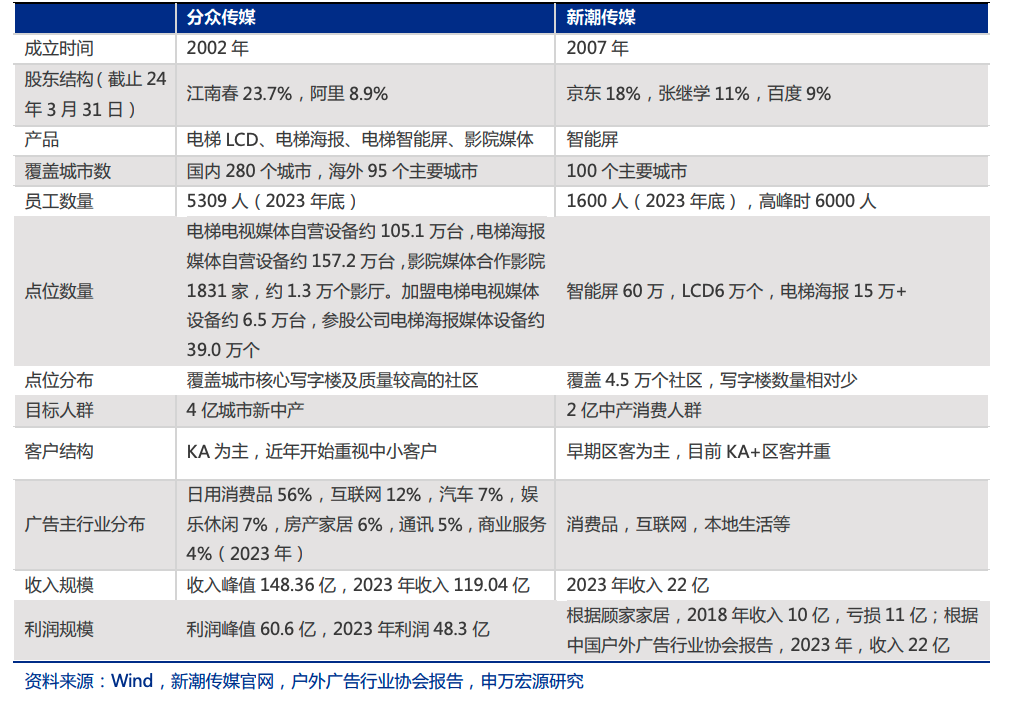
分众传媒为何收购新潮?
Hu Xiu· 2025-04-14 02:14
Group 1 - The core point of the article is the significant merger in the elevator advertising industry, where the leading company, Focus Media, acquires the second-largest company, New Trend Media, for an estimated valuation of 8.3 billion yuan, using a combination of stock and cash [1][27] - The merger is seen as a strategic move to address the competitive landscape, where both companies have been engaged in a prolonged battle for market share, leading to a "prisoner's dilemma" scenario [26][31] - The elevator advertising industry is characterized by a high market concentration, with Focus Media holding approximately 60% market share and New Trend Media holding 15-20%, together accounting for over 80% of the market [29][34] Group 2 - The merger is expected to enhance the competitive position of the new Focus Media Group, providing a stronger industry moat and increased marketing synergy through the acquisition of New Trend's valuable resources [34][35] - The strategic rationale behind the merger includes the recognition of the need for digital transformation in outdoor advertising, as articulated by New Trend's CEO, who expressed a desire to collaborate with Focus Media to achieve this vision [32][33] - The industry is anticipated to stabilize with the merger, potentially leading to a more favorable environment for growth and profitability as the scale effects are expected to increase post-merger [34][35]

《2025年3月中国房地产企业新增货值TOP100》
克而瑞研究中心· 2025-04-03 01:00
Investment Rating - The report indicates a positive outlook for the real estate industry, with a focus on major players in core cities and a significant increase in land acquisition activities among top companies [10][18][25]. Core Insights - The average premium rate for land transactions reached 17.1% in March, an increase of 6 percentage points from February, indicating a recovery in the land market [12][10]. - The top 10 real estate companies accounted for 75% of the new land value, reflecting a concentration of investment among leading firms [18][23]. - The total new land value for the top 100 companies was 622 billion yuan, with a year-on-year growth of 17.8% [17][19]. Summary by Sections New Land Value Rankings - The top three companies in terms of new land value are China Resources Land (642.2 billion yuan), China Overseas Land (566 billion yuan), and Greentown China (504 billion yuan) [1][5]. - The report lists a total of 100 companies, with significant contributions from major players in the industry [1][5]. Land Acquisition Trends - The report highlights a "head-tail differentiation" in investment, where top companies are aggressively acquiring land while many smaller firms remain cautious [23][25]. - The land acquisition ratio for the top 100 companies is 0.3, indicating a strategic focus on land procurement among leading firms [21][18]. Market Dynamics - The report notes that the land market is experiencing a structural recovery, particularly in first-tier and strong second-tier cities, while third and fourth-tier cities are still facing challenges [25][10]. - The competitive landscape is shifting towards larger firms, with increased bidding activity for high-quality land parcels in key urban areas [25][10].