战略聚焦

Search documents
为什么那个能力强的员工,越来越不服管?
3 6 Ke· 2025-11-13 03:25
Core Insights - The article discusses the phenomenon of "strategic misalignment" within organizations, where capable employees begin to resist management due to unclear strategic direction [1][2][3] - Strategic misalignment is characterized by three main issues: disappearing boundaries, internal organizational friction, and innovation stagnation, all stemming from a lack of clear strategic direction [4][13] Disappearing Boundaries - Strategic boundaries define where a company should compete and what it should avoid, but when these boundaries blur, decision-making shifts from "should we do this" to "can we do this" [5][6] - This shift leads to a proliferation of initiatives that dilute focus, resulting in a situation where the organization becomes busy but lacks clear priorities [7][8] Internal Organizational Friction - As organizations grow, the collaboration between departments often deteriorates, leading to silos where each department operates independently, resulting in inefficiencies [9][10] - This internal friction manifests as increased meetings, slower decision-making, and a lack of clarity on what drives growth, ultimately eroding the organization's judgment and collaborative spirit [11][12] Innovation Stagnation - Continuous strategic misalignment and organizational dysfunction lead to a decline in innovation, where new ideas become scarce and the organization becomes risk-averse [11][12] - The focus shifts from bold experimentation to merely maintaining stability, which can result in long-term decline despite outward appearances of activity [12][13] Rebuilding Strategic Focus - To address strategic misalignment, organizations must re-establish clear strategic direction, which involves making tough choices about priorities and resource allocation [14][15] - The process of strategic focus includes four key cycles: convergence, transmission, boundaries, and feedback, which help to clarify direction and ensure alignment across the organization [17][30] Case Studies - Procter & Gamble's transformation involved shedding around 100 brands to focus on 70-80 core brands, demonstrating the importance of strategic convergence [19][20] - Schneider Electric's "China Hub" strategy illustrates how clear communication and local empowerment can enhance strategic transmission and execution [24][25] - Airbnb's response to the COVID-19 pandemic showcases the importance of strategic feedback, as the company refocused on its core offerings to navigate through crisis [32][33] Conclusion - The article emphasizes that true strategic focus is not about doing less but about doing the right things more effectively, which requires a clear understanding of direction and boundaries [44][45] - Organizations that can align their strategic focus with employee motivation will foster a culture where capable individuals are not seen as disruptive but as catalysts for evolution [47][48]


多家上市公司年底集中出售资产 “瘦身+增效”并行
Zheng Quan Ri Bao· 2025-11-11 23:24
Core Insights - A significant number of A-share listed companies are actively engaging in asset sales, equity transfers, or property disposals as the year-end approaches, with transaction amounts ranging from millions to billions [1][2][3] - Companies are leveraging these asset disposals to enhance profits and optimize their asset structures, indicating a strategic focus on core business operations [1][2][3] Group 1: Asset Sales and Profit Enhancement - Zhuhai Zhongfu plans to sell real estate for 50 million yuan, expecting a pre-tax profit increase of approximately 26.05 million yuan [1] - Shaanxi Black Cat is selling 100% stakes in two coal companies for an estimated 439 million yuan, aiming to maximize shareholder returns and align with long-term strategic goals [2] - The trend of asset sales is seen as a response to favorable market conditions for resource consolidation in the coal industry [2] Group 2: Business Streamlining and Strategic Focus - Yantai Yatong is divesting a loss-making subsidiary for 3.668 million yuan to optimize its industrial layout and enhance competitiveness [2] - Shenzhen Jian Design is selling its loss-making subsidiary to focus on its core business, reflecting a broader trend of companies shedding non-core and inefficient assets [3] - Experts suggest that these asset disposals are proactive measures for financial optimization and strategic adjustments, allowing companies to improve operational quality and prepare for future business developments [3]


多家上市公司年底集中出售资产“瘦身+增效”并行
Zheng Quan Ri Bao Zhi Sheng· 2025-11-11 16:08
Group 1 - Numerous A-share listed companies are actively engaging in asset sales, equity transfers, or property disposals as year-end approaches, with transaction amounts ranging from millions to billions [1] - Companies are selling idle or non-core assets to generate short-term profits, thereby enhancing their financial performance [1] - For instance, Zhuhai Zhongfu plans to sell real estate for 50 million yuan, expecting a pre-tax profit increase of approximately 26.05 million yuan from the transaction [1] Group 2 - Shaanxi Black Cat is selling 100% equity stakes in two coal companies to focus on strategic realignment, with a planned sale price of approximately 439 million yuan, realizing asset appreciation [2] - Companies are also focusing on divesting loss-making businesses to streamline operations and concentrate on core activities [2] - Yantai Yatong is selling a loss-making subsidiary for 36.68 million yuan, which will no longer be included in consolidated financial statements, thus optimizing its asset structure [2] Group 3 - Shenzhen Jian Design is divesting its loss-making interior design business, indicating a trend of companies focusing on core competencies and shedding inefficient assets [3] - Experts suggest that the trend of asset disposal reflects a strategic shift towards high-quality development and resource optimization during the economic transition [3] - The year-end asset disposals are seen as practical measures to improve financial structures and operational quality, allowing companies to prepare for future strategic adjustments [3]
清新环境(002573.SZ):拟将控股子公司天晟源60%股权转让给四川省生态环保集团
Ge Long Hui A P P· 2025-11-07 12:11
Group 1 - The company, Qingxin Environment (002573.SZ), announced a strategic focus on its core business by optimizing resource allocation efficiency and enhancing core competitiveness [1] - The company plans to transfer 60% equity of its subsidiary, Tianshengyuan, through a non-public agreement for a total consideration of 237.288 million yuan [1] - Following the completion of this transaction, Tianshengyuan will no longer be included in the company's consolidated financial statements [1]

清新环境(002573.SZ)拟向控股股东协议转让天晟源60%股权 剥离非核心业务
智通财经网· 2025-11-07 12:04
Core Viewpoint - The company plans to strategically divest 60% of its stake in its subsidiary Tian Sheng Yuan Environmental Protection Co., Ltd. for 237 million yuan to its controlling shareholder, Sichuan Ecological Environmental Industry Group Co., Ltd. This move aims to focus on core business areas and optimize resource allocation efficiency [1] Group 1 - The transaction will result in Tian Sheng Yuan no longer being included in the company's consolidated financial statements [1] - The asset sale is part of a strategy to divest non-core businesses and concentrate resources on industrial flue gas treatment and water services operations [1]
三元股份(600429):25Q3点评:收入环比改善,主业盈利能力提升
Shenwan Hongyuan Securities· 2025-10-29 12:14
Investment Rating - The report maintains an "Outperform" rating for the company [2] Core Insights - The company reported a total revenue of 4.87 billion yuan for the first three quarters of 2025, a year-on-year decrease of 10%, but achieved a net profit attributable to shareholders of 236 million yuan, a significant increase of 124.8% year-on-year [7] - The revenue for Q3 2025 was 1.54 billion yuan, showing a slight decline of 0.82% year-on-year, but the net profit for the same quarter was 53.14 million yuan, compared to a loss of 22.63 million yuan in the previous year [7] - The company is shifting its strategy from revenue-driven to profit-driven, focusing on internal reforms and efficiency improvements [7] Financial Data and Profit Forecast - Total revenue forecast for 2025 is 7.127 billion yuan, with a projected year-on-year growth of 1.6% [6] - The net profit attributable to shareholders is expected to be 89 million yuan in 2025, with a year-on-year growth of 63.1% [6] - The company’s gross margin is projected to improve to 23.7% in 2025, with a return on equity (ROE) of 1.8% [6] Revenue and Profitability Trends - The company’s revenue decline has narrowed in Q3 2025, with a focus on the Beijing-Tianjin-Hebei region and fresh milk products [7] - The number of distributors has decreased by 1,640, indicating a strategic focus on key areas and product categories [7] - The gross margin for Q3 2025 was 18.7%, with a decrease of 2 percentage points year-on-year, attributed to cost pressures and product mix adjustments [7]

三元股份战略闭环加速兑现 前三季度经营质效持续跃升
Zheng Quan Ri Bao Wang· 2025-10-29 07:14
Core Viewpoint - Beijing Sanyuan Foods Co., Ltd. has demonstrated strong strategic depth and profit resilience in its Q3 report, focusing on its core business, low-temperature products, and developing major products [1][4] Financial Performance - In the first three quarters, the company achieved revenue of 4.871 billion yuan, with a net profit attributable to shareholders of 236 million yuan, representing a year-on-year increase of 124.84% [1][2] - The net cash flow from operating activities reached 329 million yuan, showing a significant year-on-year growth of 387% [1][4] - Despite a 10.06% decline in revenue compared to the previous year, the net profit after deducting non-recurring items increased by 207% to 223 million yuan [2][5] Strategic Focus - The company has implemented a "strategic slimming" approach by divesting non-core assets, such as transferring its stake in Shou Nong Animal Husbandry, to enhance operational efficiency [2][5] - The low-temperature milk segment has become a key driver of profit growth, with the launch of the "Sanyuan Beijing Fresh Milk" product, emphasizing 100% self-owned milk sources and T+0 market entry [2][3] Channel Development - Sanyuan has effectively diversified its channel layout, with significant revenue and profit growth in its special channel business, reflecting its foresight in differentiated channel strategies [3][5] - The company's vertical integration from farms to factories has strengthened its competitive position in the low-temperature milk market [3][5] Operational Efficiency - The company has focused on high-quality development and optimizing operational efficiency across the entire supply chain, which has contributed to its profit growth [4][5] - The strategic focus on "profitable revenue and cash flow profit" has positioned the company well for future expansion [4]
聚焦CRDMO后给药明康德带来了什么?
Ge Long Hui· 2025-10-28 05:39
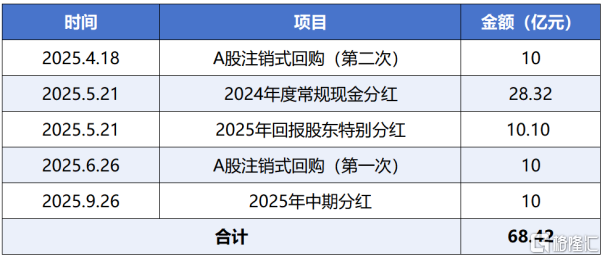
Core Insights - WuXi AppTec is strategically divesting non-core businesses to focus on its competitive CRDMO model, aiming to enhance operational efficiency and shareholder value [2][10][12] Financial Performance - In the first three quarters of 2025, the company reported a 22.5% year-on-year increase in revenue from continuing operations and a 43.4% increase in adjusted Non-IFRS net profit [3][4] - The total shareholder return plan for 2025 amounts to nearly 7 billion RMB, including regular dividends of approximately 2.83 billion RMB and special dividends of about 1.01 billion RMB [5][7] Strategic Divestitures - The sale of the ATU business was a pragmatic decision to eliminate losses and improve overall profitability, enhancing gross and net profit margins [13][14] - The divestiture of shares in WuXi XDC and clinical operations is part of a capital recycling strategy, providing funds to reinvest in the core CRDMO business [14][15][16] Operational Excellence - The company has significantly improved its operational efficiency, reducing the time required to ramp up new facilities from two years in 2017 to just two months in 2024 [20] - A proprietary digital management system optimizes production scheduling across multiple sites, enhancing asset utilization and minimizing errors [21][22] Future Outlook - WuXi AppTec is building a self-reinforcing business model that leverages operational excellence to ensure stable order flow and strong cash flow, which will be reinvested into the core CRDMO platform [23][24]

只有创新才能对抗内卷
Di Yi Cai Jing· 2025-10-27 12:48
Group 1 - The core issue of "involution" in the current Chinese economy is a systemic growth dilemma caused by insufficient innovation momentum, where continuous innovation, particularly technological innovation, is essential for breaking through this dilemma [1][3] - The phenomenon of "involution" is characterized by a large number of economic entities entering homogeneous competition, leading to a situation where overall welfare does not improve, and innovation momentum is suppressed [2][3] - Strategic "focus" is advocated as a rational survival logic, which is not an end in itself but a means to create necessary conditions for sustained and effective innovation activities [2][4] Group 2 - The essence of "involution" is the degradation of competitive forms due to insufficient innovation, and the fundamental way to break through this dilemma is to enhance the dimensions of competition through systematic innovation [3][5] - Focusing on specific areas allows companies to concentrate resources, leading to a higher intensity of investment and deeper knowledge accumulation, which are crucial for generating differentiated and hard-to-replicate technological outcomes [4][5] - Innovation is the fundamental means to achieve the goals of "cost leadership" or "differentiation" under a focused strategy, enabling companies to escape price wars and dynamically expand their focus boundaries [5][6] Group 3 - A robust institutional framework is necessary to guide competition towards innovation rather than involution, emphasizing that good systems can promote innovation while poor systems can lead to involution [6][8] - The core proposition of institutional innovation is to deeply bind key human capital with monetary capital and long-term organizational goals through a "dynamic incentive compatibility" logic [7][8] - Continuous innovation in China relies not only on the accumulation of key human capital but also on the ongoing transformation of the institutional environment that stimulates innovation [8]
佳力奇拟2087万元出售参股公司股权业绩“增收不增利”战略收缩聚焦主
Chang Jiang Shang Bao· 2025-09-26 03:56
Core Viewpoint - Anhui Jialiqi Advanced Composite Materials Technology Co., Ltd. is transferring its 35% stake in Xian Junhui Aviation Technology Co., Ltd. to a company controlled by its actual controller for approximately 20.87 million yuan, as part of a strategic adjustment to focus on its core business [2][4]. Financial Performance - From 2021 to 2023, the company's operating revenue increased from 428 million yuan to 463 million yuan, while net profit decreased from 129 million yuan to 103 million yuan [3]. - In 2024, operating revenue is projected to rise to 627 million yuan, a year-on-year increase of 35.41%, but net profit is expected to decline to 100 million yuan, a decrease of 2.05% [3]. Strategic Focus - The transfer of Junhui Aviation shares is a significant strategic move for Jialiqi, allowing the company to concentrate resources on its main business of aviation composite materials [4]. - The company aims to enhance its competitiveness in the military aviation sector while also needing to diversify its customer base to improve risk resilience [4].