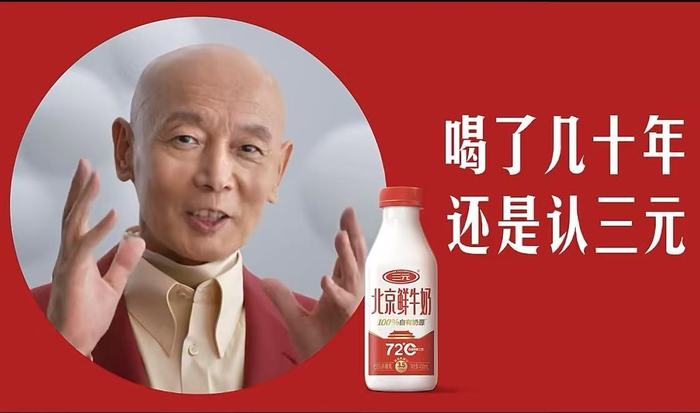
三元北京鲜牛奶

Search documents
三元食品调整战略焕新出发
Xin Lang Cai Jing· 2026-02-23 21:44
Core Viewpoint - Beijing Sanyuan Foods Co., Ltd. (referred to as "Sanyuan Foods") has announced its 2025 annual performance forecast, projecting revenue of approximately 6.35 billion yuan, with a strong market presence in low-temperature fresh milk and liquid milk in Beijing, maintaining a market share of over 50% in low-temperature fresh milk [1][2]. Group 1: Financial Performance and Market Position - Sanyuan Foods expects to achieve a revenue of around 6.35 billion yuan in 2025, with a focus on profitable revenue and cash flow [1]. - The company holds the leading market share in low-temperature fresh milk in Beijing, exceeding 50% [1]. - The launch of the second strategic product, "Beijing Yogurt," aims to enhance profitability and redefine the market landscape [1]. Group 2: Strategic Focus and Product Innovation - Sanyuan Foods has restructured its low-temperature division into a specialized team to streamline decision-making and enhance focus on core business [2]. - The company is committed to a strategy of "focusing on Beijing and deepening low-temperature products," aiming to strengthen its brand with a focus on quality and freshness [2]. - The introduction of "Sanyuan Beijing Fresh Milk" as a key product leverages 100% self-owned milk sources and T+0 delivery to create a competitive edge [1][3]. Group 3: Marketing and Brand Development - Sanyuan Foods has developed a dual spokesperson strategy to effectively reach different consumer demographics, with actor Ge You targeting the middle-aged and older population, and young actor Ding Yuxi appealing to the Z generation [2]. - The company is actively pursuing strategic partnerships with regional supermarket leaders to enhance market penetration in convenience stores and fresh supermarkets [2]. - The overall business development of Sanyuan Foods is showing strong and positive growth, reflecting a robust market presence [2].

乳饮“老江湖”的三场仗
Bei Jing Shang Bao· 2025-12-25 16:02
Group 1: Industry Overview - The Chinese food and beverage industry is undergoing significant transformation, with traditional brands facing challenges such as channel restructuring, product upgrades, and public relations issues, while emerging brands are rapidly rising through differentiated positioning and digital marketing [1] - The year 2025 is seen as a pivotal moment for established brands like Wahaha, Huiyuan, and Sanyuan, reflecting the industry's need for new strategies amidst changing market dynamics [1] Group 2: Wahaha's Challenges - Wahaha is currently embroiled in an asset dispute involving the "Zong Family Siblings" and Zong Fuli, with the company's trademark still locked in a shareholder deadlock [2] - Zong Fuli resigned from her leadership roles at Wahaha but retains a 29.4% stake, indicating a complex transition as she attempts to modernize the company while facing historical governance issues [3] - Wahaha's revenue slightly decreased from 51.2 billion yuan in 2022 to 50 billion yuan in 2023, but is projected to rebound to 70 billion yuan in 2024, showcasing a potential recovery strategy [3] Group 3: Wahaha's Strategic Moves - Wahaha has initiated a "surgical" channel reform, consolidating its distribution network to enhance control over core markets, which marks a significant shift in its long-standing channel management structure [4] - The company is focusing on professional and market-oriented adjustments, aiming to replace inertia with mechanisms that align the team closer to market demands [4] - However, internal conflicts persist, as evidenced by the registration of the "Wah Xiaozong" trademark, which has not been utilized effectively, and competition from the "Zong Sheng" brand [4][5] Group 4: Huiyuan's Capital Struggles - Huiyuan is facing a capital struggle, with its e-commerce presence severely impacted due to a control dispute that has escalated into judicial confrontations [6][8] - The company has accused its investment partner of failing to fulfill financial commitments, leading to operational difficulties and product shortages on major e-commerce platforms [8] - Huiyuan's management is actively pursuing legal action to enforce contractual obligations and restore operational stability [8] Group 5: Sanyuan's Strategic Focus - Sanyuan has shifted its strategy from scale expansion to focusing on high-margin, high-loyalty products, particularly in the low-temperature fresh milk segment [10] - The company reported sales of 2.28 billion yuan in Beijing for the first three quarters, despite a 14.6% decline compared to the previous year, indicating resilience in a challenging market [11] - Sanyuan is also expanding its product offerings to cover all life stages, aiming to create a comprehensive nutritional ecosystem [11] Group 6: Industry Trends and Future Outlook - The transformation in the beverage industry reflects a broader shift from extensive growth to refined, digital operations, highlighting the need for traditional companies to address governance, brand aging, and channel rigidity [12] - The challenges faced by established brands like Wahaha and Huiyuan signal the beginning of an industry reshuffle, emphasizing the importance of governance restructuring and adapting to consumer trends [12]
乳饮2025 | 传承、资本与产品力 老品牌的“三场仗”
Bei Jing Shang Bao· 2025-12-24 16:44
Core Insights - The Chinese food and beverage industry is undergoing significant transformation in 2025, with traditional companies facing challenges such as channel restructuring, product upgrades, and public relations issues, while emerging brands are rapidly rising through differentiated positioning and digital marketing [1] Wahaha - Wahaha is experiencing a complex situation in 2025, with its founder, Zong Fuli, resigning from key positions while retaining a 29.4% stake, indicating a struggle with historical legacy issues [2][3] - The company's revenue showed a decline from 512 billion yuan in 2022 to 500 billion yuan in 2023, followed by a rebound to 700 billion yuan in 2024, with a slight increase to 705 billion yuan in 2025, reflecting a market-driven approach under Zong Fuli's leadership [3] - Wahaha has implemented a "surgical" channel reform, consolidating its distribution rights under the "Hongsheng system" to achieve vertical control over sales terminals, marking a significant shift in its long-standing channel management structure [4] - The brand's transformation highlights the challenges of transitioning from a family-owned business to a modern corporate governance structure, with experts suggesting the need for professional management teams to rejuvenate the brand [5] Huiyuan - Huiyuan is embroiled in a capital struggle, with its e-commerce presence severely impacted, reflecting a broader control dispute that has escalated into judicial confrontations [6][8] - The company faced significant operational challenges due to a lack of funding from its restructuring investor, leading to a reliance on pre-restructuring funds and resulting in production capacity shrinkage and supply chain disruptions [8][9] - Despite these challenges, Huiyuan is attempting to pivot its strategy by launching new product lines aimed at health-conscious consumers, indicating a shift from being a raw material supplier to an integrated industry player [9] Sanyuan - Sanyuan has shifted its focus from scale expansion to high-margin, high-loyalty products, particularly in the low-temperature fresh milk segment, positioning itself strategically in the market [10] - The company reported a sales figure of 2.28 billion yuan in Beijing for the first three quarters, reflecting a decline compared to the previous year, yet it remains competitive among A-share dairy companies [11] - Sanyuan's strategy includes a localized service approach and a product matrix that caters to various life stages, aiming to create a comprehensive nutritional ecosystem [11][12] Industry Trends - The industry is transitioning from extensive growth to refined, digital operations, with traditional companies facing governance, brand aging, and channel rigidity issues, while new brands capitalize on trends like health consciousness and online shopping [12]
传承、资本与产品力:老品牌的“三场仗”
Bei Jing Ri Bao Ke Hu Duan· 2025-12-24 16:26
Core Insights - The Chinese food and beverage industry is undergoing significant transformation in 2025, with traditional brands facing challenges such as channel restructuring, product upgrades, and public relations issues, while emerging brands are rapidly rising through differentiated positioning and digital marketing [1] Group 1: Wahaha - Wahaha is experiencing a complex situation with leadership changes and unresolved trademark issues, as the new general manager faces a plan without trademark authorization [3] - Revenue for Wahaha decreased slightly from 512 billion yuan in 2022 to 500 billion yuan in 2023, but rebounded to 700 billion yuan in 2024, with a further increase to 705 billion yuan projected for 2025 [3] - The company has initiated a "surgical" channel reform, consolidating its distribution network to enhance vertical control over sales, particularly in key markets [4] Group 2: Huiyuan - Huiyuan is embroiled in a capital struggle that has escalated into a judicial confrontation, highlighting issues of corporate governance and the failure of contractual obligations by its investors [6][8] - The company has faced significant operational challenges, including a cash flow crisis and product shortages on e-commerce platforms due to unfulfilled investment commitments from its restructuring investors [7] - Despite these challenges, Huiyuan is attempting to pivot its strategy by launching new product lines aimed at health-conscious consumers and signing a major investment agreement to transform into an industry integrator [8][9] Group 3: Sanyuan - Sanyuan has shifted its focus from scale expansion to high-margin, high-loyalty products, particularly in the low-temperature fresh milk segment, positioning itself strategically in the market [10] - The company reported sales of 22.8 billion yuan in Beijing for the first three quarters, reflecting a decline compared to the previous year, but it remains competitive among A-share dairy companies [10] - Sanyuan's strategy includes localized services and a focus on product innovation across different consumer life stages, aiming to create a comprehensive nutritional ecosystem [11]

乳饮2025|传承、资本与产品力,老品牌的“三场仗”
Bei Jing Shang Bao· 2025-12-24 15:35
Core Insights - The Chinese food and beverage industry is undergoing significant transformation in 2025, with traditional brands facing challenges such as channel restructuring, product upgrades, and public relations issues, while emerging brands are rapidly rising through differentiated positioning and digital marketing [1] - The cases of Wahaha, Huiyuan, and Sanyuan illustrate the struggles and adaptations of established dairy companies in this changing landscape [1] Wahaha - In 2025, Wahaha is embroiled in a complex ownership dispute, with its brand name locked in a stock equity deadlock, impacting its operational plans [3][4] - The company experienced a revenue decline from 512 billion yuan in 2022 to 500 billion yuan in 2023, followed by a rebound to 700 billion yuan in 2024, and a slight increase to 705 billion yuan in 2025, reflecting a market-driven approach under the leadership of Zong Fuli [4] - Wahaha has initiated a "surgical" channel reform, consolidating its distribution rights under the "Hongsheng system" to enhance vertical control over sales terminals [6] - The brand's transformation is hindered by unresolved historical issues and competition from emerging brands like "Wawa Xiaozong" and "Wawa Xiaozhi" [6][7] Huiyuan - Huiyuan is facing a capital struggle, with its e-commerce presence severely impacted due to a control dispute that has escalated into judicial confrontations [8][9] - The company has accused its investment partner, Wensheng Assets, of failing to fulfill financial commitments, leading to operational difficulties and product shortages [9][10] - Despite these challenges, Huiyuan is attempting to pivot its strategy by launching new product lines aimed at health-conscious consumers, while also signing a significant investment agreement to transition from a raw material supplier to an industry integrator [10][11] Sanyuan - Sanyuan has shifted its focus from scale expansion to high-margin, high-loyalty products, particularly in the low-temperature fresh milk segment, which has become a strategic priority [12] - The company reported a sales figure of 2.28 billion yuan in Beijing for the first three quarters of the year, reflecting a decline compared to the previous year, yet it remains competitive among A-share dairy companies [12] - Sanyuan's localized strategy includes re-establishing its brand presence in urban areas, transforming traditional stores into cultural landmarks that foster community engagement [13] - The industry is experiencing a shift from extensive growth to refined, digital operations, highlighting the need for traditional companies to adapt their governance structures and product offerings to meet evolving consumer demands [13]
食品饮料行业周度市场观察-20251205
Ai Rui Zi Xun· 2025-12-05 05:39
Investment Rating - The report does not explicitly provide an investment rating for the food and beverage industry Core Insights - The sports nutrition sector is experiencing rapid growth, with the global market expected to increase from 188.13 billion yuan in 2025 to 306.47 billion yuan by 2032, reflecting a compound annual growth rate (CAGR) of 7.22%. In China, the market is projected to reach 20.93 billion yuan by 2030, with a CAGR of 11.56% [2] - The beverage market in China is witnessing a trend of "market position certification," where non-first-tier brands obtain certifications like "sales leader" and "category pioneer" to differentiate themselves in a saturated market [2] - The Japanese ready-to-drink coffee market is shifting from canned to PET bottle packaging, with PET bottles increasing from 30% in 2017 to over 40% in 2023, reflecting changing consumer preferences towards convenience and emotional connection [5] Industry Trends - The sports nutrition industry is a rapidly growing segment of the health supplement market, with a focus on serving active individuals. The market is highly concentrated in China, with the top three companies holding a 70% market share [2] - The beverage market is seeing a rise in "market position certification," which is a strategy for non-first-tier brands to establish credibility and differentiate themselves amid intense competition [2] - The dairy industry is focusing on deep processing technologies to enhance the nutritional value of milk, aiming for a transformation from quantity accumulation to quality improvement [5] - The ready-to-drink coffee market in Japan is experiencing a shift towards PET packaging, driven by consumer demand for convenience and a more leisurely drinking experience [5] - The health beverage sector is rapidly evolving, with products like birch sap showing a compound annual growth rate of over 300% in the past three years, indicating a strong consumer preference for natural and functional drinks [8] - The no-sugar tea market is transitioning from growth to maturity, with established brands gaining market share while new entrants face significant competition [8] - The sports drink market is rapidly expanding, with brands like Dongpeng's "Bushi La" gaining significant market share through competitive pricing and promotional activities [12] Top Brand News - Starbucks has launched a themed marketing campaign featuring classic millennium songs to enhance customer experience and promote seasonal products [14] - The ready-to-drink yogurt market is seeing significant growth, with brands like "Mo Yoghurt" leveraging celebrity endorsements to enhance brand visibility and consumer engagement [14] - Sanyuan Foods reported a 124.84% increase in net profit, driven by its low-temperature milk segment, showcasing the potential for growth in the dairy market [17] - JD.com has established a dedicated department for prepared food, indicating a strategic focus on the growing market for convenience foods [19] - Farmers Spring has introduced new ready-to-drink coffee products, aiming to capture market share in a competitive landscape dominated by established brands [20]

2025年第47周:食品饮料行业周度市场观察
艾瑞咨询· 2025-11-28 00:05
Group 1: Sports Nutrition Industry Analysis - The sports nutrition sector is a subfield of the health supplement industry, catering to athletes and fitness enthusiasts. The global market size is projected to grow from 188.132 billion yuan in 2025 to 306.474 billion yuan by 2032, with an average annual growth rate of 7.22%. In China, the growth rate is expected to be faster, reaching 20.93 billion yuan by 2030, with an average annual growth rate of 11.56% [2] - Products in this sector include energy supplements and control products, with a highly concentrated market in China (CR3 reaching 70%). Leading companies include Xiwang Food, Kangbiter, and Tongchen Beijian [2] - Online sales dominate the distribution channel, accounting for 65% of total sales. It is recommended to focus on leading companies, while risks include intensified competition, product homogenization, and regulatory policies [2] Group 2: Beverage Market Trends - The Chinese beverage market has seen a rise in "market position certification," where non-first-tier brands obtain certifications like "sales leader" and "category pioneer" from third-party organizations, costing between 100,000 to 500,000 yuan. This trend arises from the pressure of stock competition, with brands seeking differentiation [4] - Japan's ready-to-drink coffee market reached 930 billion yen in 2023, accounting for 8% of the beverage market. The shift from canned to PET bottled coffee reflects changing consumer preferences towards convenience and emotional connection [6] Group 3: Dairy Industry Innovations - The Chinese dairy industry is focusing on deep processing technologies to unlock the nutritional potential of milk, aiming for a transformation from quantity accumulation to quality leap. High-value products like lactoferrin and whey protein show significant potential, although the country still relies on imports [5] - The introduction of new products like "Sanyuan Beijing Fresh Milk" has driven significant profit growth for Sanyuan Foods, with a net profit increase of 124.84% year-on-year, attributed to its 100% self-owned milk source and T+0 production model [23][24] Group 4: Emerging Consumer Trends - The pet consumption market in China is rapidly growing, with urban pet ownership reaching 120 million and market size exceeding 300 billion yuan, expected to surpass 1 trillion yuan by 2028. Young pet owners, making up 67% of the demographic, are driving demand for premium and intelligent pet products [9] - The health beverage sector is experiencing rapid growth, with products like birch sap showing a compound annual growth rate of over 300% in three years, indicating a strong consumer preference for natural and functional beverages [10] Group 5: Market Dynamics and Competition - The market for sugar-free tea is shifting from incremental to stock competition, with established brands like Nongfu Spring and Suntory gaining market share while new entrants face challenges. The market is becoming more rational and mature, focusing on quality over price [11][12] - The ready-to-drink coffee segment is seeing increased competition, with companies like Nongfu Spring and Yibao entering the market, focusing on high cost-performance products to capture market share [16][28]

上新品、拓渠道 京郊老字号加码创新走近消费者
Bei Jing Shang Bao· 2025-11-13 08:22
Core Insights - The article highlights the ongoing innovation and consumer integration efforts of traditional brands in Beijing, particularly focusing on the activities of Sanyuan Foods and other local enterprises [1][6]. Group 1: Sanyuan Foods - Sanyuan Foods has launched over 30 new products this year, demonstrating its commitment to innovation in the market [1]. - The "Sanyuan Beijing Fresh Milk" product exemplifies the company's strategy to focus on the low-temperature fresh milk segment, aiming to strengthen brand recognition in a competitive market [3]. - Sanyuan Foods has a daily processing capacity of 1,200 tons of fresh milk and is expanding its store presence while also reopening the "Beijing Milk Company" and launching tea beverage stores to attract younger consumers [3]. Group 2: Other Traditional Brands - Hongxing Collective Farm, with over 70 years of history, integrates agriculture, red culture, and green ecology, offering diverse experiences such as fruit picking and camping [5]. - Nanyushao, a representative of Beijing's sauce liquor culture, preserves traditional brewing techniques and has introduced smaller bottle sizes and flavored sets to appeal to younger consumers [5]. - Beijing Rural Commercial Bank has been innovating its service mechanisms to support local agricultural industries, launching the "You Nong Quick Loan" series to address financing challenges for various regional agricultural products [5]. Group 3: Government and Market Trends - The Beijing Municipal Bureau of Commerce is encouraging traditional brands to create new consumer experiences, including the establishment of museums and innovation stores for old brands [6]. - The rise of national trends is driven by cultural confidence and consumer demand for high-quality, culturally rich products, presenting unprecedented opportunities for traditional brands [6].
三元股份战略闭环加速兑现 前三季度经营质效持续跃升
Zheng Quan Ri Bao Wang· 2025-10-29 07:14
Core Viewpoint - Beijing Sanyuan Foods Co., Ltd. has demonstrated strong strategic depth and profit resilience in its Q3 report, focusing on its core business, low-temperature products, and developing major products [1][4] Financial Performance - In the first three quarters, the company achieved revenue of 4.871 billion yuan, with a net profit attributable to shareholders of 236 million yuan, representing a year-on-year increase of 124.84% [1][2] - The net cash flow from operating activities reached 329 million yuan, showing a significant year-on-year growth of 387% [1][4] - Despite a 10.06% decline in revenue compared to the previous year, the net profit after deducting non-recurring items increased by 207% to 223 million yuan [2][5] Strategic Focus - The company has implemented a "strategic slimming" approach by divesting non-core assets, such as transferring its stake in Shou Nong Animal Husbandry, to enhance operational efficiency [2][5] - The low-temperature milk segment has become a key driver of profit growth, with the launch of the "Sanyuan Beijing Fresh Milk" product, emphasizing 100% self-owned milk sources and T+0 market entry [2][3] Channel Development - Sanyuan has effectively diversified its channel layout, with significant revenue and profit growth in its special channel business, reflecting its foresight in differentiated channel strategies [3][5] - The company's vertical integration from farms to factories has strengthened its competitive position in the low-temperature milk market [3][5] Operational Efficiency - The company has focused on high-quality development and optimizing operational efficiency across the entire supply chain, which has contributed to its profit growth [4][5] - The strategic focus on "profitable revenue and cash flow profit" has positioned the company well for future expansion [4]
三元擦亮“北京鲜牛奶”招牌,想错位竞争
Xin Lang Cai Jing· 2025-09-26 02:57
Core Viewpoint - Sanyuan Foods has reintroduced its brand ambassador Ge You for its fresh milk products after 19 years, launching the upgraded "Sanyuan Beijing Fresh Milk," which emphasizes 100% self-owned milk sources and increased protein content [1][5] Group 1: Market Position and Strategy - Sanyuan Foods is focusing on low-temperature fresh milk and core regional markets to establish competitive barriers through differentiation, following two consecutive years of declining revenue [5][9] - In the Beijing fresh milk market, Sanyuan holds a leading sales share of 58.3%, outperforming competitors like Yili, Mengniu, and Guangming [5][9] - The company has optimized its product offerings by reducing nearly 20% of its SKUs and increasing the proportion of high-end products, while also enhancing operational efficiency [7][9] Group 2: Product and Channel Development - Sanyuan has strengthened its channel development, with a significant presence in retail locations like Hema, where its upgraded products occupy nearly half of the shelf space [3][5] - The company has launched a new product line tailored for new retail channels, which has performed better than expected despite initial controversies [7] - Sanyuan has also revitalized its brand by opening tea shops that offer fresh milk and beverages sourced from its nearby organic farms, enhancing customer experience [8][9] Group 3: Financial Performance - In 2024, Sanyuan reported a revenue of 7.012 billion yuan, a decrease of 10.73% year-on-year, with a net profit of 54.81 million yuan, down 77.44% [7] - For the first half of the year, the company achieved total revenue of 3.331 billion yuan, a decline of 13.77%, but net profit increased by 43.33% to 183 million yuan [7]