
投资者适当性管理

Search documents
高估值赛道,突发!
中国基金报· 2026-01-26 03:05
Core Viewpoint - The tightening of approval for high-valuation equity funds is a regulatory measure aimed at reducing homogeneous competition and the risks of overcrowding in single sectors, ultimately protecting investor interests [2]. Group 1: Approval Tightening for High-Valuation Products - In the past year, 31 AI-themed funds have been submitted for approval but remain pending, with 15 of them having been under review for over three months [4]. - Since 2025, regulators have gradually tightened the approval of new equity funds with high valuations, adjusting the performance benchmark requirement from the 90th percentile to the 80th percentile [4]. - Recent approvals have favored industry theme funds focused on sectors like new energy and engineering machinery, which have relatively lower valuations [4]. Group 2: Regulatory Intent and Market Impact - The accumulation of valuation risks in popular sectors like AI and semiconductors is evident, with the CSI Artificial Intelligence Index PE ratio at 70.86, in the 99.22 percentile, and the National Semiconductor Index PE ratio reaching a historical high of 151 [4]. - The regulatory approach aims to suppress irrational investment trends and create a market environment conducive to long-term investment [4][5]. - The adjustment in approval pace is seen as a way to prevent local bubbles and market volatility caused by concentrated fund inflows during high sentiment periods [5]. Group 3: Recommendations for Fund Companies - Fund companies are encouraged to enhance their product layout capabilities in response to the new regulatory environment, focusing on long-term value investment rather than short-term speculation [8]. - The regulatory measures are expected to lead to three main benefits: guiding funds towards long-term investments, optimizing resource allocation, and reinforcing investor suitability management [8]. - Fund companies should prioritize sectors with reasonable valuations and align with national strategic directions, such as healthcare and consumer sectors, when applying for new products [9].


高估值赛道,突发!
Zhong Guo Ji Jin Bao· 2026-01-26 02:37
Core Viewpoint - The tightening of approvals for high-valuation equity funds is aimed at reducing homogeneous competition and the risks of overcrowding in single sectors, thereby protecting investor interests [1][2]. Group 1: Approval Tightening - In the past year, 31 AI-themed funds have been pending approval, with 15 applications submitted for over three months, indicating a slowdown in the approval process for high-valuation products [2]. - Since 2025, regulators have gradually tightened the approval of new equity funds with high valuations, adjusting the performance benchmark requirement from the 90th percentile to the 80th percentile [2]. - Recent approvals have favored industry theme funds focused on relatively low-valuation sectors such as new energy and engineering machinery [2]. Group 2: Market Dynamics - The current high valuations in popular sectors like AI and semiconductors pose risks, with the CSI Artificial Intelligence Index PE ratio at 70.86 times and the National Semiconductor Index PE ratio reaching a historical high of 151 times [2]. - The regulatory approach aims to suppress irrational investment trends and create a more favorable environment for long-term investments [2][3]. Group 3: Strategic Adjustments for Fund Companies - Fund companies are encouraged to enhance their product layout capabilities in response to regulatory adjustments, which can help mitigate risks associated with homogeneous competition [4]. - The policy direction is expected to lead to three benefits: guiding funds towards long-term value investment, optimizing resource allocation, and strengthening investor suitability management [4]. - Fund companies should prioritize sectors with reasonable valuations and align with national strategic directions, such as healthcare and consumer sectors, when applying for new products [5].
金价疯涨,银行积存金“戴着镣铐跳舞”
3 6 Ke· 2026-01-16 00:22
Core Viewpoint - The recent surge in gold prices, reaching a historical high of $4643 per ounce, has led to increased investor interest in gold accumulation products offered by banks, which are seen as accessible and flexible investment options [1] Group 1: Market Trends - From January 2 to January 14, 2026, the London spot gold price increased by 7.35% [1] - Banks are responding to the rising demand for gold accumulation products by lowering fees while simultaneously raising minimum investment thresholds and enhancing risk warnings [1][5] Group 2: Business Strategies - Banks are marketing gold accumulation products as "pain-free gold saving," promoting low entry barriers to attract individual investors [3] - Some banks, like Jiangsu Bank, have launched promotional campaigns encouraging customers to convert small expenditures into gold investments [3] - Various banks are offering temporary fee discounts to lower the cost of entry for investors, such as Industrial and Commercial Bank of China (ICBC) waiving fees for purchases made between January 1 and March 31, 2026 [3] Group 3: Risk Management - Banks are tightening risk management measures in response to the volatility in gold prices, transitioning gold accumulation products from general savings alternatives to medium-risk investment products [5] - ICBC has raised the minimum investment amount for its gold accumulation products from 1000 yuan to 1100 yuan as of January 8, 2026 [5][6] - Risk assessment requirements for investors have been increased, with banks like ICBC requiring a minimum risk rating of C3 (balanced) for new accounts and investments [6][7] Group 4: Investor Suitability - The increase in risk assessment levels aims to ensure that only investors with appropriate risk awareness and capacity can participate, thereby protecting them from potential losses during price fluctuations [7] - The dual strategy of raising entry barriers while offering fee discounts is designed to attract qualified investors and enhance market share, reflecting a balanced approach to risk management and business growth [7]

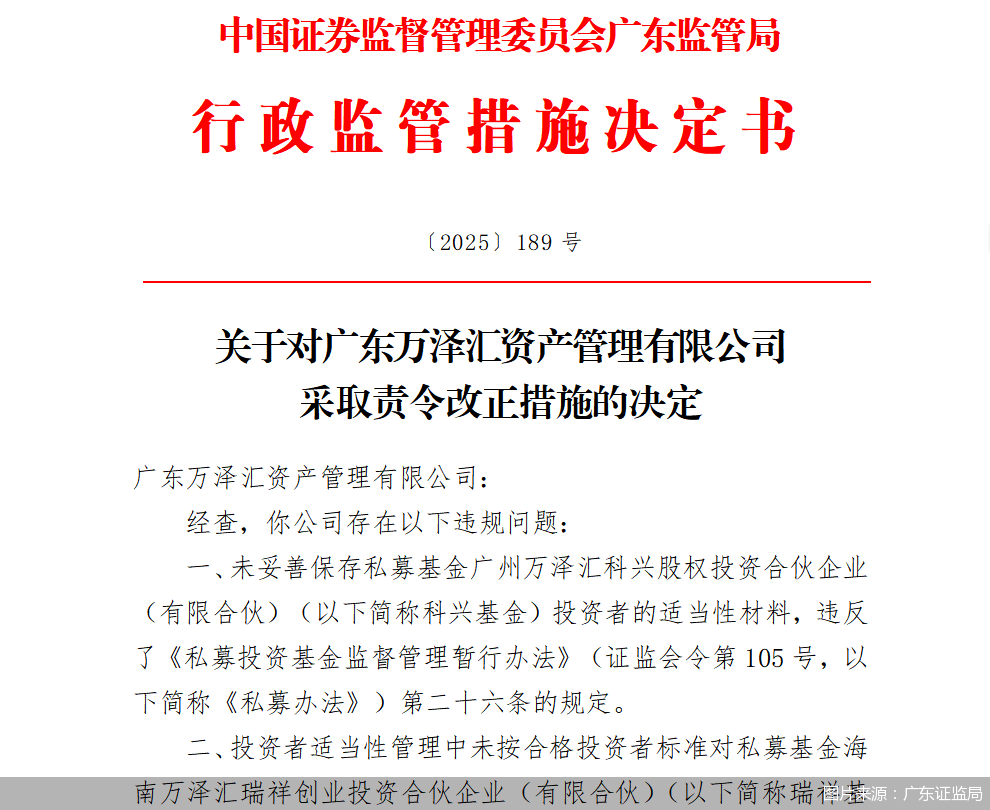
因未妥善保存投资者适当性材料等问题,广东万泽汇资管被监管责令改正
Bei Jing Shang Bao· 2026-01-14 09:40
北京商报讯(记者刘宇阳实习生岳雯艳)1月14日,广东证监局发布公告表示,经查,广东万泽汇资产管理有限公司存在未妥善保存私募基金广 州万泽汇科兴股权投资合伙企业(有限合伙)投资者的适当性材料;投资者适当性管理中未按合格投资者标准对私募基金海南万泽汇瑞祥创业 投资合伙企业(有限合伙)投资者资产证明进行认定,且广州万泽汇合润产业投资合伙企业(有限合伙)等6只私募基金投资者风险测评问卷的问 题选项显示分值;委托不具有基金销售业务资格的单位从事资金募集活动等违规问题。 广东证监局指出,上述情形违反了相关规定,决定对广东万泽汇资产管理有限公司采取责令改正的行政监管措施。广东万泽汇资产管理有限 公司应高度重视,采取切实有效的措施,对存在的问题进行整改,对相关责任人员进行问责,并在收到本决定书之日起30日内向广东证监局 提交书面整改报告。 ...
银行积存金业务热度不减 部分银行上调准入门槛
Zhong Guo Zheng Quan Bao· 2026-01-08 22:12
受到年轻投资者青睐 "最低1克即可入场,无需一次性投入大量资金,资金量有限的投资者进场无压力。投资者可以从1克 起,一点一点攒金条。"光大银行一位客户经理表示,积存金支持"T+0"交易,投资者在工作日的白天 和晚上都可以在手机银行实时交易,利用碎片时间就能进行操作管理。交易费定价清晰透明,没有隐性 成本支出,持有一定期限还能获得利息。 南京银行北京分行人士表示,该行有活期积存、定期积存、黄金定投等多种投资方式。活期积存可以看 成是存在银行可灵活买卖的黄金,1克起购买卖灵活,还可兑换实物黄金。定期积存是存在银行可以"生 金"的黄金,2克起购,多期限选择,可以随时转活期。此外,客户还可以进行黄金定投,以"懒人"模式 轻松积攒黄金份额,定投周期可以灵活选择。 近日,工商银行发布公告称,自1月12日起,将个人积存金业务风险准入等级上调至C3(平衡型)及以 上。此前,考虑到市场波动情况、投资者保护和产品风险属性等因素,多家银行已上调评级准入门槛, 达不到门槛的低风险投资者无法办理相关业务,根据客户风险偏好严把入口关。业内人士预计,随着金 价波动持续,未来会有更多银行跟进上调积存金投资准入门槛,有关积存金业务的风控举措也 ...
银行积存金业务热度不减部分银行上调准入门槛
Zhong Guo Zheng Quan Bao· 2026-01-08 20:50
● 本报记者 薛瑾 近日,工商银行发布公告称,自1月12日起,将个人积存金业务风险准入等级上调至C3(平衡型)及以 上。此前,考虑到市场波动情况、投资者保护和产品风险属性等因素,多家银行已上调评级准入门槛, 达不到门槛的低风险投资者无法办理相关业务,根据客户风险偏好严把入口关。业内人士预计,随着金 价波动持续,未来会有更多银行跟进上调积存金投资准入门槛,有关积存金业务的风控举措也将持续升 级。 受到年轻投资者青睐 "最低1克即可入场,无需一次性投入大量资金,资金量有限的投资者进场无压力。投资者可以从1克 起,一点一点攒金条。"光大银行一位客户经理表示,积存金支持"T+0"交易,投资者在工作日的白天 和晚上都可以在手机银行实时交易,利用碎片时间就能进行操作管理。交易费定价清晰透明,没有隐性 成本支出,持有一定期限还能获得利息。 工商银行提高准入门槛 南京银行北京分行人士表示,该行有活期积存、定期积存、黄金定投等多种投资方式。活期积存可以看 成是存在银行可灵活买卖的黄金,1克起购买卖灵活,还可兑换实物黄金。定期积存是存在银行可以"生 金"的黄金,2克起购,多期限选择,可以随时转活期。此外,客户还可以进行黄金定投, ...
工商银行提高个人积存金投资准入门槛
Zheng Quan Ri Bao Wang· 2026-01-08 13:10
伴随黄金价格震荡走强态势延续,商业银行正持续加强贵金属业务风控。2026年开年,便出现国有大行 上调个人积存金业务门槛。 具体而言,自2026年1月12日起,个人客户办理积存金业务的开户、主动积存或新增定投计划的,需通 过工商银行营业网点、网上银行或中国工商银行APP等渠道,按该行统一的风险测评问卷进行风险承受 能力评估、取得C3-平衡型及以上的评估结果并签订积存金风险揭示书。 "已开立积存金账户的个人客户办理积存金的赎回与兑换,有效期内定投计划的执行、修改和终止,积 存金账户的注销等操作的,不受前述条件的限制。"工商银行在公告中表示。 记者从工商银行客服处了解到,上述时间点之前,个人客户在工商银行办理积存金业务,包括开立积存 金交易账户等,仅需取得C1-保守型及以上的风险评估结果,并签订个人积存金风险揭示书便可实现。 目前商业银行的个人投资者风险能力评测,普遍从投资者的基本情况、财务状况、投资经验等维度,由 低到高将投资者的风险承受能力划分为5个等级。按照工商银行的投资者风险承受能力划分,由低到高 分为C1-保守型、C2-稳健型、C3-平衡型、C4-成长型、C5-进取型。此次工商银行调整个人客户积存金 业务 ...
积存金走俏!投资门槛有变化
Zhong Guo Zheng Quan Bao· 2026-01-08 10:36
"趁着前两天金价稍微回调,我以每克大约980元的价格入了几克积存金。今天打开银行App一看,已经 有浮盈了。"来自北京的投资者小林告诉记者。近期,黄金投资热度不减,银行积存金备受关注。 从银行端看,一场有关业务风控的升级正在加速进行。1月12日起,工商银行(601398)将个人积存金 业务风险准入等级上调至C3(平衡型)及以上,此前,考虑到市场波动情况、投资者保护和产品风险 属性等因素,多家银行已调整评级准入门槛,达不到门槛的低风险投资者无法办理相关业务。 业内人士预计,随着金价波动持续,未来会有更多银行上调积存金投资准入门槛。 "一点一点攒金条" "最低1克即可入场,无需一次性投入大量资金,资金量有限的投资者进场无压力,投资者可以一点一点 攒金条。"光大银行(601818)一位客户经理表示,"积存金支持T+0交易,投资者在工作日的白天和晚 上都可以在手机银行实时进行交易,利用碎片时间就能进行操作管理。交易费定价清晰透明,也没有隐 性成本支出,长期持有一定期限还能获得利息。" 上述特性让积存金成为投资者投资黄金的一大选择。记者从多位银行业内人士处了解到,自2024年黄金 开启新一轮升浪以来,积存金业务变得更加 ...
银行积存金投资门槛大摸底
Bei Jing Shang Bao· 2026-01-08 06:43
Core Viewpoint - The recent announcement by Industrial and Commercial Bank of China (ICBC) to raise the risk acceptance level for personal gold accumulation business to C3 (balanced) and above has triggered significant changes in the precious metals investment market, reflecting a broader industry trend towards stricter risk management in response to increased market volatility and rising gold prices [1][6]. Group 1: Industry Trends - Major banks have collectively raised the entry-level risk tolerance for gold accumulation products to at least a balanced level (C3), with some banks even setting it to aggressive levels, indicating a comprehensive industry-wide upgrade in risk control measures [1][3][4]. - The international gold price has surpassed $4,400 per ounce, prompting banks to filter out investors with lower risk tolerance to prevent significant losses due to market volatility [6][7]. Group 2: Bank-Specific Requirements - ICBC requires personal clients to achieve a C3 (balanced) risk assessment result to engage in gold accumulation business, a shift from the previous requirement of C1 (conservative) [3][4]. - Other banks, such as Postal Savings Bank and Shanghai Rural Commercial Bank, have also raised their risk assessment standards, with some requiring a minimum of C3 or higher for participation in gold accumulation products [4][6]. - Banks like China CITIC Bank and Ningbo Bank have announced future adjustments to their risk assessment requirements, aligning with the trend of increasing risk thresholds for gold investment [6][7]. Group 3: Investor Behavior and Risks - There is a growing concern about investors attempting to misrepresent their risk tolerance in order to qualify for gold accumulation products, which undermines the integrity of the risk assessment process [8][9]. - The industry is urged to enhance investor education and awareness regarding the risks associated with gold investments, especially in a volatile market environment [8][9].






“平衡型”成入门底线!银行积存金投资门槛大摸底
Bei Jing Shang Bao· 2026-01-07 13:44
Core Viewpoint - The recent announcement by Industrial and Commercial Bank of China (ICBC) to raise the risk acceptance level for personal gold accumulation business to C3 (balanced) and above has triggered significant changes in the precious metals investment market, reflecting a broader industry trend towards stricter risk management in response to increased market volatility and rising gold prices [1][6][7]. Group 1: Industry Trends - Major banks have collectively raised the entry-level risk tolerance for gold accumulation investments to at least a balanced level (C3), with some banks even requiring higher levels such as aggressive [3][4][7]. - The shift in risk assessment standards is a response to the fundamental change in market risk characteristics due to the recent volatility in gold prices, which have reached historical highs [6][7]. Group 2: Bank-Specific Requirements - ICBC now requires personal clients to achieve a C3 (balanced) risk assessment result to engage in gold accumulation activities, a change from the previous requirement of C1 (conservative) [3][4]. - Other banks, such as Postal Savings Bank and Shanghai Rural Commercial Bank, have also implemented similar or stricter requirements, with some categorizing their gold accumulation products as medium to high risk [4][6]. Group 3: Investor Behavior and Risks - There is a concern that some investors may attempt to misrepresent their risk tolerance in order to qualify for gold accumulation products, which undermines the integrity of the risk assessment process [8][9]. - The industry is urged to enhance investor education and awareness regarding the risks associated with gold investments, especially in a volatile market environment [8][9].
