
改革创新

Search documents
推动滇中新区提升发展能级
Xin Lang Cai Jing· 2026-01-24 20:40
Core Viewpoint - The provincial government has issued 34 policy measures to support the high-quality development of the Yunnan Central New Area, aiming to enhance its development capabilities and establish it as a significant growth engine for the province's economy from 2026 to 2030 [1] Group 1: Enhancing Industrial Competitiveness - The policies support the transformation and upgrading of traditional industries such as petrochemicals and metallurgy, promoting the extension of industrial chains towards deep processing and terminal manufacturing to create trillion-level industrial clusters [2] - Key focus areas include the development of semiconductor materials and equipment, new energy battery materials, non-ferrous and rare precious metal materials, and green food processing [2] - The initiative aims to cultivate strategic emerging industries such as low-altitude economy, biomanufacturing, and new materials, while establishing public service platforms for pharmaceutical R&D outsourcing and contract processing [2] Group 2: Deepening Reform and Innovation - The policies grant greater autonomy to the New Area, delegating provincial economic management powers under the principle of "maximal delegation" [3] - Support for technological innovation includes the establishment of innovation incubation demonstration bases and offshore innovation and entrepreneurship bases for overseas talent, with financial incentives for newly recognized national key laboratories and R&D institutions [3] - The initiative encourages the relocation of national and provincial applied research institutions to the New Area and supports pilot projects for mixed-use land reform [3] Group 3: Enhancing Open Cooperation - The policies aim to elevate the New Area's level of openness, supporting international trial operations at Kunming Changshui International Airport and the development of cross-border e-commerce and bonded logistics in the Kunming Comprehensive Bonded Zone [4] - The New Area will facilitate direct export operations for foreign trade entities and establish a transaction settlement center for fruits and seafood in South and Southeast Asia [4] - Collaboration with other national-level new areas will be explored to promote industrial planning alignment and resource integration [4] Group 4: Improving Urban Functionality and Quality - The policies support the composite utilization of urban above-ground and underground spaces, promote park city construction, and accelerate urban renewal while addressing shortcomings in education, healthcare, and culture [4] Group 5: Strengthening Element Guarantee - The provincial finance will allocate annual incentive funds for high-quality development, while the municipal finance will provide comprehensive financial support to the New Area [4] - Revenue from the transfer and leasing of state-owned land use rights will be fully retained for the New Area's development, alongside financial support for key construction projects and industrial development [4]
知重负重方为“梁”——2025山东经济社会运行情况解读①
Da Zhong Ri Bao· 2026-01-24 01:03
Core Viewpoint - Shandong Province has achieved a significant milestone by surpassing a GDP of 10 trillion yuan, marking it as the third province in China and the first in the north to reach this level, with a projected GDP growth of 5.5% for 2025, amounting to 10,319.7 billion yuan [1][2][8]. Group 1: Economic Growth and Significance - Shandong's GDP of 10 trillion yuan positions it as a major economic player, comparable to countries like Switzerland and the Netherlands, with an estimated GDP of approximately 1.44 trillion USD based on the 2025 exchange rate [5]. - The province's economic scale has increased its share of the national GDP from 7.19% to 7.36%, demonstrating a consistent upward trend in its economic performance [8]. - Shandong's economic indicators have consistently outperformed national averages during the 14th Five-Year Plan, with GDP growth rates exceeding national figures by up to 0.9 percentage points in recent years [9]. Group 2: Industrial and Service Sector Contributions - The industrial sector in Shandong has shown robust growth, with a year-on-year increase of 7.6% in industrial added value, surpassing the national average by 1.7 percentage points, particularly driven by the equipment manufacturing sector [14]. - The service sector has also contributed significantly, with a 6.1% increase in added value, accounting for 54.1% of the total economic output and contributing 3.2 percentage points to overall economic growth [15]. Group 3: Transformation and Innovation - Shandong's economic transformation is evident in the shift from traditional industries to high-tech sectors, with high-tech industries now accounting for 55.3% of industrial output [16]. - The province has seen the emergence of "invisible champions" in various sectors, such as the production of foie gras and commercial kitchen equipment, showcasing the depth of its county-level economies [16]. - The province's commitment to reform and innovation is highlighted by advancements in port automation and the establishment of a zero-carbon port, reflecting a broader trend of modernization and efficiency in its industrial practices [26].
电网强基 服务增效 创新赋能
Xin Lang Cai Jing· 2026-01-21 21:34
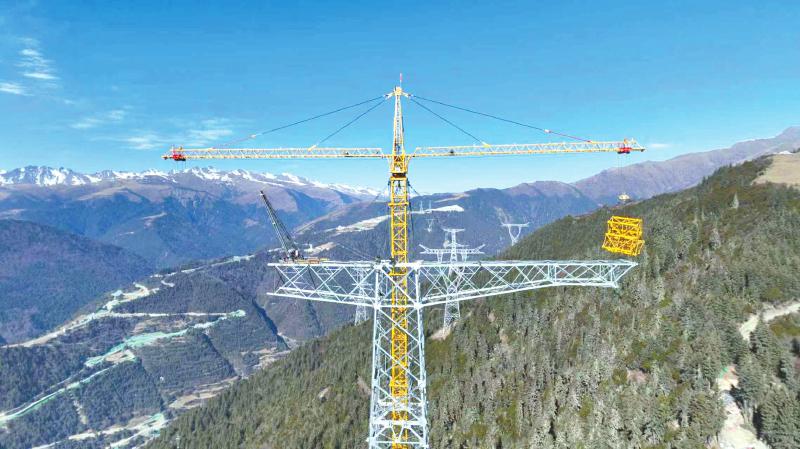
Core Viewpoint - The article emphasizes the significant role of State Grid Sichuan Electric Power Company in supporting the economic and social development of Sichuan through robust power grid construction and high-quality service, aligning with national strategies for modernization [3][4]. Investment and Infrastructure Development - During the 14th Five-Year Plan, Sichuan's power grid investment exceeded 200 billion yuan, doubling the investment from the previous five years, achieving historical highs in both construction scale and investment intensity [4]. - The company has completed 360 substations of 110 kV and above, and 20,000 kilometers of power lines, enhancing the grid's transmission capacity by over 30 million kilowatts [4]. - Major projects include the optimization of the Panxi power grid, the ±800 kV UHVDC project from Jinshang to Hubei, and the 1000 kV UHVAC project from Aba to Chengdu East, contributing to a more stable and robust power supply network [4][5]. Energy Security and Supply Reliability - Sichuan has established the largest and most complex super-large hub power grid in China, which is crucial for energy security in the Southwest region [5]. - The company aims to achieve over 100 million kW of hydropower capacity and over 32 million kW of new energy capacity by 2025, reflecting the integration of green energy into daily life [5]. Community and Social Responsibility - The company actively engages in community service, providing tailored power solutions to enhance local industries and supporting rural revitalization through initiatives like "village network co-construction" [6][7]. - During extreme weather events, the company has demonstrated its commitment to power supply security by coordinating efforts across various sectors to ensure reliable electricity delivery [7]. Innovation and Technological Advancement - The company is advancing internal reforms and innovation, focusing on key areas such as power grid safety and clean energy consumption, with an annual growth rate of 12.55% in electricity trading during the 14th Five-Year Plan [9]. - Technological breakthroughs include the deployment of the world's first grid-side static var generator and the use of drones and robots for maintenance, enhancing operational efficiency and safety [8][9]. Future Outlook - The company is committed to high-quality development, aiming to strengthen the power grid, enhance service efficiency, and foster innovation to contribute to the modernization of Sichuan [10].

【两会专版】阳光交易赋新能 改革创新践担当——2025年滨州市公共资源交易中心高质量发展纪实
Xin Lang Cai Jing· 2026-01-21 03:07
Core Insights - The article emphasizes the role of the Binzhou Public Resource Trading Center as a key driver for high-quality economic development, aiming for significant achievements by 2025 through the integration of party leadership and business operations [1][8] Group 1: Performance Metrics - In 2025, the public resource trading system in Binzhou completed 3,230 projects with a total transaction amount exceeding 52.448 billion, resulting in savings of 2.894 billion [1] - Specific project categories include 601 engineering projects with a transaction amount of 36.437 billion and savings of 0.974 billion, 1,696 government procurement projects totaling 3.52 billion with savings of 0.133 billion, and 398 land and mining projects with a transaction amount of 12.321 billion and an increase of 1.777 billion [2] Group 2: Innovations and Reforms - The center has successfully implemented a national standardization pilot and multiple provincial reform trials, showcasing innovative practices such as the "credit exemption" model for bid guarantees, which has been recognized as a benchmark in the province [2][4] - The introduction of the "Rong e Ban" financing guarantee service platform has reduced average fees to below 1.5‰, saving over 1.6 billion for enterprises and providing 0.873 billion in credit financing [5] Group 3: Digital Transformation - The center is advancing digital transformation by establishing a "digital transaction" ecosystem, including a significant pilot for electronic archives and a smart regulatory system that utilizes big data and AI for real-time monitoring [7] - In 2025, the center conducted 335 remote evaluations with a transaction amount of 22.368 billion, enhancing transparency and fairness in the evaluation process [7] Group 4: Future Directions - The Binzhou Public Resource Trading Center plans to continue integrating party leadership with business operations, focusing on reform and innovation to enhance service quality and efficiency, contributing to the construction of a high-quality Binzhou [8]
新华全媒头条|保持战略定力 把握发展主动——各地推动高质量发展观察
Xin Hua She· 2026-01-20 14:47
保持战略定力 把握发展主动——各地推动高质量发展观察 新华社记者魏玉坤、魏弘毅 国内生产总值(GDP)首次跨越140万亿元大关,社会消费品零售总额突破50万亿元,研发经费投 入强度首次超过经济合作与发展组织(OECD)国家平均水平……2025年,我国经济社会发展主 要目标任务圆满实现,"十四五"胜利收官。 "我们要坚定信心、用好优势、应对挑战,不断巩固拓展经济稳中向好势头。"习近平总书记为做 好"十五五"开局之年经济工作指明方向。 砥砺奋进,再启新程。各地全面深入贯彻落实以习近平同志为核心的党中央决策部署,扎实推进 高质量发展,集中力量办好自己的事,确保"十五五"开好局、起好步。 北国风光,银装素裹。黑龙江哈尔滨冰雪大世界内,游客们熙熙攘攘,或在冰雕前拍照,或在冰 滑梯旁排起长队。"第一次看到这么多冰和雪,玩得特别尽兴!"来自广州的游客赵昕然说。 为进一步挖掘冰雪消费机遇,哈尔滨围绕梦幻冰雪、高山滑雪等主题,推出十大冰雪旅游线路, 中央大街、中华巴洛克历史文化街区通过冰雪景观、灯光设计与建筑风貌融合,形成白天可逛、 夜间可游、全天可体验的城市冰雪场景。 消费是经济增长的"主引擎"。2025年中央经济工作会议部 ...
市政府举行第五次全体(扩大)会议
Xin Lang Cai Jing· 2026-01-18 03:00
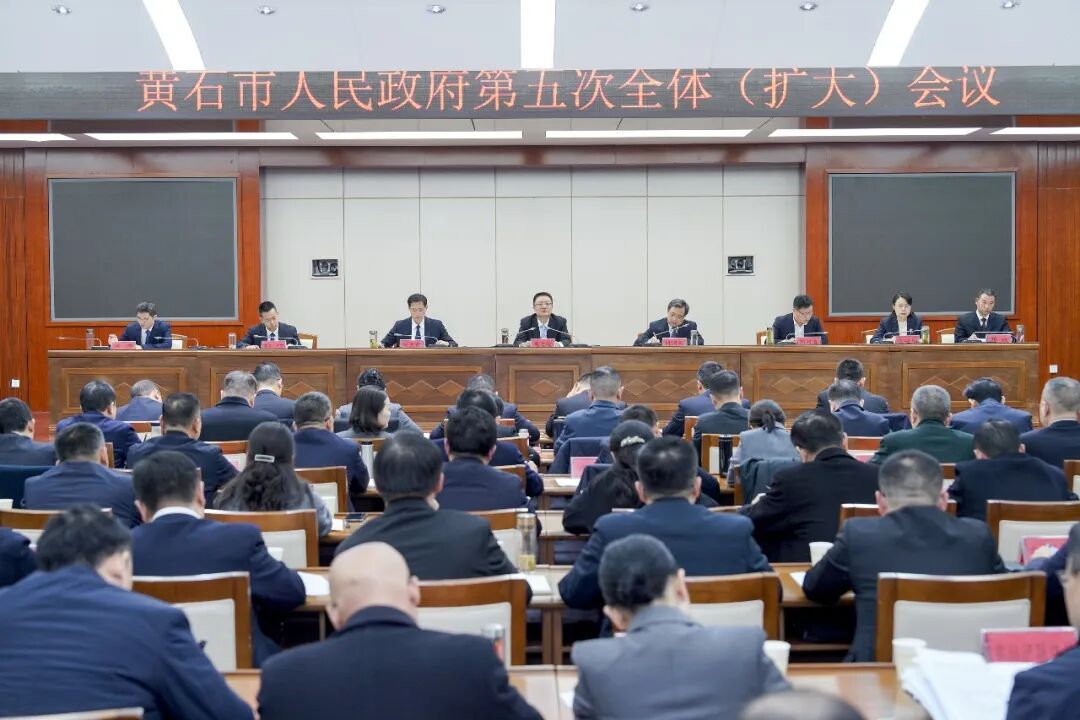
吴之凌要求,要坚持以习近平新时代中国特色社会主义思想为指引,在市委的坚强领导下,进一步坚持正确方向、抬升发展标杆,深化思想解放、善作善 为善成,把握干事创业机遇、强化担当作为,以过硬作风推动政府工作全面提质增效,确保实现"十五五"良好开局,持续奋进全省第一方阵,为加快建设 武汉都市圈重要增长极、奋力打造鄂东区域中心城市、服务推动全省支点建设作出更大贡献。 市委常委、常务副市长刘润长主持会议。副市长黄志勇、郭双喜、郭宝、徐丹娅、晏勇,市人大常委会秘书长严荣勇,市政府秘书长邓斌,市政协秘书长 万建新出席会议。 融媒记者 王若梦/文 张成/摄 转自:黄石发布 17日,市政府举行第五次全体(扩大)会议,贯彻市"两会"精神,分解落实《政府工作报告》确定的各项目标任务,安排部署全市政府系统工作。市委副 书记、市长吴之凌出席会议并强调,要深学细悟习近平总书记系列重要讲话精神,认真贯彻落实党的二十届四中全会、中央经济工作会议精神,加力奋 进、提质增效,全力打造武汉都市圈重要增长极和鄂东区域中心城市。 吴之凌强调,提质增效是"十五五"开好局起好步、树立和践行正确政绩观、纵深推进高质量发展的重要要求,要把提质增效贯穿政府工作全过 ...
第五届湖北改革奖揭晓 32个“改革先锋”上榜
Xin Lang Cai Jing· 2026-01-17 02:22
聚焦科创引领战略。推进智能网联汽车试点示范,武汉在全国率先开展Robotaxi、无人巴士等示范应 用,在首批"双智试点"城市综合评估中位列全国第二。武汉产业创新发展研究院推进科技创新与产业创 新融合,探索"共投共担"机制,经验做法被中央科技办推广。湖北三峡实验室常务副主任李少平带领团 队攻克工业黄磷生产电子级磷酸关键技术,填补国内产品空白。 湖北日报讯 (记者曾雅青、通讯员许海涛)近日,省委、省政府公布第五届湖北改革奖表彰决定,32 个改革先进典型入选。 聚焦文化创新、区域联动战略。云梦县博物馆守护千年文脉,湖北长江人民艺术剧院传承长江文化,让 中华文明瑰宝永续留存、泽惠后人,激励人们不断增强民族自豪感和自信心。武穴市农业农村局、闵洪 艳、田淑娴等一批一线单位和个人,致力于推进农业发展模式创新、农村科技创新、基层治理体系创 新,是新时代乡村改革创新的典型代表。 湖北改革奖每两年评选表彰一次,是我省落实党中央改革决策部署、健全改革激励机制的重大举措。本 次评出的32个先进典型分为项目奖、单位奖、企业奖、个人奖,全面聚焦支点建设七大战略,围绕激活 力、育新质、优环境、善治理、惠民生、强党建,更加突出解决实际问题, ...
使思想活起来
Xin Lang Cai Jing· 2026-01-16 18:01
Group 1 - The core principle of reform is to maintain the vitality of thought, which is essential for the development of advanced productivity and culture [1][3] - Identifying and addressing core issues through in-depth research and systematic thinking is crucial for effective reform [1][2] - Reform requires courage to innovate and the wisdom to execute effectively, balancing various interests while breaking outdated thought patterns [2][3] Group 2 - Continuous effort and practical results are vital for successful reform, necessitating a persistent and determined approach [2] - Mechanisms must be established to ensure that reform measures translate into tangible benefits for the workforce and community [2] - Innovation and the liberation of thought are fundamental drivers for building a modern socialist system, emphasizing the need for proactive and creative approaches [3]
紫金银行:将坚守服务三农、服务中小、服务城乡的市场定位
Zheng Quan Ri Bao· 2026-01-15 13:40
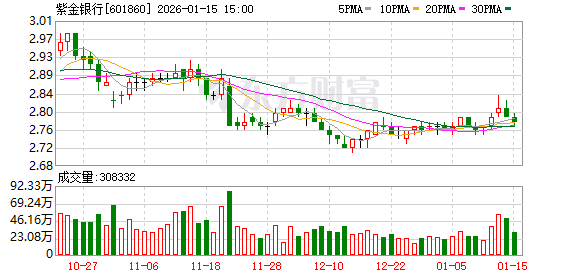
证券日报网1月15日讯 ,紫金银行在接受调研者提问时表示,2026年,我行仍将坚守服务三农、服务中 小、服务城乡的市场定位,以服务实体经济为根本宗旨,以深化改革创新为强大动力,聚焦主责主业, 持续深化做小做散机制,加强重点领域金融支持,提升风险防控能力,努力实现高质量发展。 (文章来源:证券日报) ...
改革破浪千帆竞 奋楫笃行开新局——通渭县“十四五”以来全面深化改革工作综述
Xin Lang Cai Jing· 2026-01-15 00:53
谋篇布局,以思路创新引领发展方向 改革破浪千帆竞 奋楫笃行开新局 ——通渭县"十四五"以来全面深化改革工作综述 时序更替,华章日新。"十四五"的五年,是通渭县在改革浪潮中砥砺奋进、破局开新的五年。面对时代 考题与发展重任,全县上下坚持将改革作为"关键一招",以创新破解发展难题,以实干推动追赶进位, 在陇中大地奏响了一曲激荡磅礴的改革奋进乐章。 五年来,全县预计地区生产总值从54.7亿元增长至96.7亿元,年均增长7.2%;固定资产投资从30.9亿元 增加到70亿元,年均增长17.8%;城乡居民人均可支配收入分别达35221元、11851元,较"十三五"末净 增9150元、3878元。一组组跃升的数据,一项项夯实的家底,正是改革效能持续释放的生动注脚。 大力实施"引大引强引头部"行动,建立"一项目一专班"跟踪服务机制,细化招商产业链图谱和目标企业 清单,累计实施招商引资项目203个,落实到位资金378亿元,较"十三五"增长20%,株洲美神种猪、国 家电投、浙江正泰等知名企业先后落户。创新推行"产业链招商+节会招商"模式,连续五年在兰洽会上 签约项目63个、总金额256.98亿元。 "优化营商环境全面提升年"行动 ...