
教育科技人才一体化发展

Search documents
【省科技厅】需求牵引 加快聚集 有序流动 共享共用陕西统筹推进教育科技人才一体化发展
Shan Xi Ri Bao· 2025-07-26 00:06
Group 1 - The core viewpoint is that Shaanxi is focusing on breaking the bottlenecks in the interaction between education, technology, and talent, promoting integrated reforms and development in these areas [1] - Shaanxi is establishing a dynamic adjustment mechanism for university discipline and major settings to meet the needs of technological innovation and social development [1] - The province is implementing a "school recruitment shared" model to attract urgently needed talents, successfully recruiting 362 talents and training 1,500 master's and doctoral graduates through the "dual mentor system" [1] Group 2 - Shaanxi is promoting the orderly flow of technology talents through the "dual thousand plan," with 1,161 "technology vice presidents" and "technology consultants" appointed from universities and research institutes [2] - The province is focusing on cultivating a professional team of technology managers, establishing a training system, and supporting the creation of the first technology manager college at Xi'an Jiaotong University [2] - Shaanxi is enhancing the construction of the technology manager team and exploring flexible employment methods to stimulate the motivation and vitality of technology transfer talents [2]
总编有约·“两高四着力”调研行丨教育+科技+人才?
He Nan Ri Bao· 2025-07-17 23:39
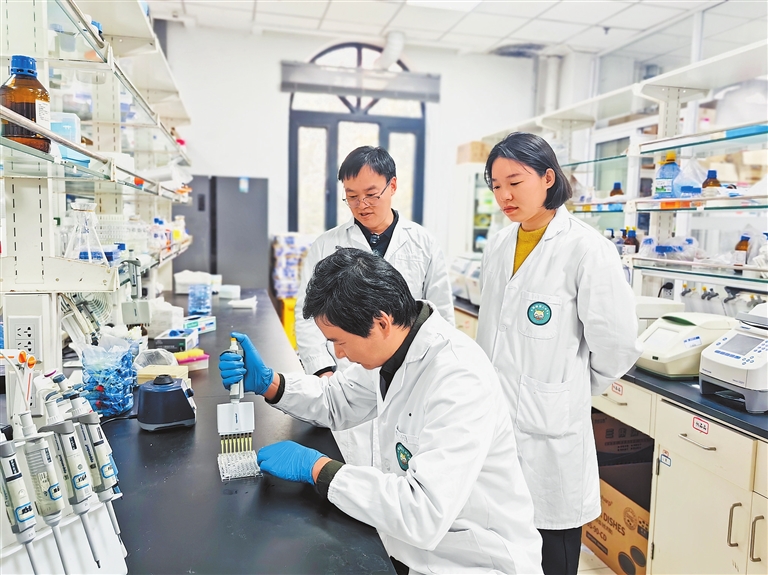
Core Viewpoint - The integration of education, technology, and talent is driving innovation and development in Henan Province, creating a robust ecosystem for agricultural advancements and enhancing the province's overall economic growth [5][15]. Group 1: Education and Talent Development - The establishment of the China Modern Agriculture Graduate School has led to the creation of two national major scientific projects and five national innovation platforms within a year, showcasing the rapid development of talent in modern agriculture [8]. - Since 2021, Henan has added 541 new undergraduate programs and removed 199, aligning educational offerings with industry needs, particularly in emerging sectors like new materials and new energy vehicles [14]. - The province has seen over 70% of new employees in advanced manufacturing and strategic emerging industries come from local universities, highlighting the critical role of education in workforce development [15]. Group 2: Technological Innovation - The province's technology contract transaction volume is projected to reach 175.9 billion yuan in 2024, reflecting a year-on-year growth of 28.7% [16][17]. - The implementation of reforms allowing researchers to retain ownership of their technological achievements has significantly increased the number of technology transfer contracts, from 67 contracts worth 27.68 million yuan to 225 contracts worth 392 million yuan, marking a 236% increase [11]. - The integration of research and industry has led to the establishment of 2,560 joint research and development centers between universities and enterprises, with over 75% of large-scale enterprises engaging in R&D activities [16]. Group 3: Agricultural Advancements - The development of five high-yield corn varieties by Henan Agricultural University has positioned them among the top ten in the Huang-Huai-Hai region, indicating a significant leap in agricultural biotechnology [7]. - The collaboration between academia and industry has resulted in the successful application for a national invention patent for a biological agent that prevents avian necrotic enteritis, showcasing the practical impact of research on agricultural practices [9][10].

总编有约·“两高四着力”大家谈丨畅通教育、科技、人才良性循环
He Nan Ri Bao· 2025-07-17 23:31
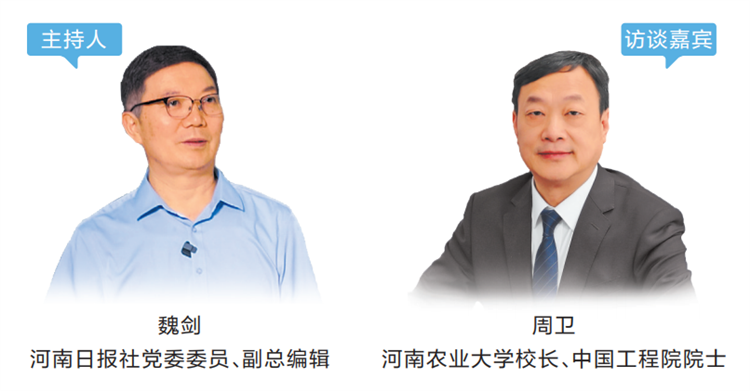
Core Viewpoint - The integration of education, technology, and talent development is a strategic requirement emphasized in the 20th National Congress report and the 3rd Plenary Session of the 20th Central Committee, highlighting the need for a collaborative approach to enhance innovation and productivity in the agricultural sector [2] Group 1: Integration Strategies - A virtuous cycle mechanism among education, technology, and talent is essential, requiring a systematic approach and top-level design for policy formulation and resource allocation [2] - The current higher education system faces challenges such as an inadequate evaluation system, inefficient results transformation, talent supply-demand mismatch, and insufficient collaborative innovation [2][3] Group 2: Initiatives by Henan Agricultural University - Henan Agricultural University is focusing on deepening reforms in the agricultural sector by optimizing professional settings and developing emerging interdisciplinary programs like smart agriculture and food processing [3] - The university has initiated a "famous schools and enterprises integration innovation strategy" to promote collaborative education and resource integration [3] - The establishment of the "China Modern Agriculture Joint Graduate School" aims to create an innovative platform for integrated development in education, technology, and talent [3] Group 3: Talent Development Efforts - The university emphasizes talent as a primary support, having introduced 3 academicians from the Chinese Academy of Engineering and cultivated 1, ranking third among agricultural universities in China [4] - A talent recruitment campaign named "Hundred Talents Gathering at Agricultural University" has been launched, focusing on attracting high-level talents through various strategic approaches [4] - The university aims to align its talent cultivation with national strategies and industry needs, enhancing collaboration with leading enterprises and establishing research institutes and laboratories [4]
陈刚会见厦门大学党委书记张荣
Guang Xi Ri Bao· 2025-07-09 02:11
Group 1 - The meeting between the Secretary of the Autonomous Region and the President of Xiamen University highlights the importance of collaboration in advancing artificial intelligence and education in Guangxi [1][2] - Guangxi is positioned as a "bridgehead" for China's cooperation with ASEAN, emphasizing the region's strategic location and potential for economic development [1] - The collaboration aims to establish an AI innovation cooperation center focused on ASEAN, enhancing Guangxi's role in international AI partnerships [1] Group 2 - Xiamen University expresses commitment to deepen cooperation in areas such as AI, education development, and talent transfer, aligning with Guangxi's development needs [2] - The partnership will focus on practical cooperation in combating Huanglong disease and supporting Guangxi Normal University [2] - The leadership from both sides acknowledges the unique advantages of Guangxi and the potential for high-quality development through this collaboration [2]
传达学习贯彻市委十二届八次全会精神
Zheng Zhou Ri Bao· 2025-07-04 01:15
Group 1 - The meeting emphasized the importance of implementing the spirit of General Secretary Xi Jinping's important speech and the resolutions from the 12th Plenary Session of the Municipal Party Committee, focusing on self-revolution and enhancing party discipline [1][2] - Key areas of focus include economic stability, growth, and the integration into the national unified market, along with the development of new productive forces [2] - The government aims to achieve high-quality development by adhering to the "Fourteen Five" plan and preparing for the "Fifteen Five" development phase, while ensuring safety and addressing potential risks [2]
牢记嘱托挑大梁 奋楫争先走在前
Zheng Zhou Ri Bao· 2025-07-01 00:50
Core Viewpoint - The articles emphasize the importance of implementing Xi Jinping's thoughts and directives to promote high-quality development in Zhengzhou, aligning with national strategies for modernization and regional growth [1][2][3]. Group 1: Strategic Goals and Directions - Zhengzhou is positioned to focus on "Two Highs and Four Efforts" as a benchmark for development, aiming to enhance its role as a national central city [2][3]. - The city aims to build a modern industrial system and a strong agricultural sector while improving living standards and social governance [3][4]. - The next five years are critical for Zhengzhou's development, with a focus on advancing manufacturing, technology, and comprehensive strength [4]. Group 2: Implementation and Governance - The city plans to enhance governance through smart city initiatives and create a fair and efficient business environment [4][5]. - There is a commitment to integrating education, technology, and talent development to support high-quality growth [4]. - The emphasis is on collective efforts to translate Xi Jinping's vision into practical outcomes for Zhengzhou's modernization [5][8].
甘肃:求取教育科技人才创新“最大值”
Zhong Guo Fa Zhan Wang· 2025-05-07 11:27
Core Viewpoint - Gansu Province has issued measures to accelerate the integrated development of education, technology, and talent, aiming to enhance innovation capabilities and establish a robust talent pool by 2030 [1][2]. Group 1: Education and Talent Development - The measures emphasize the importance of deep integration between education, technology, and talent to cultivate a large-scale, well-structured, and high-quality innovative talent team [2]. - Universities will be categorized into research-oriented, application-oriented, and skill-oriented types, promoting differentiated development in fields such as science, engineering, agriculture, and medicine [2][3]. Group 2: Technology Transfer and Innovation - The measures aim to break through technology transfer barriers by encouraging universities and research institutions to lead joint efforts in tackling fundamental technology challenges [3]. - A mechanism will be established to allow technology transfer revenues to support further research, promoting a "try before you pay" model for small and medium enterprises [3]. Group 3: Corporate Involvement - Companies are encouraged to establish talent funds and collaborate with universities for commissioned training, creating "school-in-factory" and "factory-in-school" models [4]. - By 2025, the number of corporate experts in the provincial technology evaluation expert database is expected to exceed 1,000, with over 75% of major provincial technology projects led or significantly participated in by enterprises [4][5]. Group 4: Policy Support and Financial Incentives - By 2025, Gansu Province plans to allocate 150 million yuan from state-owned capital revenues to support technological innovation, alongside tax incentives for high-tech enterprises [5]. - The measures will explore various incentive mechanisms for state-owned enterprises, including profit-sharing and market-oriented salary systems [5]. Group 5: Ecosystem for Innovation - The measures outline a comprehensive approach to create a favorable ecosystem for integrated development, focusing on resource coordination, project management, and financial support [6][7]. - New talent utilization models such as "technology vice presidents" and "industry professors" will be supported, with plans to recruit over 1,200 high-level talents by 2025 [7].