高校教育

Search documents
从基层治理到非遗传承,他们这样书写履职“答卷”
Chang Sha Wan Bao· 2026-02-04 00:13
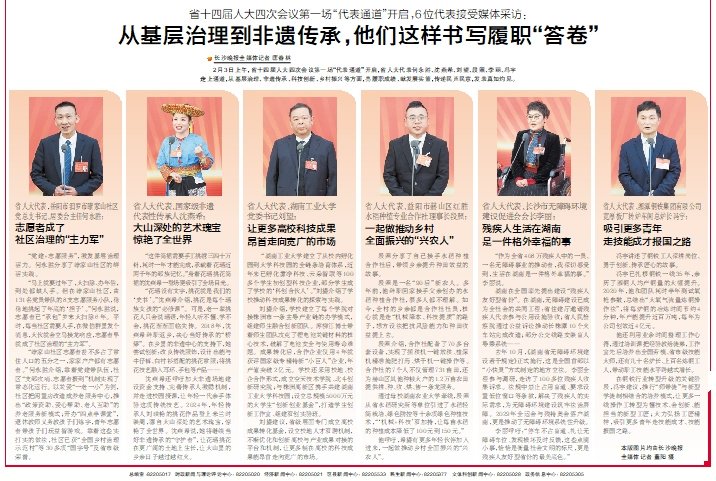
Group 1: Community Governance and Volunteerism - The community of Liaojiashan has effectively utilized volunteers, with 131 party members leading 8 volunteer teams, significantly contributing to community governance and activities such as year-end cleaning [5] - Approximately 20% of the community's permanent residents are volunteers, showcasing a strong culture of volunteerism and community engagement [5] - The community has received over 30 national and provincial honors, including being recognized as a "National Rural Governance Demonstration Village" [5] Group 2: Cultural Heritage and Non-material Cultural Inheritance - The art of embroidery in the Hmong culture, which requires extensive manual labor, is at risk of being lost as younger generations struggle to learn the craft [7] - Efforts to innovate traditional clothing and integrate embroidery techniques into modern products have been initiated to preserve this cultural heritage [7] - The call for increased funding for cultural heritage sites and improved incentive mechanisms for inheritors has been emphasized to ensure the continuation of these traditions [7] Group 3: Technology and Innovation in Education - Hunan University of Technology has established a comprehensive incubation system, resulting in the creation of over 100 student-led tech startups [9] - The university's collaboration with local industries has led to significant advancements in lithium battery technology, with a partner company achieving an annual output value exceeding 200 million yuan [9] - A proposal for a provincial-level fund to support the commercialization of university research outcomes has been made to enhance the connection between academia and industry [9] Group 4: Agricultural Innovation and Rural Revitalization - The rice planting cooperative led by a young entrepreneur has adopted mechanization and technology to improve farming efficiency and reduce costs by 100 to 150 yuan per mu [11] - The cooperative provides comprehensive agricultural services to local farmers, enhancing productivity across 12,000 mu of farmland [11] - There is a call for more young individuals to engage in agriculture and contribute to rural revitalization efforts [11] Group 5: Accessibility and Disability Rights - Hunan has taken the lead in establishing a "disability-friendly province," with initiatives involving disabled representatives in public facility assessments [13] - The implementation of local legislation aimed at improving accessibility for disabled individuals has been highlighted, addressing practical needs such as the prohibition of occupying blind paths [13] - The upcoming 2029 National Games and Special Olympics in Hunan is expected to further enhance the systematic upgrade of accessibility environments [13] Group 6: Skills Development in the Steel Industry - The steel industry has seen significant productivity improvements, with innovative practices leading to an annual increase in production capacity by nearly one million tons [16] - A focus on training and mentoring has resulted in the development of skilled workers, including national role models and skilled masters [16] - Recommendations for combining traditional apprenticeship models with modern training methods have been made to attract youth to skilled trades [16]

上海一高校食堂全流程由AI驱动 AI如何重构校园的餐饮服务生态?
Yang Guang Wang· 2025-12-28 01:54
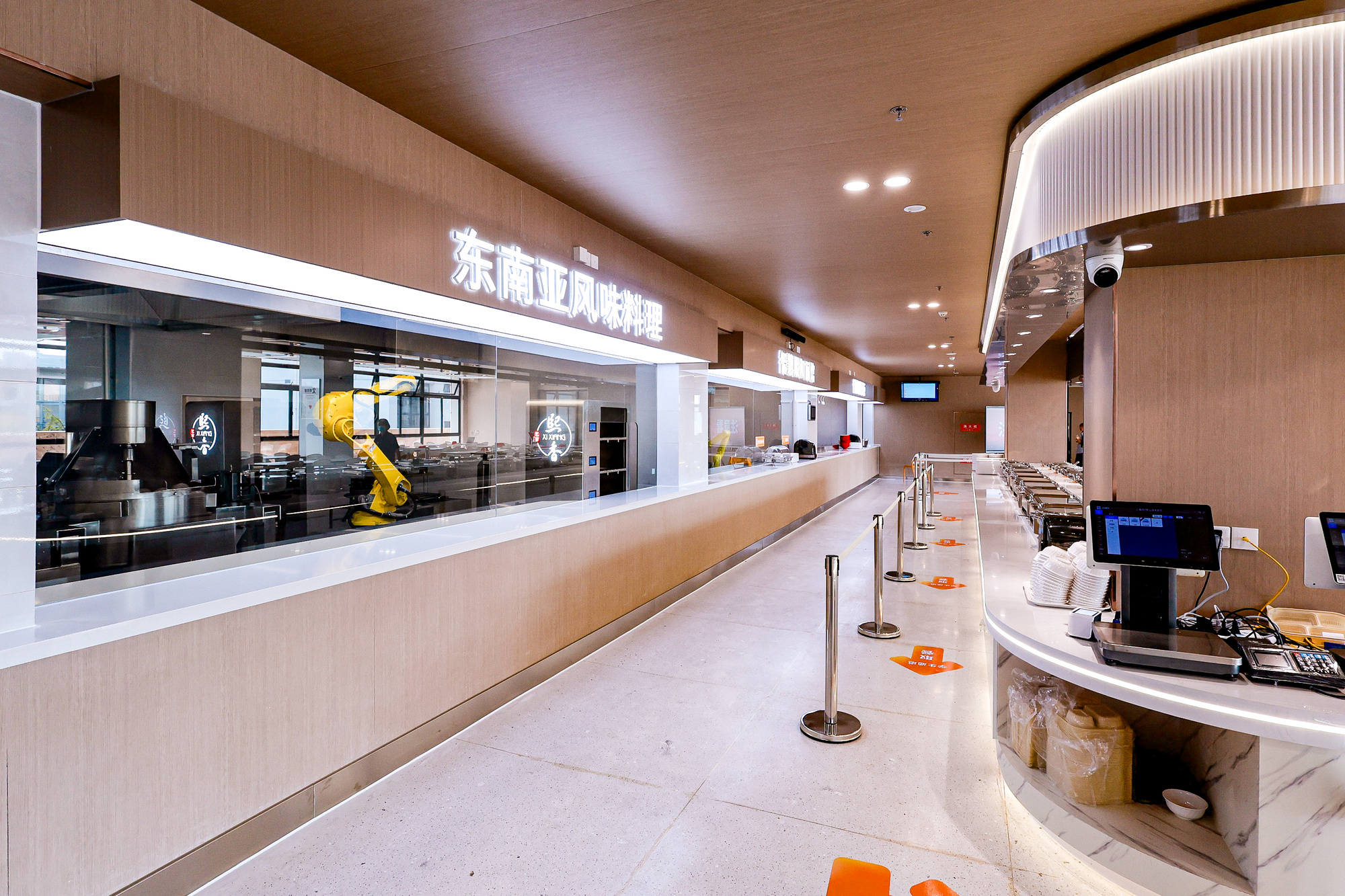
Core Insights - The introduction of an AI-driven cafeteria at Shanghai Minhang Vocational Technical College has transformed the dining experience for students, eliminating traditional queues and enhancing efficiency through automation [1][2][12] Group 1: AI Cafeteria Features - The AI cafeteria operates with fully automated processes for selecting dishes, pricing, cooking, and management, requiring no human intervention [1][8] - Students can now enjoy a faster dining experience, with automated systems reducing wait times significantly compared to traditional setups [2][12] - The cafeteria has reduced staff from 12 to 2, indicating a significant shift towards automation in food service [2][4] Group 2: Benefits and Innovations - The AI cafeteria not only improves convenience but also enhances data-driven decision-making, allowing for better identification of economically disadvantaged students through consumption patterns [12] - Nutritional management has become more precise, with the system tracking nutritional content and student eating habits to promote healthier choices [12][13] - The initiative aligns with the college's goal of integrating education with industry, providing practical training opportunities for students in AI and related fields [13][15] Group 3: Industry Trends - The trend of integrating robotics in college cafeterias is seen as a necessary evolution to address challenges such as slow service during peak hours and the need for standardized food quality [15][16] - Experts predict that while current implementations focus on standardization, future developments will allow for a blend of automated and personalized service options [16]
为全面振兴提供科技和人才支撑
Liao Ning Ri Bao· 2025-12-02 00:54
Group 1 - The provincial government emphasizes the integration of education, technology, and talent development to drive high-quality growth and innovation [1][2] - The focus is on establishing a coordinated mechanism for education and talent management to support the modernization of the industrial system [1][2] - The implementation of the "Strengthening Talent Leadership" initiative aims to enhance the synergy between technological innovation and industrial development [1][2] Group 2 - The education system will prioritize the development of "Double First-Class" universities and disciplines, expanding quality undergraduate education [2] - The provincial technology department aims to create a nationally influential regional technology innovation center to enhance the integration of technology and industry [2] - The focus will be on emerging fields such as hydrogen energy storage and intelligent manufacturing to drive high-quality development [2] Group 3 - Universities are encouraged to adopt new talent recruitment strategies aligned with regional development needs, enhancing collaboration between academia and industry [3] - The emphasis is on optimizing the environment for retaining talent and improving evaluation mechanisms for faculty [3] - The integration of technological innovation into research efforts is highlighted as a key driver for regional revitalization [3] Group 4 - Companies are urged to leverage technological advancements to enhance core competitiveness and support major projects [4] - The adoption of digital and intelligent technologies in engineering consulting is emphasized to improve service quality [4] - The focus is on building a modern industrial system centered around high-end manufacturing and new materials [4] Group 5 - The establishment of a service system for enterprises aims to address urgent needs in funding, labor, and talent acquisition [5] - Companies are encouraged to tackle critical technological challenges and develop high-value products in the magnesium materials sector [5] - The creation of innovation platforms for deep integration of industry, academia, and research is prioritized [5] Group 6 - The business environment is seen as crucial for the development of traditional and emerging industries, with a focus on enhancing service efficiency [6] - Initiatives to support private enterprises and promote international trade are being implemented [6] - The transportation sector is focusing on resource optimization and infrastructure development to enhance economic growth [6] Group 7 - Customs authorities are working to create a market-oriented and law-based business environment, enhancing service precision for enterprises [7] - Measures to streamline tax processes and improve the efficiency of customs operations are being implemented [7] - Tax authorities are focusing on supporting the development of the modern industrial system through effective tax policies [7] Group 8 - Local governments are committed to optimizing the business environment as part of the "Industrial Strong County" strategy [8] - Efforts are being made to address challenges faced by businesses throughout their lifecycle [8] - The focus is on creating a supportive atmosphere for businesses to thrive [8]
我省18个高新区与37所高校结对协同发展做实“关键一招”,推动“科产深融”
Xin Hua Ri Bao· 2025-11-13 23:31
Core Viewpoint - The "Double High Coordination" model aims to enhance collaboration between high-tech zones and universities to promote deep integration of technological and industrial innovation, marking a new development approach in Jiangsu Province [1][4][5]. Group 1: Implementation and Progress - Jiangsu Province has initiated a three-year action plan involving high-tech zones and universities, establishing innovation development centers and funding for technology transfer [1][2]. - The "Double High Coordination" model has transitioned from spontaneous collaborations to organized partnerships, with specific funding and resource-sharing agreements in place [3][6]. - The model has already seen the establishment of various platforms, including technology demand lists and patent transfer lists, with significant numbers of items included [2][3]. Group 2: Policy Support and Framework - The provincial government has introduced 24 support policies and 15 reform measures to facilitate the "Double High Coordination" initiative, emphasizing the importance of collaboration between technology and education sectors [5][6]. - A joint working group has been formed to enhance coordination among departments, high-tech zones, and universities, focusing on continuous evaluation of the initiative's effectiveness [6][8]. Group 3: Future Directions and Goals - The initiative aims for "full-domain coordination," addressing existing gaps in collaboration mechanisms and ensuring sustained efforts for long-term success [6][7]. - Universities plan to expand their collaborative efforts across the province, creating a comprehensive network that integrates academic resources with industrial needs [7][8].
山东政商要情(9.22—9
Jing Ji Guan Cha Bao· 2025-09-29 03:22
Group 1 - The eighth China Farmers' Harvest Festival was successfully held in Shandong, showcasing the theme "Celebrating Agricultural Harvest, Enjoying a Better Life" and highlighting its historical significance in the context of the "14th Five-Year Plan" [1] - The event featured various activities such as a rural food festival, cultural carnival, and marketing of national premium brands and local specialty agricultural products, with over 3,000 harvest celebration events conducted nationwide, attracting hundreds of millions of participants [1] - The festival serves as a platform to promote the integration of the entire agricultural industry chain, enhance production and sales connections, and stimulate rural vitality, contributing to the high-quality and sustainable development of Chinese agriculture [1] Group 2 - Shandong Province announced a new scientific and technological reward policy, increasing the maximum award from 3 million to 5 million yuan, and introducing a new youth award of 500,000 yuan [2] - The new policy raises the awards for natural science, technological invention, and scientific progress, with first-class awards now at 1 million yuan, and additional financial incentives for first completion units of national awards [2] Group 3 - The 2025 China International Confucius Culture Festival was held in Qufu, Shandong, focusing on the theme "Great Confucius, Harmony and Coexistence" to promote peaceful coexistence among different nations and cultures [3] - The festival has evolved over 40 years into a globally recognized cultural event, with Shandong being a significant birthplace of Chinese civilization and Confucian culture [4] Group 4 - The 2025 Jinan Provincial Universities Symposium was convened to enhance collaboration between local government and 37 provincial universities, focusing on addressing needs and challenges to promote integration [5] - The symposium aims to identify synergies between high-level university development and local high-quality growth, emphasizing collaborative innovation and talent cultivation [6] Group 5 - The 2025 Qingdao Venture Capital and Private Equity Conference was successfully held, transitioning from a venture capital event to a broader financial industry gathering, with the release of a new action plan to promote high-quality development [7] - The action plan proposes a "3+N" government-guided fund system, aiming to attract social capital to create a fund matrix of no less than 300 billion yuan [7]
四川省2025届普通高校毕业生就业形势保持总体稳定
Zhong Guo Chan Ye Jing Ji Xin Xi Wang· 2025-09-08 00:05
Group 1 - The number of graduates employed in the Pearl River Delta and Yangtze River Delta regions reached 55,000, representing a year-on-year increase of approximately 29% [1] - The overall employment situation for college graduates in the province remains stable [1] - The provincial education department organized joint visits to enterprises in Jiangsu and Zhejiang to expand job opportunities for graduates [1] Group 2 - A dual approach was adopted to enhance employment opportunities, focusing on both market-oriented and policy-oriented positions [1] - The establishment of a recruitment system involving 33 universities and 12 types of regional and industry-specific permanent employment markets [1] - The expansion of policy-oriented job positions, including roles such as agricultural technology assistants and research assistants, to facilitate early and quality employment for graduates [1] Group 3 - Sichuan province established a dynamic adjustment mechanism for academic programs, adding 298 new programs, with 60% aligned with the province's advantageous and emerging industries [2] - The removal of 570 outdated programs that do not meet development needs [2] - Implementation of the "Double Thousand" plan to enhance employment capabilities, introducing 177 micro-specialties in key areas such as artificial intelligence and renewable energy [2]
呼和浩特“订单班”促进高校毕业生留呼就业
Nei Meng Gu Ri Bao· 2025-07-29 02:19
Group 1 - The core initiative "Skills Illuminate the Future" aims to enhance employment opportunities for university graduates in Hohhot by establishing a service system that integrates skills training and employment services [1] - Hohhot is promoting training models such as "order classes" and "agreement classes" to improve graduates' skills and facilitate their employment [1] - The city is fostering cooperation between government, schools, and enterprises by collecting training needs from companies and aligning them with academic programs, resulting in 91 "order classes" and training 2,200 students [1] Group 2 - Hohhot has launched the "Skills Illuminate the Future: Qingcheng Craftsman School Tour" to inspire students' interest in skill learning and ensure that employment policies are accessible and understandable [2] - The city has identified 35,000 job opportunities for graduates through various methods, including job fairs and policy-driven job releases [2] - A total of 22,600 university students have secured employment in Hohhot this year, supported by 11 campus recruitment fairs and a tailored job matching approach [2]
精准施策平衡供需 数字赋能服务升级
Liao Ning Ri Bao· 2025-07-19 01:43
Group 1 - The meeting emphasized the need to enhance accessibility and convenience of employment services, leverage digital empowerment, and align education supply with industry demand to address new challenges and opportunities in employment [1] - Recommendations included establishing a youth innovation support system and a cross-departmental coordination mechanism to optimize service innovation [1] - The proposal to create a "Red Employment Station" in community service centers aims to integrate various employment services, enhancing the effectiveness of grassroots public service systems [1] Group 2 - The importance of school-enterprise cooperation was highlighted as a key strategy for addressing economic structural adjustments and industrial upgrades, with suggestions for multi-dimensional incentive policies and practical training bases [2] - The use of big data technology to reshape employment service models and create a comprehensive employment service platform was recommended, aiming for real-time job information aggregation [2] - Strengthening the guidance for college graduates to pursue careers in rural and community services was suggested to expand employment channels [2] Group 3 - The need for differentiated policies to address labor shortages in new economy sectors was discussed, including flexible employment policies and the establishment of a monitoring system for new economy labor [3] - Fostering competitive emerging enterprises in fields like artificial intelligence was recommended to create new job opportunities and facilitate re-employment [3] - The proposal to dynamically adjust academic programs and vocational training to align with market demands was made to enhance graduates' practical skills and employability [3]
文科大批裁撤后,理科的消亡也开始了
吴晓波频道· 2025-07-19 00:04
Core Viewpoint - The article discusses the historical evolution of job roles, emphasizing the shift from repetitive tasks to creative and empathetic roles, and from single skills to interdisciplinary thinking [1][47]. Group 1: Popular Majors and Employment Crisis - In 2023, the top 20 popular undergraduate majors are predominantly in STEM fields, with electrical engineering and automation leading with a heat score of 82,000 [2][3]. - Despite the popularity of these majors, an unexpected employment crisis is emerging, particularly in the U.S. where computer science, once considered a top field, now has a high unemployment rate of 6.1% [5][6]. - The article highlights that the perception of job security in popular fields does not correlate with actual employment stability in the AI era [22]. Group 2: Impact of AI on Employment - By 2030, it is predicted that over 12 million jobs in the U.S. will disappear, affecting not only low-skilled labor but also white-collar jobs previously considered secure [8]. - A study predicts that up to 70% of roles in professions like medicine, law, and education may be replaced by AI by 2028 [9]. - The article notes that the demand for computer science graduates is not necessarily increasing due to oversupply and the need for more skilled candidates [18][20]. Group 3: Shifts in Educational Focus - Major universities are reducing humanities courses while expanding STEM programs, with over 100 new AI-related majors added in the last six years in China [12][13]. - The article cites that the number of STEM graduates in China is eight times that of the U.S., indicating a significant shift in educational focus towards technical fields [16]. Group 4: Job Market Transformation - The retail and manufacturing sectors are expected to see significant job losses, with 2.8 million and 2.1 million jobs respectively needing to be reallocated by 2030 [28]. - In manufacturing, the demand for basic skill jobs is declining, while the need for engineers and high-level management is increasing [30]. - The financial sector is also undergoing transformation, with an estimated 600,000 jobs affected, particularly in roles like cashiers and data entry [31][32]. Group 5: Future Skills Demand - The article emphasizes the importance of both technical and social-emotional skills in the future job market, with predictions of a 29% increase in technical skills demand in the U.S. by 2030 [43]. - It highlights that the integration of technical and social-emotional skills will be crucial, as both STEM and humanities graduates will need to adapt to the evolving job landscape [45][47].

总编有约·“两高四着力”调研行丨教育+科技+人才?
He Nan Ri Bao· 2025-07-17 23:39
Core Viewpoint - The integration of education, technology, and talent is driving innovation and development in Henan Province, creating a robust ecosystem for agricultural advancements and enhancing the province's overall economic growth [5][15]. Group 1: Education and Talent Development - The establishment of the China Modern Agriculture Graduate School has led to the creation of two national major scientific projects and five national innovation platforms within a year, showcasing the rapid development of talent in modern agriculture [8]. - Since 2021, Henan has added 541 new undergraduate programs and removed 199, aligning educational offerings with industry needs, particularly in emerging sectors like new materials and new energy vehicles [14]. - The province has seen over 70% of new employees in advanced manufacturing and strategic emerging industries come from local universities, highlighting the critical role of education in workforce development [15]. Group 2: Technological Innovation - The province's technology contract transaction volume is projected to reach 175.9 billion yuan in 2024, reflecting a year-on-year growth of 28.7% [16][17]. - The implementation of reforms allowing researchers to retain ownership of their technological achievements has significantly increased the number of technology transfer contracts, from 67 contracts worth 27.68 million yuan to 225 contracts worth 392 million yuan, marking a 236% increase [11]. - The integration of research and industry has led to the establishment of 2,560 joint research and development centers between universities and enterprises, with over 75% of large-scale enterprises engaging in R&D activities [16]. Group 3: Agricultural Advancements - The development of five high-yield corn varieties by Henan Agricultural University has positioned them among the top ten in the Huang-Huai-Hai region, indicating a significant leap in agricultural biotechnology [7]. - The collaboration between academia and industry has resulted in the successful application for a national invention patent for a biological agent that prevents avian necrotic enteritis, showcasing the practical impact of research on agricultural practices [9][10].