智能影像

Search documents
影石创新全景相机2025年全球市占率超85%,连续8年全球第一
Zheng Quan Shi Bao Wang· 2025-10-31 11:49
Core Insights - The global and Chinese handheld smart imaging device market is expected to undergo significant changes by 2025, with Yingshi Innovation (Insta360) maintaining a leading position in the panoramic camera sector, holding over 85% of the global market share in the first three quarters of 2025 [1][5]. Market Positioning - Yingshi Innovation has achieved a global market share of 75% and over 60% in the domestic market as of Q3 2023, solidifying its leading position [1][5]. - DJI entered the panoramic camera market in July 2023 and quickly captured approximately 17.1% of the global market share and 37.1% of the domestic market through aggressive pricing strategies [1][5]. Competitive Landscape - The competitive landscape in the action camera segment is intensifying, with Yingshi holding a global share of 38.6% and DJI at 34.6% as of Q3 2023, while GoPro's share has decreased to 15.7% [5][11]. - Yingshi's revenue for Q3 2023 grew by 92.64% year-on-year, with a cumulative revenue of 6.611 billion yuan for the first three quarters, reflecting a year-on-year growth of 67.18% [11]. Market Growth Potential - The global handheld smart imaging device market is projected to reach a size of 79.93 billion yuan by 2030, with a compound annual growth rate (CAGR) of 15.9% from 2020 to 2030 [11][12]. - The entry of new players like DJI is expected to stimulate market expansion, as evidenced by significant increases in app downloads and active user numbers for both Yingshi and DJI in major global markets [11][12]. Strategic Advantages - Yingshi has built a strong competitive moat through six generations of product iterations, focusing on panoramic stitching algorithms, software ecosystems, and user communities, making it difficult for new entrants to disrupt its leading position [12].


影石创新(688775):影石创新3Q2025业绩点评
CAITONG SECURITIES· 2025-10-30 09:24
Investment Rating - The investment rating for the company is "Accumulate" (maintained) [2] Core Views - The company reported a revenue of 6.611 billion yuan for the first three quarters of 2025, representing a year-on-year increase of 67.18%, while the net profit attributable to shareholders was 0.792 billion yuan, a decrease of 5.95% year-on-year [7] - The company achieved a revenue of 2.94 billion yuan in Q3 2025, marking a year-on-year growth of 92.64%, with a net profit of 0.272 billion yuan, down 15.9% year-on-year [7] - The company has a strong presence in the market, ranking first in multiple categories during the Double Eleven shopping festival, driven by a diverse product lineup [7] - The company is expected to release the "Yingling Antigravity" panoramic drone in Q4, which is anticipated to open a new growth avenue [7] - Revenue forecasts for 2025-2027 are 9.2 billion, 11.96 billion, and 15 billion yuan respectively, with net profits of 1 billion, 1.5 billion, and 2.06 billion yuan [7] Financial Performance - The company's revenue for 2023 is projected at 3.636 billion yuan, with a growth rate of 78.2%, and net profit of 0.830 billion yuan, reflecting a growth rate of 103.7% [6][8] - For 2024, revenue is expected to reach 5.574 billion yuan, with a growth rate of 53.3%, and net profit of 0.995 billion yuan, with a growth rate of 19.9% [6][8] - The company’s gross margin for Q3 2025 was 47.64%, down 6.69 percentage points year-on-year [7] Research and Development - R&D expenses increased significantly, with a year-on-year growth of 127.02% in the first three quarters of 2025, primarily due to investments in strategic projects such as chip customization and drones [7] Market Position - The company has maintained a leading position in the market, particularly in the action camera segment, and has successfully launched multiple new products to meet market demand [7]
豪威集团前三季度 归母净利润同比增35%
Zheng Quan Shi Bao· 2025-10-28 22:36
Core Viewpoint - The company, OmniVision Technologies, reported a significant increase in net profit for Q3 2025, driven by growth in the automotive smart driving sector and expansion in the smart imaging terminal market [1][2]. Financial Performance - In Q3 2025, the company achieved a revenue of 7.827 billion yuan, a year-on-year increase of 14.81%, and a net profit of 1.182 billion yuan, up 17.26% year-on-year and 1.76% quarter-on-quarter [1]. - For the first three quarters of 2025, the company reported a total revenue of 21.783 billion yuan, reflecting a 15.2% year-on-year increase, and a net profit of 3.21 billion yuan, which is a 35.15% increase year-on-year [1]. - The basic earnings per share for the first three quarters stood at 2.67 yuan [1]. Market Position - According to Frost & Sullivan, the company holds a 32.9% market share in the global automotive CIS market, ranking first, and a 10.5% share in the global smartphone CIS market, ranking third [2]. - The company has also expanded its product offerings into markets such as action cameras, smart glasses, and machine vision, contributing to rapid revenue growth in emerging markets [2]. Cash Flow and Financial Health - The net cash flow from operating activities decreased by approximately 17% year-on-year for the first three quarters [2]. - Accounts receivable reached 91.26 million yuan, showing a significant increase compared to the same period last year, while inventory rose by nearly 20% and contract liabilities increased by about 11% [2]. Dividend Distribution - The company announced a mid-term profit distribution plan, proposing a cash dividend of 4 yuan per 10 shares (tax included), amounting to a total distribution of 481 million yuan, which represents 14.98% of the net profit for the first three quarters [2]. Stock Options Adjustment - Following the mid-term dividend announcement, the exercise prices for stock options were adjusted to 78.01 yuan for the first and second phases and 138.67 yuan for the 2025 plan [3]. Shareholder Changes - Notable changes in shareholder positions include a reduction in holdings by Goldman Sachs International and other investors, while Huatai-PB and E Fund increased their stakes, with E Fund becoming the tenth largest shareholder [3].

“撒钱”后又发黄金,全景相机龙头影石创新净利骤降16%
Guan Cha Zhe Wang· 2025-10-28 10:28
Core Insights - The company reported a significant revenue growth of 92.64% year-on-year for Q3 2025, reaching 2.94 billion yuan, while the net profit attributable to shareholders decreased by 15.90% to 272 million yuan [1][2][3] Financial Performance - Revenue for Q3 2025 was 2,940,277,480.22 yuan, marking a 92.64% increase compared to the same period last year [2] - Total profit for the period was 267,651,828.45 yuan, down 22.10% year-on-year [2] - Net profit attributable to shareholders was 271,933,120.07 yuan, a decrease of 15.90% [2] - The company reported a total revenue of 6.61 billion yuan for the first three quarters of 2025, a 67.18% increase year-on-year, with a net profit of 792 million yuan, down 5.95% [3] - R&D expenses for Q3 2025 reached 523,700,532.63 yuan, a substantial increase of 164.81% year-on-year, accounting for 17.81% of revenue [2][3] Strategic Initiatives - The company plans to launch two drone brands, including its own and a co-developed brand called "影翎 Antigravity" [3] - The public testing phase for the Antigravity drone is nearing completion, with potential market trials expected in Q4 2025 [4] Employee Engagement and Recognition - The company awarded 5.0866 million shares of restricted stock to three key employees at a price of 148.92 yuan per share [4][5] - The company has a history of unique employee rewards, including the distribution of gold keycaps to celebrate Programmer's Day, emphasizing the value of its R&D personnel [9][10] Market Position and Brand Image - The company has acknowledged its role in the price reduction of DJI products and offered compensation to affected customers [10] - Founded in 2015, the company has established itself as a leading provider of smart imaging devices, focusing on panoramic technology [10]

大疆运动相机登顶全球,影石创新迎“正面狙击”
Nan Fang Du Shi Bao· 2025-10-28 05:07
Core Insights - DJI has become the global leader in the action camera market with a market share of 66%, surpassing GoPro [1] - In the panoramic camera market, DJI's Osmo 360 has captured 49% of the Chinese e-commerce market and 43% globally within three months of its launch [1] - The rapid market shift indicates DJI's successful positioning in the imaging sector, following its dominance in the drone market [1][3] Market Dynamics - Three years ago, GoPro held over 75% of the action camera market, but the landscape has shifted towards Shenzhen, where DJI is based [3] - DJI's product iteration speed, channel system, and ecosystem collaboration have allowed it to break into the imaging device market, creating a matrix of drones, action cameras, and panoramic cameras [3] - The launch of the Osmo 360, featuring 8K quality and AI algorithms, has accelerated the concentration of the panoramic camera market, setting industry growth records [3] Competitive Landscape - Insta360, another Shenzhen-based imaging company, is feeling pressure from DJI's rapid expansion and has responded with promotional strategies [4] - Insta360 has launched a consumer drone brand and plans to create the world's first panoramic drone, indicating a direct competition with DJI in aerial imaging [4] - The competition between DJI and Insta360 is evolving from product-level rivalry to ecosystem-level competition, with both companies targeting each other's core markets [6] Industry Trends - The competition in smart imaging is entering a new phase, focusing on who can better serve creators rather than just hardware specifications [6] - DJI's comprehensive product system integrates drones, handheld devices, and panoramic cameras, creating a closed loop from hardware to content [6] - The future of smart imaging will revolve around the complete chain of shooting, editing, and sharing, emphasizing the importance of stable content platforms and user ecosystems [6]
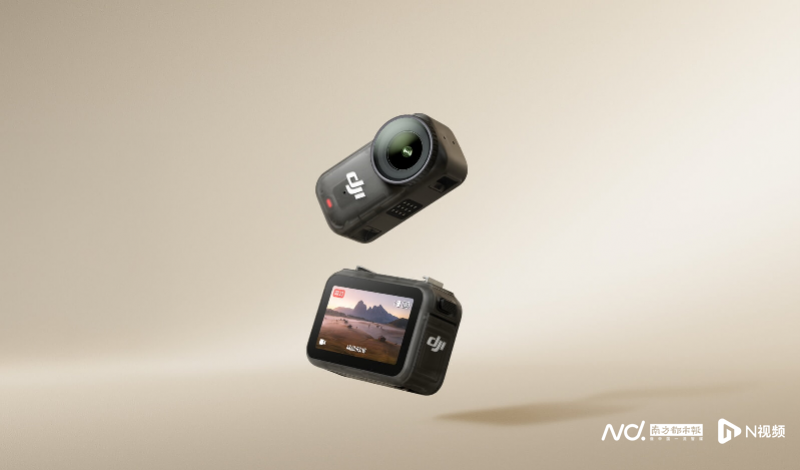
大疆运动相机登顶全球 影石创新迎“正面狙击”
Nan Fang Du Shi Bao· 2025-10-28 05:07
Core Insights - DJI has become the global leader in the action camera market with a market share of 66%, surpassing GoPro [1] - In the panoramic camera market, DJI's Osmo 360 captured 49% of the Chinese e-commerce market and 43% globally within three months of its launch [1] - DJI's aggressive pricing strategy ahead of the "Double Eleven" shopping festival has sparked consumer discussions and reflects a strategy to exchange scale for ecosystem dominance [2] Company Developments - DJI's rapid expansion in the action and panoramic camera sectors marks a significant shift in market dynamics, moving the center of influence from California to Shenzhen [2] - The launch of Osmo 360, featuring 8K quality and AI algorithms, has contributed to the rapid growth of the panoramic camera market [2] - Insta360, another Shenzhen-based imaging company, is feeling competitive pressure from DJI's pricing strategies and market entry [3] Competitive Landscape - The competition between DJI and Insta360 is intensifying, with both companies targeting each other's core markets [3] - Insta360 has launched a consumer drone brand and is planning to create the world's first panoramic drone, indicating a direct challenge to DJI's dominance [3] - The competition is evolving from product-level rivalry to ecosystem-level competition, with both companies focusing on enhancing user experience and content creation [4] Industry Trends - The smart imaging industry is entering a new phase where competition is not solely based on hardware quality but on the ability to serve creators effectively [4][5] - The focus is shifting towards creating a seamless "shoot-edit-share" ecosystem, which is crucial for maintaining user engagement and loyalty [4][5] - Trends such as short video creation, AI-assisted imaging, and cross-device collaboration are reshaping the global imaging industry [5]
大疆降价 影石CEO发微博送网友补贴
Zhong Guo Jing Ying Bao· 2025-10-14 10:35
Core Viewpoint - The CEO of YingShi Innovation, Liu Jingkang, acknowledged that the company's actions may have contributed to DJI's significant price reductions, and he expressed apologies to consumers who recently purchased DJI products [1] Group 1: Company Actions - Liu Jingkang announced a compensation initiative for customers who bought DJI products between October 2 and October 8, offering a 100 yuan voucher for those who share their order proof [1] - The company is also running a promotional campaign where two lucky participants who retweet the announcement will win a full set of YingShi consumer cameras or DJI OSMO products [1] Group 2: Market Context - DJI recently announced substantial price cuts on several of its popular products, with some models seeing reductions exceeding 1,000 yuan [1] - YingShi Innovation, established in 2015, focuses on the development and sales of smart imaging devices, including panoramic cameras, action cameras, wearable mini cameras, and professional VR equipment [1] Group 3: Financial Performance - YingShi Innovation reported a revenue of 3.671 billion yuan for the first half of the year, representing a year-on-year growth of 51.17% [1] - The company's net profit for the same period was 520 million yuan, showing a slight year-on-year increase of 0.25% [1]

大疆降价,影石CEO发微博“致歉”营销
Sou Hu Cai Jing· 2025-10-14 07:16
Core Viewpoint - The recent price drop by DJI has been linked to competitive pressures from Insta360, leading to a marketing apology from Insta360's CEO, which has generated significant consumer engagement and discussion on social media [1][3][5]. Group 1: Company Actions and Responses - Insta360's CEO Liu Jingkang issued an apology on Weibo, acknowledging that the company's actions may have contributed to DJI's price reduction, and offered a 100 yuan voucher to customers who purchased DJI products during a specific period [1][3]. - DJI announced a price adjustment as part of its regular promotional activities for the upcoming Double Eleven shopping festival, with significant discounts on various popular products [3][5]. - Consumers who purchased DJI products during the promotional period have expressed intentions to return items or seek refunds, with some successfully obtaining refunds [5]. Group 2: Market Dynamics and Competition - The competitive landscape between Insta360 and DJI is intensifying, as evidenced by the recent marketing strategies and consumer reactions [5][6]. - Insta360 has been expanding its product offerings, including entering the drone market with a new panoramic drone, indicating a strategic move to compete directly with DJI [6]. - Market share data shows that Insta360's share has increased from 28.4% in 2023 to 35.6% in 2024, while DJI's share has decreased from 19.1% to 13.2%, highlighting a shift in competitive positioning [7]. Group 3: Financial Performance - Insta360 reported a revenue of 3.671 billion yuan for the first half of the year, reflecting a year-on-year growth of 51.17%, while net profit increased slightly by 0.25% to 520 million yuan [7].

【独家】OPPO也要做手持云台相机,产品对标大疆
Xin Lang Cai Jing· 2025-09-29 05:07
Core Insights - OPPO has confirmed the initiation of a project in the handheld smart imaging device market, following vivo's entry, aiming to compete with leading products from GoPro and DJI [1][4] - The global market for smart action cameras and mobile panoramic cameras is projected to exceed 60 billion yuan by 2027, with significant growth potential [2][8] - The entry of OPPO and vivo into this market is influenced by their recent performance in the smartphone sector, where both companies have experienced declines [6][8] Company Developments - OPPO's new product will be developed by the smart imaging team under the Find product planning department, led by Li Yang, a former GTM for the Find series [1] - Vivo's project for a handheld gimbal camera has over 200 personnel involved, indicating a strong commitment to this new product line [1][4] - Both companies have historically been conservative in exploring new product categories outside of smartphones, but recent market dynamics have prompted a strategic shift [4][6] Market Dynamics - The handheld smart imaging device market is characterized by high barriers related to brand recognition, algorithms, and component supply, but OPPO and vivo possess advantages due to their extensive experience in the smartphone industry [7] - Key technologies in this sector include stabilization algorithms, color reproduction, and AI editing, which are areas where OPPO and vivo have established expertise [7] - The profitability of the handheld smart imaging device market, with gross margins exceeding 50%, makes it an attractive opportunity for smartphone manufacturers [8] Financial Insights - The market for smart action cameras is expected to reach 69.07 million units by 2027, indicating robust demand [2] - Vivo and OPPO's annual revenues exceed 200 billion yuan, with net profits around 10 billion yuan, positioning them competitively against emerging players like Ying Shi Innovation [4] - Vivo's internal cost assessments suggest that selling just tens of thousands of units could recoup initial investments in this new product line [8]
影石和大疆都想成为对方
3 6 Ke· 2025-09-29 03:00
Core Insights - The competition between Yingshi and DJI reflects a significant shift in the global smart imaging market, with both companies venturing into each other's core business areas, indicating a mutual determination to expand the market [3][14] - Both companies are experiencing growth anxieties as the global market growth rate declines, with DJI's consumer drone market share dropping from over 70% and Yingshi's revenue growth showing signs of slowing despite high market share [5][8] Group 1: Market Dynamics - The consumer drone market is projected to reach approximately $7.1 billion in 2023, with a growth rate declining from 18.9% in 2019 to 5.8% in 2024, indicating market saturation [5] - Yingshi holds a 67.2% market share in the global consumer-grade panoramic camera market, with revenue expected to grow from 2.041 billion yuan in 2022 to 5.574 billion yuan in 2024, reflecting a compound annual growth rate of 65.25% [5][7] - The overall global panoramic camera market size is only 5.03 billion yuan in 2023, with limited growth potential, expected to reach 7.85 billion yuan by 2027 [7] Group 2: Competitive Strategies - DJI is leveraging its hardware advantages to compensate for software shortcomings by integrating its drone technology into panoramic cameras, while Yingshi is applying its software capabilities to drone products [9][10] - DJI's strategy focuses on hardware-first innovation, utilizing its established supply chain to enhance its panoramic camera offerings, while Yingshi aims for differentiation through innovative product categories like the Antigravity A1 panoramic drone [11][13] - The competition has led to a blending of technologies, with both companies pushing the boundaries of their respective markets, resulting in new product forms and a redefinition of industry standards [16][18] Group 3: Future Outlook - The mutual competition between Yingshi and DJI is not just about market share but is driving industry upgrades and creating a larger market ecosystem [14][18] - Both companies are expected to continue evolving, with DJI needing to enhance its software ecosystem and Yingshi aiming to improve its hardware capabilities while maintaining its software edge [18] - This ongoing "self-revolution" is crucial for both companies to adapt to changing consumer needs and technological advancements, ultimately shaping the future of smart imaging devices [18]