
生态循环农业

Search documents
专访深农集团副总裁:扫码查产地、采摘时间 科技创新破解传统农业痛点
Zheng Quan Shi Bao Wang· 2025-09-25 08:36
Core Viewpoint - The article discusses the transformation of traditional agriculture in China towards high-quality development, emphasizing the importance of standardization in the agricultural supply chain, particularly in the context of the Guangdong-Hong Kong-Macao Greater Bay Area's "vegetable basket" project [1][2]. Group 1: Industry Transformation - The agricultural sector is shifting from a focus on quantity to an emphasis on quality, branding, and collaboration, driven by national policies aimed at enhancing the agricultural supply system [1][2]. - The "vegetable basket" project requires a unified standard for agricultural products, necessitating quality control from production to market [2][3]. Group 2: Deep Agricultural Group's Strategy - Shenzhen Agricultural Products Group (Deep Agricultural Group) positions itself as a connector between rural and urban areas, leveraging the agricultural foundation of Huaiqi to meet the demand of the Greater Bay Area [3]. - The company aims to create a model for standardized processes in planting, sorting, cold chain logistics, and sales, addressing the industry's challenges of efficiency and ecological balance [3][4]. Group 3: Technological Innovation - Deep Agricultural Group employs technology to address traditional agricultural pain points, such as high labor costs and low efficiency, by implementing automated planting and precision agriculture techniques [6][7]. - The introduction of a cold chain traceability system enhances consumer trust by providing transparent information about product origins and quality [6][7]. Group 4: Brand Development and Economic Impact - The brand strategy focuses on establishing standards before branding, ensuring that products are recognized for their quality and safety [7][8]. - The introduction of standardized practices has led to a 41.67% price increase for Huaiqi rice, demonstrating consumer acceptance of the quality and branding approach [8]. - The model has created approximately 1,000 long-term jobs and 10,000 short-term jobs, benefiting local farmers by integrating them into the supply chain and stabilizing their income [8]. Group 5: Future Directions - The Huaiqi model is intended to be replicable across the country, with plans to expand standardized planting areas to 50,000 acres within five years [8]. - The company aims to enhance digital applications in cold chain logistics to ensure transparency throughout the agricultural supply process [8].

耕地安全利用率100%,威海积极构建现代农业发展新格局
Qi Lu Wan Bao Wang· 2025-09-22 07:14
Core Viewpoint - Weihai City is committed to implementing green development strategies in agriculture and rural areas, focusing on sustainable practices and resource conservation to achieve significant progress by 2025 [3][4]. Group 1: Agricultural Development - The quality of arable land has steadily improved, with 830,000 acres of high-standard farmland constructed since 2019 and a 100% safety utilization rate of arable land for five consecutive years [4]. - The area of arable land reached 2.503 million acres, an increase of approximately 70,000 acres compared to 2021, with the quality rating improving by 0.2 levels [4]. - The proportion of large-scale planting of major grain crops increased by 35 percentage points to 48% compared to 2021 [4]. Group 2: Waste Utilization - The comprehensive utilization rate of straw remains above 96%, with multiple methods employed for its recycling [5]. - The city promotes the scientific use and recovery of agricultural film, with 80,000 acres utilizing high-strength and fully biodegradable films [5]. - The resource utilization of livestock manure has improved significantly, positioning Weihai among the top in the province [5]. Group 3: Quality Agricultural Products - The number of certified agricultural products reached 249, with 34 organic food certifications, ranking first in the province [6]. - A comprehensive quality safety monitoring system from farm to table has been established, maintaining a monitoring pass rate of over 98.5% for several years [6]. - New crop varieties have been introduced, including 52 new species of apples, sweet potatoes, potatoes, peanuts, and corn [6]. Group 4: Rural Environment Improvement - A village cleaning campaign mobilized 59,000 participants, resulting in the removal of 4,163 tons of waste and cleaning 1,684 kilometers of village ditches [7]. - The city has built 12 centralized treatment stations for rural toilet waste resource utilization [7]. - A total of 195 provincial and 600 municipal beautiful villages have been created, focusing on the integration of production, life, and ecology [7]. Group 5: New Agricultural Productivity - Policies supporting rural revitalization have been implemented, promoting facility agriculture, smart agriculture, and ecological circular agriculture [8]. - More than 10 modern facility agricultural bases have been established, with over 5,000 acres of facility apples and 300 acres of facility vegetables [8]. - The growth rate of modern high-efficiency agriculture is projected to reach 7.2% in 2024, ranking sixth in the province [8].

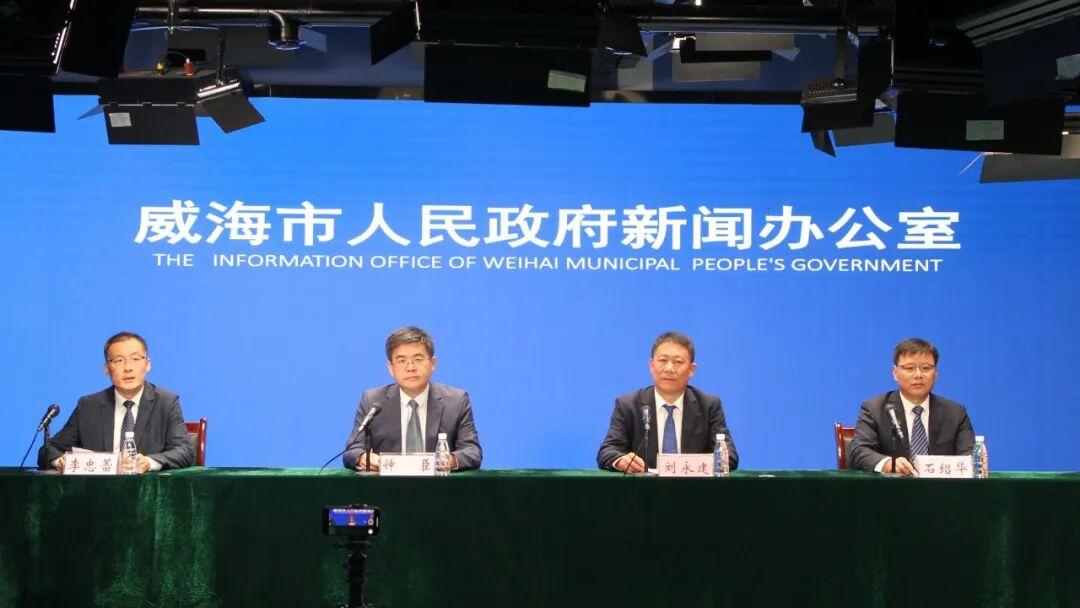
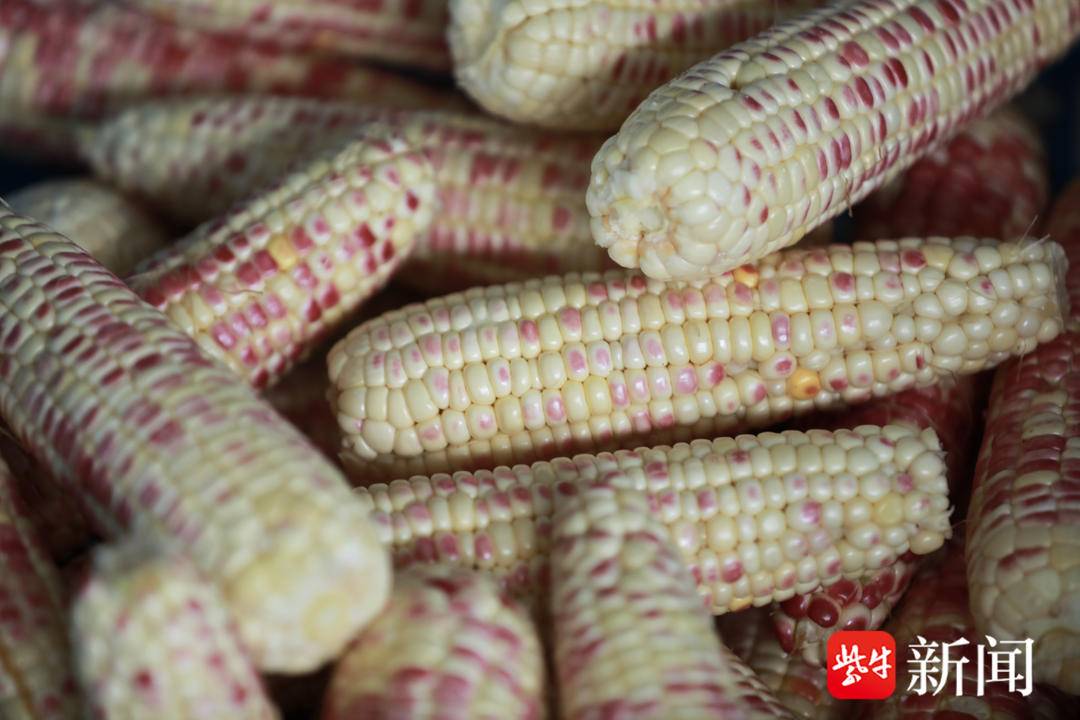
丰收节前话丰收!句容秋茬玉米抢鲜上市 ,20 万穗预计创收百万
Yang Zi Wan Bao Wang· 2025-09-19 08:57
Core Insights - The article highlights the successful harvest of fresh sweet corn in Jiangsu's Jurong, benefiting from agricultural technology and ecological practices, leading to increased income for farmers and environmental benefits [1][3]. Group 1: Harvest and Economic Impact - The fresh sweet corn harvest in Jiangsu's Jurong is officially starting, with the main variety being "Little Red Corn," and the harvest is expected to last until mid-November, occurring 10 days earlier than previous years [3]. - The total yield for this season is projected to be around 200,000 ears of corn, with sales expected to exceed 1 million yuan [3]. Group 2: Agricultural Practices and Collaboration - The corn is sold through online platforms, offline channels, and partnerships with large chain supermarkets, showcasing a diversified sales strategy [5]. - An "ecological circular co-construction agreement" has been signed with a neighboring village, promoting both economic and ecological development through organic farming practices [5]. - The region's ecological advantages and expert guidance from the provincial agricultural science institute have led to the introduction of multiple new corn varieties, enhancing both yield and quality [5].
让农业尽显科技范儿
Jing Ji Ri Bao· 2025-09-07 01:17
Core Insights - The article highlights the entrepreneurial journey of Han Chun, the chairman of Jiangxi Gexi Zhengtai Poultry Development Co., Ltd, who has successfully transformed the local poultry industry through innovation and community engagement [1][7]. Group 1: Entrepreneurial Journey - Han Chun started his career with humble beginnings, working in a printing factory before returning to his hometown to start a small supermarket and later venturing into poultry farming [2]. - In 2005, he began raising chickens, initially experimenting with different types to determine which was the most profitable, ultimately focusing on egg production [2][3]. - Despite facing significant setbacks, including a devastating collapse of his chicken coop and the impact of avian influenza, Han persevered and eventually gained a strong customer base due to the quality of his eggs [3][4]. Group 2: Technological Innovation - Han Chun invested in advanced foreign chicken-raising equipment to increase production capacity, although initial challenges arose due to environmental differences [4][5]. - After months of adjustments, he successfully adapted the equipment to local conditions, emphasizing the importance of technology in modern agriculture [5][6]. - The company has implemented a smart farming system, allowing for better management of larger flocks and significantly reducing labor costs [6]. Group 3: Community Engagement and Social Responsibility - Han Chun believes in the principle that collective prosperity is essential, leading to the establishment of a support mechanism for local farmers, which has helped many families increase their income [7][8]. - The company has expanded its cooperative model, resulting in over 530 households benefiting from increased earnings through collaborative farming efforts [7]. - Han Chun also actively participates in social initiatives, such as the "Sunshine Assistance Program," which supports local children and emphasizes the importance of corporate social responsibility [8]. Group 4: Future Aspirations - The company is planning to upgrade its facilities into an "Ecological Circular Agriculture Demonstration Park," integrating smart farming, organic planting, and educational experiences [9]. - The focus is on enhancing agricultural efficiency, revitalizing rural areas, and increasing farmers' incomes, reflecting Han Chun's commitment to sustainable development [9].
让农业尽显科技范儿 ——记江西省葛溪正太禽业开发有限责任公司董事长韩纯
Jing Ji Ri Bao· 2025-09-06 22:11
Core Viewpoint - The article highlights the entrepreneurial journey of Han Chun, the chairman of Jiangxi Gexi Zhengtai Poultry Development Co., Ltd., who has successfully transformed a small-scale poultry operation into a modern agricultural enterprise while promoting local economic development and community welfare [1][7]. Group 1: Entrepreneurial Journey - Han Chun started his career with humble beginnings, working in a printing factory before returning to his hometown to start a small supermarket and later venturing into poultry farming [2]. - In 2005, he began raising chickens, initially experimenting with different types to determine which was most profitable, ultimately focusing on egg production [2][3]. - Despite facing significant setbacks, including a devastating building collapse and the impact of avian influenza, Han Chun persevered and adapted his business model to survive [2][3]. Group 2: Innovation and Technology - Han Chun emphasizes the importance of technology in modern agriculture, believing it enhances efficiency and productivity [5]. - He invested in advanced poultry farming equipment from abroad, overcoming initial challenges related to local environmental conditions through persistent adaptation and learning [4][5]. - The company has implemented a smart farming system that significantly increases operational efficiency, allowing one worker to manage 12.5 times more chickens than before [6]. Group 3: Community Development - The company has grown from a small workshop to a leading agricultural enterprise with 137 employees and an annual output of over 10,000 tons of eggs, generating more than 100 million yuan in revenue [7]. - Han Chun has established a support mechanism for local farmers, helping them improve their livelihoods through shared resources and training [7]. - The cooperative model has successfully increased the income of over 530 local households by an average of nearly 20,000 yuan per year [7]. Group 4: Social Responsibility - Han Chun actively engages in social responsibility initiatives, including educational support for underprivileged children and community development projects [8]. - The company is also exploring rural tourism opportunities, enhancing local economic activity and attracting youth back to the area [9]. - Future plans include developing an ecological circular agriculture demonstration park that integrates smart farming, organic planting, and educational experiences [9].
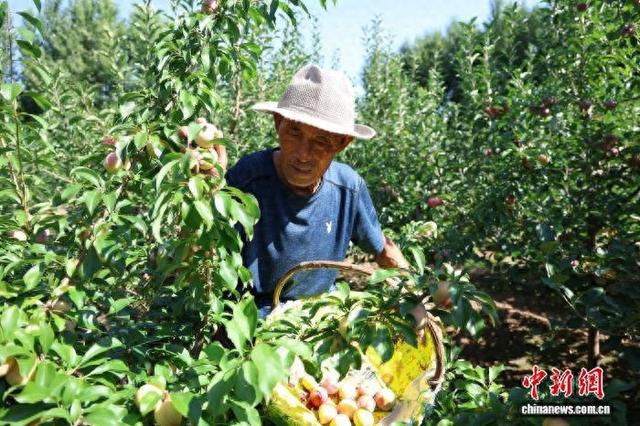
(乡村行·看振兴)荒山变“金山”:兴安岭上小县城耕耘“幸福果园”
Zhong Guo Xin Wen Wang· 2025-09-05 12:23
Core Viewpoint - The transformation of barren land into productive orchards in Tuquan County, Inner Mongolia, showcases the potential for agricultural development and economic growth through dedicated farming practices and diversification of fruit varieties [1][3][6]. Group 1: Agricultural Development - The local farmers have successfully converted previously barren land into fruitful orchards, with Liu Jingzhi's 20 acres of land now yielding an annual income exceeding 70,000 yuan [6]. - The introduction of various fruit tree species, such as cold-resistant apples and pears, has allowed for a continuous harvest from July to October, enhancing market competitiveness [3][6]. - The total area of economic forest in Tuquan County has reached 127,000 acres, generating an annual output value of 52 million yuan [8]. Group 2: Community Impact - The fruit industry has significantly improved the livelihoods of local residents, with 272 households in He Sheng Village earning over 5,000 yuan annually from backyard fruit cultivation [6]. - In Baolin Village, 70% of households have increased their income through the sand fruit industry, with 6,000 acres of sand fruit trees entering the productive phase [8]. - The ecological practices, such as intercropping oats with fruit trees, have created a sustainable agricultural model, further enhancing profitability for farmers [8].
科技扎根田野间 多地探索农业高质量发展新路径
Zhong Guo Chan Ye Jing Ji Xin Xi Wang· 2025-08-28 23:34
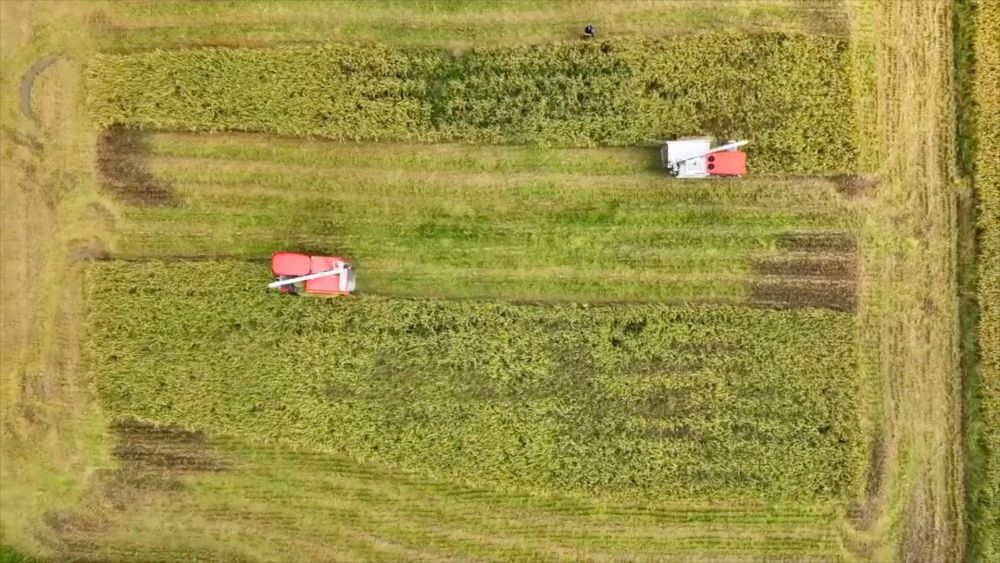
Group 1 - Various regions are exploring new paths for high-quality agricultural development by leveraging resource endowments and technological advantages [1] - The collaboration between universities, enterprises, and farmers is fostering an organic dry farming ecological cycle, enhancing agricultural waste treatment and resource utilization [2] - The establishment of a 6,000-acre high-quality sweet melon demonstration base in Hainan has generated over 12 million yuan in output value, showcasing successful agricultural transformation [3] Group 2 - The adoption of smart agriculture technologies, such as drones for pesticide spraying, is transforming traditional farming practices and enhancing rural revitalization [4] - The development of the yellow mushroom industry in Inner Mongolia is creating job opportunities and contributing to rural revitalization through sustainable farming practices [5] - Innovative approaches in saline-alkali land management, including the introduction of salt-resistant rice varieties, are significantly improving agricultural yields and farmer incomes [6] Group 3 - The focus on edible mushroom cultivation in Yunnan is leading to the establishment of a robust industry that enhances local economic development and food supply chains [7] - The collective efforts in exploring new agricultural development paths are yielding fruitful results, addressing traditional agricultural challenges, and invigorating rural economies [8]
新华视点|科技扎根田野间 多地探索农业高质量发展新路径
Xin Hua She· 2025-08-26 13:24
Core Viewpoint - Various regions are exploring new paths for high-quality agricultural development by leveraging resource endowments and technological advantages, promoting the transformation of agricultural production towards ecological, intelligent, and industrialized models [1]. Group 1: Collaborative Models - The Shanxi Agricultural University has established a collaborative model involving "universities + enterprises + farmers" to develop an organic dry farming ecological cycle agricultural production model, focusing on the harmless treatment and resource utilization of agricultural waste [3]. - The Shanxi Agricultural University aims to lead the development of organic dry farming and premium agriculture in the region, creating a green model for sustainable agricultural practices [5]. Group 2: Innovative Agricultural Practices - In Hainan, the "new farmers" have established a 6,000-acre high-quality sweet melon demonstration base, generating over 12 million yuan in output value, showcasing the successful application of research results in tropical agriculture [7]. - The transformation of seeds developed through southern breeding not only changes the landscape of local industries but also supports farmers' dreams of increased production and income [9]. Group 3: Smart Agriculture - In Inner Mongolia, the use of drones for pesticide spraying in high-standard farmland represents a shift from traditional farming methods to data-driven agricultural practices, enhancing productivity [11][13]. - The development of the yellow mushroom industry in Inner Mongolia has provided employment opportunities for local villagers, contributing to rural revitalization through traditional manual farming methods [14][16]. Group 4: Overcoming Environmental Challenges - In Fujian Province, the introduction of salt-tolerant rice varieties and mechanized planting has significantly improved crop survival rates and yields in previously saline-alkaline areas, demonstrating effective agricultural transformation [19][21]. Group 5: Industry Development - In Yunnan Province, the focus on edible mushroom cultivation has led to the establishment of processing enterprises, enhancing the value-added products and supporting local economic growth [23][25]. - The exploration of new paths for high-quality agricultural development across various regions has yielded fruitful results, addressing traditional agricultural challenges and invigorating rural economies through technological empowerment and industrial innovation [27].
陕西:府谷农业经营主体活力迸发——闯出富民兴村路
Zhong Guo Fa Zhan Wang· 2025-08-18 14:11
Core Insights - The agricultural sector in Fugu County, Shaanxi Province, is experiencing a dual win of industrial upgrading and increased income for villagers through innovative models such as industrial integration and ecological cycles [1][2] - The establishment of agricultural bases is leading to significant improvements in local livelihoods, with villagers now able to work closer to home and earn a stable income [1] - The county has actively cultivated various agricultural entities, resulting in a steady increase in both quantity and quality of agricultural operations [2] Group 1 - The agricultural base in Tianqiaoze Village is thriving, with a variety of crops such as watermelons, eggplants, and peppers showing strong growth, contributing to local income [1] - Villager testimonials highlight the positive impact of local agricultural jobs on their quality of life, allowing for better work-life balance and financial stability [1] - The agricultural base is also expanding into livestock farming, with goats and pigs being raised, indicating a diversification of agricultural activities [1] Group 2 - The ecological model in Hongya Village features a symbiotic relationship between trees and livestock, where poultry feed on insects and weeds, reducing costs and enhancing product quality [2] - The use of poultry manure as fertilizer for trees exemplifies the successful implementation of an ecological cycle that benefits both the environment and economic returns [2] - Fugu County has developed a range of agricultural entities, including 1497 family farms and 151 registered farmer cooperatives, showcasing a robust growth in agricultural infrastructure [2]
正大(琼山)农业产业链项目开工
Hai Nan Ri Bao· 2025-08-16 01:33
Group 1 - The project, known as Zhengda (Qiongshan) Agricultural Industry Chain, has officially commenced construction, marking the second agricultural investment by Zhengda Group in Hainan [2] - The project aims to create a comprehensive agricultural industry chain that includes feed production, pig farming, slaughter processing, cold chain logistics, and terminal sales through a modern "plant-animal combination, circular development" model [2] - Upon full operation, the project is expected to produce 200,000 pigs annually and 20,000 tons of high-quality pork, significantly enhancing Hainan's self-sufficiency in pork supply [3] Group 2 - The project will utilize advanced intelligent farming technology and environmentally friendly processes to ensure both economic and social benefits [2] - An innovative ecological farming model will be implemented, converting all waste into clean electricity and returning residual materials to support tropical fruit and vegetable cultivation, forming a "pig-biogas-fruit" ecological cycle [2] - The establishment of a traceable system from breeding, feed to slaughter will provide consumers with safe and reliable meat products [2]