
疆煤外运

Search documents
钢铁动脉奔腾不息,乌将铁路助力疆煤外运展新图
Zhong Guo Xin Wen Wang· 2025-09-19 00:51
Core Insights - The article highlights the significant transformation and efficiency improvements in the transportation of coal via the Wujian Railway in Xinjiang, which has become a crucial channel for coal supply both within the region and to other parts of China [1][2][3]. Group 1: Infrastructure and Capacity - The Wujian Railway has been upgraded from a single-line to a double-line electrified railway, increasing the daily train frequency from over 20 pairs to more than 80 pairs, with a maximum capacity of 100 pairs, equating to over 290,000 tons of coal transported daily [2]. - The annual freight volume of the Wujian Railway has surged from 56.48 million tons to 108 million tons, with a cumulative shipment of 67.1556 million tons as of August, including 19.4237 million tons of coal exported from Xinjiang [2][3]. Group 2: Operational Efficiency - The coal loading process has been optimized, reducing loading time for large trains from 4-5 hours to under 2 hours, and for smaller trains from 2 hours to under 1 hour, significantly enhancing operational efficiency [2]. - The Wujian Railway has achieved a coal dispatch volume of 62.3419 million tons this year, accounting for 92% of the total dispatch volume, indicating a continuous increase in transportation efficiency [3]. Group 3: Strategic Initiatives - The Xinjiang Railway Department has implemented market-oriented reforms and established the "Tianshan Snow Lotus" service brand, creating a flexible logistics service system that collaborates with over 30 major enterprises annually to ensure capacity supply [4]. - The railway has adopted diverse transportation methods for bulk commodities, such as grouping scattered goods and operating dedicated trains, which has significantly improved the supply capacity for key materials like coal and grain [4]. Group 4: Economic Impact - The Wujian Railway serves as a vital economic corridor, supporting regional economic development and energy security, while facilitating deeper exchanges and high-quality development in Xinjiang [5].
抢抓“疆煤外运”国家战略机遇 ST广物全年运量有望突破3000万吨
Zheng Quan Shi Bao Wang· 2025-09-14 10:35
Core Insights - ST Guangwu has reported significant growth in coal transportation via the Hongnao Railway, with July and August volumes reaching 240 million tons and 255 million tons respectively, marking year-on-year increases of approximately 25% and 58% [1][2] - The company aims to leverage Xinjiang's natural resource advantages and the strategic importance of coal transportation, contributing to the national "Jiang Coal Export" strategy [1][2] Company Performance - In the first half of 2025, ST Guangwu's cumulative transportation volume via the Hongnao Railway reached 13.49 million tons, a year-on-year increase of 38.96%, accounting for about 30% of the total railway dispatch volume for "Jiang Coal Export" [1] - The company has set a target to achieve coal transportation volumes exceeding 30 million tons by 2025, supported by ongoing infrastructure developments [2] Industry Context - Xinjiang's coal reserves account for approximately 40% of the national total, making it a critical energy supply region in China [1] - The coal production in Xinjiang reached 279 million tons in the first half of 2025, with a year-on-year growth rate of 12.4%, surpassing the national growth rate of 5.4% [1] - The overall coal export volume from Xinjiang has been increasing, with a target of 100 million tons for the year, following a record of 90.61 million tons in the previous year, which was a 50.2% increase [2]

ST广物上半年盈利3.55亿元,能源物流主业韧性凸显 红淖铁路运量逆势增近四成,未来成长空间广阔
Quan Jing Wang· 2025-09-03 05:48
Group 1 - ST Guangwu reported a revenue of 1.421 billion yuan and a net profit of 260 million yuan for the first half of 2025, with a significant increase in coal transportation volume by 38.96% [1] - The company has been focusing on energy logistics, leveraging its strategic location in Xinjiang as part of the Silk Road Economic Belt, and has developed a "one channel, four bases" growth model [1][2] - Despite challenges in the coal market, the company managed to reduce sales and management expenses by 48.93% and 49.62% respectively, showcasing strong cost control [1] Group 2 - Recent infrastructure developments have enhanced the transportation capacity of the Hongnao Railway, transitioning from a single channel to a dual-channel system, which shortens transport time and expands market reach [2] - The company is actively developing four comprehensive energy logistics bases, with the Liugou base having an annual turnover capacity of approximately 20 million tons, improving supply capabilities and price competitiveness [2] - Xinjiang's coal production reached 279 million tons in the first half of 2025, with a 12.4% year-on-year increase, indicating the region's growing importance in the national energy supply system [2] Group 3 - As the energy logistics system matures and the western railway network improves, ST Guangwu's advantages in capacity release, network layout, and cost control are expected to translate into profitability [3] - The company is poised to unlock new growth opportunities and strengthen its strategic position in the energy logistics landscape of the Belt and Road Initiative [3]
ST广物: 广汇物流股份有限公司关于2025年半年度业绩说明会召开情况的公告
Zheng Quan Zhi Xing· 2025-09-01 16:18
Meeting Overview - The company held a half-year performance briefing on September 1, 2025, to discuss its operational results, financial status, and development strategy with investors [1] - Key executives, including the chairman and general manager, participated in the meeting [1] Performance Highlights - As of June 30, 2025, the cumulative transport volume of the Hongnao Railway reached 13.49 million tons, a year-on-year increase of 38.96%, accounting for approximately 30% of the total railway dispatch volume for "Xinjiang coal export" [1][6][9] Strategic Initiatives - The company is actively supporting the "Xinjiang coal export" strategy by enhancing logistics efficiency and expanding its service network [2] - Plans are in place to upgrade the transport capacity of the Hongnao Railway to meet external transport demands from the Nao Maohu and Zhundi regions [2] - The company is integrating road and rail transport resources to create a comprehensive logistics service matrix, aiming to reduce overall logistics costs [2] Future Development Plans - The company is focused on the construction of four comprehensive logistics bases to enhance energy logistics response efficiency and expand market share [2][5] - The company is also working on the development of railway dedicated lines and coal storage facilities to ensure smooth project implementation [3] Market Adaptation Strategies - In response to declining coal prices, the company has implemented temporary freight discounts to support market expansion for energy resource enterprises [3][7] - The company plans to dynamically adjust its pricing strategies based on market supply and demand changes [3][10] Share Buyback Program - As of July 31, 2025, the company has repurchased 14,770,400 shares, representing 1.24% of its total share capital [7] - The share buyback period has been extended to April 30, 2026, to better align with market conditions and ensure effective execution of the buyback plan [7] Operational Efficiency - The company is enhancing its operational capabilities by improving the efficiency of coal transportation and container return processes [6][7] - The current utilization rate of the Hongnao Railway is approximately 40%, with ongoing efforts to increase transport capacity through infrastructure upgrades [9] Long-term Vision - The company aims to become a leading energy logistics service provider along the "Belt and Road" initiative by leveraging its strategic location and resources [5][11] - Continuous improvement in operational management and efficiency is a priority to ensure stable growth in performance [5][11]
广汇物流20250830
2025-08-31 16:21
Summary of Guanghui Logistics Conference Call Company Overview - **Company**: Guanghui Logistics - **Period**: First half of 2025 - **Total Assets**: 21.587 billion CNY - **Net Assets**: 7.243 billion CNY - **Debt Ratio**: 64.21%, down 1.5 percentage points from the beginning of the year [2][3] Key Financial Metrics - **Revenue**: 1.421 billion CNY, down approximately 21% year-on-year [1][2] - **Net Profit**: 260 million CNY, roughly flat year-on-year [1][2] - **Operating Cash Flow**: 878 million CNY, up 28.81% year-on-year [1][2] - **Energy Logistics Revenue**: 1.124 billion CNY, down 20% year-on-year; Gross Margin: 38%, Net Margin: 17.662% [1][2][4] - **Real Estate Revenue**: 250 million CNY, down 56% year-on-year [1][3] Energy Logistics Performance - **Total Shipment Volume**: 13.49 million tons, up 38.96% year-on-year [1][2][4] - **Initial Shipment Volume**: 6.3 million tons [2][4] - **Throughput Volume**: 7.19 million tons, up 95.16% year-on-year [1][2][4] - **2025 Shipment Target**: 31 million tons, up 37% year-on-year [2][8] - **2026 Shipment Projection**: 35 to 40 million tons, with a year-on-year increase of 15% to 30% [2][9] Real Estate Business - **Inventory Cost**: Approximately 2.2 billion CNY, with 1.8 billion CNY located in Chengdu Tianfu New Area [3][6] - **Current Status**: All real estate projects completed and in the sales phase [5][6] Major Developments - **Stock Buyback Plan**: Delayed to April 30, 2026, with a budget of 200 to 300 million CNY; 14.77 million shares repurchased for 85 million CNY [2][13] - **ST Removal Application**: Planned for October 12, 2025 [2][13] - **Railway Projects**: The restoration of Jiangnao Railway is expected to be completed by the end of 2027 [2][15] Market and Strategic Outlook - **Coal Price Impact**: Coal price fluctuations have affected logistics pricing; however, the company has adjusted fees accordingly [11][20] - **Future Coal Market Outlook**: Optimistic about the growth potential of Xinjiang's coal market, with significant demand gaps expected in Gansu, Ningxia, and Sichuan-Chongqing regions [12][20] - **Logistics Base Development**: New logistics bases in Ming Shui and Guang Yuan expected to enhance coal transfer efficiency [14][17] Additional Insights - **Cost Structure**: The complete cost of Xinjiang coal ranges from 140 to 160 CNY/ton, with varying transportation costs to different regions [11] - **Investment Gains**: Expected investment gain of nearly 100 million CNY from the sale of Jiangnao Railway shares to the National Railway Group [2][16] - **Operational Adjustments**: The company has implemented price reductions to counteract market challenges, including a 30 CNY/ton reduction in initial fees and a 10% reduction in shipping rates [4][7]
ST广物2025年上半年利润总额3.55亿元 红淖铁路运量飙升39%占“疆煤外运”三成
Zheng Quan Shi Bao Wang· 2025-08-29 12:37
Core Viewpoint - ST Guangwu (600603) reported significant growth in revenue and profit for the first half of 2025, driven by increased coal transportation through the Hongnao Railway, which plays a crucial role in the company's energy logistics strategy [1][2]. Financial Performance - The company achieved operating revenue of 1.421 billion yuan and a net profit attributable to shareholders of 260 million yuan during the reporting period [1]. - The total profit reached 355 million yuan, indicating a strong financial performance [1]. Coal Transportation and Logistics - The Hongnao Railway recorded a cumulative transportation volume of 13.4918 million tons, representing a year-on-year increase of 38.96%, accounting for approximately 30% of the total coal transportation volume via rail during the same period [1][2]. - The coal production in Xinjiang reached 279 million tons, with a year-on-year growth of 12.4%, surpassing the national growth rate of 5.4% [1]. Strategic Initiatives - The company is focused on leveraging Xinjiang's geographical advantages as part of the "Belt and Road" initiative, aiming to establish a comprehensive energy logistics service provider [1]. - ST Guangwu is implementing a "one channel, four bases" strategy, which includes the development of the Hongnao Railway and four major energy logistics bases [1][3]. Cost Management - The company has successfully implemented cost control measures, resulting in a significant reduction in sales, management, and financial expenses by 48.93%, 49.62%, and 9.73%, respectively [3]. Future Outlook - ST Guangwu plans to enhance the efficiency and flexibility of coal transportation through the dual-channel system of "Lanxin + Linha" and expand the market reach of Xinjiang coal [3].
ST广物: 广汇物流股份有限公司2025年半年度报告
Zheng Quan Zhi Xing· 2025-08-29 11:44
Core Viewpoint - Guanghui Logistics Co., Ltd. reported a decrease in revenue and a slight increase in profit for the first half of 2025, highlighting challenges in the coal market and a strategic focus on energy logistics [2][3]. Company Overview and Key Financial Indicators - The company’s revenue for the first half of 2025 was approximately 1.42 billion RMB, a decrease of 20.95% compared to the same period last year [2]. - Total profit amounted to approximately 354.84 million RMB, reflecting a 3.17% increase year-on-year [2]. - The net profit attributable to shareholders was approximately 260.09 million RMB, down 1.32% from the previous year [2]. - The company’s net assets increased by 3.83% to approximately 7.24 billion RMB [2]. - Total assets decreased slightly by 0.96% to approximately 21.59 billion RMB [2]. Industry and Main Business Situation - The company is focused on energy logistics, leveraging its strategic location in Xinjiang, which is a key area for coal production in China [3][4]. - In the first half of 2025, national coal production reached 2.4 billion tons, with Xinjiang's output increasing by 12.4% to 279 million tons [3]. - The company is developing four major comprehensive energy logistics bases to enhance its logistics capabilities and support coal transportation [3][4]. Operational Performance - The Red Naoh Railway, a key asset for the company, saw a significant increase in transport volume, reaching approximately 13.49 million tons, a growth of 38.96% year-on-year [4][5]. - The company is actively expanding its logistics network to improve efficiency and reduce transportation costs, particularly for coal exports [5][6]. - The integration of the "Jiang-Naoh-Hong" railway has improved transportation efficiency, reducing the distance and time for coal transport by 28% and 30% respectively [6][7]. Strategic Developments - The company is enhancing its logistics infrastructure by developing comprehensive energy logistics bases, which will serve as key nodes in its supply chain [8][9]. - The logistics bases are designed to improve coal storage and distribution, thereby increasing the competitiveness of Xinjiang coal in the market [8][9]. - The company is also focusing on diversifying its operations, including cold chain logistics, to adapt to market changes and enhance profitability [10].
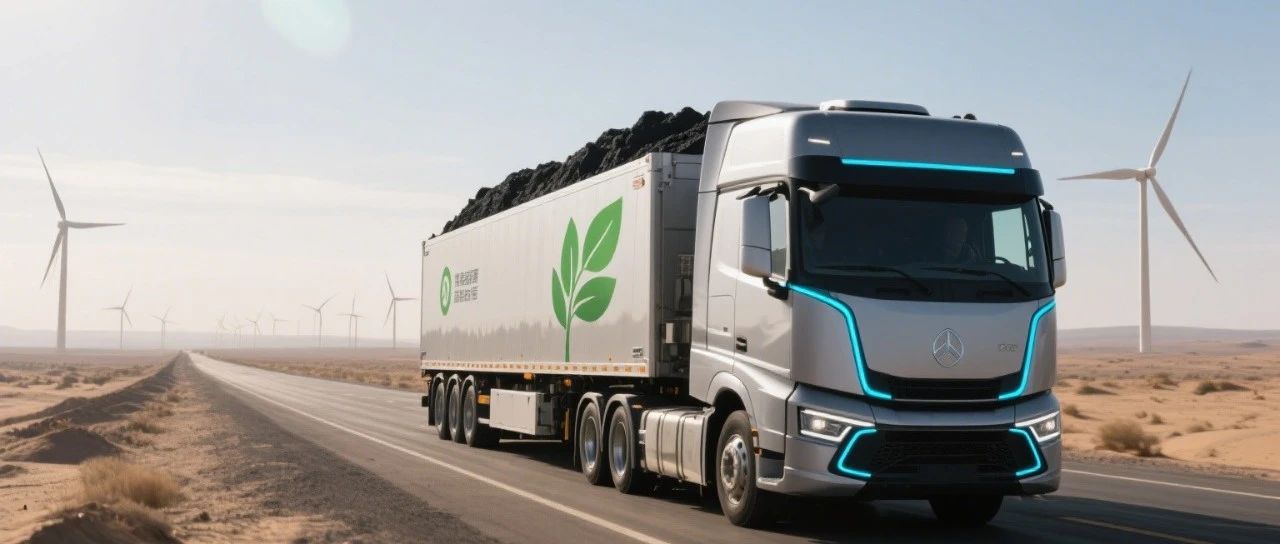
疆煤外运如何撬动新一轮电动重卡需求?
高工锂电· 2025-08-10 10:24
Group 1 - The article discusses the growing demand for electric heavy trucks driven by a national energy strategy, particularly in Xinjiang, which has significant coal production and reserves [2][3][5] - In 2024, Xinjiang's coal production is projected to be approximately 540 million tons, accounting for about 13.5% of the national total, with reserves reaching 2.19 trillion tons, the highest in the country [2] - The transportation of coal from Xinjiang is primarily conducted via rail, with road transport accounting for about 25.8%, predominantly using fuel heavy trucks, which are high-emission vehicles [3] Group 2 - The penetration rate of electric heavy trucks in Xinjiang is currently low due to insufficient charging infrastructure, but advancements in charging technology and battery capacity are expected to boost sales [4][5] - In the first half of 2025, nationwide sales of electric heavy trucks reached 79,000 units, with Xinjiang's sales exceeding 4,000 units, marking a year-on-year growth of over 200% [4][6] - Xinjiang has the highest market share for battery-swapping heavy trucks in the country, exceeding 50%, indicating a strong shift towards electric solutions in the region [5] Group 3 - The article highlights the diverse energy replenishment methods being adopted, including battery swapping and ultra-fast charging networks, to support the logistics of coal transportation [7][9] - The demand for heavy truck batteries is expected to rise significantly, with an estimated 31.7 GWh of battery installations in the first half of 2025, reflecting a year-on-year increase of 230% [6] - Companies are actively establishing dedicated battery-swapping stations and ultra-fast charging stations to facilitate the transition to electric heavy trucks in Xinjiang [10][11] Group 4 - The deployment of ultra-fast charging stations is accelerating in Xinjiang, with significant projects already underway, including those by Huawei and Shenghong [13][17] - The article notes that the integration of solar energy and storage solutions is being explored to mitigate the impact of high-power charging on the electrical grid [15][17] - Predictions indicate that Xinjiang's sales of new energy heavy trucks could reach 6,000 units in 2025, further driving the development of supporting infrastructure [17]

国信证券:中期维度看好煤炭需求韧性 业绩稳健高股息龙头具较高配置价值
智通财经网· 2025-07-16 03:58
Group 1: Core Insights - The coal prices have reached a bottom in the first half of the year, with potential for a rebound in the second half as supply-demand dynamics improve, indicating resilience in coal demand in the medium term [1] - In Q1 2025, despite significant performance pressures, the coal sector remains strong with low debt-to-asset ratios (44.7%), high net profit margins (12.7%), and relatively high return on equity (ROE) [1] - The current low interest rate environment enhances the investment appeal of high-dividend leading stocks in the coal sector [1] Group 2: Supply Dynamics - From January to May, domestic coal production increased by approximately 130 million tons year-on-year, while imports decreased by about 16 million tons, indicating an overall increase in supply [2] - The domestic raw coal production for the same period reached 1.99 billion tons, reflecting a year-on-year increase of 6%, with expectations for a narrowing growth rate in the second half of the year [2] - Coal imports are projected to remain low, with an expected year-on-year decrease of 8 million tons (-15%) for the entire year, primarily due to reduced imports from Indonesia [2] Group 3: Regional Insights - The transportation demand for coal from Xinjiang has seen a temporary decline due to falling coal prices, despite efforts to lower railway freight rates [3] - As of June 6, the railway transportation volume of Xinjiang coal increased by only 6.8% year-on-year, with limited price advantages in certain regions [3] - Xinjiang is accelerating investments in coal chemical and coal power projects, indicating a future increase in local coal consumption [3] Group 4: Price and Production Trends - Historical data suggests that when coal prices drop below 600 RMB/ton, production cuts begin to occur, with previous years showing significant reductions in coal output [4] - Current coal companies maintain reasonable profitability and operational quality, making spontaneous production cuts less likely, although a slight reduction may occur if prices fall below cost lines [4] Group 5: Demand Outlook - National coal consumption from January to May reached 2.05 billion tons, showing a slight year-on-year increase of 0.5%, with expectations for improved demand in the second half of the year [5] - The thermal power sector is under pressure due to slower electricity demand growth and competition from renewable energy, but a rebound is anticipated as the peak season approaches [5] - Non-electric demand, particularly for chemical coal, remains strong, with significant year-on-year growth in coal-to-PVC, coal-to-ethylene glycol, and coal-to-methanol production [5]

申万宏源研究晨会报告-20250520
Shenwan Hongyuan Securities· 2025-05-20 00:43
Group 1: Key Insights on Xinjiang Coal Industry - Xinjiang has abundant coal reserves with a resource volume of 2.19 trillion tons, accounting for 39% of the national total, and confirmed coal resources of 450 billion tons [3][12] - The coal production in Xinjiang is projected to reach 900-1,000 million tons by 2030, with an expected export of 250 million tons [3][12] - The railway infrastructure in Xinjiang is undergoing significant development, with the completion of the Lin-Ha backbone channel by 2027 expected to add an export capacity of 200 million tons [3][12] Group 2: Investment Opportunities in Xinjiang Coal - The coal consumption in Xinjiang is anticipated to grow significantly, driven by the construction of large-scale thermal power plants and coal chemical projects [3][12] - Key companies to watch for potential growth in production capacity in Xinjiang include Tebian Electric Apparatus, Hubei Yihua, and Yanzhou Coal Mining [3][12] Group 3: Insights on Logistics and Robotics Industry - The logistics automation and robotics sector is expanding, with applications across various scenarios including factory logistics, commercial delivery, and consumer logistics [19] - The core drivers for the adoption of robotics in logistics are improving operational efficiency and reducing labor costs, particularly in the express delivery sector [19] - Companies like Dematic Technology and others are actively engaging in strategic partnerships to enhance logistics automation capabilities [19]