私域流量运营

Search documents
银行微信渠道迎整合:公域流量“滑坡”,私域运营“加码”
2 1 Shi Ji Jing Ji Bao Dao· 2025-08-06 11:58
Core Viewpoint - The article discusses the ongoing integration and optimization of online channels by commercial banks, particularly focusing on WeChat platforms, as they adapt to changing customer engagement dynamics and regulatory requirements [1][2][4]. Group 1: Trends in WeChat Channel Integration - Commercial banks are accelerating the integration of online channels, with many direct banks and credit card center apps facing shutdowns [2][3]. - Banks are migrating WeChat service accounts to official public accounts to unify service functions and promotional channels [2][3]. - Similar business public accounts within the same bank are being consolidated or redirected to the official public account [3]. Group 2: Regulatory and Management Challenges - Regulatory bodies have emphasized the need for banks to optimize mobile applications, particularly those with low user engagement or high compliance risks [4]. - Many banks have multiple official WeChat accounts, leading to confusion in service offerings and inconsistent functionalities across different accounts [4][5]. Group 3: Shift in User Engagement Dynamics - The differentiation between WeChat service accounts and public accounts has impacted user engagement, with service accounts now requiring additional clicks to access content, leading to a decline in visibility and interaction [6][7]. - The overall reading volume for service account content has decreased significantly since the introduction of the new WeChat features [6][7]. Group 4: Focus on Private Traffic Operations - Banks are increasingly shifting their focus to private traffic operations, utilizing tools like enterprise WeChat for personalized customer service and targeted marketing [8][9]. - The integration of various online and offline channels aims to create a seamless customer journey and enhance overall customer experience [9].




微信CRM的核心定义是什么?
Sou Hu Cai Jing· 2025-08-04 09:56
Core Insights - WeChat CRM is a customer relationship management system based on the WeChat ecosystem, enabling companies to efficiently manage customer information and interactions through tools like WeChat Work and official accounts [2][10] - The integration of WeChat Work allows for seamless customer management, automating data synchronization and enhancing sales team efficiency [4][10] WeChat Work Features - WeChat Work automatically syncs chat records, customer tags, and interaction data, reducing manual entry errors and saving time [4] - Key advantages include data synchronization, chat history archiving, automated marketing triggers, and efficient group chat management, which collectively enhance customer interaction and loyalty [4] Official Account Functions - Official accounts assist in collecting fan information through menu settings, auto-replies, and message pushes, allowing for precise customer segmentation [6] - By utilizing automated tools, companies can reduce marketing costs and improve customer engagement through personalized promotions and reminders [6][8] Performance Improvement Strategies - Data analysis and automation tools are crucial for enhancing performance, enabling companies to identify high-value users and tailor marketing efforts accordingly [7][10] - The average sales increase can exceed 20% through effective use of automated responses and reminders, leading to higher customer satisfaction and repeat purchases [7] Private Traffic Operations - Private traffic operations allow companies to control customer resources independently, reducing reliance on external platforms and lowering marketing costs [8][10] - Various industries can apply this model effectively, such as retail using official accounts for promotions and education using WeChat Work for course reminders [8][10] Overall Value of WeChat CRM - WeChat CRM simplifies daily operations and supports digital transformation across industries, providing tangible value through efficient customer management and cost reduction [10]


企业微信SCRM的核心价值是什么?
Sou Hu Cai Jing· 2025-08-04 09:44
Core Insights - The core value of WeChat SCRM lies in its seamless integration with the WeChat ecosystem, enabling companies to efficiently reach a vast user base for effective communication and low-cost marketing [2][4][6] Group 1: Customer Engagement and Marketing Efficiency - WeChat SCRM allows businesses to directly communicate with customers via WeChat, eliminating the need to switch between applications, thus enhancing communication efficiency [4][6] - The system significantly improves response times, with an average success rate of 80% for customer outreach compared to just 30% for traditional methods [6][8] - Companies can utilize personalized marketing strategies, such as sending tailored promotions based on customer behavior, which enhances customer engagement and retention [10][11] Group 2: Cost Reduction and Resource Optimization - WeChat SCRM helps businesses save on marketing costs by enabling direct customer outreach through features like group messaging and promotional activities, which are nearly cost-free compared to traditional advertising [8][15] - Automation tools within the system reduce the need for manual intervention, further lowering labor costs and minimizing resource wastage [8][10] - The integration of customer service, marketing, and employee management into a single platform streamlines operations and reduces the need for multiple tools, leading to significant cost savings [15][16] Group 3: Employee Management and Performance Tracking - WeChat SCRM provides comprehensive tracking of employee interactions with customers, allowing management to monitor communication effectiveness and identify areas for improvement [13][16] - The system retains all communication records, ensuring that customer relationships are preserved even if employees leave the company, facilitating smoother transitions [16] - Performance metrics such as the number of new customers added and response times are automatically generated, making employee evaluations more objective and data-driven [13][16] Group 4: Long-term Business Growth - WeChat SCRM acts as a continuous growth engine for businesses by transforming each successful customer interaction into future sales opportunities [14] - The system enables companies to create detailed customer profiles based on past interactions, which helps in delivering personalized services and recommendations [14][11] - By effectively managing customer data and interactions, businesses can enhance customer loyalty and increase repeat purchases, thereby solidifying their market position [14][11]

酒水行业一物一码:再互动营销平台如何以扫码抽奖重构增长引擎
Sou Hu Cai Jing· 2025-08-04 02:20
Core Insights - The article highlights the innovative marketing model of "one code per item + scan to win" by the interactive marketing platform, which has become a core engine for growth in the beverage industry [1] - The platform leverages technology to reconstruct the relationship between products, consumers, and sales channels, transforming traditional promotional activities into a data-driven precision marketing system that aids brands in customer acquisition, repurchase, and retention [1] Customer Acquisition - The "dynamic code assignment" technology allows beverage brands to adjust scan reward strategies in real-time based on consumer profiles, leading to a 32% conversion rate for a certain liquor brand's Spring Festival promotion offering a 20 yuan discount for first-time buyers [3] - The platform's capability of "one scan, all reach" enables the redirection of scanned users to various platforms such as WeChat groups, Douyin challenges, and Tmall flagship stores, resulting in 3.2 billion exposures and over 5 million private domain users for a leading liquor brand during the Spring Festival, with 45% of traffic coming from secondary dissemination after scanning [3] Repurchase - The "five-code integration" system (bottle code, outer bottle code, box code, case code, and pallet code) turns products into full-link data collectors, allowing a beer brand to reduce its replenishment cycle from 15 days to 7 days and improve supply chain response speed by 60% through targeted regional marketing activities [5] - The development of a "virtual winery" metaverse scene, featuring AR tasting and NFT collectibles, increased user engagement time from the industry average of 2 minutes to 12 minutes, while a certain sauce liquor brand improved its product detail page conversion rate by 17% by integrating user reviews [5] Customer Retention - The membership points system and community viral tools convert public traffic into private assets, with a liquor brand implementing a "three-stage operation strategy" that increased repurchase frequency to 2.8 times per month through limited edition rewards and boosted average transaction value by 1.8 times through private tasting events [6] - This "layered operation + value deepening" model enhanced brand member activity by 40% and reduced customer acquisition costs by 35%, while the platform's federated learning technology ensures "data usable but not visible," providing precise user profiles while safeguarding consumer privacy [6]
商业新革命!链动 3+1 模式如何重塑万亿市场
Sou Hu Cai Jing· 2025-07-23 06:14
Core Insights - The integration of digital economy and physical economy has made efficient monetization of private traffic a core issue for many platforms [1] - The "Chain Movement 3+1" business model has emerged as a solution, featuring "intelligent rotation + positive allocation distribution" to address common pain points in traditional distribution models [1][14] - This model is gaining attention for its ability to drive both user scale and performance growth through a scientific identity hierarchy and diverse reward system [1][15] Model Essence - The Chain Movement 3+1 model is centered around a "proxy - boss" dual identity system, establishing a cycle of "3 direct referrals + 1 upgrade" for growth [3] - Users can become agents by purchasing specific products and can upgrade after referring three new users, allowing for team automatic fission [3][5] Reward Mechanisms - **Direct Referral Reward**: Agents earn 20%-30% of the product price for each new user referred, significantly lowering participation barriers and increasing conversion rates by 67% in the first week [6] - **Point Reward**: Bosses earn tiered rewards for each new agent added to their team, enhancing team cohesion and increasing repurchase rates by 42% [8] - **Peer Reward**: When bosses are at the same level, they earn 10% of the lower-level team's earnings, promoting fair competition [9] - **Slide Reward**: New users are allocated to underperforming areas of the team, improving team survival rates to 89% [10] - **Contribution Reward**: Teams achieving sales milestones receive a percentage of total earnings, extending user retention periods by 2.3 times [11] - **Rotation Reward**: Weekly or monthly earnings rotation ensures equitable access to high-revenue resources, providing equal development opportunities for smaller teams [12] Compliance Design - The Chain Movement 3+1 model operates within a compliant framework by separating product profits from distribution rewards, ensuring earnings are derived from actual sales [14] Model Evolution - Compared to the traditional Chain Movement 2+1 model, the 3+1 version optimizes the reward structure, expands theoretical team size from 14 to 81, and enhances risk control and ecological value [15] - The model redefines traditional business operations and enhances consumer shopping experiences, achieving qualitative improvements in decision-making efficiency and interaction depth [15] Future Outlook - The application of the Chain Movement 3+1 model is expected to expand with advancements in AI and big data, enhancing its influence in the commercial sector [16] - This evolution will empower companies in cost control, traffic conversion, and user retention while creating incremental value for consumers [16]

汽车经销商如何穿越周期?易车志解码“稳扎稳打”下的韧性增长逻辑
Zhong Guo Chan Ye Jing Ji Xin Xi Wang· 2025-07-15 03:59
Core Insights - Jietongda Group has achieved over 10 billion RMB in revenue and sold over 70,000 new vehicles in 2024, focusing on long-term development in the Tianjin and Yunnan markets [1][2][9] - The company operates 44 automotive brands and serves over 1.1 million car owners, emphasizing the importance of service capability in the automotive dealership sector [2][4] Group Strategy - Jietongda Group's strategy is centered on deepening its presence in the Tianjin and Yunnan markets, avoiding blind expansion and focusing on the quality of individual stores [6][19] - The company has maintained a sales growth rate of over 10% in recent years despite fierce competition in the automotive market [6][9] Business Performance - In 2024, Jietongda Group's new car sales exceeded 70,000 units, with used car sales reaching 17,000 units and vehicle maintenance exceeding 660,000 instances, resulting in approximately 14 billion RMB in revenue [9][14] - The used car segment has shown strong performance, with sales reaching 17,000 units and revenue surpassing 480 million RMB [14] Growth Engines - The company has been actively developing its new energy vehicle (NEV) business since 2018, collaborating with several NEV brands and establishing a comprehensive NEV shopping mall in Tianjin [10][12] - The used car business is also a critical growth area, with plans to enhance brand influence through quality assurance services and retail outlets [14] Industry Perspective - Jietongda Group's chairman believes that traditional dealership models will not disappear, as they provide localized service capabilities that are essential in the automotive market [15][17] - The automotive industry is undergoing significant changes, and companies must adapt to new sales models while maintaining integrity and professional service [17][19] Future Directions - The company is exploring new media strategies, such as live streaming and short videos, to engage online customers and activate its existing client base [20] - Jietongda Group aims to focus on long-term customer value and believes that the automotive market, valued in trillions, will present new opportunities for those who adhere to a long-term strategy [22]

虚拟资源项目真赚钱么:搭建一个付费社群一天能有500多的收入
Sou Hu Cai Jing· 2025-07-11 12:59
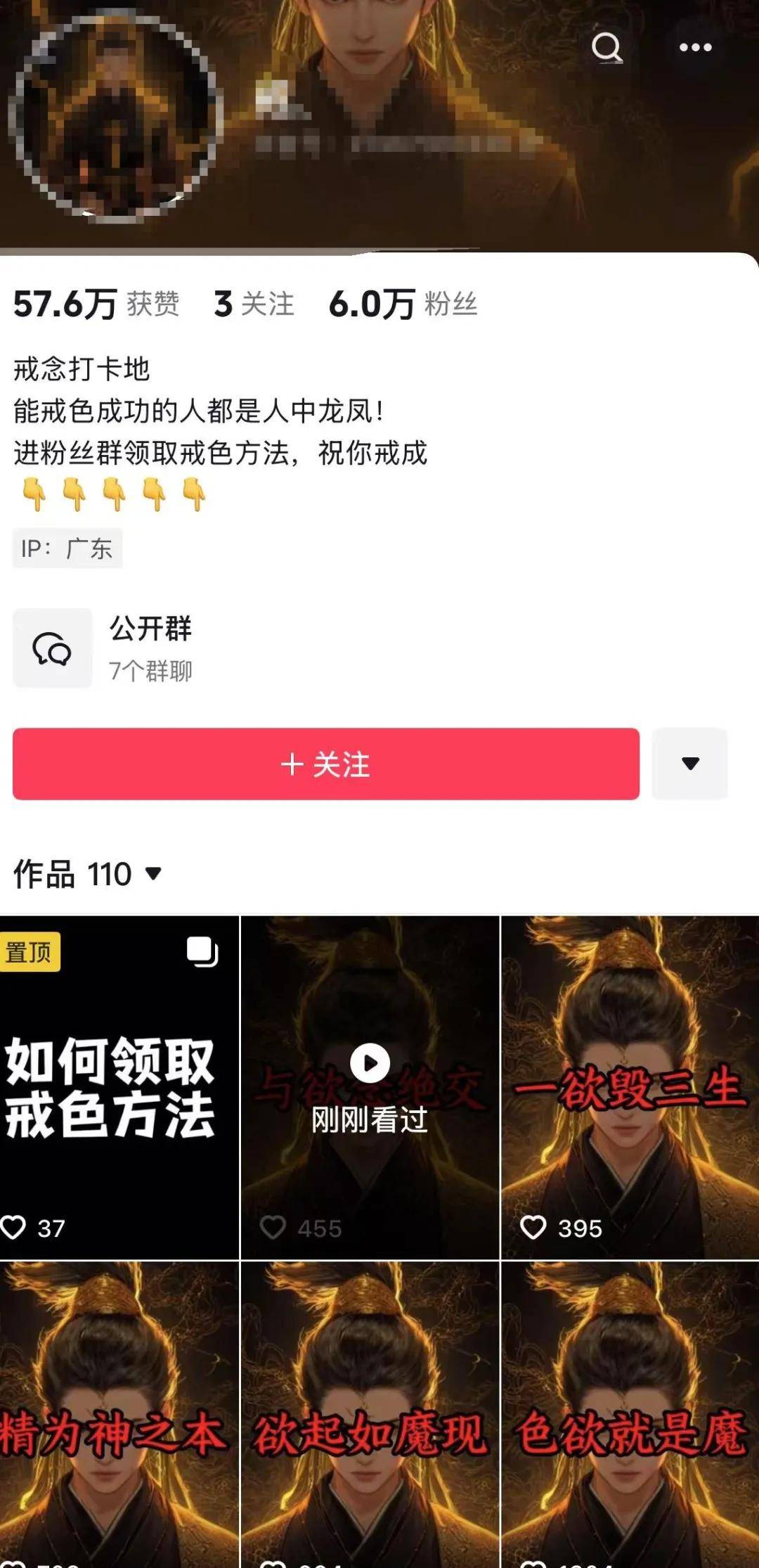
Core Insights - The project "戒色引流号" operates similarly to the previously analyzed "同城搭子" project, focusing on monetization through content creation and community engagement [1] - The project targets male users seeking self-improvement by presenting themes of positivity and personal growth, establishing a persona of a "spiritual mentor" or "growth partner" [7] Project Overview - The account has published 110 pieces of content and gained over 60,000 followers, indicating effective audience engagement [6] - The monetization strategy involves directing traffic from short video content to private community groups, utilizing a low-cost entry mechanism through QR codes [7][22] Execution Steps - The first step involves obtaining copy from Douyin videos using tools like Doubao App to extract necessary text [11] - The second step is to creatively rephrase the obtained text using AI tools to ensure originality [15] - The third step includes video production using mainstream editing software, applying templates and automated subtitles for efficiency [16] - The final step is to set up an automated group entry system, which can be acquired at a low cost from e-commerce platforms [17] Community Management - Once the system is configured, users can automatically join groups after payment, allowing for a fully automated process [22] - Group maintenance involves regularly sharing relevant materials on the project's theme, enhancing user engagement and retention [22]
电商企业如何通过SCRM管理系统实现精准营销?五大策略深度解析
Sou Hu Cai Jing· 2025-07-10 04:57
Core Insights - The article emphasizes the importance of SCRM management systems in the e-commerce industry, particularly in the context of declining traffic dividends and rising customer acquisition costs. E-commerce companies using SCRM software have seen an average reduction in customer acquisition costs by 37% and an increase in customer lifetime value (LTV) by 53% [1]. Group 1: Data Integration for Precision Marketing - SCRM systems break down data silos to create a unified customer view, which is essential for informed marketing decisions [3]. - Modern SCRM software can seamlessly integrate with major e-commerce platforms like Tmall, JD, and Pinduoduo, automatically synchronizing order information and customer interactions [4]. - SCRM can generate customer profiles with 128 dimensions by integrating transaction and social data, significantly improving the identification of VIP customers and boosting sales for high-end product lines [5]. Group 2: Customer Segmentation and Tagging - SCRM software utilizes intelligent tagging systems to convert large customer bases into actionable segments, enhancing marketing effectiveness [8]. - The RFM model (Recency, Frequency, Monetary) is a standard feature in SCRM, allowing automatic classification of customers into eight categories, each with tailored marketing strategies [8]. - Dynamic tags are generated through NLP analysis, improving customer service efficiency and conversion rates [9]. Group 3: Automated Marketing Engines - SCRM systems enable personalized marketing through automation, significantly reducing labor costs [12]. - Trigger mechanisms allow automatic actions based on user behavior, enhancing customer engagement [12]. - Multi-channel coordination ensures critical information reaches customers effectively, utilizing various communication methods [13]. Group 4: Private Traffic Operations - The SCRM system supports systematic tools for private traffic operations, crucial in the current e-commerce landscape [15]. - It identifies customers with high sharing intent and incentivizes word-of-mouth marketing through various mechanisms [16]. - Automated re-engagement strategies are employed for dormant customers, enhancing retention [17]. Group 5: Continuous Optimization and Data-Driven Marketing - SCRM provides a complete feedback loop from execution to analysis, essential for iterative marketing strategies [19]. - Attribution analysis helps identify the root causes of returns and negative feedback, guiding product selection [20]. - Real-time dashboards monitor key performance indicators, allowing for proactive customer retention strategies [21]. - Marketing sandbox features enable businesses to test strategies in a virtual environment, reducing trial and error costs [22]. Conclusion - SCRM systems are reshaping e-commerce marketing paradigms, transitioning from broad-based advertising to precision operations. The integration of AI and big data will enhance customer intent prediction and interaction experiences, establishing a competitive edge in customer data management [24].

许多宝妈居家想赚钱做点副业不知道如何运营私域流量?
Sou Hu Cai Jing· 2025-06-28 23:37
Core Insights - The article discusses how HuiZhuan Life provides a unique platform for mothers to achieve economic independence through effective private traffic management and various features like a savings app, cashback offers, local discounts, and community engagement [1][3]. Group 1: Platform Features - The Savings App is a highlight of HuiZhuan Life, allowing users to save money while shopping and participate in various promotional activities, thus attracting a large user base [1]. - Cashback offers provide users with a percentage of their spending back, creating an additional income source for mothers and enhancing the shopping experience [1]. - The Local Discounts feature enables users to discover promotions from nearby businesses, supporting local economies while helping mothers save money [1]. Group 2: Community Engagement - The platform offers a way for mothers to learn about and participate in local events, increasing social opportunities and potential income sources [3]. - Community involvement fosters a sense of belonging among users, providing them with more economic opportunities [3]. Group 3: User Management and Content Quality - Effective management of user groups is crucial for mothers to develop successful marketing strategies based on user needs and behaviors [3]. - HuiZhuan Life provides tools and resources for data analysis and marketing optimization, helping users achieve higher conversion rates [3]. - Attention to content quality is essential, as errors can impact user experience; continuous learning and improvement in writing skills are encouraged [3].
雷军曾力捧的欢牛蛋糕“倒闭”了?
Sou Hu Cai Jing· 2025-06-17 04:35
Core Viewpoint - The rapid expansion and subsequent collapse of HuanNiu Cake House highlight the critical importance of sustainable business practices over short-term growth strategies in the competitive bakery industry [3][7]. Group 1: Company Overview - HuanNiu Cake House started in 2013 with an initial investment of 30,000 yuan and gained popularity through viral products, achieving over 100 million yuan in annual sales by 2022 [2]. - The company received nearly 10 million USD in Series A funding from Shunwei Capital, expanding to 30 stores in Hangzhou with an impressive single-store annual GMV exceeding 3.33 million yuan and a repurchase rate of 76% [2]. Group 2: Recent Developments - On June 15, HuanNiu announced its closure due to rising costs, intense market competition, and management failures, causing significant unrest among consumers and franchisees [3]. - Prior to the closure announcement, the company attempted to dispel rumors of financial distress and planned to open 100 new stores through franchising [3]. Group 3: Financial Challenges - Despite a high gross margin of 77.5%, the company faced severe financial strain due to high marketing costs and rent, leading to a profit margin of only 5%-10% [4]. - The number of store closures began to exceed openings, with 2024 projected to see more closures than openings for the first time [4]. Group 4: Product and Market Position - HuanNiu's product innovation lagged behind industry standards, with SKU updates at only 50% of the average frequency, resulting in a loss of competitive edge [5]. - The company's membership system failed to engage consumers effectively, leading to a repurchase rate that was only half of the industry average [5]. Group 5: Consumer Impact - The sudden closure left many consumers with prepaid cards, resulting in significant financial losses, with estimates suggesting that consumer prepaid balances accounted for 20%-30% of the company's total debt [6]. - Consumers have begun organizing to seek compensation, but the company has indicated it lacks the resources to refund these amounts [6]. Group 6: Industry Implications - The downfall of HuanNiu Cake House serves as a cautionary tale for the bakery industry, emphasizing the need for a balanced approach to growth that prioritizes operational quality, cost management, product innovation, and effective consumer engagement [7].