视频生成模型

Search documents
阿里发布电影级视频模型万相2.6
Xin Lang Cai Jing· 2025-12-16 04:34
Core Viewpoint - Alibaba has launched the new generation of the Wanshang 2.6 model, which is the first video model in China to support role-playing functions, aimed at professional film production and image creation scenarios [1][3]. Group 1: Model Features - The Wanshang 2.6 model includes features such as audio-visual synchronization, multi-camera generation, and sound-driven capabilities [1][3]. - It has improved video quality, sound effects, and instruction adherence, achieving the highest single video duration of 15 seconds in China [1][3]. - The model allows for one-click completion of videos featuring single or multiple characters, as well as automatic multi-camera switching to meet professional film-level requirements [1][3]. Group 2: User Experience - Users can upload personal videos and input sci-fi or suspense-themed prompts, enabling the model to quickly design storyboards, perform character portrayals, and provide voiceovers, resulting in a complete short film in just a few minutes [1][3]. - The model can generate complete narrative shorts for advertising and short drama production by inputting continuous prompts, maintaining consistency in key information during multi-camera transitions [2][4]. Group 3: Accessibility and Applications - The Wanshang 2.6 model is now available for direct experience on the Wanshang official website, and enterprise users can access the model API through Alibaba Cloud [2][4]. - The Wanshang model family supports over ten visual creation capabilities, including text-to-image, image editing, text-to-video, image-to-video, voice generation, action generation, role-playing, and general video editing, widely applied in AI comics, advertising design, and short video creation [2][4].

首帧的真正秘密被揭开了:视频生成模型竟然把它当成「记忆体」
机器之心· 2025-12-05 04:08
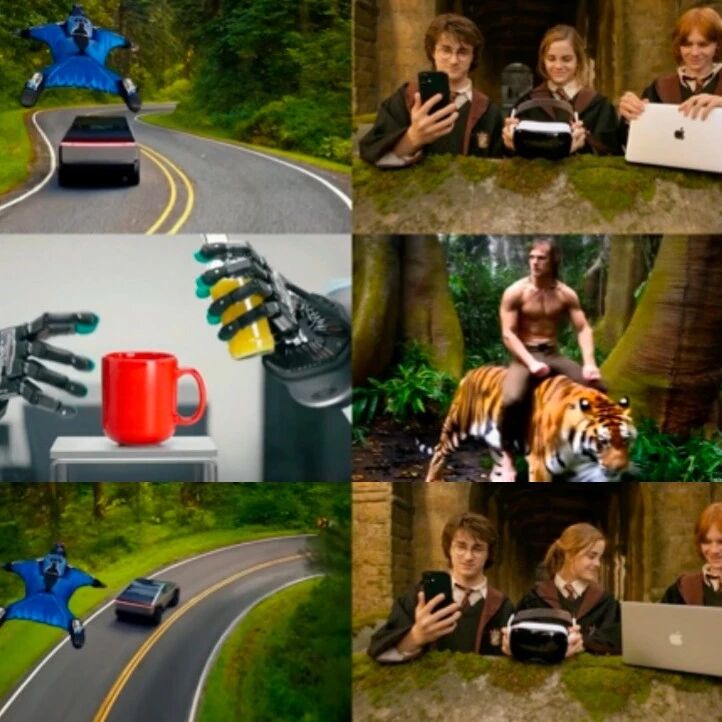
Core Insights - The first frame in video generation models serves as a "conceptual memory buffer" rather than just a starting point, storing visual entities for subsequent frames [3][9][48] - The research highlights that video generation models can automatically remember characters, objects, textures, and layouts from the first frame and reuse them in later frames [9][10] Research Background - The study originates from a collaborative effort by research teams from UMD, USC, and MIT, focusing on a phenomenon in video generation models that had not been systematically studied [5][8] Methodology and Findings - The proposed method, FFGo, allows for video content customization without modifying model structures or requiring millions of training samples, needing only 20-50 carefully curated examples [18][21] - FFGo can achieve state-of-the-art (SOTA) video content customization with minimal data and training time, demonstrating significant advantages over existing methods like VACE and SkyReels-A2 [21][29] Technical Highlights - FFGo enables the generation of videos with multiple objects while maintaining identity consistency and action coherence, outperforming previous models that were limited to fewer objects [22][31] - The method utilizes Few-shot LoRA to activate the model's memory mechanism, allowing it to leverage existing capabilities that were previously unstable and difficult to trigger [30][44] Implications and Future Directions - The research suggests that video models inherently possess the ability to fuse multiple reference objects, but this potential was not effectively utilized until now [39][48] - FFGo represents a paradigm shift in how video generation models can be used, emphasizing smarter usage over brute-force training [52]

视频模型原生支持动作一致,只是你不会用,揭开「首帧」的秘密
3 6 Ke· 2025-11-28 02:47
Core Insights - The FFGo method revolutionizes the understanding of the first frame in video generation models, identifying it as a "conceptual memory buffer" rather than just a starting point [1][26] - This research highlights that the first frame retains visual elements for subsequent frames, enabling high-quality video customization with minimal data [1][6] Methodology - FFGo does not require structural changes to existing models and can operate effectively with only 20-50 examples, contrasting with traditional methods that need thousands of samples [6][24] - The method leverages Few-shot LoRA to activate the model's memory mechanism, allowing it to recall and integrate multiple reference objects seamlessly [16][22] Experimental Findings - Tests with various video models (Veo3, Sora2, Wan2.2) demonstrate that FFGo significantly outperforms existing methods in multi-object scenarios, maintaining object identity and scene consistency [4][17] - The research indicates that the true mixing of content begins after the fifth frame, suggesting that the first four frames can be discarded [16] Applications - FFGo has broad applications across multiple fields, including robot manipulation, driving simulation, aerial and underwater simulations, product showcases, and film production [12][24] - Users can provide a single first frame with multiple objects and a text prompt, allowing FFGo to generate coherent interactive videos with high fidelity [9][24] Conclusion - The study emphasizes that the potential of video generation models has been underutilized, and FFGo provides a framework for effectively harnessing this potential without extensive retraining [23][24] - By treating the first frame as a conceptual memory, FFGo opens new avenues for video generation, making it a significant breakthrough in the industry [24][26]

具身智能机器人:2025商业元年底色兑现,2026量产元年基色明晰
Ge Long Hui· 2025-11-28 02:07
Core Insights - The commercialization of embodied intelligence is expected to reach a critical milestone in 2025, with significant orders already secured by leading manufacturers, although challenges remain in scaling applications across various industries [1][2] Group 1: Industry Progress and Developments - Several leading manufacturers have secured orders exceeding 1 billion yuan, with applications primarily in research, education, cultural entertainment, and data collection sectors. As of November 2025, companies like UBTECH and Zhiyuan Robotics have received over 800 million yuan and 520 million yuan in orders, respectively [1] - The supply chain is becoming clearer as manufacturers approach mass production, with Chinese suppliers actively establishing production capabilities in overseas hubs like Thailand to support Tesla's 2026 production plans [2] - Chinese tech giants are diversifying their investments in the embodied intelligence sector, with companies like Huawei focusing on foundational infrastructure such as chips and computing power, while others like Meituan and JD.com are integrating Physical AI into their existing business models [2] Group 2: Future Directions and Market Outlook - The industry is expected to continue its long-term progress despite short-term fluctuations, with Tesla planning to release the Optimus V3 in Q1 2026, aiming for a target of 1 million units sold [3] - The Hong Kong stock market is becoming a hub for new players in the embodied intelligence sector, with companies like UBTECH and Yuejiang successfully listing, which is anticipated to stimulate further capital expansion [3] - The fundamental breakthroughs in embodied intelligence models will depend on the scale effects of data and computing power, with a focus on enhancing model performance through larger datasets [4]


全新稀疏注意力优化!腾讯最新超轻量视频生成模型HunyuanVideo 1.5核心技术解密
量子位· 2025-11-26 09:33
Core Insights - Tencent's HunyuanVideo 1.5 has been officially released and open-sourced, featuring a lightweight video generation model based on the Diffusion Transformer (DiT) architecture with 8.3 billion parameters, capable of generating 5-10 seconds of high-definition video [1][2]. Model Capabilities - The model supports video generation from text and images, showcasing high consistency between images and videos, and can accurately follow diverse instructions for various scenes, including camera movements and character emotions [5][7]. - It can natively generate 480p and 720p HD videos, with the option to upscale to 1080p cinematic quality using a super-resolution model, making it accessible for developers and creators to use on consumer-grade graphics cards with 14GB of memory [6]. Technical Innovations - HunyuanVideo 1.5 achieves a balance between generation quality, performance, and model size through multi-layered technical innovations, utilizing a two-stage framework [11]. - The first stage employs an 8.3B parameter DiT model for multi-task learning, while the second stage enhances visual quality through a video super-resolution model [12]. - The model features a lightweight high-performance architecture that achieves significant compression and efficiency, allowing for leading generation results with minimal parameters [12]. - An innovative sparse attention mechanism, SSTA (Selective and Sliding Tile Attention), reduces computational costs for long video sequences, improving generation efficiency by 1.87 times compared to FlashAttention3 [15][16]. Training and Optimization - The model incorporates enhanced multi-modal understanding with a large model as a text encoder, improving the accuracy of video text elements [20]. - A full-link training optimization strategy is employed, covering the entire process from pre-training to post-training, which enhances motion coherence and aesthetic quality [20]. - Reinforcement learning strategies are tailored for both image-to-video (I2V) and text-to-video (T2V) tasks to correct artifacts and improve motion quality [23][24]. Use Cases - Examples of generated videos include cinematic scenes such as a bustling Tokyo intersection and a cyberpunk-themed street corner, showcasing the model's ability to create visually appealing and contextually rich content [29][30].


想法流CEO沈洽金:AI驱动的下一代互动内容应该怎么做?|「锦秋会」分享
锦秋集· 2025-11-04 11:01
Core Insights - The evolution of AI content has transitioned from "generable" to "empathetic," indicating a shift from automated creation to personalized interaction, marking a move from an efficiency revolution to an emotional revolution [4][8] - The concept of "AI native IP" is emerging, where AI-generated characters and stories evolve through user interaction, creating lasting emotional connections rather than one-time consumption [24][26] Group 1: AI Content Evolution - The first phase of AI content was to prove its capability to create content, while the second phase focuses on understanding the audience and the manner of content creation [8][10] - The team behind "Idea Flow" is building an AI co-creation content universe where users actively participate in creating characters, worlds, and stories alongside AI [6][13] Group 2: Core Capabilities of AI Content - The two core capabilities of AI content are interactivity and imagination, which foster emotional connections and allow content to transcend reality [13][19] - AI-generated content is designed to be engaging and participatory, enabling users to "play" with the content rather than just consume it [13][22] Group 3: User Engagement and IP Development - The platform has developed over 300 AI native IP characters, which are co-created and evolve through community interaction, providing a sustainable relationship with users [24][25] - The use of IP as a core anchor point allows for repeated content experiences, fostering long-term emotional connections with users [26][29] Group 4: Creation Tools and User Experience - The creation tools provided by the platform allow users, even those with minimal technical skills, to easily create content using templates and workflows [29][36] - The introduction of a "creation agent" enhances user experience by automatically selecting the most suitable workflows based on user intent, streamlining the content creation process [33][37] Group 5: Future Directions and Innovations - The platform is exploring dynamic content generation, such as story-driven videos and interactive gameplay, leveraging advancements in AI models [53][60] - New functionalities like "Clue Cards" and "Send Characters on a Trip" are being developed to enhance user engagement and content depth [69][72]

美团LongCat-Video正式发布并开源,支持高效长视频生成
3 6 Ke· 2025-10-27 08:59
Core Insights - Meituan's LongCat team has released and open-sourced the video generation model LongCat-Video, which supports text-to-video, image-to-video, and video continuation tasks under a unified architecture, achieving leading results in both internal and public benchmarks, including VBench [2][8] Group 1: Model Performance - LongCat-Video achieved a total score of 62.11% in the VBench 2.0 benchmark, with notable scores in creativity (54.73%), commonsense (70.94%), controllability (44.79%), and human fidelity (80.20%) [5][6] - The model is based on the Diffusion Transformer (DiT) architecture and can generate long videos of several minutes while maintaining cross-frame temporal consistency and physical motion realism [6][8] Group 2: Technical Features - LongCat-Video employs a task differentiation method based on "conditional frame count," allowing it to handle text generation without input frames, image generation with one reference frame, and video continuation using multiple preceding frames [6] - The model incorporates block sparse attention (BSA) and a conditional token caching mechanism to reduce inference redundancy, achieving a speed improvement of approximately 10.1 times over the baseline in high-resolution and high-frame-rate scenarios [6] Group 3: Model Specifications - The base model of LongCat-Video consists of approximately 13.6 billion parameters, with evaluations covering text alignment, image alignment, visual quality, motion quality, and overall quality [6] - The release is positioned as a step in the exploration of the "World Model" direction, with all related code and models made publicly available [8]


豆包视频生成模型1.0 pro fast正式发布
Di Yi Cai Jing· 2025-10-27 06:49
Core Insights - The company, Huoshan Engine, has officially launched the Doubao video generation model 1.0 pro fast on October 24 [1] - This new model builds upon the core advantages of the Seedance 1.0 pro model, achieving significant efficiency improvements [1] Performance Improvements - The generation speed of the Doubao model has increased by approximately 3 times [1] - The cost of using the model has decreased by 72% [1]
美团视频生成模型正式发布并开源
Di Yi Cai Jing· 2025-10-27 02:55
Core Insights - Meituan's LongCat team has released and open-sourced the LongCat-Video video generation model, addressing computational bottlenecks in high-resolution and high-frame-rate video generation [2] Group 1 - LongCat-Video utilizes a threefold optimization approach: "coarse-to-fine generation (C2F), block-sparse attention (BSA), and model distillation," which enhances video inference speed by 10.1 times [2]
闪电快讯|Sora 2亮相后,百度谷歌同日发布视频模型新品
Xin Lang Cai Jing· 2025-10-16 14:04
Core Insights - OpenAI launched its latest video generation application, Sora 2, on October 1, marking a new phase in the global video generation sector [1] - Baidu announced an upgrade to its video generation model, Baidu Steam Engine, on October 15, introducing real-time interactive long video generation capabilities [2] - The competition in the video generation market is intensifying, with companies focusing on execution speed and product ecosystem development rather than just technological superiority [7][8] Group 1: Product Features and Innovations - The upgraded Baidu Steam Engine model allows for both image-to-video and video-to-video generation, enabling users to control video content in real-time [5] - The Steam Engine model theoretically supports unlimited video length generation, although practical limits are set based on user application scenarios [5] - Baidu's new features include interactive digital humans and an open-world dynamic construction capability, aiming to transform human-media interaction and content consumption [5] Group 2: Pricing and Market Positioning - Baidu's Steam Engine is priced at 2.5 yuan per second for the Turbo version, with a promotional rate of 1.4 yuan for 5 seconds [2] - In comparison, Sora 2's API starts at $0.1 per second, with additional costs for ChatGPT Plus or Pro memberships for end users [3] - Baidu's pricing strategy remains unchanged, reflecting a careful consideration of engineering optimization and generation costs [2] Group 3: Competitive Landscape - Google launched its video generation model, Veo 3.1, on the same day as the Steam Engine upgrade, featuring enhancements in audio output and editing control [6] - The video generation market is characterized by a lack of absolute technological advantage, with companies competing on execution and speed [7] - The importance of productization and ecosystem building in the video generation market is increasingly recognized [8] Group 4: Broader Implications and Future Directions - Baidu's Steam Engine aims to reshape content consumption from passive reception to collaborative creation, potentially leading to new artistic forms and business ecosystems [5] - The integration of various creative tools in Baidu's Wenxin Assistant allows for multi-modal content creation, enhancing user engagement and creativity [10] - The introduction of an open real-time interactive digital human agent by Baidu signifies a move towards more personalized and professional user interactions [10]