
非遗传承与创新

Search documents
传统技艺融合现代审美,山西运城“马”元素非遗作品受欢迎
Sou Hu Cai Jing· 2026-01-13 14:21
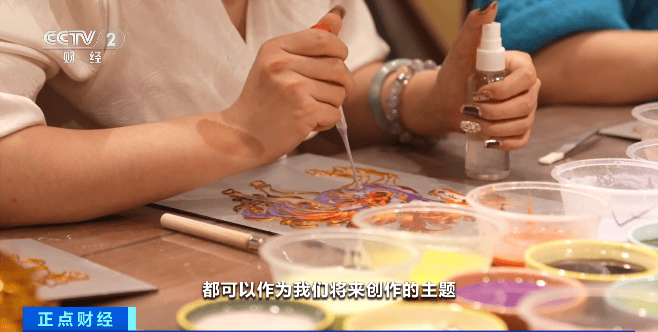
(央视财经《正点财经》)随着春节日益临近,在山西运城,当地的非遗传承人用指尖技艺,创作出各 式各样以马为主题的作品。 在山西省运城市盐湖区掐丝珐琅釉画传承示范基地里,山西省级非物质文化遗产传承人梁文平与学员们 正忙碌赶制着春节订单,铜丝与釉料在他们手中被赋予新的生命。 编辑:令文芳 同样充满"马"元素的创作,在山西省运城市非遗剪纸的传习基地里同步上演。红纸铺案,刀剪轻舞,纸 屑如雪纷落,一幅幅线条灵动、栩栩如生的骏马窗花渐显形貌。非遗剪纸传承人今年以"马上见喜""马 上送福"等为主题,创作了一系列融合传统技艺与现代审美的剪纸作品,订单也随之纷至沓来。 在传承中创新,在创新中发展,是这两项非遗技艺共同的道路。非遗传承人不仅改良工艺,还推行"非 遗工坊+农户"模式,将设计分解为零部件,由周边村民参与制作,带动闲散劳动力就业增收。 转载请注明央视财经 ...

一针一线,拼出新彩
Xin Lang Cai Jing· 2026-01-05 22:49
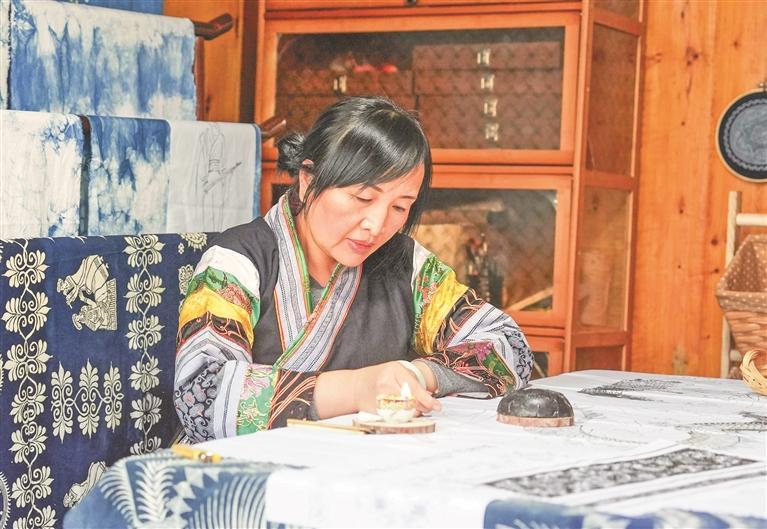
Group 1 - The core focus of the article is on the innovative efforts of a company in the traditional craft of wax dyeing, particularly in adapting the technique for silk fabric, which has led to significant growth in sales and training initiatives [2][3] - In 2025, the company achieved nearly a 20% increase in sales, developing over 10 cultural and creative products, including zodiac-themed brooches and wax-dyed notebooks [2] - The company has successfully trained over 300 women in various villages, promoting the skills of traditional embroidery and wax dyeing [2] Group 2 - The company actively engages with educational institutions, sharing the stories and techniques of Miao embroidery and wax dyeing with over a thousand students [3] - The aim is to inspire the younger generation to appreciate and carry forward traditional crafts, positioning them as fashionable and relevant in the modern world [3] - Looking ahead to 2026, the company plans to collaborate with more organizations to train additional women, further expanding the reach and impact of their traditional crafts [3]
多维展示非遗传承新成果 2026年湖南非遗迎新嘉年华启动
Xin Lang Cai Jing· 2026-01-02 05:04
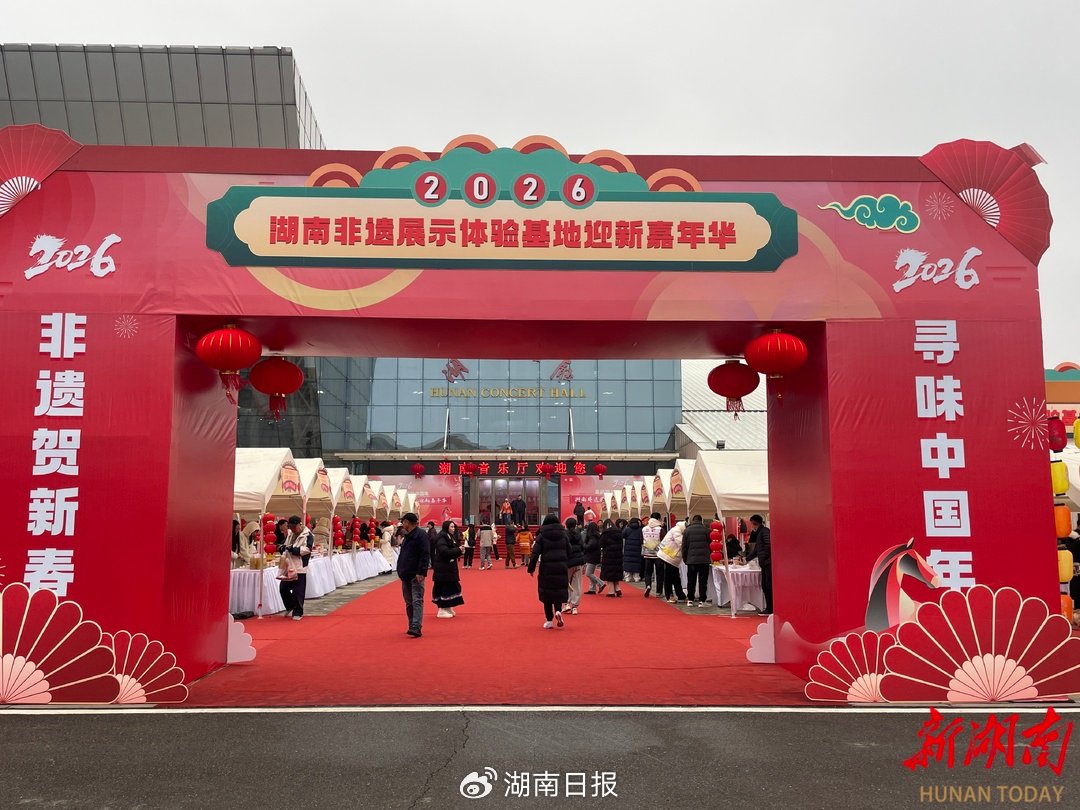
Core Viewpoint - The "Non-Heritage New Year Celebration: Exploring the Taste of Chinese New Year" event has been officially launched in Hunan Province, showcasing the achievements in integrating intangible cultural heritage (ICH) into modern life and promoting its transmission and development [1] Group 1 - The event features nearly a hundred ICH projects from across the province, with activities including performances, markets, experiential learning, and themed discussions, allowing audiences to engage with Hunan's rich heritage in an interactive manner [2][3] - The event includes traditional performances such as lion dances, folk music, and flower drum opera, along with activities like treasure hunts and hands-on experiences, creating a festive atmosphere [3] Group 2 - Over the past year, the Hunan Cultural Center has focused on creating a comprehensive platform for ICH that includes transmission, experience, education, communication, and marketing, significantly enhancing its role in promoting ICH [5] - The base was open for 314 days, serving over 100,000 people, and hosted more than 520 brand activities, utilizing live streaming and digital exhibitions to expand its outreach and improve the consumption conversion rate of ICH products [5] - Future plans include deepening the integration of ICH with tourism, technology, and education, aiming to establish the base as a model for ICH display, communication, and innovative use in the province [5]
传承匠心 兴业富民
Xin Lang Cai Jing· 2026-01-01 22:55
Core Insights - The articles highlight the transformation of traditional crafts in Guizhou, focusing on the efforts of local artisans to innovate and promote their heritage through modern business practices and branding [1][2][3] Group 1: Dragon Luying's Initiatives - Dragon Luying, a national-level rural craftsman, aims to promote Miao embroidery globally, with her company achieving over 30 million yuan in revenue by 2025 [1] - She has developed a business model that integrates training, production, and sales, training over 5,800 individuals and establishing multiple training bases and production points [1] Group 2: Chen Xingxing's Innovations - Chen Xingxing, a sixth-generation heir of the traditional gray tofu-making technique, has significantly increased production efficiency, raising daily output from 200 to 2,000 jin [2] - She has created the "Buyi Xing" gray tofu brand, utilizing both online and offline sales strategies to enhance market reach and consumer engagement [3] Group 3: Government Support and Impact - The Guizhou government has implemented policies to support rural craftsman development, resulting in the recognition of 6,185 rural craftsmen and the establishment of 890 enterprises and studios [3] - The initiative has created job opportunities for 130,000 individuals and recognized 695 provincial-level rural craftsman masters, positioning Guizhou as a leader in rural craftsmanship [3]
云南瓦猫 “跃入”生活
Ren Min Ri Bao Hai Wai Ban· 2025-12-21 22:41
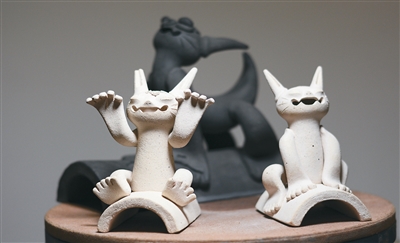
Core Viewpoint - The article highlights the cultural significance and contemporary evolution of the traditional Yunnan "瓦猫" (tile cat), which serves as a guardian symbol in local architecture and has become a popular cultural and creative product in recent years [8][9][10]. Group 1: Cultural Significance - "瓦猫" is a unique decorative element in Yunnan's traditional residences, modeled after tigers, symbolizing protection and good fortune [8][9]. - The practice of placing "瓦猫" on rooftops is a rural custom in Yunnan, with variations in design reflecting local artistic styles and materials [9][10]. - The "瓦猫" has been recognized as a provincial intangible cultural heritage, with over 20 representative inheritors across the province [10]. Group 2: Contemporary Development - Recent innovations in "瓦猫" design have led to the creation of various cultural and creative products, making them popular souvenirs and gifts [8][12]. - The demand for "瓦猫" products has surged, with sales increasing from over 1,000 items in 2023 to more than 20,000 in 2024, and the variety of products expanding from 20 to over 160 [15]. - The integration of "瓦猫" into educational programs has fostered creativity among students, allowing them to engage with this traditional craft [16]. Group 3: Artistic Innovation - Artists like Zhang Hang and Su Longxiang are modernizing "瓦猫" through innovative designs and techniques, blending traditional craftsmanship with contemporary aesthetics [11][12][13]. - The artistic exploration of "瓦猫" includes various forms and styles, with each piece reflecting unique characteristics and cultural narratives [10][12]. - The transformation of "瓦猫" into a cultural IP aims to enhance its market value and promote its heritage [13].
友成基金会“香橙妈妈守艺计划”非遗焕新创变营圆满举行
Xin Lang Cai Jing· 2025-12-18 09:43
Core Insights - The "Orange Mom Craft Heritage Renewal Program" launched by the Youcheng Foundation aims to transform traditional intangible cultural heritage (ICH) crafts into viable commercial projects, bridging the gap between tradition and market demand [1][29] - The program emphasizes the empowerment of female inheritors, showcasing their skills in a modern context and highlighting the commercial potential of ICH [1][29] Group 1: Event Overview - The program commenced on December 10, 2025, in Chengdu, gathering 18 ICH beneficiaries from 12 provinces and cities across 18 districts and counties [1] - Traditional crafts such as carving, embroidery, paper-cutting, wax dyeing, fish lanterns, and ancient pottery are being revitalized as tangible commercial products [1][29] Group 2: Innovative Techniques and Products - Various ICH inheritors showcased their unique skills, such as Guo Shuang's birch bark carving that integrates the hunting culture of the Ewenki people, and the "Earth Mongoose" series that combines Tibetan traditional patterns with modern design, achieving over 5,000 sales [2][31] - The integration of AI and digital technology is being explored, with projects like a digital embroidery museum and interactive smart weaving toys, enhancing the visibility and appeal of traditional crafts [4][33] Group 3: Collaborative Design Efforts - A five-day collaborative design workshop involved designers and artisans working together to create new products that merge traditional techniques with contemporary aesthetics [5][31] - Designers like Xue Ying are applying systematic business logic to help artisans refine their product features and enhance marketability [7][35] Group 4: Expert Feedback and Market Engagement - The program included expert evaluations from notable figures in design and cultural studies, emphasizing the need for a balance between preserving tradition and embracing modern innovation [25][53] - Over 50 brands and media representatives attended the event, with several brands expressing interest in collaboration to further develop and market the innovative products created during the program [27][55] Group 5: Cultural Significance and Future Directions - The initiative underscores the importance of human elements in ICH, aiming to empower artisans and connect past traditions with future markets [29][57] - The program seeks to establish a sustainable model for ICH by fostering a symbiotic relationship between artisans, designers, and market demands, ensuring the longevity and relevance of traditional crafts in contemporary society [29][57]

上榜!新会一陈皮主题博物馆入选2024“非遗融入现代生活”典型创新实践名单
Nan Fang Nong Cun Bao· 2025-11-27 10:04
Core Viewpoint - The Lihong Xinhui Chenpi Cultural Museum has been selected for the 2024 "Intangible Cultural Heritage Integrated into Modern Life" typical innovation practice list, recognizing its efforts in integrating traditional culture with contemporary life [1][6][21]. Group 1: Selection and Recognition - The selection process for the 2024 list involved collecting 716 projects from 31 provinces, autonomous regions, and municipalities across the country, ultimately selecting 51 typical practices [6][7]. - The announcement of the selected projects took place during the "2025 Intangible Cultural Heritage Brand Promotion Week" held in Dali, Yunnan Province [3][4]. Group 2: Museum Overview - The Lihong Xinhui Chenpi Cultural Museum is located in the Lihong Modern Agricultural Industrial Park in Xinhui District, Jiangmen City, and focuses on the theme "The Past, Present, and Future of a Piece of Chenpi" [9][10][16]. - The museum covers an area of approximately 1,000 square meters and utilizes multimedia technology to vividly showcase the historical culture and the "medicinal and dietary" value of Xinhui Chenpi [11][12]. Group 3: Cultural Integration and Activities - The museum aims to create a comprehensive platform that integrates cultural display, educational research, tourism experience, and industrial promotion, serving as a model for deep integration of agriculture, culture, and tourism [17][19]. - It conducts hands-on workshops such as tea brewing and Chenpi tea production, attracting over 30,000 participants annually, thereby enhancing public recognition and awareness of traditional culture [18][19]. Group 4: Impact and Future Directions - The recognition of the museum's efforts is seen as a validation of Xinhui District's work in deeply integrating Chenpi culture with modern life [20][21]. - This practice exemplifies the district's exploration of "living" heritage pathways, transitioning from static protection to dynamic transmission and innovative development, providing valuable experience for building regional public brands [22].

金融如何助力 “非遗”传承与创新
Jin Rong Shi Bao· 2025-11-27 05:03
Core Insights - The development of intangible cultural heritage (ICH) in China emphasizes the balance between inheritance and innovation, particularly as ICH enters commercial fields, showcasing its cultural depth and appeal through collaborations with luxury brands [2][7] - Financial support is crucial for the productization, talent cultivation, and market promotion of ICH, enabling its effective release of cultural influence [2][3][6] Group 1: Current Status of ICH - As of December 2023, China has recognized over 100,000 representative projects of ICH across various levels, leading the world with 44 entries in the UNESCO ICH list, which totals 788 items from 150 countries [1] - The transition of ICH from small workshop operations to industrialization is exemplified by financial institutions supporting traditional crafts with modern technology [3] Group 2: Financial Support Mechanisms - Financial institutions are actively involved in the productization of ICH, as seen in the case of the Nanning branch of Industrial Bank linking traditional techniques to high-tech enterprises, resulting in over 40 patents and a transformation towards the health industry [3] - Agricultural banks in regions like Fujian and Chongqing are providing targeted financial support to local ICH practitioners, ensuring the sustainability and development of traditional arts [4][5] Group 3: Market Expansion and Promotion - Financial institutions are leveraging online and offline channels to broaden the sales avenues for ICH products, including the creation of online marketplaces and culturally themed banking services [6] - The international recognition of Chinese ICH is growing, with brands integrating traditional crafts into their offerings, indicating a significant opportunity for financial empowerment in this sector [7]
迈向“十五五”的文化图景 | 一起绣出更美好的生活
Ren Min Ri Bao· 2025-10-31 00:11
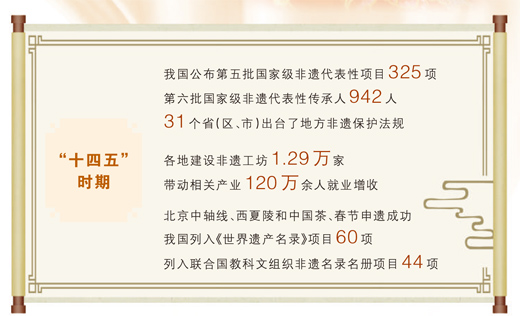
Core Viewpoint - The article emphasizes the importance of integrating traditional cultural heritage, specifically the Jin embroidery from Shanxi, into modern life to ensure its preservation and development [3][4][6]. Group 1: Cultural Heritage and Economic Development - The Jin embroidery workshop has trained over 3,000 women, with more than 2,000 becoming signed family embroiderers, showcasing the impact of government support on skill development [3][4]. - The annual sales of the Jin embroidery workshop have increased from several hundred thousand to several million yuan, indicating a significant growth in the industry [4][5]. - The establishment of a 1,000-square-meter training base has enhanced the workshop's visibility and contributed to rural tourism development [5]. Group 2: Policy and Institutional Support - During the "14th Five-Year Plan" period, the mechanism for protecting intangible cultural heritage (ICH) in China has become more refined, with over 31 provinces implementing local ICH protection regulations [6]. - More than 100 universities have established ICH protection undergraduate programs, and over 200 universities are involved in training programs for ICH inheritors, indicating a growing institutional commitment to ICH [6]. Group 3: Integration of ICH into Modern Life - The integration of ICH into daily life has been highlighted through various cultural activities, such as traditional festivals and health practices, making ICH more accessible and relatable to the public [6]. - The establishment of 12,900 ICH workshops has created job opportunities for over 1.2 million people, demonstrating the economic potential of ICH [6].
一起绣出更美好的生活(迈向“十五五”的文化图景)
Ren Min Ri Bao· 2025-10-30 22:37
Core Viewpoint - The article emphasizes the importance of integrating intangible cultural heritage (ICH) into modern life to ensure its preservation and development, highlighting the success of the Jin Embroidery workshop in Shanxi province as a case study of revitalization through training and market expansion [3][4][6]. Group 1: Cultural Heritage and Economic Impact - The Jin Embroidery workshop has trained over 3,000 women, with more than 2,000 becoming signed family embroiderers, showcasing the workshop's role in job creation and economic upliftment in a previously impoverished area [3][4]. - The annual sales of the Jin Embroidery workshop have increased from several hundred thousand to several million yuan, indicating a significant growth in the local economy driven by cultural heritage [4][5]. Group 2: Training and Education Initiatives - The workshop has established seven training stations and partnered with Taiyuan University of Technology to create a practical training base, enhancing educational opportunities for local residents [3][4]. - Regular training sessions are conducted for disabled individuals, helping them gain employment and improve their quality of life, demonstrating the social impact of the workshop [4][5]. Group 3: Integration of ICH into Modern Products - The Jin Embroidery workshop has developed modern products featuring traditional designs, such as bags and home decor, to attract a broader customer base and maintain cultural relevance [4][5]. - Participation in various exhibitions has been crucial for market access, with about half of the orders being secured through these events, illustrating the importance of visibility in the market [4][5]. Group 4: Policy Support and Future Aspirations - The workshop has benefited from government support and policies aimed at promoting cultural heritage, which has facilitated its growth and sustainability [3][6]. - Looking ahead, the workshop aims to expand its reach and popularity, aspiring to make Jin Embroidery a recognized cultural brand [5][6].