
AI for Science

Search documents
速递 | 谷歌AlphaGenome登Nature!AI在10年内攻克所有疾病
未可知人工智能研究院· 2026-01-29 03:21
Core Insights - The article discusses the groundbreaking advancements of AlphaGenome, a new AI model by Google DeepMind, which aims to decode the 98% of the human genome that does not code for proteins, previously referred to as "junk DNA" [1][4][22]. Group 1: AlphaGenome's Purpose and Innovations - AlphaGenome is designed to decipher the regulatory mechanisms of non-coding DNA, which plays a crucial role in gene expression and is linked to various diseases [5][6]. - The model utilizes three key innovations: ultra-long context, single-base precision, and multi-modal predictions, allowing it to analyze vast sequences of DNA and predict multiple biological features simultaneously [6][10]. - A specific case study highlighted the model's ability to identify a mutation in a non-coding region that led to a form of leukemia, showcasing its precision in detecting subtle genetic changes [7]. Group 2: Evolution of the Alpha Family - The Alpha family of AI models has evolved from AlphaGo, which focused on game strategy, to AlphaFold, which predicts protein structures, and now to AlphaGenome, which aims to understand the dynamic regulatory processes of life [9][10]. - This progression signifies a shift from static predictions to dynamic understanding of biological systems, moving closer to the core of life processes [10][22]. Group 3: Implications for Drug Development and Healthcare - AlphaGenome is set to revolutionize drug development by enabling faster identification of disease-causing mutations and designing targeted therapies, potentially reducing the development timeline from ten years to just two or three [13]. - The model also paves the way for personalized medicine by analyzing individual genetic variations, allowing for tailored drug dosages and treatment plans [14][15]. - The advancements in synthetic biology facilitated by AlphaGenome will enable precise genetic modifications, significantly enhancing the efficiency of biotechnological applications [16]. Group 4: Limitations and Ethical Considerations - Despite its capabilities, AlphaGenome is described as a "black box" model, meaning it can predict outcomes but lacks the ability to explain the underlying biological mechanisms [18]. - There are concerns regarding the model's training data, which predominantly represents European populations, potentially leading to disparities in healthcare outcomes for other ethnic groups [18]. - Ethical dilemmas arise from the potential for gene editing technologies to create "designer babies," raising questions about regulation and societal implications [18]. Group 5: Recommendations for Stakeholders - For students and professionals in the field, there is a growing demand for expertise in bioinformatics and computational biology, emphasizing the need for interdisciplinary knowledge [20]. - Healthcare professionals are encouraged to familiarize themselves with AI tools, as those who do not adapt may be left behind in the evolving landscape of medicine [20]. - Investors and entrepreneurs should focus on niche areas such as non-coding variant detection services and AI-driven personalized medicine, as these sectors are expected to see significant growth and investment opportunities [20][21].


光明今年将全面建成鹏城云脑Ⅲ
Nan Fang Du Shi Bao· 2026-01-28 23:12
Core Viewpoint - The Guangming District is accelerating the construction of a world-class science city, focusing on integrating science and industry as a key driver for development, with significant emphasis on artificial intelligence (AI) and technological innovation [3][4]. Group 1: Development Plans and Infrastructure - Guangming aims to establish a "one city, three districts" framework, enhancing its role as a comprehensive national science center and a hub for technological innovation in the Greater Bay Area [3]. - The district plans to enhance its scientific competitiveness by prioritizing high-level operation of facilities, technological breakthroughs, and the transformation of research outcomes [3][4]. - Key projects include the Shenzhen Measurement Innovation Institute, Shenzhen Medical Academy, and the International Technology Information Center, which are set to boost the operational efficiency of major scientific infrastructures [3][4]. Group 2: AI Integration in Research - The development of AI is positioned as a foundational element for scientific research, with the establishment of two major computing platforms: Pengcheng Cloud Brain III and the National Supercomputing Center Shenzhen [4]. - The report emphasizes the exploration of AI for Science, aiming to significantly enhance research efficiency and facilitate breakthroughs in fundamental research and original innovation [4][5]. Group 3: Industrial Development and AI Applications - Guangming is focusing on the integration of AI across various sectors, including manufacturing, to support the transformation and upgrading of traditional industries and to foster new strategic industries [6][8]. - The district plans to develop industry-specific and general-purpose industrial AI systems, promoting smart upgrades in industrial equipment and creating new growth avenues for enterprises [6][7]. Group 4: Urban Management and AI Implementation - The district is set to implement an "All In AI" strategy to enhance urban governance through AI, aiming to improve management capabilities across various sectors such as government, healthcare, education, and transportation [8]. - Guangming will leverage opportunities in open-source technologies to build a robust digital infrastructure, creating a city-wide AI ecosystem [8]. Group 5: Emerging Industries and Economic Growth - The district is committed to nurturing emerging industries, particularly in biomanufacturing and medical technology, with plans to establish innovation zones and support unicorn development in niche sectors [9][10]. - Guangming aims to optimize its industrial structure by focusing on high-performance materials, medical devices, and intelligent sensors, ensuring the growth of key industries [9][10].
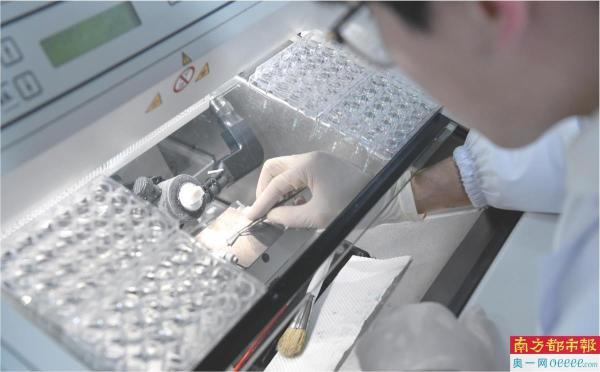
百度智能云发布螺旋桨小蛋白设计平台2.0
Sou Hu Cai Jing· 2026-01-28 19:20
Core Insights - Baidu Intelligent Cloud has launched its AI-native biological computing platform, "Propeller Protein Design 2.0," marking a significant milestone in the AI for Science sector, particularly in drug discovery [1] Group 1 - The event, "Cloud Intelligence Sharing Conference - Life Sciences," was held in Beijing, co-hosted by Baidu Intelligent Cloud, Zhongguancun Life Science Park, and Darts Innovation Center [1] - The launch of the new platform represents a major shift from "prediction" to "creation" in the drug discovery process [1]


腾讯研究院AI速递 20260129
腾讯研究院· 2026-01-28 16:03
Group 1: OpenAI Developments - OpenAI launched Prism, a cloud-based LaTeX workspace powered by GPT-5.2, integrating drafting, editing, collaboration, and publishing, with capabilities to read the overall structure and context of papers [1] - Prism offers features like intelligent literature search, sketch-to-LaTeX conversion, and voice editing, allowing unlimited collaborators and is free for all ChatGPT users [1] - OpenAI anticipates that AI will transform software development by 2025 and the scientific field by 2026, positioning Prism as a pioneer in accelerating scientific discovery [1] Group 2: Google AI Plus Initiative - Google officially launched the AI Plus plan globally, priced at $7.99 per month in the U.S., with a 50% discount for the first two months, targeting budget-conscious users [2] - The plan includes access to Gemini 3 Pro, Flow video creation, NotebookLM research assistance, and 200GB of cloud storage, supporting up to six family members [2] - Existing Google One Premium 2TB users will automatically receive all AI Plus benefits, seen as a direct response to OpenAI's ChatGPT Go [2] Group 3: Clawdbot Rebranding - The open-source project Clawdbot was forced to rebrand as Moltbot due to trademark infringement claims from Anthropic, with developers humorously noting "same lobster spirit, new shell" [3] - During the rebranding, a GitHub issue led to the old ID being seized by cryptocurrency scammers for blockchain fraud, prompting the author to clarify that no tokens were ever issued [3] - The author also advised that "most non-technical users should not install this," as the project is still in its early stages and poses security risks [3] Group 4: Tencent's Mixed Yuan Image 3.0 - Tencent's Mixed Yuan Image 3.0, a state-of-the-art image generation model, has been open-sourced, based on an 80 billion parameter mixed expert architecture, ranking seventh globally on the LMArena image editing leaderboard [4] - The model employs a "think before edit" workflow, supporting diverse editing capabilities such as addition, deletion, style transformation, and old photo restoration [4] - The training process involved constructing a dataset of millions of image generation tasks covering over 80 tasks, utilizing a proprietary MixGRPO algorithm to align with user preferences [4] Group 5: Kunlun Tiangong's Mureka V8 - Kunlun Tiangong released the Mureka V8 music model, leveraging MusiCoT technology to enhance musicality, arrangement completeness, and vocal expression, transitioning from "generable" to "publishable" [5][6] - The V8 model surpassed Suno in subjective scoring for Chinese song generation and has formed a strategic partnership with Taihe Music Group, integrating AI music into mainstream production and distribution [6] - The platform has served over 8,000 global clients and plans to iterate 2-3 versions annually, aiming to become the leading platform in the global AI music sector [6] Group 6: Vidu's Q2 Reference Model - Vidu launched the Q2 Reference Pro model, featuring a unique "everything can be referenced" capability, supporting six types of references including effects, expressions, textures, actions, characters, and scenes [7] - The model enables fine-tuned video editing, allowing users to add, delete, modify, and replace any elements, with one-click switching between real and animated styles [7] - This new functionality allows users to create special effects films without needing to learn professional tools like C4D or AE, accelerating the production of AI-driven short dramas [7] Group 7: Ant Group's LingBot-VLA - Ant Group released the LingBot-VLA, an embodied intelligent base model trained on approximately 20,000 hours of real data covering nine dual-arm robot configurations, outperforming Pi0.5 in GM-100 benchmark tests [8] - The model utilizes a Mixture-of-Transformers architecture, integrating visual distillation to achieve strong generalization across different entities and scenes [8] - The research revealed the scaling law of the VLA model, showing continuous performance improvement as data expanded from 3,000 to 20,000 hours without saturation [8] Group 8: Establishment of the Interstellar Navigation Academy - The Interstellar Navigation Academy was officially established at the Chinese Academy of Sciences, with Academician Zhu Junqiang as the director, aiming to build a curriculum system covering 14 primary disciplines [9] - The academy will introduce 22 core courses, focusing on cutting-edge topics such as interstellar dynamics and governance, along with six specialized teaching practice platforms [9] - This initiative is positioned as a key measure to seize technological high ground, providing talent support for national deep space exploration and space science research [9] Group 9: OpenAI's CEO Acknowledgment - OpenAI's CEO acknowledged during a developer meeting that GPT-5.2 sacrificed writing capabilities for improved reasoning and coding, stating "we messed up," with plans to address this in future versions [10] - The CEO predicted that by the end of 2027, the cost of GPT-5.2 level intelligence will decrease by at least 100 times, leading to personalized app versions for everyone [10] - He emphasized that the most important skills in the AI era will be high adaptability and the ability to generate ideas, noting that while the definition of engineers may change, demand will remain [10] Group 10: AI for Science Competition - OpenAI's Vice President Kevin Weil stated that GPT-5's reasoning capabilities have reached the forefront of human performance, scoring 92% on the GPQA doctoral-level test, significantly surpassing GPT-4's 39% [11] - Weil believes the greatest value of large language models lies in discovering interdisciplinary connections and forgotten research, exploring ways to instill "cognitive humility" and self-fact-checking abilities in models [11] - He predicts that 2026 will be a pivotal year for AI-enabled research, warning that researchers who do not deeply utilize AI tools will miss opportunities to enhance efficiency [11]

64笔超1亿美元融资,从这16家“新晋AI顶流”,看懂硅谷的新逻辑
3 6 Ke· 2026-01-28 12:52
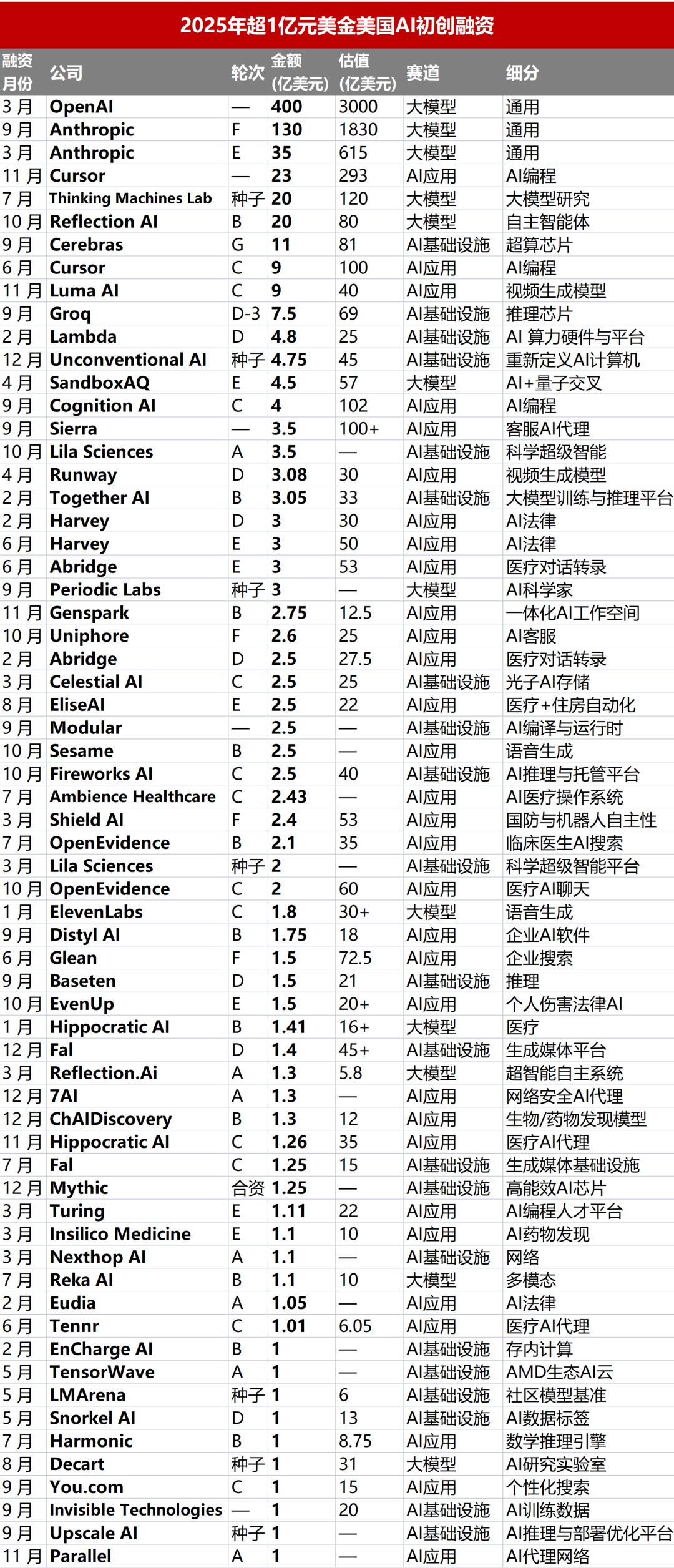
Core Insights - In 2025, the focus of AI venture capital in the U.S. shifted from "spreading wide" to "placing big bets," with 64 deals exceeding $100 million, including 8 companies receiving multiple large investments, leading to rising valuations [1][4] Group 1: Investment Trends - The trend of headlining investments is evident, with 35 transactions exceeding $200 million covering 29 companies in 2025 [3] - Investment is primarily directed towards two main lines: restructuring the physical foundations of AI and targeting core business flows in high-value industries [4][54] - AI infrastructure investments accounted for 7 out of 18 major funding rounds, with significant amounts raised by companies like Cerebras and Unconventional AI [5] Group 2: Notable Companies and Their Innovations - Unconventional AI raised $475 million in seed funding, focusing on bio-inspired computing, aiming for a theoretical efficiency improvement of 1000 times over traditional GPUs [6][7] - Cerebras Systems secured $1.1 billion in G round funding, specializing in wafer-scale AI computing, with a product designed for accelerated training and low-latency inference [8][10] - Celestial AI completed a $250 million C round, developing photonic AI accelerators that significantly enhance efficiency compared to traditional GPUs [12] - Modular raised $250 million, focusing on unified AI computing infrastructure with a product that optimizes across various hardware [13][15] - Fireworks AI, an open-source large model cloud platform, raised $250 million, providing extensive AI infrastructure services [17][18] Group 3: AI Applications in Vertical Industries - Cognition AI raised $400 million, developing an AI engineer capable of independent software development, targeting tech companies and financial institutions [20][21] - Sierra, an AI-driven conversational platform, raised $350 million, focusing on automating customer interactions across various sectors [23][25] - Ambience Healthcare, specializing in clinical documentation automation, raised $243 million, aiming to reduce documentation time for healthcare providers [27][28] - OpenEvidence, an AI clinical decision support company, raised $200 million, providing real-time answers to clinical questions based on authoritative medical literature [30][32] - EliseAI, an automation platform for real estate and healthcare, raised $250 million, focusing on operational efficiencies in both sectors [35][36] Group 4: AI for Science - Lila Sciences, an AI-driven scientific platform, raised $350 million, integrating generative AI and automated laboratories for research [48][49] - Periodic Labs, focusing on materials science, raised $300 million, developing a triad science stack for accelerating material discovery [50] - SandboxAQ, a quantum and AI technology company, raised $450 million, providing solutions for post-quantum cryptography and AI-driven quantum simulations [51][53]
划重点!深圳光明区全面拥抱人工智能
Nan Fang Du Shi Bao· 2026-01-28 03:45
Core Insights - The article emphasizes the significant role of artificial intelligence (AI) in transforming various industries and enhancing competitiveness, particularly in the Guangming District of Shenzhen, which aims to fully embrace AI as a key focus for its development during the 14th Five-Year Plan period [1][3]. Group 1: AI in Science and Research - Guangming is set to explore the "AI for Science" paradigm, aiming to integrate data, algorithms, and computing power to enhance research efficiency and drive breakthroughs in fundamental research and original innovation [3][4]. - The district is home to major scientific infrastructure, including the Pengcheng Cloud Brain III and the National Supercomputing Center in Shenzhen, which will support AI applications in scientific research [3][4]. Group 2: AI in Manufacturing - Guangming has identified AI as a strategic priority for its advanced manufacturing sector, with plans to strengthen AI applications across the entire manufacturing process [6][5]. - The district will support the development of industry-specific and general-purpose industrial AI models, promoting smart upgrades in industrial equipment and fostering new growth avenues for enterprises [6][5]. Group 3: Urban Management and Governance - The report outlines the implementation of an "All In AI" strategy to enhance urban management capabilities through AI, aiming for a more intelligent and professional governance approach [7]. - Guangming plans to create a comprehensive AI city, integrating AI into various sectors such as government, healthcare, education, and transportation, while also developing a robust digital infrastructure [7].

迈好第一步 展现新气象
Liao Ning Ri Bao· 2026-01-28 01:07
Group 1: Investment and Economic Development - The provincial government aims to implement a comprehensive investment strategy, focusing on attracting projects and ensuring their successful execution through a structured investment work system [2][3] - Emphasis will be placed on stabilizing high-tech manufacturing investments and promoting advanced manufacturing sectors, while also addressing social needs through public welfare projects [2][3] - The government plans to enhance private investment participation in major projects, particularly in transportation, energy, and water resources [3] Group 2: Education and Social Welfare - The provincial education system will focus on improving the quality and accessibility of education, with significant investments planned for infrastructure and resources in schools [4][5] - Initiatives will include expanding access to quality early childhood education and enhancing facilities in primary and secondary schools [4] - The government will also prioritize health and welfare services for the elderly and children, including the establishment of a comprehensive support network for elderly care [11][12] Group 3: Technology and Industry - The provincial government aims to create a nationally influential regional technology innovation center, focusing on enhancing innovation capabilities and supporting enterprise development [6][7] - Key initiatives will include building a service system for technology transfer and fostering collaboration between enterprises and research institutions [8] - The government will also promote the development of a unique industrial system characterized by strategic emerging industries and traditional industry upgrades [9][10] Group 4: Transportation and Infrastructure - The transportation sector will focus on building a comprehensive transportation network, with significant projects planned for highways and modern port upgrades [15][16] - The government will implement measures to enhance logistics efficiency and reduce costs, promoting multi-modal transport solutions [15][16] Group 5: Agriculture and Rural Development - The agricultural sector will prioritize modernizing agricultural practices and enhancing food security through the construction of high-standard farmland [17][18] - Initiatives will include promoting rural infrastructure development and improving public services in rural areas [18] Group 6: Trade and Foreign Investment - The provincial government will enhance its efforts in foreign trade and investment, focusing on building a robust network for international trade and attracting foreign enterprises [19][20] - Strategies will include promoting cross-border e-commerce and integrating domestic and international trade [19][20] Group 7: Cultural and Tourism Development - The government aims to enhance cultural influence and promote the integration of culture and tourism, with initiatives to support local cultural heritage and tourism projects [21][22] - Plans include developing new tourism products and enhancing public cultural services to stimulate economic growth [22] Group 8: Health Services - The health sector will focus on improving access to medical services and addressing public health concerns, with initiatives to enhance hospital capabilities and community health services [23][24] - The government will also prioritize health services for vulnerable populations, including the elderly and children [24] Group 9: Sports Development - The province will launch the "Northeast Super" football league to promote sports and cultural integration, aiming to create a platform for local talent [25][26] - The initiative will focus on community engagement and enhancing the overall experience for participants and spectators [26]
厅局长访谈 | 金莉:“十个突破”推动科技创新与产业创新深度融合
Xin Lang Cai Jing· 2026-01-27 16:55
Group 1 - The core objective is to create a nationally influential regional technology innovation center, focusing on five key areas: capability building, technology supply, enterprise innovation, results transformation, and institutional mechanisms [2] - The plan includes a systematic approach to achieve breakthroughs in ten areas by 2026, such as building a results transformation service system and enhancing collaborative efforts between provincial and municipal levels [3] - The initiative aims to support and lead industrial development by aligning with national strategies and forming a national key laboratory innovation alliance [3] Group 2 - The focus on new fields includes accelerating advancements in AI for Science and proactively engaging in cutting-edge technologies like atomic-level manufacturing and quantum technology [3] - The reform efforts will include the implementation of regulations to promote innovation development in material laboratories and the empowerment of enterprises through targeted actions [3] - Financial support will be expanded through technology finance risk compensation trials and exploring new support methods [3]

【财闻联播】易方达黄金主题LOF:暂停申购!*ST波导:公司股票可能被终止上市
券商中国· 2026-01-27 11:15
Macro Dynamics - The People's Bank of China reported that by the end of Q4 2025, the balance of real estate development loans will decrease by 3% year-on-year, amounting to 13.16 trillion yuan, with an annual reduction of 357.5 billion yuan [2] - The total balance of RMB real estate loans will be 51.95 trillion yuan, down 1.6% year-on-year, with an annual decrease of 963.6 billion yuan [2] Market Regulation - The State Administration for Market Regulation announced ten major cases of "involution" competition for 2025, emphasizing a strict enforcement approach to combat infringement, quality violations, and monopolistic agreements [3] Real Estate Market - In major cities like Shanghai, the number of second-hand housing listings is declining as transaction volumes recover, with listings returning to levels seen in February of the previous year [5] Financial Institutions - China Merchants Securities reported a net profit of 12.3 billion yuan for 2025, an increase of 18.43% year-on-year, with total revenue of 24.9 billion yuan, up 19.19% [8] - Dongfang Securities expects a net profit of 5.62 billion yuan for 2025, a year-on-year increase of 67.8%, with projected revenue of 15.34 billion yuan [9] Market Data - The ChiNext Index rose by 0.71%, with the semiconductor sector showing strong performance, while the overall market saw over 1,900 stocks increase in value [11] - The total margin financing balance across both exchanges increased by 19.55 billion yuan, reaching 26.99 trillion yuan [12] Company Dynamics - Mu Xi Co. launched the X series scientific intelligent GPU, aimed at enhancing the AI for Science ecosystem [14] - *ST Boda announced a projected net profit of 6 to 8 million yuan for 2025, with a significant expected loss in net profit after non-recurring items [15] - Zhongjin Gold expects a net profit of 4.8 to 5.4 billion yuan for 2025, a year-on-year increase of 41.76% to 59.48%, driven by improved profitability in gold mining [16] - Ideal Auto plans to close a small number of inefficient retail stores as part of normal operational adjustments [17] - Guandun Quantum anticipates a net profit of around 5 million yuan for 2025, marking a turnaround from losses [18] - Zhenlei Technology expects a net profit of 123 to 145 million yuan for 2025, a significant increase of 529.64% to 642.26% year-on-year [19]







博彦科技:探索AI技术在化学等科研领域的应用
Zheng Quan Ri Bao Wang· 2026-01-27 02:57
Core Viewpoint - The company is leveraging AI technology in the field of "AI for Science" to enhance research and development in chemistry, aiming to shorten the development cycle of new chemical products [1] Group 1: Company Initiatives - The company is exploring the application of AI technology in scientific research through a collaborative model of "data + model + scenario" [1] - The research outcomes have already been gradually implemented in projects for certain clients in the chemical industry [1]
