
数字技术

Search documents
研判2025!中国气动工具行业壁垒、发展历程、产业链、市场规模、竞争格局及发展趋势分析:中高端市场仍由国际品牌占据主导地位[图]
Chan Ye Xin Xi Wang· 2025-10-02 05:02
Core Insights - The pneumatic tools market is experiencing a recovery after a decline in 2022, with a projected global market size of $12.463 billion in 2024, reflecting a year-on-year growth of 6.26% [1][13] - The Chinese pneumatic tools market is also expected to grow, with a projected output value of 14.279 billion yuan in 2024, representing a year-on-year increase of 12.04% [1][14] Industry Overview - Pneumatic tools are widely used in various sectors such as automotive, home appliances, construction materials, and furniture decoration due to their high efficiency, portability, safety, and ease of maintenance [1][13] - The industry faced challenges in 2020-2021 due to raw material price fluctuations and supply chain disruptions, which increased demand in the DIY market [1][13] Market Dynamics - The global pneumatic tools market saw a decline in 2022 due to reduced consumer spending in Europe and the US, inventory buildup from previous large-scale purchases, and proactive inventory optimization by distributors [1][13] - As of the second half of 2023, inventory levels have returned to reasonable ranges, signaling the start of a new replenishment cycle [1][13] Competitive Landscape - The global pneumatic tools industry is mature, with established international brands dominating the high-end market, while domestic Chinese companies primarily operate under OEM or ODM models [1][14] - Notable domestic companies include Zhejiang Fengli Intelligent Technology Co., Nanjing Tengya Precision Technology Co., and Zhejiang Rongpeng Pneumatic Tools Co. [1][14] Industry Barriers - The pneumatic tools industry has high technical barriers due to the need for specialized knowledge in product development, mold design, and process improvement, which directly affects product durability and quality [1][7] Development Trends - Future trends indicate that pneumatic tools will integrate digital technologies, including sensors and IoT, for remote monitoring and fault prediction, alongside advancements in automation and precision [1][17]



数字化世博打造城市“创新实验场”|《世博双城记》第5期
第一财经· 2025-09-30 01:30
Core Viewpoint - The 2025 Osaka-Kansai Expo focuses on the theme "Designing Future Society, Letting Life Shine" and emphasizes the integration of technology, sustainable development, and human well-being [1]. Group 1 - The Expo aims to showcase how digital technology is applied in various national pavilions, highlighting its role in creating a more intelligent, inclusive, and sustainable future society [1]. - The program "Expo Dual City" explores the diverse paths, innovative practices, and future visions of urban development from the 2010 Shanghai Expo to the 2025 Osaka Expo [1]. - The initiative seeks to decode the deep connections between Shanghai and the world from a global perspective, while also envisioning the ideal future city through Eastern wisdom [1].

云汉芯城:随着募集资金投资项目实施 公司盈利能力将进一步提升
Quan Jing Wang· 2025-09-29 23:21
Core Viewpoint - Yunhan Chip City successfully held its online roadshow for the initial public offering (IPO) and listing on the ChiNext board, with the stock subscription starting on September 19 [1] Company Overview - Founded in 2008, Yunhan Chip City focuses on the research, production, and procurement of small-batch electronic components in the electronic manufacturing industry [1] - The company operates a self-built B2B online mall, providing efficient and professional one-stop supply chain services for electronic components, extending to product technical solution design, PCBA manufacturing services, and technical support from electronic engineers [1] Future Outlook - The Chief Financial Officer, Zhou Xuefeng, indicated that the company's profitability will improve with the implementation of fundraising investment projects [1] - The company plans to emphasize technological innovation, increase R&D investment, adopt new models and technologies, and expand its customer base to enhance market competitiveness and profitability [1] IPO Details - The IPO price for Yunhan Chip City is set at 27 yuan per share, with the subscription code being 301563 [1]
打通服务消费供需衔接堵点
Jing Ji Ri Bao· 2025-09-29 22:22
Core Viewpoint - The recent issuance of policies by the Ministry of Commerce and other departments aims to address bottlenecks in service consumption, promoting a shift towards service consumption as a dominant form of consumption in China [1] Group 1: Current State of Service Consumption - China's service consumption is characterized by multi-layered and diversified features, with a growing demand for quality in basic services such as education, healthcare, and elderly care [2] - There is a rapid increase in demand for improved services, with cultural, tourism, and sports services becoming key areas for consumption upgrades [2] - Emerging high-end services like premium healthcare and customized tourism are flourishing [2] Group 2: Challenges in Service Consumption - Service consumption faces challenges such as mismatched supply and demand, with a surplus of low-end services and a shortage of high-end services [2] - Quality standards in services are not well established, leading to high decision-making costs for consumers and inhibiting immediate consumption [2] - There is a notable shortfall in services for the elderly and childcare, alongside a lack of professional talent in critical areas like elderly care [2] Group 3: Solutions to Address Bottlenecks - Digital technology can play a crucial role in bridging gaps, with internet platforms efficiently matching supply and demand, and big data providing insights into consumer needs [3] - Standardization in service quality is essential, as services are inherently intangible and heterogeneous, necessitating a robust standard system to ensure quality [3] - Market-oriented reforms in the talent market are vital, focusing on innovative vocational education and the effective use of data as a new production factor [3] Group 4: Policy Recommendations - A differentiated approach is needed for various service categories, ensuring basic public services are equitable, while expanding supply for inclusive services through policy guidance [4] - For high-end personalized services, market vitality should be stimulated through deeper reforms, encouraging innovation and competitive differentiation [4] - Establishing a multi-layered and diversified service supply system is crucial to meet the growing needs of the population for a better quality of life [4]
大家保险集团总经理孙先亮:银行保险构建深层次战略协同 合作潜力不断释放 |银行与保险
清华金融评论· 2025-09-29 11:36
Core Viewpoint - Digital technologies represented by big data and artificial intelligence are profoundly reshaping the financial industry, with data becoming a core driver of high-quality development. The aging population in China is increasing the demand for pension finance and high-quality pension services, prompting banks and insurance institutions to explore new paths in pension services and wealth management through data sharing and ecological collaboration [2]. Group 1: Reasons for Deepening Bank-Insurance Cooperation - The cooperation model between banks and insurance companies is becoming increasingly close, with many large banks establishing their own insurance companies and large insurance firms strategically investing in commercial banks, enhancing cooperation while achieving good returns [4]. - The foundation for cooperation is more solid, as insurance distribution is a crucial part of banks' non-interest income, helping alleviate the pressure from narrowing net interest margins. Insurance products are essential for banks to develop comprehensive financial services and meet customer needs in risk protection and wealth transfer [4]. - The cooperation ecosystem is significantly improving, with the implementation of the "bank-insurance integration" policy accelerating the deep transformation of bank-insurance business. The focus is shifting from fee-driven dependence to a value co-creation model centered on customer service [4]. Group 2: Trends in Bank-Insurance Cooperation - The status of bank-insurance channels will be redefined, with bank-insurance new single premiums accounting for 64% of the industry’s new single premiums in the first half of the year, expected to approach 70% by year-end, establishing a bank-insurance dominant channel structure [6]. - Complex insurance products will occupy a larger share, as the aging population and declining interest rates lead to more conservative risk and investment preferences among bank customers, increasing demand for guaranteed income long-term savings products and protection products related to pensions, health, and accidents [6]. - Ecological services will play a more important role, with the "bank-insurance integration" policy highlighting the importance of additional services. The entity with more service scenarios and better service quality will attract more customer flow and enhance customer loyalty [6]. - Technology will empower the entire operational chain of bank-insurance cooperation, with rapid advancements in big data and artificial intelligence reshaping operational processes and enhancing data connectivity, enabling precise marketing, team management, customer service, and compliance risk control [6].

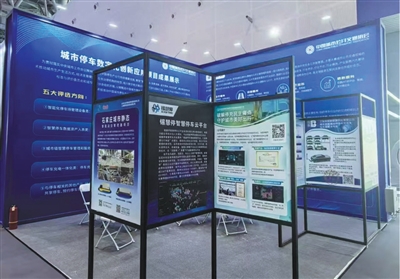
“全市一个停车场”! 杭州智慧停车经验亮相
Hang Zhou Ri Bao· 2025-09-29 02:52
Core Insights - Hangzhou is leveraging digital technology to address parking challenges, significantly reducing exit times from 30 seconds to 2 seconds and saving a total of 3 million hours [3][5] Group 1: Digital Innovation in Parking - The city has implemented a unified parking management system, connecting 6,300 parking facilities and 1.84 million parking spaces, with a "pay after exit" service covering 4,500 facilities and 1.07 million spaces [5][6] - The average turnover rate of social parking spaces has increased by 16%, equivalent to adding 250,000 new parking spaces [5] Group 2: Smart Parking Solutions - Three smart scenarios have been developed: "Smart Governance" for government oversight, "Smart Management" for efficient operations, and "Smart Parking" for user convenience [5] - A four-legged robot is set to be deployed for autonomous road parking inspections, enhancing efficiency and reducing manual labor [6] Group 3: Shared Parking Initiatives - The "Neighbor Parking" platform has integrated over 600 units and 39,000 shared parking spaces, while the "Green Parking" platform focuses on residential community sharing [6] - The city aims to create a comprehensive shared parking network, optimizing the use of idle parking spaces [6]
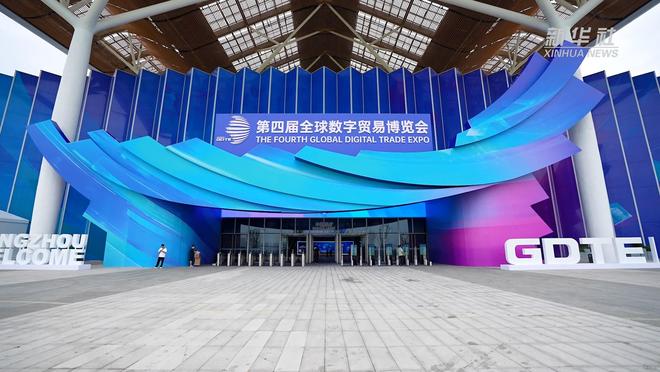
通讯丨数字闪耀数贸会 创新圈粉海外客
Xin Hua She· 2025-09-28 13:53
Group 1 - The fourth Global Digital Trade Expo showcased various Chinese digital technologies and products, attracting significant interest from foreign visitors and businesses [1][2] - Rokid's latest AI+AR glasses allow for real-time information overlay, including features like translation and navigation, which garnered inquiries from international clients [1] - The iMedImage product from Deshi Biotechnology significantly reduces the cost of specialized medical model development by over 90% compared to traditional methods, appealing to foreign medical professionals [2] Group 2 - The AI-driven 3D cloning technology from Second Life Technology attracted attention, with international customers expressing interest in bringing the technology to their countries [3] - The WiseMatch platform by Put Education facilitates efficient job matching through AI interactions, with inquiries from various countries indicating a desire to adopt the platform [3]
科技点亮生活——数贸会上的“未来体验”
Xin Hua She· 2025-09-28 08:48
Core Insights - The Fourth Global Digital Trade Expo is being held from the 25th to the 29th in Hangzhou, Zhejiang [1] - The event showcases how digital technology is transforming life scenarios and presents diverse possibilities empowered by technology [3] Industry Highlights - Innovative applications such as robotic piano performances, intelligent humanoid combat, and AI-based traditional Chinese medicine diagnosis are prominently featured at the expo [4]
中国经济信心说丨这些“黑科技”里,蕴藏着消费升级新密码
Yang Shi Xin Wen Ke Hu Duan· 2025-09-27 07:44
Core Viewpoint - The rapid development of China's digital economy is significantly enhancing digital consumption, making it more accessible to the public, as highlighted by the recent guidance from the Ministry of Commerce and other departments to further improve digital consumption infrastructure and environment [1] Group 1: Digital Consumption Growth - The scale of digital consumption in China is projected to reach 23.8 trillion yuan in 2024, accounting for 44.2% of total household consumption that year, indicating a strong momentum driven by the application of emerging technologies [1] - The evolution of mobile phones from basic communication devices to multifunctional smart terminals has played a crucial role in this transformation, facilitating various daily activities such as shopping, social interaction, and healthcare [1] Group 2: Technological Innovations and New Consumption Models - The emergence of technologies like virtual reality, artificial intelligence, and smart connected vehicles is expected to create new entry points for digital consumption, potentially transforming industries and consumer experiences [2] - Innovations in digital technology have led to the rise of new business models and consumption scenarios, such as the popularity of live-streaming sales and short videos, which have enabled even remote farmers to sell their products globally [2] Group 3: Enhanced Quality of Life - The integration of online and offline services is creating convenient living environments, allowing consumers to shop easily from home and access healthcare services remotely, thus improving overall quality of life [3] - The application of digital technologies in cultural and tourism sectors is revitalizing historical heritage, providing immersive experiences that enhance consumer engagement and satisfaction [2][3]
《越南科技创新法》将于10月1日起生效
Shang Wu Bu Wang Zhan· 2025-09-26 16:20
越南科技部部长阮孟雄表示,该法将越共中央政治局关于推进科技创新和国家数字化转型突破发展 的第57号决议具体化,是一份以知识与创造力建设强盛国家的"宣言"。科技部副部长黎春定认为,该法 充分彰显越南破解长期制约科技创新与数字化转型发展制度瓶颈坚定决心,为支持全面创新、推动科研 与市场深度融合提供了法律框架。在企业发挥核心作用背景下,该法落地后有望涌现更多具有竞争力 的"越南制造"科技产品,带动越南企业更深入融入全球价值链。 "创新"首次正式纳入法律,与"科学"和"技术"并列。如果说科技侧重于新知识和技术研发,那么创 新则涵盖了从构想、试验到商业化的全过程,并强调全社会广泛参与。企业首次在法律条款中拥有独立 章节。该法鼓励企业利用自身资源和国家支持,大规模投资研发。 (原标题:《越南科技创新法》将于10月1日起生效) 该法不仅弥补了以往制度不足,更确立了一种全新思路:充分激发全社会创新创造活力,以企业为 核心,支持科研成果商业化并构建数字化基础。凭借诸多创新性、突破性举措,新法有望成为越南在融 入国际社会新阶段加速发展、提升国家竞争力的重要推动力。 越通社9月26日报道,《越南科技与创新法》将于10月1日起生效, ...