
消费者信心指数

Search documents
上财调研:二季度上海消费者信心指数仍乐观,部分消费领域预期分化
Di Yi Cai Jing· 2025-07-15 02:44
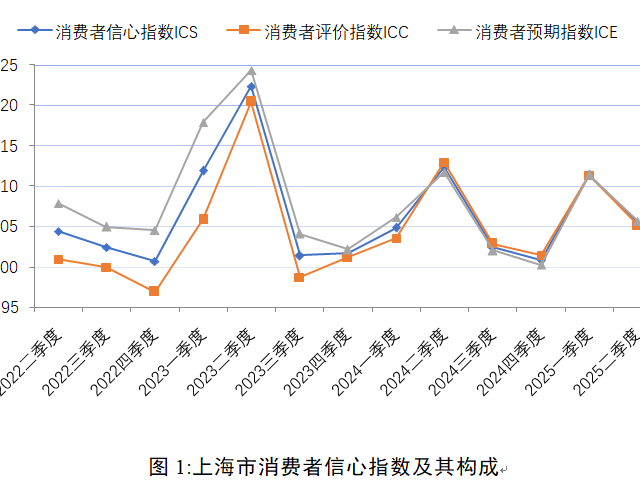
Core Insights - Overall consumer purchasing willingness has declined, but the indices for car purchases and durable goods purchases still show some positive performance, indicating consumer confidence in certain areas of spending [1][2] Consumer Confidence Index - The Shanghai Consumer Confidence Index for Q2 2025 is reported at 105.4 points, a decrease of 6.0 points from the previous quarter and a decrease of 6.9 points year-on-year [1] - The consumer evaluation index stands at 105.2 points, down 6.2 points quarter-on-quarter and down 7.7 points year-on-year [1] - The consumer expectation index is at 105.6 points, reflecting a quarter-on-quarter decline of 5.8 points and a year-on-year decline of 6.1 points [1] Purchasing Willingness Index - The purchasing willingness index is at 98.8 points, down 5.5 points quarter-on-quarter but up 16.1 points year-on-year [2] - The home buying index is at 69.9 points, showing a significant quarter-on-quarter decline of 16.3 points but a year-on-year increase of 5.7 points [2] - The car buying index is at 100.6 points, with a quarter-on-quarter increase of 1.9 points and a year-on-year increase of 12.3 points [2] - The durable goods buying index is at 126.0 points, down 2.0 points quarter-on-quarter but up 30.3 points year-on-year, indicating strong confidence in this category [2] Purchasing Expectation Index - The purchasing expectation index is at 87.8 points, down 4.6 points quarter-on-quarter but up 5.0 points year-on-year [2] - The home buying expectation index is at 74.6 points, down 11.5 points from the previous quarter but up 4.1 points year-on-year [2] - The car buying expectation index is at 101.0 points, reflecting a quarter-on-quarter increase of 2.3 points and a year-on-year increase of 5.7 points [2] Analysis of Decline - The decline in the consumer confidence index may be attributed to a pullback after significant increases in previous quarters, particularly in purchasing willingness indices [4] - Key indicators related to livelihood, such as income evaluation and employment situation evaluation, have shown notable declines, which may weaken consumer confidence [4] - Global economic uncertainties, including U.S. tariff increases, have also contributed to the decline in consumer confidence [4] Recommendations - It is suggested to implement targeted policies to support consumer sectors like automobiles and durable goods, such as optimizing subsidies for new energy vehicles and improving the trade-in service system for durable goods [4] - There is a need to stabilize employment and income expectations to strengthen the foundation of consumer confidence, as both income evaluation and employment situation indices have significantly decreased [5]

澳大利亚7月西太平洋/墨尔本消费者信心指数 93.1,前值92.6。
news flash· 2025-07-15 00:33
Group 1 - The core consumer confidence index for Australia in July is reported at 93.1, an increase from the previous value of 92.6 [1]

瑞士6月消费者信心指数 -32.2,预期-35,前值-36.5。
news flash· 2025-07-11 06:59
Core Viewpoint - The Swiss consumer confidence index for June is reported at -32.2, which is better than the expected -35 and the previous value of -36.5 [1] Group 1 - The current consumer confidence index indicates a slight improvement in consumer sentiment compared to previous months [1] - The index value of -32.2 suggests that consumers remain pessimistic, but the decrease in negativity from -36.5 to -32.2 may signal a potential stabilization in consumer outlook [1]
7月11日电,瑞士6月消费者信心指数为-32.2,预期-35。
news flash· 2025-07-11 06:58
Group 1 - The core point of the article is that Switzerland's consumer confidence index for June is reported at -32.2, which is better than the expected -35 [1]
瑞士6月消费者信心指数将于十分钟后公布。
news flash· 2025-07-11 06:55
Group 1 - The Swiss consumer confidence index for June is set to be released in ten minutes [1]
今日重点关注的财经数据与事件:2025年7月11日 周五
news flash· 2025-07-10 16:04
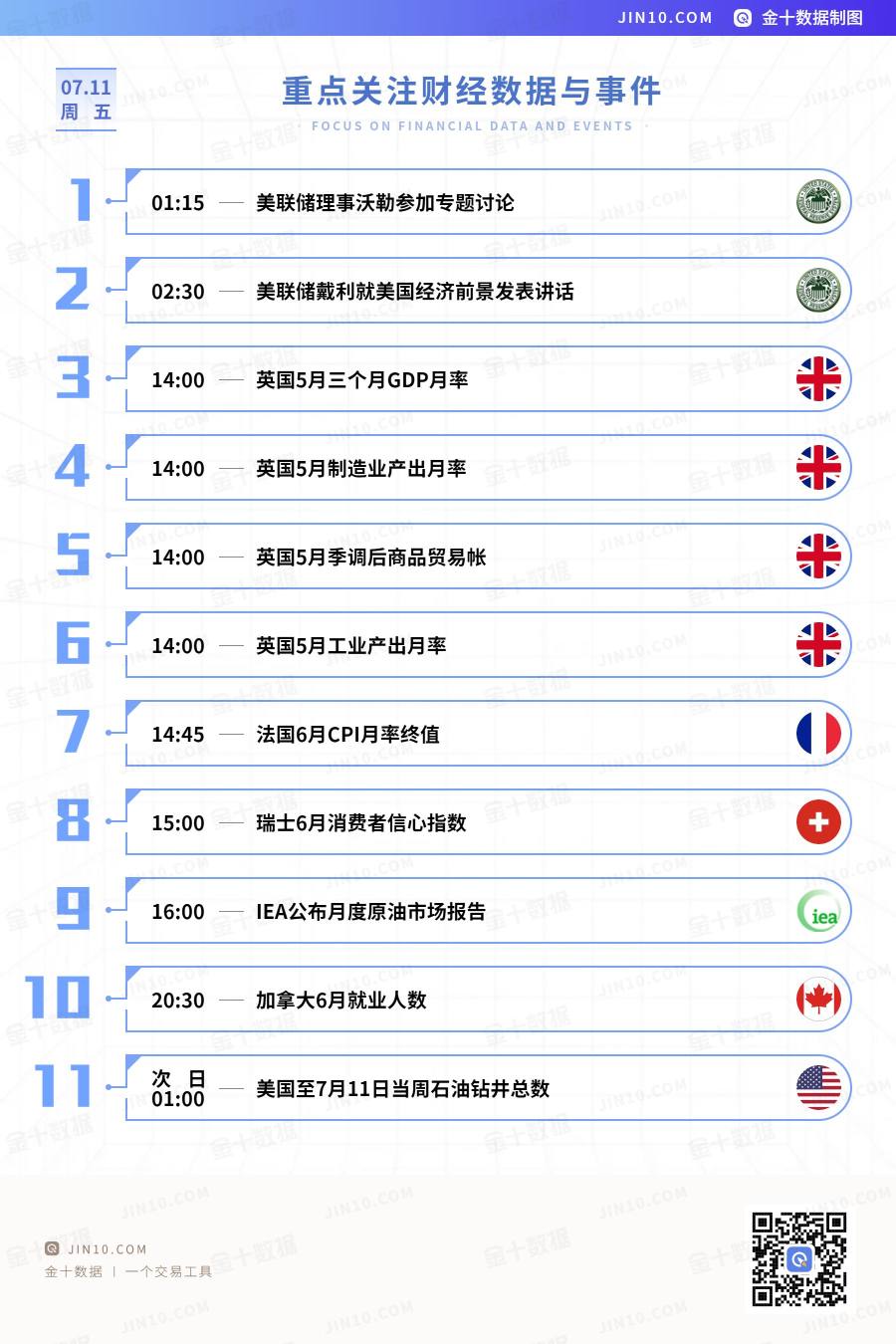
Group 1 - Key Point 1: Focus on the economic outlook as Federal Reserve officials, including Waller and Daly, are scheduled to speak on July 11, 2025 [2] - Key Point 2: Key economic data releases from the UK include May GDP, manufacturing output, trade balance, and industrial output, all set to be announced at 14:00 [2] - Key Point 3: France's final CPI for June will be released at 14:45, while Switzerland's consumer confidence index for June will be available at 15:00 [2] Group 2 - Key Point 1: The IEA will publish its monthly oil market report at 16:00, which may provide insights into global oil supply and demand trends [2] - Key Point 2: Canada's employment numbers for June will be released at 20:30, which could impact market sentiment regarding the Canadian economy [2] - Key Point 3: The total number of oil rigs in the US will be reported for the week ending July 11 at 01:00 the following day, indicating activity levels in the oil sector [2]
泰国6月消费者信心指数为52.7,低于5月的54.2。
news flash· 2025-07-09 04:18
Group 1 - The consumer confidence index in Thailand for June is reported at 52.7, which is a decrease from May's figure of 54.2 [1]
印度尼西亚6月消费者信心指数为117.8,低于5月的117.5。
news flash· 2025-07-08 03:09
Group 1 - The consumer confidence index in Indonesia for June is reported at 117.8, which shows a slight increase from May's index of 117.5 [1]
大漂亮法案正式通过,最终的票数为218:214票
Sou Hu Cai Jing· 2025-07-04 13:17
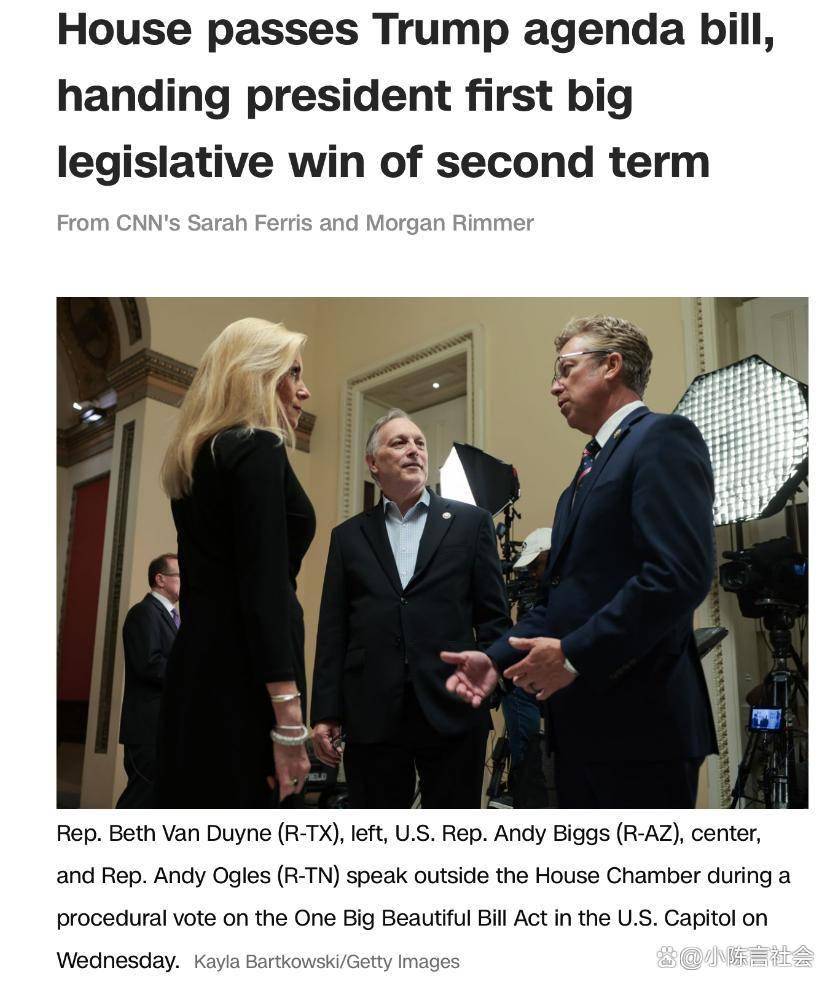
Core Points - The recent passage of the "Big Beautiful Act" in the U.S. Congress reflects a significant shift towards austerity measures that disproportionately affect lower-income individuals and workers [4][10] - The act extends tax benefits for the wealthy while cutting food assistance and medical subsidies for the poor, indicating a regression to a more conservative societal structure reminiscent of the Cold War era [6][10][11] - The U.S. is facing a growing national debt, nearing $35 trillion, with interest payments exceeding $1 trillion annually, prompting the need for spending cuts [9] Summary by Sections Legislative Changes - The "Big Beautiful Act" passed with a narrow vote of 218 to 214, with no Democratic votes in favor and only two Republicans opposing [4] - Key provisions include the extension of tax benefits for the wealthy and cuts to food assistance and medical subsidies for the poor [4][10] Economic Context - Over the past decade, average wage growth in the U.S. was around 3% annually before the pandemic, but real purchasing power has stagnated despite nominal increases of over 5% in recent years [6] - The wealth of the top 10% of Americans increased by over 15% in the past year, driven by stock market and real estate gains, while lower-income households have seen their savings diminish [7] Social Implications - The cuts to welfare programs, including a 4% reduction in food assistance and over 1% in children's health insurance subsidies, suggest a return to a society where the working poor must work harder for less support [10][11] - The current economic environment is characterized by a strong dollar and high interest rates, which may lead to further cuts in education and housing subsidies if fiscal pressures continue [13] Consumer Sentiment - Despite rising stock markets, consumer confidence remains low, with many Americans expecting negative economic conditions in the near future [15] - The passage of the "Big Beautiful Act" indicates a prioritization of corporate interests and fiscal strength over the welfare of ordinary workers, raising concerns about the long-term societal impact [15][17]
2025年6月美国非农数据点评:政府就业回升不可持续,美国非农弱势渐显
EBSCN· 2025-07-04 09:43
Employment Data - In June 2025, the U.S. added 147,000 non-farm jobs, exceeding the expected 110,000 and the revised previous value of 144,000[11] - The unemployment rate fell to 4.1%, lower than the expected 4.3% and previous 4.2%[11] - Average hourly earnings increased by 3.7% year-on-year, below the expected 3.9% and revised previous increase of 3.8%[11] Government vs. Private Sector Employment - Government jobs contributed nearly half of the new employment, with 73,000 jobs added, significantly higher than the previous month's 7,000[15] - Private sector employment weakened, with service sector jobs dropping from 141,000 to 68,000, indicating potential economic pressure from tariff disruptions[18] - Retail sector employment rebounded slightly, adding 2,000 jobs compared to a loss of 7,000 in the previous month[24] Labor Market Dynamics - The labor force participation rate decreased to 62.3%, down from 62.4% in the previous month, with a notable decline in youth employment willingness[27] - The U6 unemployment rate, which includes those working part-time for economic reasons, fell to 7.7% from 7.8%[32] - Permanent unemployment decreased by 29,000, while temporary job losses also declined, suggesting stability in the job market[32] Federal Reserve Outlook - Given the unsustainable rise in government employment and the risk of weakening non-farm data, the probability of the Federal Reserve restarting rate cuts in the second half of 2025 is significant[20] - Market expectations indicate a 60% chance of a rate cut in September 2025, with only a 5.2% chance in July[22]