
美国优先

Search documents
外媒:白宫将世界贸易组织从资金削减名单中移除
Zhong Guo Xin Wen Wang· 2025-09-04 03:36
Group 1 - The White House has quietly removed the World Trade Organization (WTO) from a list of entities facing funding cuts, which was initially announced on August 29, involving a total of $4.9 billion in foreign aid reductions [1] - The funding for the WTO, amounting to $29 million, was previously cited as an example of U.S. financial support for international projects that contradict President Trump's "America First" principles [1] - As of September 3, all references to the WTO on the White House website have been deleted, indicating a shift in the administration's stance [1] Group 2 - A trade source familiar with the situation confirmed that the WTO's funding will no longer be cut, although further details were not disclosed [1] - Democratic lawmakers in Congress criticized the government's funding cuts as illegal, arguing that the funds had already been authorized by Congress [1] - WTO Director-General Roberto Azevêdo mentioned that he has been in discussions with representatives from the Trump administration regarding this matter [1]
“美国优先”不灵了,抢在特朗普动武前,27国统一对美战线
Sou Hu Cai Jing· 2025-09-03 06:17
Group 1 - The article discusses the geopolitical significance of Greenland, highlighting its strategic position as a hub for North America, Europe, and Russia, particularly in terms of trade routes and military presence [1] - It emphasizes the U.S. interest in Greenland as part of the "America First" strategy, aiming to influence the political structure of Denmark and Greenland to secure a foothold in the Arctic [1] - The article warns of potential backlash from Europe if the U.S. employs a dual strategy of soft and hard power, which could lead to legal barriers, political isolation, and a normalized military presence in the region [1] Group 2 - The melting ice in the Arctic is creating new shipping routes, which the U.S. aims to control for monitoring and supply purposes, indicating a shift in military strategy [1] - The narrative of respecting local choices while simultaneously exerting influence is highlighted as contradictory, potentially undermining U.S. efforts in the region [1] - The presence of naval vessels and joint military actions is framed as a declaration of intent and presence in the Arctic, reinforcing the strategic importance of the area [1]
投票结果7:4!美国法院正式做出裁定,特朗普无权对中国加征关税
Sou Hu Cai Jing· 2025-09-01 08:01
Core Viewpoint - The U.S. Court of Appeals ruled that the tariffs imposed by the Trump administration on China were illegal, exceeding the legal authority granted to the president under the International Emergency Economic Powers Act (IEEPA) [1][5][29] Group 1: Legal and Political Implications - The court emphasized that the IEEPA was intended for addressing "special and extraordinary threats," such as financial sanctions, and not for imposing tariffs, which were deemed outside the scope of the law [5][9] - The ruling undermines Trump's ability to use tariffs as a negotiating tool in trade discussions with China, potentially shifting the balance of power in future negotiations [1][22][29] - The decision reflects a broader political struggle, with the Democratic Party viewing Trump's tariff actions as an overreach of presidential power, leading to legal challenges against his policies [15][17][29] Group 2: Impact on U.S.-China Trade Relations - The ruling may lead to a new phase in U.S.-China trade relations, as it could allow China to negotiate from a stronger position without the pressure of tariffs [22][25][29] - China's response to Trump's tariffs has been characterized by a strategy of maintaining a position of strength, emphasizing that it will not compromise under unequal pressure [25][29] - The potential dismantling of Trump's tariff policies could create favorable conditions for improved trade relations between the U.S. and China, as evidenced by recent high-level negotiations from China [25][29] Group 3: Effects on U.S. Domestic Politics - The ruling has weakened Trump's political leverage within the Republican Party, although he remains a central figure with significant influence [17][29] - The decision may exacerbate existing political tensions in the U.S., as it highlights the ongoing conflict between executive power and legislative authority [15][17][29] - Trump's unilateral approach to tariffs has led to skepticism among traditional U.S. allies, such as Japan, regarding the stability of U.S. trade policies [27][29]

美前国家安全顾问:中国受欢迎程度已超美国
Sou Hu Cai Jing· 2025-09-01 07:14
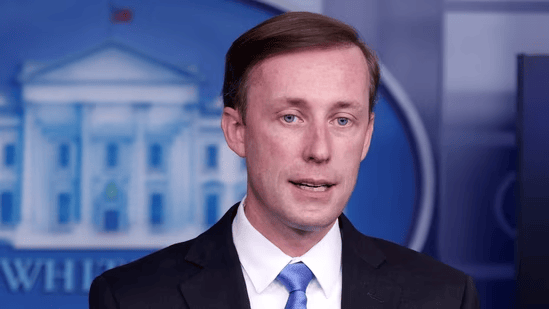
Group 1 - Jack Sullivan criticized Trump's "massive trade offensive" against India, suggesting it pushes India closer to China [1][2] - Sullivan noted that many countries now view the U.S. as the biggest disruptor and an unreliable partner, with India being a prime example of this shift [2][4] - The recent 50% tariffs imposed by Trump on Indian exports are the highest tariffs the U.S. has levied globally, justified as retaliation for India's purchase of Russian oil [4][6] Group 2 - Analysts suggest that the tariffs may stem from Trump's personal grievances, particularly his frustration over not being allowed to mediate the India-Pakistan conflict [6] - The U.S.-India relationship, once seen as a cornerstone of global democratic cooperation, is now perceived as fragile due to tariffs and aggressive U.S. policies [6][7] - Sullivan's comments reflect a critique of the Trump administration's "America First" policy, which is believed to undermine allies' interests and raise doubts about U.S. commitments [7]
连打4个电话都不接,特朗普对印度加税50%,莫迪开始对美“投降”
Sou Hu Cai Jing· 2025-08-29 07:22
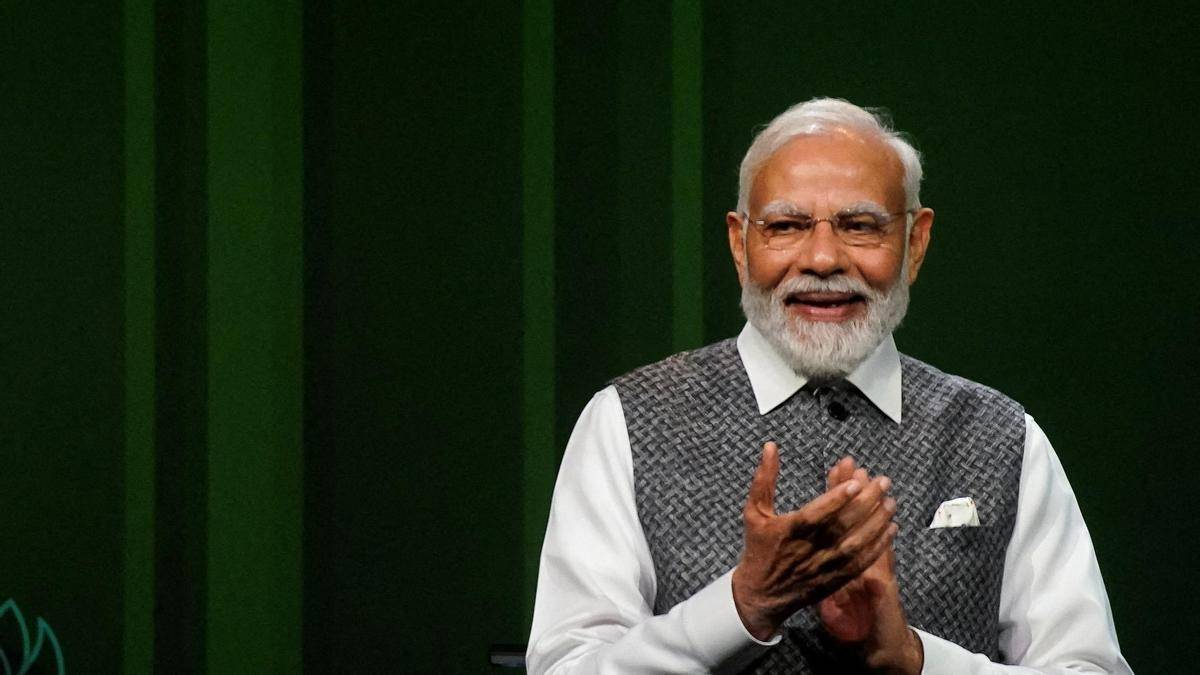
Group 1: Trade Relations and Tariffs - The U.S. has imposed a 50% tariff on Indian goods, escalating trade tensions and forcing Indian Prime Minister Modi to reconsider his stance [1] - The timing of the tariff coincides with stalled U.S.-India trade negotiations, indicating a lack of willingness from the U.S. to provide India with any leeway [1] - India's response includes suspending small package mail services to the U.S., which is seen as a retaliatory measure against the U.S. [1] Group 2: Economic Impact on India - India has a significant trade surplus with the U.S., exceeding $40 billion annually, primarily in textiles, pharmaceuticals, and jewelry [5] - A full implementation of the 50% tariff could lead to a drastic reduction of 60% to 80% in Indian exports to the U.S., posing severe challenges to India's economy already facing inflation and growth pressures [5] - The U.S. also relies heavily on Indian imports, with 60% of its generic drugs and substantial amounts of jewelry and electronics sourced from India, indicating potential repercussions for the U.S. market as well [5] Group 3: Political Dynamics and Responses - Indian officials initially expressed strong resistance to U.S. pressure, with Foreign Minister Jaishankar asserting India's commitment to protecting its farmers and small businesses [3] - Despite public defiance, there are indications that India may reduce its imports of Russian oil, signaling a potential compromise to ease tensions with the U.S. [5] - The relationship between the U.S. and India has deteriorated significantly, with Trump’s rhetoric shifting from praise to criticism, highlighting the volatility of international relations based on national interests [7]
白宫解除美国地面运输委员会一名董事会成员的职务
Yang Shi Xin Wen Ke Hu Duan· 2025-08-28 14:17
Core Points - The White House announced the removal of Robert Primus, a board member of the U.S. Surface Transportation Board, due to non-alignment with the "America First" agenda [1] - The Trump administration plans to nominate a new member for the Surface Transportation Board in the near future [1]
又有27国向美国“跪了”?特朗普开始摆架子,中美还没谈妥,先逼中国掏钱做一件事?
Sou Hu Cai Jing· 2025-08-28 05:29
Group 1 - The new trade framework between the US and the EU appears to be a move towards easing trade tensions, but it heavily favors US interests with high tariffs on EU imports [3][5] - The agreement includes a commitment from the EU to purchase $750 billion worth of US natural gas, oil, and nuclear products by 2028, along with $40 billion in AI chips [3][5] - European media and analysts criticize the agreement as a one-sided concession from the EU, highlighting the lack of mutual benefits and unresolved issues such as tariffs on steel and aluminum [3][5][6] Group 2 - The US is leveraging its market position and the global dominance of the dollar to impose high tariffs, effectively forcing the EU to increase purchases and investments in the US [5][6] - The agreement lacks legal binding, raising concerns about its implementation and the potential for the US to change terms unilaterally [5][6] - The dynamics of US-China trade negotiations contrast sharply with US-EU discussions, as the US faces challenges in maintaining agricultural exports to China while simultaneously imposing tariffs [6][8]
特朗普为“欢迎中国留学生”辩护,中方回应
Huan Qiu Shi Bao· 2025-08-27 22:53
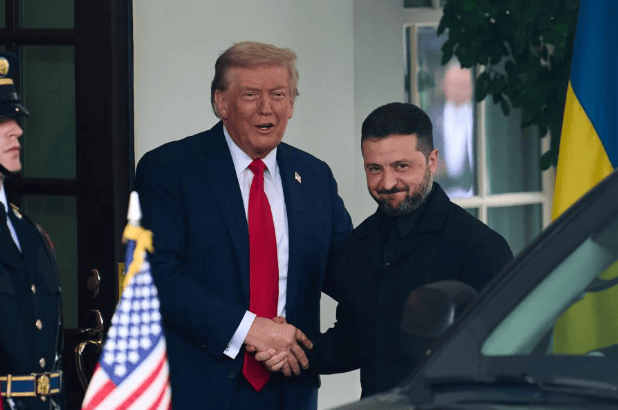
Core Viewpoint - President Trump's statement allowing 600,000 Chinese students to study in U.S. universities has sparked criticism from his "Make America Great Again" (MAGA) allies, indicating a potential shift in U.S. education and immigration policy as the 2026 midterm elections approach [1][2] Group 1: Trump's Statements - Trump defended his position by stating that the absence of Chinese students would lead to a rapid collapse of the U.S. university system, particularly affecting struggling institutions rather than top-tier universities [1] - He emphasized the importance of Chinese students in maintaining the excellence of the U.S. higher education system and expressed pride in their presence [1] Group 2: Reactions and Implications - Trump's remarks signify a departure from the previous hardline stance on international students and the "America First" policy, suggesting potential adjustments in education and immigration policies ahead of the upcoming elections [1] - China's Foreign Ministry spokesperson welcomed Trump's comments, highlighting that educational exchanges foster better understanding between nations and urged the U.S. to ensure the rights of Chinese students are protected [2]
委内瑞拉紧急征兵!美军兵临城下,马杜罗挡得住吗?
Sou Hu Cai Jing· 2025-08-27 06:26
Group 1 - The core viewpoint of the article revolves around the escalating military tensions between the United States and Venezuela, with President Trump taking aggressive actions against Maduro's regime, potentially risking a large-scale conflict [1][3][6] - The U.S. Navy has deployed a significant amphibious expeditionary force to the southern Caribbean, indicating a serious military posture against Venezuela [3][6] - Maduro's government has mobilized millions of citizens for military service in response to U.S. threats, showcasing a strong nationalistic sentiment and readiness to defend the country [4][6] Group 2 - Trump's military actions mark the second significant use of force during his presidency, raising questions about his previous claims of not engaging in wars [3][6] - The geopolitical implications of a potential regime change in Venezuela could reshape alliances in South America, with the U.S. aiming to establish a new ally in the region [6][8] - Venezuela's vast oil reserves, estimated at 300 billion barrels, are a significant factor in U.S. interests, as the country recently reported a daily oil production exceeding 1.031 million barrels [6][8]
【环时深度】美国为何反复回归“孤岛心态”?
Huan Qiu Shi Bao· 2025-08-26 23:20
Core Viewpoint - The article discusses the increasing isolation of the United States due to its trade policies, humanitarian aid cuts, and immigration restrictions, raising concerns about the potential decline of free trade and the U.S.'s global influence [1][8]. Group 1: U.S. Isolation and Global Impact - The U.S. is perceived as increasingly isolated, with its actions leading to a deterioration of its international image and a weakening of its dominant position in the global economy [1][3][9]. - The U.S. government's withdrawal from international organizations and its restrictive immigration policies are contributing to a decline in its attractiveness as a destination for foreign talent and investment [3][9]. - The U.S. is projected to be the only country experiencing a decline in foreign tourist spending this year, with international visitor numbers only reaching 80% of 2019 levels [4][9]. Group 2: Historical Context of U.S. Isolationism - The article traces the roots of American isolationism back to its geographical advantages and historical policies, such as Washington's farewell address and the Monroe Doctrine, which emphasized non-interference in foreign affairs [5][6]. - Public sentiment in the U.S. has historically leaned towards isolationism, especially during periods of international conflict, with significant events like World War I and II shaping this perspective [6][7]. Group 3: Shifts in Global Trade Dynamics - The U.S.'s trade wars and isolationist policies are prompting other countries to seek new partnerships, leading to tighter cooperation between Canada and Europe, and a shift in trade dynamics away from U.S. involvement [8][9]. - The article notes that since 2017, the share of global trade involving the U.S. has declined, with other regions, particularly Asia and Europe, increasing their trade shares [8][9]. Group 4: Declining U.S. Influence - The U.S. is losing its status as a key player in the global economy, with its isolationist policies undermining its previous role as a leading economic power and diminishing the dollar's status as a reserve currency [9][10]. - The article highlights that the U.S.'s complex cultural understanding and selective policy enforcement are eroding its soft power and international credibility [9][10].