自由贸易

Search documents
【解局】中国—东盟自贸区迈入3.0时代,意味着什么?
Huan Qiu Wang· 2025-10-28 11:45
Core Points - The signing of the China-ASEAN Free Trade Area 3.0 Upgrade Protocol marks a significant enhancement in economic cooperation between China and ASEAN, providing new momentum and confidence for regional economic development [1][2][3] Group 1: Economic Cooperation - The protocol reflects a commitment to multilateralism and free trade, demonstrating a united front against unilateralism and protectionism [2][3] - The China-ASEAN Free Trade Area is the first free trade area established by both parties, with its construction starting in 2002 and evolving through various phases, culminating in the 3.0 version [1][3] Group 2: Areas of Focus - The 3.0 Upgrade Protocol covers nine major areas, adding five new fields: digital economy, green economy, supply chain connectivity, competition and consumer protection, and support for small and medium-sized enterprises [3][4] - The shift from a "tariff concession" model to a "rule-building" approach is a key highlight of the 3.0 version, promoting investment and trade facilitation in emerging sectors [4][6] Group 3: Market Impact - The bilateral trade volume has surged from $235.5 billion in 2010 to nearly $1 trillion last year, indicating the significant market potential of the China-ASEAN Free Trade Area, which encompasses over 2 billion people [5][6] - The protocol is expected to create new opportunities for Malaysian enterprises, particularly in the digital economy and supply chain connectivity, allowing for advanced technology collaboration [4][5]
特朗普被激怒叫停贸易谈判,加拿大惊慌认错:这次真玩大了!
Sou Hu Cai Jing· 2025-10-28 10:49
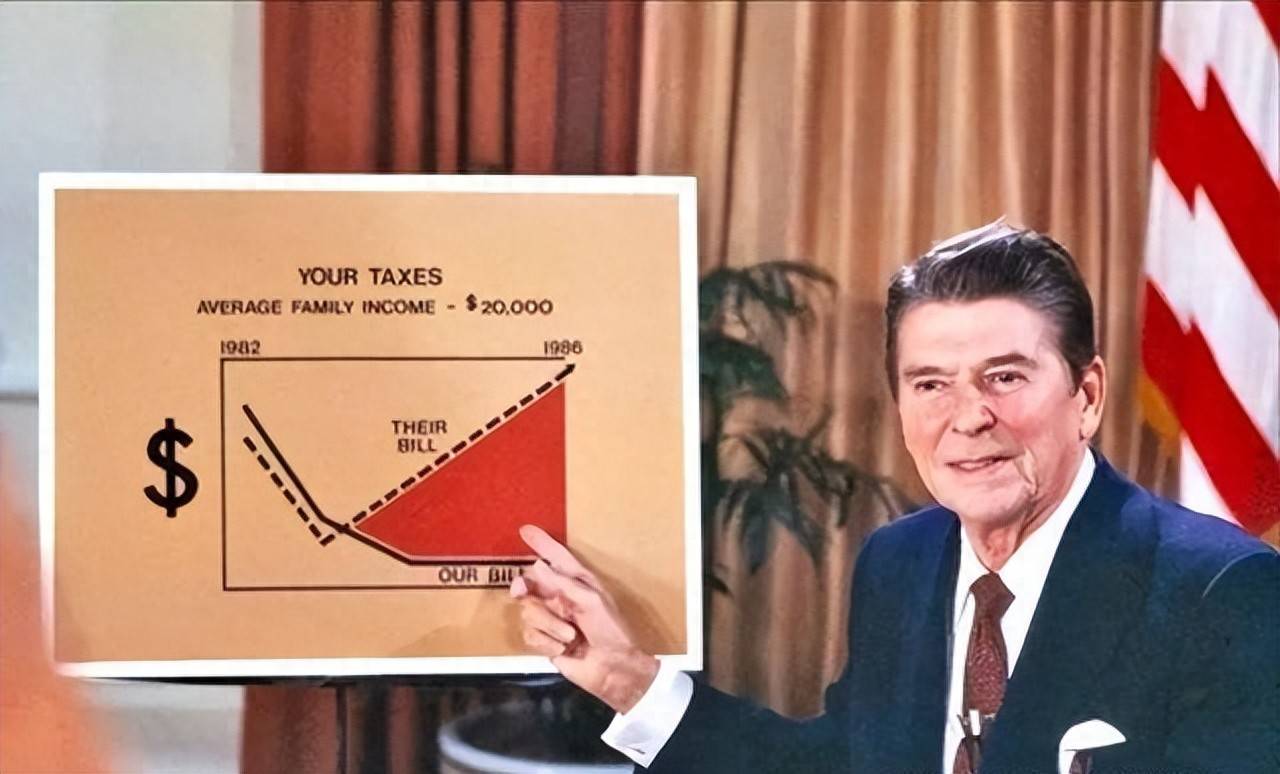
Core Points - The Ontario government of Canada spent 75 million CAD on advertisements in the U.S. that provoked a strong reaction from former President Trump, leading to a halt in U.S.-Canada trade negotiations [2][3] - The advertisements featured edited clips of Ronald Reagan's speeches opposing tariffs, which the Reagan Foundation claimed misrepresented his original message [2][4] - Trump's response included terminating all trade negotiations with Canada and imposing an additional 10% tariff on Canadian goods, exacerbating economic uncertainty for Canadian exporters [3][6] Advertising Strategy - The advertisement campaign was aimed at U.S. congressional districts controlled by the Republican Party, utilizing major networks such as Fox News and NBC [2] - The content selectively highlighted Reagan's views against tariffs while omitting his context of supporting tariffs under specific circumstances [4] - The intention was to sway American public opinion against Trump's tariff policies, but it backfired, leading to accusations of foreign interference in U.S. affairs [4][6] Economic Impact - The suspension of trade negotiations raised economic uncertainty, particularly affecting Ontario's manufacturing sector, including the automotive and steel industries [3][6] - Following the advertisement controversy, the Canadian dollar depreciated, and investor confidence in Canadian markets declined due to fears of escalating tariffs [6] - The incident highlighted the fragility of U.S.-Canada trade relations, with Canada being heavily reliant on the U.S. market for exports [6]

中国—东盟自贸区3.0版升级议定书签订
Shang Wu Bu Wang Zhan· 2025-10-28 09:30
Core Points - The signing of the China-ASEAN Free Trade Area 3.0 upgrade protocol marks a significant achievement in the implementation of important consensus reached during the 30th anniversary summit of China-ASEAN dialogue relations [2][4] - The protocol aims to enhance regional economic integration and cooperation in emerging fields such as digital economy, green economy, and supply chain connectivity [3][6] Group 1: Importance of the Protocol - The protocol signifies strong support for multilateralism and free trade amidst challenges to the international economic system, providing confidence and momentum for regional and global economic growth [2] - It establishes a new milestone for deeper regional economic integration, expanding cooperation beyond traditional trade and investment to include digital, green, and supply chain sectors [3] - The protocol will strengthen the China-ASEAN community of shared destiny, promoting a more open and inclusive regional market [3] Group 2: Background and Negotiation Process - The China-ASEAN Free Trade Area is the first free trade agreement established by both parties, with the initial agreement announced in 2002 and the first version completed in 2010 [4] - The 3.0 version negotiations began in November 2022 and concluded after nearly two years of discussions, culminating in the signing on October 28, 2025 [4][5] Group 3: Key Features of the Protocol - The protocol introduces five new areas of cooperation: digital economy, green economy, supply chain connectivity, competition and consumer protection, and support for small and medium enterprises [6][7] - It enhances the level of openness in trade, services, and investment, establishing a systematic cooperation framework for both traditional and emerging sectors [7] - The protocol promotes inclusive development by ensuring fair competition, consumer protection, and support for small and medium enterprises [7] Group 4: Main Content of the Protocol - The protocol covers nine major areas, including customs procedures, trade facilitation, and new fields like digital and green economies [8] - In the digital economy, it establishes a high-level rule system and cooperation arrangements, including customs duty exemptions on electronic transmissions and enhanced data protection [9] - The green economy section defines key areas for cooperation, aiming to eliminate trade barriers related to environmental standards and promote sustainable development [9] - The supply chain connectivity chapter aims to enhance the resilience and connectivity of regional supply chains through digital technology and infrastructure improvements [10] - The protocol also includes provisions for standards and technical regulations, health measures, and economic and technical cooperation to support inclusive regional development [11][12] Group 5: Implementation of the Protocol - Following the signing, both parties will undertake domestic approval processes to ensure the protocol's early implementation [13]
外交部:中欧经贸关系本质是优势互补 互利共赢
Yang Shi Xin Wen Ke Hu Duan· 2025-10-28 08:40
Core Viewpoint - The essence of China-Europe economic and trade relations is complementary advantages and mutual benefits, emphasizing the importance of free trade and opposition to protectionism [3]. Group 1: Economic and Trade Relations - China hopes that the European side will adhere to its commitments to support free trade and oppose trade protectionism [3]. - The Chinese government advocates for resolving trade differences through dialogue and consultation, rather than resorting to restrictive measures [3]. - There is a call for providing a fair, transparent, and non-discriminatory business environment for enterprises from all countries [3]. Group 2: Market Economy and WTO Rules - The statement emphasizes the need to uphold market economy principles and the rules of the World Trade Organization (WTO) through concrete actions [3].

中方是否将与欧盟谈判放松对稀土的出口管制?外交部回应
Zhong Guo Xin Wen Wang· 2025-10-28 07:57
Core Viewpoint - The Chinese Ministry of Foreign Affairs emphasizes the importance of maintaining a mutually beneficial trade relationship with the EU, advocating for dialogue over restrictive measures regarding rare earth export controls [1]. Group 1: Trade Relations - The essence of China-EU economic and trade relations is characterized by complementary advantages and mutual benefits [1]. - China hopes that the EU will adhere to its commitments to support free trade and oppose trade protectionism [1]. Group 2: Export Controls - The Chinese government encourages the EU to resolve trade differences through dialogue and consultation rather than imposing restrictive measures [1]. - There is a call for the EU to provide a fair, transparent, and non-discriminatory business environment for enterprises from all countries [1].
中欧将讨论稀土问题?外交部回应
券商中国· 2025-10-28 07:56
Core Viewpoint - The essence of China-EU economic and trade relations is complementary advantages and mutual benefits, emphasizing the need for dialogue and cooperation to resolve trade differences and maintain a fair business environment [1]. Group 1 - The Chinese Foreign Ministry spokesperson, Guo Jia Kun, addressed a question regarding the potential relaxation of China's export controls on rare earths during a press conference [1]. - Guo emphasized that the EU should adhere to its commitments to support free trade and oppose protectionism, avoiding restrictive measures [1]. - The spokesperson suggested that specific inquiries regarding export controls should be directed to the relevant Chinese authorities [1].
中欧将讨论稀土问题?外交部回应
财联社· 2025-10-28 07:44
Core Viewpoint - The essence of China-EU economic and trade relations is mutual complementarity and win-win cooperation, emphasizing the importance of free trade and opposition to trade protectionism [2] Group 1 - The upcoming trade talks in Brussels will focus on trade agreements and issues related to rare earth exports [2] - China urges the EU to adhere to commitments supporting free trade and to avoid restrictive measures, advocating for dialogue to resolve trade differences [2] - The Chinese government emphasizes the need for a fair, transparent, and non-discriminatory business environment for enterprises [2]

中国和欧盟代表将在布鲁塞尔会谈讨论稀土问题,外交部回应
Huan Qiu Wang· 2025-10-28 07:34
Core Viewpoint - The essence of China-EU economic and trade relations is complementary advantages and mutual benefits, emphasizing the importance of dialogue and cooperation in addressing trade issues [1] Group 1: China-EU Trade Relations - China hopes the EU will adhere to its commitment to support free trade and oppose trade protectionism [1] - The Chinese side advocates for resolving trade differences through dialogue and consultation rather than imposing restrictive measures [1] - There is a call for providing a fair, transparent, and non-discriminatory business environment for enterprises from all countries [1]
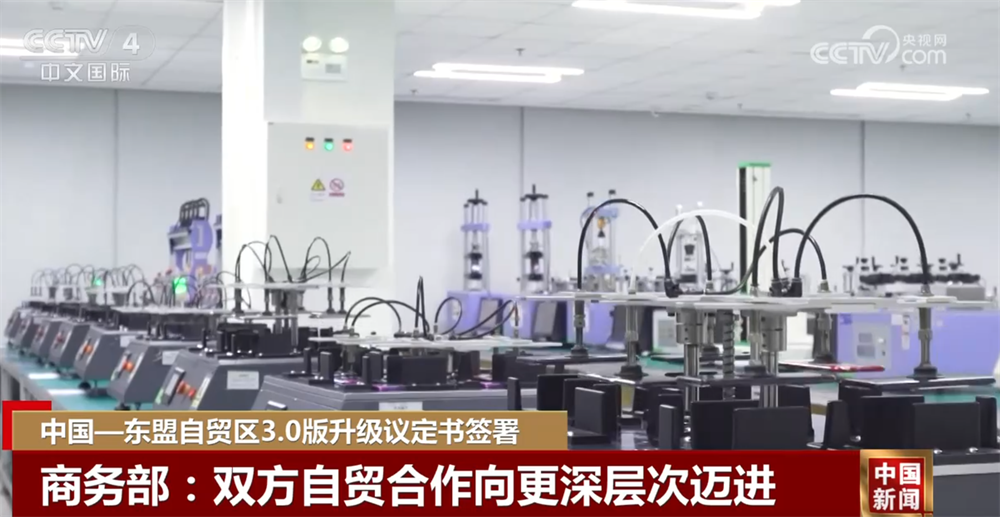
中国—东盟自贸区3.0版升级议定书签署 双方自贸合作向更深层次迈进
Yang Shi Wang· 2025-10-28 06:26
Core Viewpoint - The signing of the China-ASEAN Free Trade Area 3.0 upgrade protocol in Kuala Lumpur marks a significant step towards deeper economic integration and cooperation between China and ASEAN countries, focusing on new areas such as digital economy and green economy [1][3]. Group 1: Agreement Details - The 3.0 upgrade protocol covers nine major areas, adding five new fields: digital economy, green economy, supply chain connectivity, competition and consumer protection, and support for small and medium enterprises [1]. - The protocol aims to enhance fair competition, protect consumer rights, support the development of small and medium enterprises, and improve compliance capabilities of underdeveloped countries, promoting inclusive regional economic development [1]. Group 2: Historical Context - The China-ASEAN Free Trade Area is the first free trade area established through negotiations, initiated in 2002, with the 1.0 version completed in 2010 and the 2.0 version fully implemented in 2019 [5]. - Negotiations for the 3.0 version began in 2022 and were completed in May of this year [5]. Group 3: Multilateralism and Trade - The signing of the protocol demonstrates a commitment to multilateralism and free trade, serving as an important example for resisting unilateralism and protectionism while addressing international economic and trade challenges [3]. - It signifies a deeper level of cooperation in the free trade partnership, contributing to the construction of an open, inclusive, and rules-based regional integrated market [3].
中国与东盟签署自贸区3.0版升级议定书
中国能源报· 2025-10-28 03:53
Core Viewpoint - The signing of the China-ASEAN Free Trade Area 3.0 upgrade protocol marks a significant achievement in implementing the consensus reached during the 30th anniversary summit of China-ASEAN dialogue relations, reflecting a commitment to multilateralism and free trade [2][3]. Group 1 - The protocol was signed on October 28 in Kuala Lumpur, Malaysia, by Chinese Commerce Minister Wang Wentao and Malaysian Minister Zafrul, witnessed by leaders including Chinese Premier Li Qiang and Malaysian Prime Minister Anwar [2]. - The upgrade of the China-ASEAN Free Trade Area 3.0 demonstrates a strong determination to build an open, inclusive, and rules-based regional integrated market, enhancing cooperation opportunities for businesses in both regions and globally [2][3]. - The 3.0 version upgrade encompasses nine areas, including digital economy, green economy, supply chain connectivity, standards and technical regulations, sanitary measures, customs procedures, competition and consumer protection, small and medium enterprises, and economic and technological cooperation [3]. Group 2 - The construction of the China-ASEAN Free Trade Area began in 2002, with the 1.0 version completed in 2010 and the 2.0 version in 2015; the 3.0 version negotiations are set to be completed by May 2025 [3]. - Following the signing of the protocol, both parties will undertake their respective domestic approval processes to ensure the protocol's early implementation [3].