
双碳目标

Search documents
智护滨海湿地
Zhong Guo Zi Ran Zi Yuan Bao· 2026-02-05 10:57
2月2日,世界湿地日到来之际,中国地质调查局青岛海洋地质研究所系统总结"十四五"期间滨海湿 地研究成果,在生态地质调查监测体系搭建、保护修复技术攻坚、国际交流合作拓展等核心领域实现多 项突破。 相关研究既为我国滨海湿地生态保护与高质量发展筑牢地质科技根基,也以可复制、可推广的技术 体系与实践方案,为全球湿地生态治理注入专业、可行的中国地质智慧,提供兼具科学性与实用性的中 国解决方案。 生态地质调查监测多点突破 "十四五"期间,青岛海洋地质研究所聚焦湿地地质演化、生态水文过程、生物地球化学循环、现代 环境过程与多圈层监测四大核心方向,系统推进滨海湿地生态地质调查工作。 湿地潮滩生态地质野外调查。青岛海洋地质研究所供图 青岛海洋地质研究所坚持科研与实践并行,推动技术成果快速转化应用,从政策支撑、工程保障、 平台建设等维度,全面助力滨海湿地保护修复落地见效。 在规划与政策支撑方面,该所牵头编制《支撑实现碳达峰碳中和目标海洋地质工作方案》《关于加 强滨海湿地固碳能力调查评价服务国家碳中和目标的建议》,明确提出海洋和滨海湿地增汇增储的关键 路径。该所优化完善滨海湿地碳汇能力核算方法,编制的《全国滨海湿地碳汇潜力修复区建 ...


预计今年光伏新增装机降幅超20% 工信部电子信息司:治理行业“内卷”是今年工作重中之重
Ge Long Hui· 2026-02-05 10:37
Core Insights - The Chinese photovoltaic (PV) industry is expected to experience a significant turning point in 2026, with new installed capacity projected to be between 180-240 GW, marking a decline of 23.8% to 42% from the record high of 315 GW in 2025 [1][1][1] Industry Overview - The China Photovoltaic Industry Association's advisor, Wang Bohua, indicated that the industry will shift from a focus on scale and price competition to value competition, reflecting a transformation in development philosophy and logic [1][1] - The Deputy Director of the Electronic Information Department of the Ministry of Industry and Information Technology, Wang Shijiang, emphasized that addressing industry "involution" will be a key focus this year, acknowledging the ongoing deep adjustment period and significant challenges faced by enterprises [1][1][1] Market Dynamics - The industry is currently experiencing a mismatch in supply and demand, with deep-rooted contradictions that have not yet been fundamentally resolved, indicating a challenging operational environment for companies [1][1] - The photovoltaic sector is recognized as a strategic industry that plays a crucial role in achieving China's "dual carbon" goals, transitioning from quantitative expansion to qualitative improvement during this critical window [1][1][1]
碳足迹管理成产业转型“必修课”,南京玄武区先行探路“绿色新赛道”
Yang Zi Wan Bao Wang· 2026-02-05 10:06
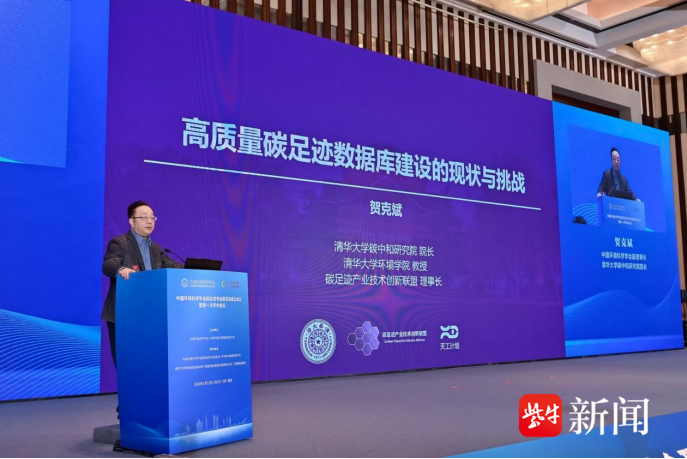
Group 1 - The establishment of the Carbon Footprint Professional Committee by the Chinese Society for Environmental Sciences aims to explore low-carbon transformation and cultivate green competitiveness under the "dual carbon" goals [1] - Carbon footprint management is transitioning from a single accounting tool to an institutionalized management system, which is essential for promoting pollution reduction and industrial green transformation [3] - The introduction of the EU's new battery law, effective from August 2023, mandates that all battery products entering the market must include a digital product passport (DPP) detailing carbon footprints and supply chain due diligence [3] Group 2 - Jiangsu Province is proactively developing a public service platform for product carbon footprints, which is expected to be officially launched by the end of 2024, with over a thousand companies already registered [5] - The "Tiangong Database," launched in November 2023, is China's first open and transparent lifecycle unit process database, containing over 70,000 publicly available data points across 55 industries [6] - The collaboration between the Jiangsu government and the British Standards Institution (BSI) aims to establish a Carbon Neutrality Innovation Research Center in Nanjing, focusing on developing low-carbon technologies and standards suitable for China [7]
国内资本开支创新高+设备出海高增,天弘中证电网设备主题指数基金(A类025832/C类025833)布局电网设备业绩兑现期
Sou Hu Cai Jing· 2026-02-05 09:47
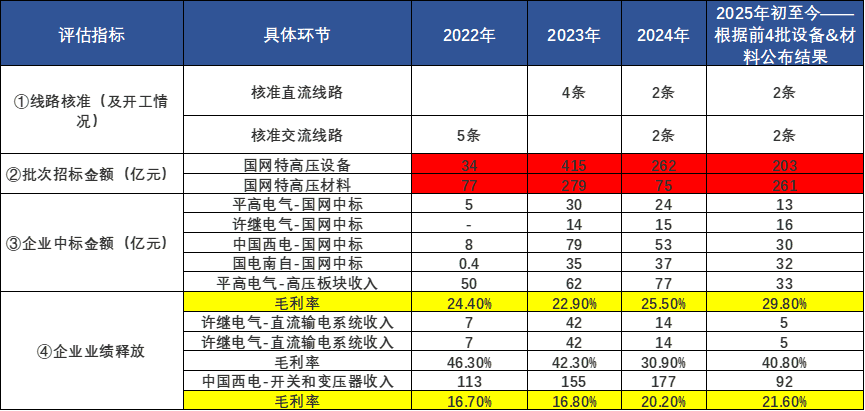
Group 1 - The industry has transitioned from a traditional "cyclical defensive" attribute to a "growth offensive" track, driven by the clearing of production capacity in the power grid equipment sector and multiple strategic benefits [1] - The latest investment plan from the State Grid for 2025 exceeds 650 billion yuan, marking an 8% year-on-year increase and a historical high, with significant changes in investment structure [2] - The construction of the power grid is shifting from merely pursuing transmission capacity to a comprehensive transformation focusing on "strong backbone + quality distribution network + intelligence" [2] Group 2 - The approval and construction of domestic UHV projects have significantly accelerated, with the bidding amounts for UHV materials and equipment expanding year by year, indicating a robust demand for UHV networks [3] - In the global context, the power grid is undergoing a historic restructuring, with developed countries facing mandatory asset updates and emerging economies needing to fill infrastructure gaps, leading to structural expansion in global grid investment [4] - China's key power equipment exports reached 71.5 billion USD from January to November 2025, a 20% year-on-year increase, with high-value transmission and transformation equipment driving export growth [4][5] Group 3 - The index selected 80 listed companies involved in UHV industry, smart grid construction, green energy, and energy storage, with a high weight of 88% in smart grid and 65% in UHV, indicating strong support from funds and policies [6] - The top three weight sectors of the index as of February 3, 2026, are transmission and transformation equipment (35.2%), grid automation equipment (21.7%), and cable components (12.6%) [8] - The Tianhong CSI Power Grid Equipment Theme Index Fund offers flexible share options suitable for long-term investors and those looking to capture industry fluctuations, providing a convenient tool for investing in the energy sector [9]
从40亿到120亿,中信金租上演“资本三级跳” 金融租赁业资本“军备竞赛”硝烟再起
Jing Ji Guan Cha Wang· 2026-02-05 09:24
Core Viewpoint - CITIC Bank has approved a cash capital increase of 2 billion yuan for its wholly-owned subsidiary, CITIC Financial Leasing, raising its registered capital from 10 billion yuan to 12 billion yuan, marking the second significant capital injection within a year, reflecting a strategic reassessment of the financial leasing sector amid regulatory changes and new market opportunities [1][2][4] Group 1: Capital Increase and Strategic Intent - The recent capital increase is part of a clear strategic intent and robust performance support, with CITIC Financial Leasing's registered capital previously raised from 4 billion yuan to 10 billion yuan in a short span [2] - CITIC Financial Leasing focuses on strengthening its core business areas, including aircraft and ship leasing, while also promoting retail models in household photovoltaic and vehicle sectors, achieving significant financial growth [2][5] Group 2: Industry Landscape and Competition - The increase in registered capital to 12 billion yuan positions CITIC Financial Leasing among the top tier in the financial leasing industry, surpassing competitors like CCB Financial Leasing and BOC Financial Leasing [3] - The capital competition among leasing companies is intensifying, driven by regulatory requirements and market opportunities, with many firms increasing their capital to meet new standards [4][6] Group 3: Implications for Competitive Dynamics - The capital boost enhances CITIC Financial Leasing's project bidding, risk pricing, and long-term asset construction capabilities, potentially triggering a new round of competition within the industry [5][6] - As leading institutions upgrade their capital, competition is shifting from mere scale pursuit to a comprehensive contest involving capital efficiency, professional capabilities, and strategic ecosystems [6]

赣能股份(000899) - 000899赣能股份投资者关系管理信息20260205
2026-02-05 09:02
编号:2026 -01 投资者关系活动类别 特定对象调研 ☐ 分析师会议 ☐ 媒体采访 ☐ 业绩说明会 ☐ 新闻发布会 ☐ 路演活动 ☐ 现场参观 ☐ 其他(请文字说明其他活动内容) 参与单位名称及人员姓名 华源证券 邓思平 WL Fund 冯皓琪 安信基金 张鹏 煜诚私募基金 王凯 泉果基金 游瑾 泰康保险 万晨洁 华宝基金 居桢 光大永明资产 吴涛 前海再保险 陈泓君 博时基金 金欣欣 上海保银 余泽 时间 2026年02月04日 17:00—18:00 地点 公司会议室,腾讯会议方式 上市公司接待人员姓名 副总经理、董事会秘书 李洁 证券事务代表 尹思悦 投资者关系活动主要内容 介绍 1、2025 年,公司经营情况如何? 答:(1)根据公司披露的《2025 年度业绩预告》(2026-01), 公司 2025 年归属于上市公司股东的净利润区间为盈利 9.43 亿元— 10.80 亿元,同比增长 32.13%—51.26%,主要原因系公司所属上高 一期火电厂#1、#2 机组于报告期内陆续投产发电及所属火电厂本 期燃料成本较上年同期有所下降。(2)截至 2025 年 12 月底,公 司总装机规模625.05万 ...

哈希隶属伟励拓获奖
仪器信息网· 2026-02-05 09:01
Core Viewpoint - Veralto has been recognized for its sustainable development practices in China, winning the 2025 Pudong New Area ESG Practice Case Leading Sample Award, showcasing its commitment to sustainability through innovative technology [5][10]. Group 1: ESG Innovation - Veralto is a leading company in water quality management, driven by core technology to innovate in ESG practices [8]. - The company has established a strategic framework that integrates "product-earth-people" to enhance its sustainability efforts [8]. - Veralto's technological innovations contribute to achieving carbon neutrality goals and promote a circular economy by driving green transformation from the source [8]. Group 2: Social Responsibility - The company emphasizes a dual approach of talent cultivation and community building to fulfill its social responsibilities [8]. - Veralto has achieved an MSCI AAA rating in sustainable development, reflecting its commitment to environmental, social, and governance standards [9]. Group 3: Commitment to Sustainability - Veralto demonstrates that industrial enterprises can achieve commercial success while protecting the environment, redefining ESG practice standards for the industry [10]. - The company aims to continue its journey by measuring responsibility professionally and driving development through innovation [10].

发力绿色金融,国民信托首单公募REITs上市
Xin Hua Cai Jing· 2026-02-05 08:25
Group 1 - The core viewpoint of the article highlights the launch of the first public REITs project by Guomin Trust, named "Guomin Trust · Jingneng No. 1 REITs Investment Collective Fund Trust Plan," which is involved in the expansion of the AVIC Jingneng photovoltaic REIT listed on the Shanghai Stock Exchange [1] - The public REITs market in China is entering a normalized issuance phase, with a projected total issuance scale exceeding 210 billion yuan by the end of 2025, indicating a positive market development trend [1] - The "Jingneng No. 1" project specifically targets the operation and development of the Yunnan Province Sujiahekou Hydropower Station and Songshanhekou Hydropower Station, creating a virtuous value cycle through indirect ownership of infrastructure project assets [1] Group 2 - Guomin Trust aims to deepen its focus on the green finance sector, enhancing its professional operational capabilities in public REITs, and guiding more social capital towards sustainable development [2] - The company is committed to supporting the construction of a green low-carbon circular economy system in China, contributing to high-quality economic and social development [2]
生物基化学品与材料专场,免费注册参会!
synbio新材料· 2026-02-05 07:41
Core Viewpoint - The article emphasizes the importance of bio-based chemicals and materials as a key pillar of the bio-manufacturing industry, highlighting their potential to replace traditional petroleum-based products in various sectors such as packaging, textiles, and automotive, driven by their renewable raw materials and low carbon footprint throughout their lifecycle [2]. Group 1: Industry Context - The global push for green transformation and carbon neutrality goals positions bio-based chemicals and materials as critical to the industry's transition [2]. - China prioritizes the development of bio-based new materials, categorizing them as strategic materials, with ongoing supportive industrial policies [2]. Group 2: Challenges - The bio-based industry faces significant challenges, including competitive cost structures, stability of raw material supply chains, optimization of product performance, and market acceptance [2]. Group 3: Event Details - The "5th China Synthetic Biology and Bio-Manufacturing Conference" will be held in Hangzhou from March 31 to April 1, 2026, focusing on bio-based chemicals and materials [4]. - The conference aims to gather insights from various sectors to address the challenges in the bio-based chemicals and materials industry and promote high-quality development [2][4].

2025年第四季度上海写字楼市场报告
莱坊· 2026-02-05 07:30
Investment Rating - The report indicates a continued downward trend in rental prices for Grade-A office buildings in Shanghai, with a recommendation to monitor the market closely for potential recovery opportunities in the future [5][12][16]. Core Insights - The Shanghai Grade-A office market is currently under dual pressure from supply and demand, leading to a rental decline of 3.2% quarter-on-quarter, reaching RMB 6.05 per square meter per day [5][16]. - New supply in Q4 2025 included two projects totaling 216,585 square meters, contributing to a slight increase in vacancy rates to 23.8% [5][12]. - The net absorption for the quarter rose to 82,570 square meters, primarily driven by demand from financial institutions and TMT (Technology, Media, and Telecommunications) companies, while shared office brands continued to expand [5][12][14]. - The upcoming "14th Five-Year Plan" aims to boost domestic demand and promote technological innovation, which may provide moderate recovery opportunities for the office market [5][12]. - Approximately 1.4 million square meters of new office space is planned for release in Shanghai next year [6]. Summary by Sections Supply and Demand - In Q4 2025, the market saw a year-on-year increase of 55% in new supply, with a total annual supply of 1 million square meters, of which 46% was located in emerging markets [12]. - Nearly 80% of rental transactions in Q4 were from renewals and relocations, with an increasing trend in cross-regional moves driven by cost control considerations [12][14]. Rental Trends - The average rental price for Grade-A office buildings continued to decline, with a quarter-on-quarter decrease of 3.2% to RMB 6.05 per square meter per day [16]. - The rental prices in emerging business districts fell by 2.3% to RMB 5.14 per square meter per day, while CBD expansion areas experienced a 3.4% drop to RMB 4.62 per square meter per day [18]. Investment Market - In Q4 2025, the Shanghai office investment market recorded 14 major transactions totaling over RMB 6 billion, with a total of approximately 39 transactions for the year exceeding RMB 30 billion [20][21]. - Owner-occupiers are actively targeting office properties during this low-value period to achieve regional operational goals [21].