数据安全

Search documents
当汽车成为智能终端,如何为“轮子上的数据”制定共识标准
Zhong Guo Xin Wen Wang· 2025-09-28 06:45
Core Insights - The automotive industry is transitioning from traditional mechanical products to smart vehicles integrated with AI, IoT, and big data, necessitating the establishment of global standards for automotive data and compliance [1] Group 1: Challenges in International Markets - Chinese electric vehicles (EVs) face complex regulatory challenges when entering international markets, including data security certifications and privacy protection, in addition to traditional safety and emissions tests [2] - In 2024, global EV sales are projected to reach 18.24 million units, with China exporting 2.01 million units, highlighting the importance of compliance with varying international standards [2] Group 2: Standardization Efforts - International standardization bodies are working towards unified solutions to address the fragmentation of standards, with a focus on "net zero emissions standards" that encompass renewable energy use, circular economy principles, and digital trust [3] - The International Organization for Standardization (ISO) is set to release the ISO14060 standard, which will help organizations transparently disclose their emission reduction paths and carbon neutrality commitments [3] Group 3: Industry Initiatives - Two international collaborative mechanisms were launched to tackle standard fragmentation: the "World New Energy Vehicle Safety and Sustainable Standards Collaboration Group," focusing on safety and sustainability, and the "Automotive Data Cross-Border Working Group," which will develop standards for data flow and sharing [4] - Hainan Province has established over 1,000 kilometers of open testing roads to provide specialized testing services for EVs, supporting the upcoming policy framework for testing and compliance in the Hainan Free Trade Port [4]
TikTok在美国真的安全了?
虎嗅APP· 2025-09-26 10:21
Core Points - The article discusses the new TikTok plan in the U.S. following President Trump's executive order, which involves the establishment of a joint venture to manage TikTok's data security and content review in the U.S. with ByteDance holding no more than 20% [2][3] - The joint venture is valued at $14 billion and will include several major investors, with Oracle playing a significant role [4] - The control of TikTok's algorithm by U.S. investors raises concerns about its impact on the company's commercialization process and organizational structure [6][8] Commercialization Process - TikTok's commercialization in the U.S. has faced challenges, particularly in the e-commerce sector, where the U.S. market is lagging behind other regions [9][10] - The global GMV for TikTok Shop is projected to reach $45 billion in 2024, with Southeast Asia driving most of the growth, while the U.S. market's target has been significantly reduced from $25 billion to $18 billion due to underperformance [11][12] Organizational Structure - There are ongoing conflicts between Chinese management styles and U.S. employee expectations, leading to employee turnover and instability within the company [13] - A significant restructuring occurred in early 2025, with a shift in leadership towards Chinese personnel due to poor performance in the U.S. market [13] - Internal stakeholders express a sense of resignation regarding the changes, indicating a focus on continuing operations regardless of ownership [14]


康宝莱中国:模式争议与信任危机双重夹击
Jing Ji Guan Cha Bao· 2025-09-26 09:48
Core Insights - Herbalife China is facing multiple controversies including false advertising, refund difficulties, data violations, and product safety issues [1][2] - Consumer complaints on platforms like Black Cat Complaints highlight serious allegations against Herbalife, including claims of misleading recruitment and product ineffectiveness [1] - The company has been previously penalized for illegal direct selling practices, indicating ongoing regulatory challenges [2] Group 1: Consumer Complaints - On September 4, 2025, a consumer accused Herbalife of false recruitment practices, leading to product purchases without refunds, labeling the company as a "pyramid scheme" [1] - Complaints also include adverse health effects experienced after using Herbalife products, such as pain, bloating, headaches, and insomnia [1] - Allegations of inducing consumers to take loans for product purchases have been reported, raising ethical concerns about sales practices [1] Group 2: Data Security Issues - In August 2025, the Shanghai Communications Administration reported that three Herbalife apps violated personal information processing rules, necessitating rectification [1] - This incident highlights vulnerabilities in Herbalife's data governance and compliance with the Personal Information Protection Law [1] Group 3: Product Safety Concerns - In July 2025, Herbalife recalled 5,888 bottles of "Relax Tea" due to incorrect raw materials supplied by a vendor, raising safety concerns among consumers [2] - The ongoing issues with product safety contribute to a growing distrust in the brand [2] Group 4: Regulatory Challenges - Herbalife has a history of regulatory scrutiny, including a significant fine of 5.73 million yuan for illegal direct selling practices in 2018 [2] - The company has been operating in China since 1998 and has received approval to conduct direct selling in over 250 cities, but faces increasing operational and compliance challenges [2] Group 5: Leadership and Strategic Direction - In January 2024, Herbalife appointed Cai Menghong as the General Manager for China, tasked with overseeing market strategy, business development, and sales operations [2] - The effectiveness of this leadership change in addressing the current crises remains to be seen [2]

英方软件跌3.13%,成交额5762.31万元,后市是否有机会?
Xin Lang Cai Jing· 2025-09-26 08:23
Core Viewpoint - The company, Yingfang Software, is experiencing fluctuations in stock performance and is actively involved in the development of data replication technologies, which are crucial for data security and digital transformation across various industries [1][2][3]. Company Overview - Yingfang Software, established on August 12, 2011, and listed on January 19, 2023, specializes in providing data replication software, integrated hardware-software solutions, and related services [7]. - The company's revenue composition includes 60.37% from software products, 20.57% from software-related services, 15.97% from integrated hardware-software products, and 3.09% from other sources [7]. Product and Technology - The company has developed proprietary data replication technologies, including dynamic file byte-level, database semantic-level, and volume layer block-level replication, which are compatible with various domestic and international software brands [2]. - Yingfang Software's products are primarily deployed on clients' data servers, with a classic application scenario being disaster recovery and backup, ensuring data security and continuity of information systems [3]. Market Position - The company ranks among the top three suppliers in the domestic data replication and protection software market [3]. - Its products have been successfully implemented in numerous financial institutions, including securities firms, banks, insurance companies, and asset management companies, as well as in government agencies and healthcare institutions [3]. Recent Financial Performance - For the first half of 2025, Yingfang Software reported a revenue of 84.35 million yuan, reflecting a year-on-year growth of 0.93%, while the net profit attributable to the parent company was -9.53 million yuan, showing a significant year-on-year improvement of 55.35% [8]. Stock Performance - On September 26, the stock price of Yingfang Software decreased by 3.13%, with a trading volume of 57.62 million yuan and a market capitalization of 2.896 billion yuan [1]. - The average trading cost of the stock is 36.31 yuan, with the stock currently near a resistance level of 35.33 yuan, indicating potential for upward movement if this level is surpassed [6].

TikTok在美国终于安全了?
Hu Xiu· 2025-09-26 05:01
Core Points - The new TikTok plan in the U.S. involves the establishment of a joint venture to manage data security and content review, with ByteDance holding no more than 20% [1][2] - The joint venture is valued at $14 billion and will include "four to five world-class investors," with Oracle playing a significant role [3][4] - The algorithm will be controlled by American entities, ensuring fair treatment of various philosophies and policies [5] Commercialization Progress - TikTok's U.S. market performance has been underwhelming, with the 2024 target for TikTok Shop set at $15.5 billion, but only expected to achieve $8.5 billion [12] - The global GMV target for TikTok Shop in 2025 has been revised down from $95 billion to $87 billion due to poor U.S. market performance [13] - The U.S. market's struggles are attributed to difficulties in data access under the U.S. data security framework, impacting decision-making efficiency [7][8] Organizational Structure - There is a noted conflict between Chinese management styles and U.S. employee expectations, leading to employee turnover [14][15] - A significant restructuring occurred in early 2025, with a shift in leadership to predominantly Chinese personnel due to poor performance in the U.S. market [15] - Internal stakeholders express a sense of resignation regarding the ongoing changes, indicating a focus on operational continuity regardless of ownership [16]
【锋行链盟】港交所IPO过程中可能面对的关注点
Sou Hu Cai Jing· 2025-09-26 01:20
Core Points - The core focus of the HKEX IPO process revolves around compliance, transparency, sustainability, and market acceptance [5] Financial Metrics and Profitability - HKEX has specific financial requirements for IPO applicants, including cumulative profits of at least 50 million HKD over the last three years, with at least 20 million HKD in the most recent year [3] - Different tests apply for various sectors, with a focus on the authenticity and sustainability of profits [3] Information Disclosure and Transparency - The principle of "disclosure-based" is emphasized, requiring issuers to provide full, accurate, and timely information to avoid misleading investors [2] Corporate Governance and Independence - Issuers must have a sound corporate governance structure to protect minority shareholders from potential harm by controlling shareholders or management [2] Business Model and Sustainability - The sustainability of business models, especially for new economy companies, is a key focus, including aspects like patent numbers and user engagement metrics [2] Industry Regulation and Compliance - Issuers must comply with both domestic and international regulatory requirements, particularly if their business involves specific sectors like finance or healthcare [4] Related Party Transactions and Interest Transfer - HKEX imposes strict regulations on related party transactions to prevent harm to minority shareholders [4] Use of Proceeds - Issuers are required to disclose the specific and reasonable use of raised funds [4] Shareholder Structure and Equity Arrangement - The structure of shareholders must avoid instability in control or conflicts of interest [4] Financial Statements and Auditing - Ensuring the authenticity of financial data is crucial, with a focus on the qualifications of auditing firms [4] Special Arrangements for New Economy - HKEX has introduced special rules to attract new economy companies, which also brings additional scrutiny [4] Cross-Border Regulation and Data Security - Companies with mainland operations must navigate regulatory coordination between regions [4] Responsibilities of Intermediaries - Intermediaries like sponsors, lawyers, and accountants must fulfill their due diligence responsibilities [5][6] Market Acceptance and Valuation - The market shows a preference for sectors like technology, consumption, healthcare, and renewable energy, while traditional industries may face lower valuations [6] Ongoing Obligations Post-IPO - Issuers must continue to comply with HKEX's ongoing listing obligations after the IPO [5]


2023丨直击 TikTok 听证会,日益收紧的包围圈
晚点LatePost· 2025-09-26 00:35
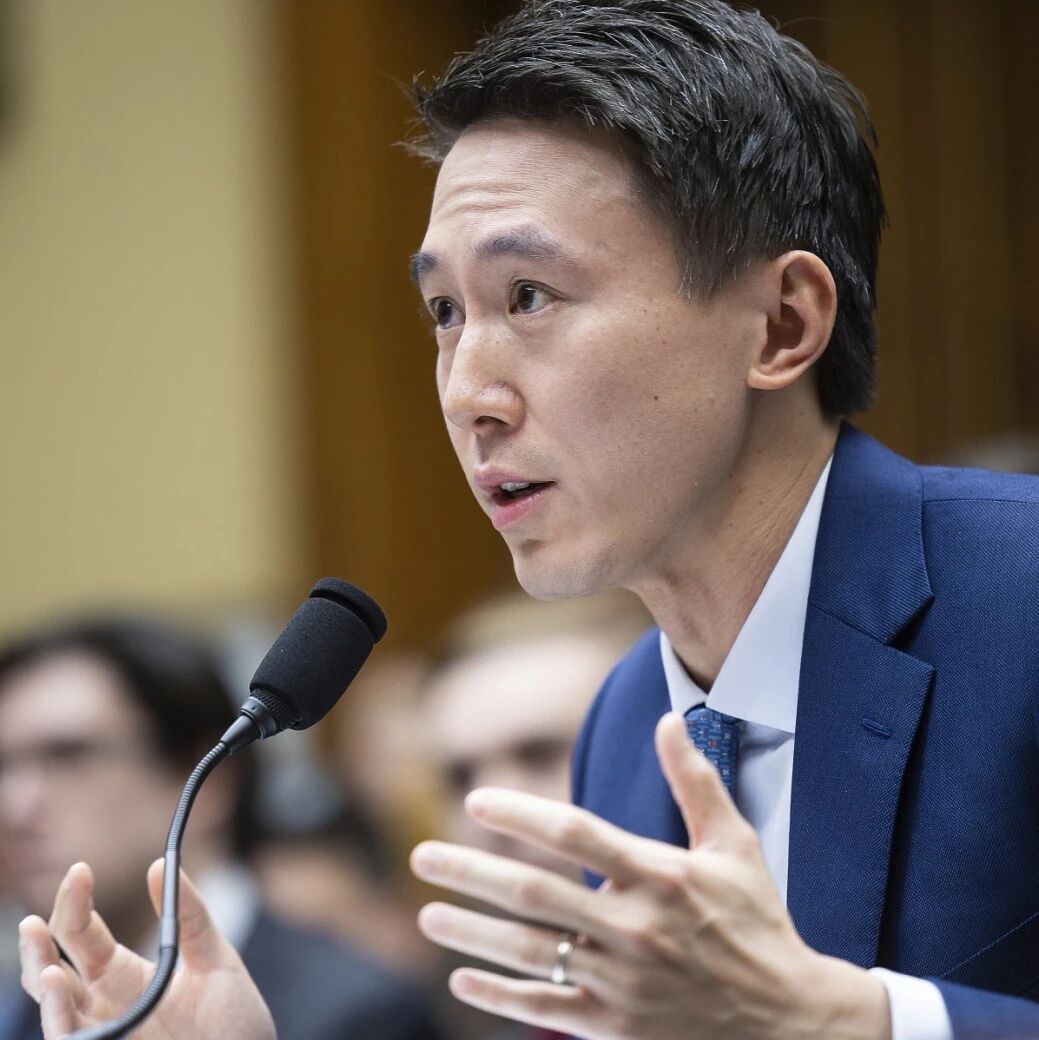
Core Viewpoint - TikTok faces significant challenges in the U.S. due to increasing scrutiny from lawmakers and potential legislative actions that could lead to its breakup or ban, reflecting a growing resistance to globalization in a politically charged environment [3][5][6]. Group 1: Hearing Overview - The U.S. Congress held a hearing on TikTok, marking the first time in three years that the company’s CEO, Shou Zi Chew, attended to address concerns about data privacy and national security [3][4]. - The hearing lasted nearly five hours, during which Chew struggled to provide detailed answers due to frequent interruptions from lawmakers, highlighting the contentious nature of the inquiry [4][9]. - Lawmakers expressed concerns that TikTok poses a serious threat to American citizens by potentially allowing foreign governments to access sensitive data and influence content [7][8]. Group 2: User Engagement and Growth - TikTok has become deeply embedded in American society, with approximately 150 million monthly users, a threefold increase since 2020, and daily active users exceeding 80 million [5][39]. - Despite its growth, TikTok's penetration rate in the U.S. remains at about 24%, significantly lower than Douyin's (its Chinese counterpart) 54% [42]. Group 3: Legislative Environment - The Biden administration has provided TikTok with two options: either divest its U.S. operations or face a ban, reflecting a bipartisan consensus in Congress regarding the platform's risks [5][38]. - Recent legislative proposals, such as the RESTRICT Act, aim to empower the government to ban foreign applications deemed a threat to national security, with bipartisan support [38]. Group 4: Data Security Measures - TikTok is implementing the "Texas Project," which involves migrating its U.S. operations to Oracle's servers in Texas, aiming to alleviate concerns over data security and foreign access [46][50]. - The project is expected to cost TikTok between $700 million to $1 billion annually, with a focus on establishing a firewall for U.S. user data [46][50]. Group 5: Challenges and Comparisons - TikTok's advertising revenue generation is significantly lower than that of competitors like Facebook, with the platform struggling to monetize its user base effectively [42][43]. - The platform's e-commerce initiatives in the U.S. have been slow to develop, with plans for expansion being postponed due to regulatory pressures and competitive challenges [44][46].
2020丨直击 TikTok 美国听证会
晚点LatePost· 2025-09-26 00:35
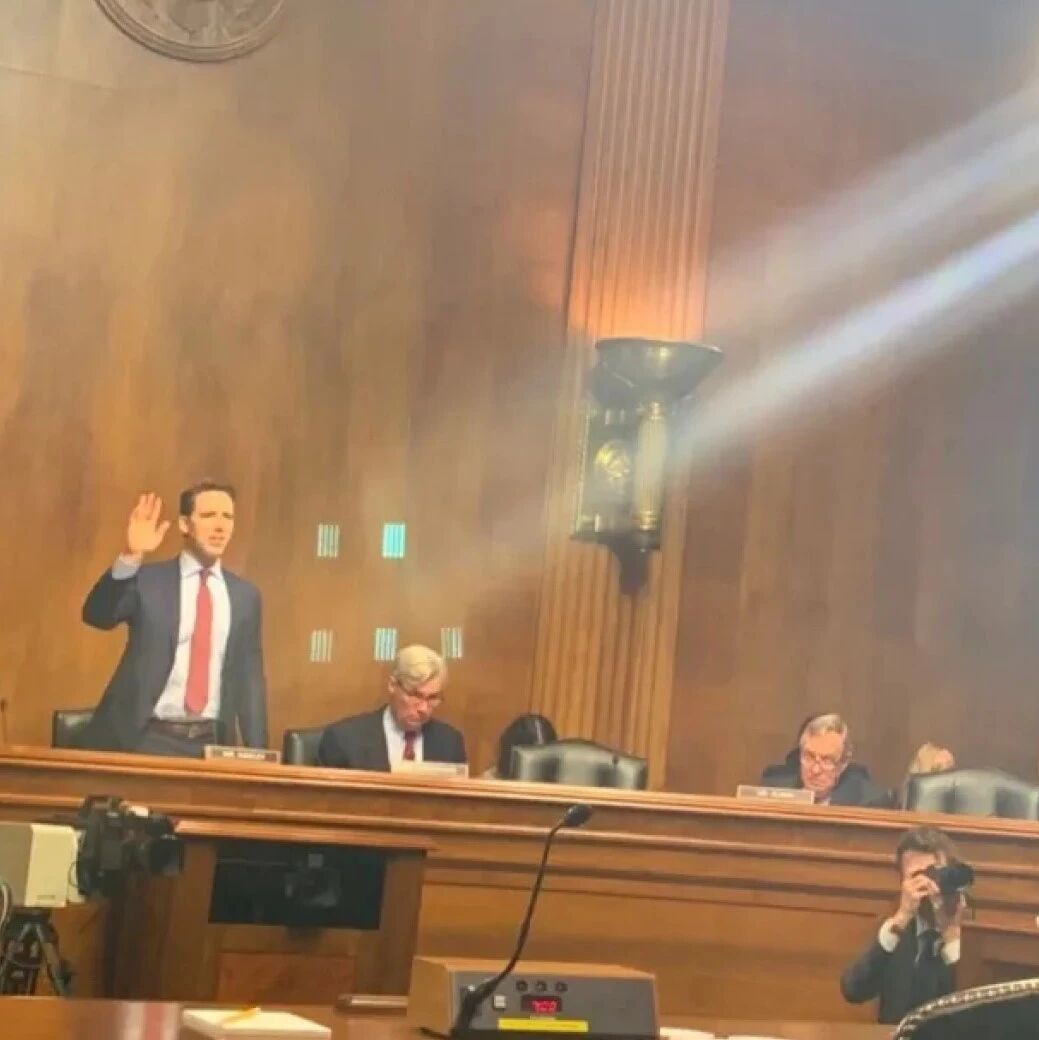
Core Viewpoint - The article discusses the complexities faced by ByteDance as it navigates unprecedented global challenges, particularly in light of U.S. congressional scrutiny over TikTok's data security and privacy issues [3][10]. Group 1: Congressional Hearing on TikTok - A U.S. Senate hearing on TikTok's data security took place on March 4, 2020, where TikTok and Apple declined to attend [4]. - Senator Josh Hawley announced plans to legislate a ban on federal employees using TikTok on government devices, highlighting concerns over user data collection and potential government access [5][9]. - TikTok's U.S. operations are managed by an American company based in Culver City, California, and the platform has become a focal point for discussions on user data security alongside Facebook [5][10]. Group 2: TikTok's Response and Independence - TikTok has been working to establish operational independence from its parent company, ByteDance, with a focus on data, product architecture, and commercialization [6]. - The company has set a commercial target of 7.5 billion RMB for 2020 and is actively recruiting a new CEO for its U.S. operations to enhance its credibility [6][10]. - Despite concerns, TikTok's operational independence does not imply a spin-off in terms of ownership structure [6]. Group 3: Expert Opinions on Data Security - Experts at the hearing emphasized the potential for user data to be weaponized, with concerns about data mining and vulnerabilities in information security [7][10]. - Samm Sacks, a researcher, argued that while there are valid concerns about data security, the idea that TikTok's data could be used for future blackmail is exaggerated [13][15]. - Derek Scissors noted that while current risks may be low, future risks could be significant, and suggested that ByteDance should consider structural changes to alleviate U.S. concerns [20][21]. Group 4: Market Dynamics and Competition - The article highlights that Chinese tech companies, including TikTok, face unique challenges in international markets, particularly regarding data privacy concerns [10][21]. - In emerging markets, data privacy issues may not hinder Chinese companies as much as they do in developed markets, where consumers prioritize service quality and price [21]. - The competitive landscape in regions like Southeast Asia and India is influenced by local data governance practices, which may favor companies willing to localize data storage [15][21].
2025丨四年极限自救,变成一个有吸引力的筹码
晚点LatePost· 2025-09-26 00:35
Core Viewpoint - The article discusses the challenges faced by TikTok in the U.S. market due to legislative actions and political pressures, highlighting that the company's future developments are increasingly beyond its control [2][5][37]. Group 1: Legislative Actions and Political Pressures - On January 19, 2025, TikTok was effectively banned in the U.S. as Congress passed a law requiring ByteDance to sell TikTok or face a ban [2][6]. - The law applies to all ByteDance products, including Lemon8, CapCut, and Lark, which were also taken offline in the U.S. [2]. - The U.S. government has escalated its scrutiny of TikTok, transitioning from individual executive actions to formal legislative measures [5][11]. Group 2: Historical Context and Comparisons - TikTok's current situation mirrors past challenges faced by Huawei, where national security concerns led to significant operational hurdles [4][5]. - TikTok's entry into the U.S. market in 2017 coincided with rising geopolitical tensions, which have only intensified over the years [4][5]. - The company has made substantial investments in growth and compliance, yet its operational choices are now limited by external political factors [5][7]. Group 3: Company Operations and Employee Sentiment - Despite the ban, TikTok employees remain hopeful about the platform's future, with many continuing to work on business plans and operations [3][7]. - The TikTok e-commerce team faced immediate challenges as U.S. merchants were left uncertain about their inventory and sales strategies [3][7]. - TikTok has been proactive in engaging with local creators and businesses to enhance its value proposition in the U.S. market [5][14]. Group 4: Business Strategy and Market Position - TikTok has pursued aggressive growth strategies, becoming a major advertising player in the U.S. despite facing stiff competition from established platforms like Google and Facebook [15][24]. - The platform's e-commerce initiatives have shown promise, with daily sales reaching approximately $20 million in the U.S. [14][25]. - TikTok's advertising market share in the U.S. is projected to be only 3.4% by 2024, indicating significant room for growth [24]. Group 5: Future Outlook and Uncertainties - The article emphasizes that TikTok's future is uncertain, hinging on political decisions and legislative actions that are beyond the company's control [7][37]. - The potential for a 90-day extension on the ban has been discussed, but the overall sentiment remains cautious as the political landscape evolves [6][36]. - TikTok's ability to navigate these challenges will depend on its capacity to adapt and maintain its user base amid ongoing scrutiny [37].

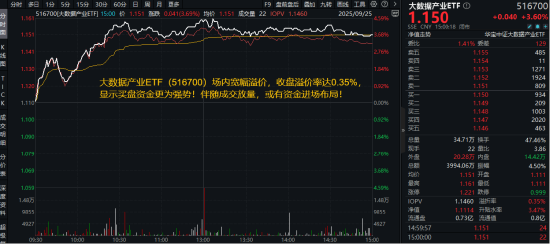
大涨3.6%!大数据产业ETF领跑市场!重磅利好政策迭出+阿里全球扩张布局,516700创2年多新高!
Xin Lang Ji Jin· 2025-09-25 11:49
Group 1 - The core viewpoint highlights the significant rise in the big data industry ETF (516700) due to favorable policies and Alibaba's global expansion, with a trading increase of 3.6% and a peak of 4.59% during the day [1] - The ETF's trading volume surged by 426%, indicating strong buying interest and potential capital inflow into the sector [1] - Key constituent stocks such as Tianxiexiu and Inspur Information reached their daily limit, while others like Zhongke Shuguang and Yonyou Network saw gains exceeding 6% [1] Group 2 - Recent policies from the Ministry of Commerce and other departments aim to boost digital consumption and establish international data centers and cloud computing centers in free trade zones [2] - The release of the national standard focusing on data security and personal information protection provides a clear path for organizations in the data security field [2] - Alibaba announced significant investments in AI infrastructure, planning to build new cloud computing nodes in Brazil and France, which is expected to drive demand for servers and data centers [2] Group 3 - The big data industry ETF (516700) tracks the CSI Big Data Industry Index, focusing on sectors like data centers and cloud computing, with major stocks including Zhongke Shuguang and Inspur Information [3] - The emphasis on "technology leading the way" and the acceleration of domestic substitution processes are seen as catalysts for growth in the sector [3][4] - The current trend towards technological self-reliance is expected to create a broad market space for AI and security integration [2][4]