端侧AI

Search documents
各厂商纷纷布局端侧AI,关注产业链相关机会
Jianghai Securities· 2025-12-11 07:13
Investment Rating - The industry investment rating is maintained at "Overweight" [5] Core Insights - The report highlights the increasing significance of domestic AI chips in the electronics industry, with various companies launching innovative products such as AI glasses and mobile assistants [4][6] - The report emphasizes the rapid growth and adoption of AI edge devices, suggesting a focus on related companies like Alibaba, Xiaomi, Hengxuan Technology, and others [6] Summary by Sections Recent Industry Performance - The industry has shown relative returns of 0.82% over the past month, 10.46% over three months, and 30.55% over the past year compared to the CSI 300 index [3] Key Events - Alibaba launched the Quark AI glasses on November 27, 2025, featuring advanced technology and integration with various Alibaba services [5] - ByteDance introduced the Doubao mobile assistant on December 1, 2025, which can perform complex tasks like a human [5] - Huawei released the AI toy "Hanhai" on November 28, 2025, designed for emotional companionship [5] Investment Recommendations - The report suggests monitoring the growth of AI edge devices and related companies, indicating a positive outlook for the sector [6]
当算力追赶不上智能:2026年AI行业的缺口与爆发(附86页PPT)
材料汇· 2025-12-10 15:51
Core Insights - The rapid evolution of AI is outpacing the development of computing infrastructure, leading to a significant gap in computing power that is expected to widen by 2026. This gap will manifest in two key areas: a growing demand for core computing capabilities across chips, storage, packaging, and cooling, and a shift towards edge computing to reduce cloud latency and costs, resulting in an explosion of applications from AI smartphones to integrated robots [1]. Industry Overview - The electronic sector has reached a record high in Q3 2025, driven by AI, with the electronic index rising by 44.5% year-to-date, outperforming the CSI 300 index by 26.6% [12][13]. - The semiconductor sector has shown significant growth, with various sub-sectors experiencing substantial increases: PCB (+114%), consumer electronics (+51%), and semiconductors (+40%) year-to-date [12][13]. - The overall electronic industry reported a revenue increase of 19% and a net profit increase of 35% in Q1-Q3 2025, with all major segments showing positive growth [18][24]. Performance Metrics - The electronic sector's inventory levels have risen, particularly in consumer electronics and PCBs, indicating strong demand and recovery in terminal markets [22][25]. - The semiconductor sector's monthly sales growth has rebounded since June 2023, with a notable increase in demand for digital, storage, and equipment segments [34][41]. AI Impact on Semiconductor Cycle - The semiconductor market is entering an upward cycle, with significant growth in capital expenditures from both domestic and international cloud service providers, driven by AI demand [41][42]. - Major cloud providers are expected to increase their capital expenditures significantly, with projections indicating a 50%-60% growth in 2026 [43]. Consumer Electronics Trends - Global smartphone sales are projected to recover, with a forecast of 1.29 billion units in 2024, reflecting a 6.1% year-on-year increase [26][27]. - The PC market is also expected to grow, with global sales reaching 263 million units in 2024, a 1.0% increase year-on-year [27][29]. Automotive Sector Insights - The automotive market is experiencing a weak recovery, with global sales expected to reach 92.23 million units in 2025, reflecting a 1.8% year-on-year increase [39]. - The penetration rate of electric vehicles is projected to rise, with expectations of 20% in 2025 for global sales [39]. AI Narrative Acceleration - The competition among AI model developers has intensified, with significant advancements in model capabilities and applications across various sectors [47][50]. - The demand for AI-related spending is expected to reach $3-4 trillion by 2030, driven by the need for enhanced computing power and applications [58]. Edge Computing and Hardware Development - The shift towards edge computing is becoming crucial, with predictions indicating that the global edge AI market will grow to ¥1.2 trillion by 2029, with a CAGR of 39.6% [69]. - Major AI companies are actively entering the edge hardware market to enhance user experience and profitability [69].





泰凌微:与谷歌在智能家居/音频等领域展开合作
Ju Chao Zi Xun· 2025-12-10 14:26
Group 1 - The core viewpoint of the article is that TaiLing Microelectronics (688591.SH) has expanded its collaboration with Google from supplying remote control chips to a broader partnership in smart home, audio, and edge AI projects [1][3] - The company’s products have been integrated into Google's Pixel Bud Pro2 smart headphones, indicating a significant entry into the global consumer electronics supply chain [1] - TaiLing Microelectronics aims to enhance its one-stop service capability for original equipment manufacturers (OEMs) by building a chip and platform system around smart home and IoT applications [3] Group 2 - The TL-EdgeAI platform, based on the TL721X series chips, supports the deployment of open-source models like Google LiteRT and TVM, targeting low-power IoT and wearable device scenarios [3] - The company emphasizes the increasing demand for low-power computing and multi-protocol connectivity in edge devices due to the integration of AI and IoT [3] - Future plans include continuous iteration of hardware and software solutions for the TL-EdgeAI platform while maintaining low power consumption and high integration [3]

泰凌微:端侧AI芯片目前持续放量中
Zheng Quan Ri Bao Wang· 2025-12-10 12:41
Group 1 - The core viewpoint of the article is that the company, TaiLing Micro, is experiencing a continuous increase in the production of its edge AI chips [1] Group 2 - The company responded to investor inquiries on its interactive platform regarding the ongoing growth in the output of its edge AI chips [1]
电子行业2026年投资策略:从云端算力国产化到端侧AI爆发,电子行业的戴维斯双击时刻
Soochow Securities· 2025-12-10 12:11
Investment Strategy Overview - The report highlights a significant investment opportunity in the electronic industry, driven by the dual forces of domestic cloud computing capabilities and the explosive growth of AI at the edge, marking a pivotal moment for the sector leading up to 2026 [1] Semiconductor Manufacturing - Capital expenditure in semiconductor manufacturing is set to reach new heights, with domestic fabs expected to experience a dual expansion in memory and advanced logic production in 2026, supporting a sustained high level of demand in the wafer foundry sector [2] - The semiconductor equipment sector is anticipated to witness a "β+α" resonance market, with a focus on industry leaders benefiting from expansion dividends and companies like Jingzhida and others that have a clear technology realization logic [2] Cloud Computing Chips - Global cloud service providers (CSPs) are increasing capital expenditures, with the combined capital expenditure of the four major overseas CSPs (Google, Amazon, Microsoft, Meta) reaching $97.9 billion in Q3 2025, a 10% quarter-on-quarter increase [5] - Domestic cloud computing is catching up, with significant growth potential as demand for computing power rises, particularly from leading firms like ByteDance [5][17] - Companies such as Cambricon and Haiguang Information are recommended for investment due to their expected performance release in the domestic computing power sector [5][17] Edge Computing Chips - The strategic importance of edge AI is rapidly increasing, with major tech companies integrating AI models into core products, enhancing the demand for System on Chip (SoC) manufacturers [7][36] - Companies like Amlogic and RichChip are positioned to benefit from the growing demand for edge AI applications, particularly in smart home devices [7][39] Storage Sector - The storage sector is experiencing a strong cyclical upturn, with DRAM and NAND indices showing significant increases of 101% and 79% respectively from September to November 2025 [5] - Major CSPs are increasing their procurement of storage products, leading to a sustained rise in storage prices and creating a "super cycle" in the industry [5] Analog Sector - The analog sector is seeing growth driven by increasing automotive demand, although price pressures are expected to persist [5] - The sector is poised for opportunities related to new AI applications as the industry evolves [5] Consumer Electronics - AI is driving a transformation in terminal interactions, with a notable shift in smartphone upgrades and the emergence of AR products [7] - The AR glasses market is expected to see significant growth in 2026, with major companies like Meta and Apple launching new products [7] PCB/CCL Market - The PCB/CCL market is set to benefit from increased capital expenditures by global cloud providers, with the AI PCB market projected to reach 60 billion yuan in 2026, a 229.8% year-on-year increase [7] - The introduction of low-loss materials and advanced architectures is expected to significantly enhance the value of PCB products [7]

软件ETF(515230)近20日净流入超2.5亿元,关注端侧AI产业进展
Mei Ri Jing Ji Xin Wen· 2025-12-10 07:07
软件ETF(515230)跟踪的是软件指数(H30202),该指数从市场中选取涉及软件开发、销售和服务等 业务的上市公司证券作为指数样本,覆盖操作系统、应用软件、网络安全等领域的代表性企业,以反映 软件行业相关上市公司证券的整体表现。该指数具有显著的成长性和技术导向性,能够较好地体现软件 行业的市场趋势和发展动态。 长江证券指出,豆包手机助手作为首个豆包与手机厂商在操作系统层面合作的手机AI助手,实现了通 过系统语音、侧边AI键及智能耳机唤醒等功能,直接读取屏幕内容并跨应用调用服务。此举推动手机 操作系统交互逻辑从"图标点击"向"意图识别"转变。终端设备可能是AI落地的重要方向,而全栈AI或将 是未来模型厂商的发展趋势。可关注国产大模型厂商、AI基础设施提供商、AIAgent相关公司以及中国 推理算力产业链。 (文章来源:每日经济新闻) ...
深圳AI芯片“小巨人”冲刺IPO,清华学霸创办,夫妻持股超65%,出货量全球第一
3 6 Ke· 2025-12-10 04:37
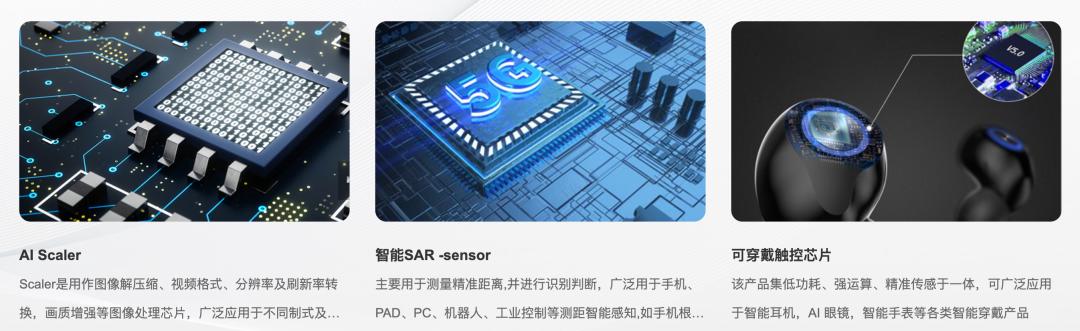
Core Viewpoint - Xihua Technology, a Shenzhen-based AI chip and solution provider, has officially submitted its IPO application to the Hong Kong Stock Exchange, aiming to enhance its R&D capabilities and expand its product offerings in the AI chip market [1][4]. Group 1: Company Overview - Founded in August 2018, Xihua Technology is recognized as a national-level key "little giant" enterprise, specializing in smart display chips and smart sensing control chips, with over 100 million chips shipped to date [1]. - The company ranks second globally in the Scaler market with a market share of 18.8%, having shipped 37 million units, and holds the largest market share of 55% in the AI Scaler segment [2][3]. Group 2: Financial Performance - Xihua Technology has not yet achieved profitability, reporting cumulative losses of 426 million RMB over less than four years, with R&D expenditures nearing 400 million RMB [5]. - Revenue figures for the years 2022 to 2025 (up to September) are 87 million RMB, 150 million RMB, 244 million RMB, and 240 million RMB, respectively, indicating a compound annual growth rate of 67.8% from 2022 to 2024 [5][8]. - The gross margin fluctuated significantly, with rates of 35.7%, 21.5%, 28.4%, and 22.1% for the respective years, attributed to the company's relatively small sales scale [8][9]. Group 3: Product Lines and Market Position - Xihua Technology has developed 17 chip models across two main product lines: smart display chips (including AI Scaler and STDI chips) and smart sensing control chips (including TMCU and general-purpose MCUs) [11][12]. - The smart display chips have consistently contributed over 85% of the company's revenue from 2022 to 2025, while the revenue share from smart sensing control chips has increased from 1.9% in 2022 to 14.4% in the first nine months of 2025 [11][12]. Group 4: R&D and Technological Development - The company has established three major technological foundations, with over 50% of its workforce dedicated to R&D, totaling 81 employees [20][22]. - Xihua Technology has filed 361 patent applications, with 85% being invention patents, and holds 169 granted patents as of September 2025 [22]. Group 5: Customer and Supplier Dependency - A significant portion of Xihua Technology's revenue is concentrated among a few key customers, with the top five customers contributing 89.9% of total revenue in 2022, decreasing to 82.2% in the first nine months of 2025 [23][24]. - The company also relies heavily on a limited number of suppliers, with the top five suppliers accounting for 81.8% of total procurement costs in 2022, which decreased to 76.6% in the first nine months of 2025 [27][29]. Group 6: Ownership Structure - The founder and chairman, Chen Xi, and his spouse, Wang Hong, collectively control 65.51% of Xihua Technology [30][32].
当千亿参数撞上5毫米芯片
Tai Mei Ti A P P· 2025-12-10 03:19
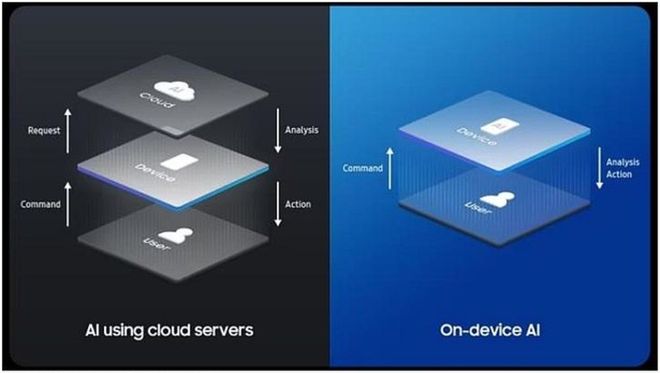
Core Insights - The global tech industry is experiencing a shift from cloud-based AI to edge AI, driven by the limitations of cloud dependency and the need for real-time processing in critical applications [1][4][18] - The current trend emphasizes the development of smaller, more efficient AI models that can operate independently on edge devices, rather than relying on large cloud models [16][18] Group 1: Challenges of Cloud Dependency - Cloud-based AI systems face significant latency issues, which can be detrimental in time-sensitive applications like autonomous driving [2][4] - Privacy concerns arise from the need to transmit sensitive data to cloud servers, making edge computing a more attractive option for users [2][4] Group 2: The Shift to Edge AI - The industry is moving towards a "cloud-edge-end" architecture, where complex tasks are handled by cloud models while real-time tasks are managed by edge devices [7][18] - Edge AI must overcome the "impossible triangle" of high intelligence, low latency, and low power consumption, necessitating innovative solutions [7][8] Group 3: Techniques for Edge AI Implementation - Knowledge distillation is a key technique that allows smaller models to retain the intelligence of larger models by learning essential features and reasoning paths [8][10] - Extreme quantization reduces model size and increases speed by compressing model weights, allowing for efficient processing on edge devices [10][11] - Structural pruning eliminates redundant connections in neural networks, further optimizing performance for edge applications [10][11] Group 4: Hardware Innovations - The "memory wall" issue in traditional architectures leads to inefficiencies, prompting the development of specialized architectures that integrate storage and computation [11][13] - Companies are exploring dedicated chip designs that optimize performance for specific AI tasks, enhancing efficiency in edge computing [13][14] Group 5: Industry Evolution - The focus is shifting from general-purpose AI models to specialized models that excel in specific applications, improving reliability and performance [15][16] - The Chinese AI industry is collectively recognizing the importance of practical applications over sheer model size, leading to a more grounded approach to AI development [16][18]
中银国际:料明年AI手机助手开始广泛发展 厂商提前投入和升级端侧AI相关的功能性硬件
Zhi Tong Cai Jing· 2025-12-10 02:57
然而,产品发布后随即遭遇多个软件平台的使用限制,首批用户反馈在作微信时触发登录环境异常导致 封号;多家银行App及阿里系应用识别出非人工作风险,拒绝执行支付、验证码等敏感指令或直接提 示"设备异常"。面对广泛的业内抵制和使用限制,豆包团队被迫于12月3日及5日紧急下线微信及金融类 应用的作能力,并对游戏代玩、点击激励广告等使用场景对使用AI助手进行了限制。 中银国际发布研报称,明年将是AI手机助手开始广泛发展的一年,未来几个季度市场也将陆续发布带 有AI手机助手功能的产品。该行认为豆包手机助手的发布将显著强化手机厂商的FOMO心态,从而带来 对端侧AI相关的功能性硬件的提前投入和升级,如SoC、存储、续航、散热和传感器等。 中银国际指,邀请手机智能助手的业内资深专家参与了讨论,并一致认为手机AI助手正在逐步走向应 用的拐点,基本的底层技术栈的设计已经比较成熟,而目前所面对的主要困境更多来自互联网服务商、 手机硬件厂商以及监管之间不同利益所带来的摩擦。 报道称,12月1日,字节跳动联合中兴手机发布搭载豆包手机助手预览版的工程样机,其核心卖点在于 通过语音指令实现跨应用的自动化AI Agent作能力。豆包手机广告 ...

上市AI芯片公司落地数个千卡集群;国内有万卡经验的公司不超过3个;拆机DDR4半公开售卖;智算中心建设遇到「死结」
雷峰网· 2025-12-09 10:55
Group 1 - The eighth GAIR Global Artificial Intelligence and Robotics Conference will be held on December 12-13, 2025, in Shenzhen, focusing on topics such as large models, computing power transformation, and world models [1][20]. - The conference will feature three thematic forums, gathering builders and thinkers from AI chips, intelligent computing centers, cloud computing, infrastructure, and capital fields to discuss the realities and trends of the computing power revolution [1][20]. Group 2 - AI chip companies listed on the Sci-Tech Innovation Board are strictly controlling the production quality of computing power servers, with the latest flagship product offering a single card computing power of approximately 0.5P, priced at 250,000 yuan [2]. - The previous generation flagship product, an 8-card integrated machine, was priced between 600,000 to 650,000 yuan, and the company has already collaborated with partners to implement several thousand-card cluster projects [2]. Group 3 - Leading AI chip companies have recently secured significant orders, including a procurement order for 200,000 chips from a major internet company for their search and recommendation services [4]. - The CEO of the chip company has committed to "unlimited supply" for core computing power needs during discussions with another major internet company, further solidifying partnerships with key clients [4]. Group 4 - Major internet companies are accelerating the exploration and implementation of domestic computing power alternatives due to geopolitical influences, aiming to build a self-controlled computing power supply system [5]. - These companies are adopting a "scene adaptation first, gradual optimization" approach, prioritizing business scenarios where domestic chips can meet core needs [5]. Group 5 - The exploration of alternatives to CUDA is accelerating globally, with initiatives like Triton and domestic projects such as FlagOS and TileLang aiming to create a Chinese version of CUDA [6]. - However, the development of FlagOS faces challenges, as the resource and effort investment among participating companies varies significantly [6]. Group 6 - The price of storage chips has doubled, significantly impacting the overseas business of some domestic technology companies, leading to a reduction in overseas orders [7][8]. - The rising storage costs are forcing product prices up, causing foreign clients to adopt a wait-and-see approach, which directly affects export volumes [8]. Group 7 - The market for DDR4 storage chips is experiencing a shortage, leading to the emergence of "used" chips being sold semi-publicly, as manufacturers begin to use parts from dismantled equipment [9]. - These used chips undergo performance and quality testing before entering the market, with minimal price differences compared to new chips [9]. Group 8 - The number of companies capable of deploying and operating ten-thousand-card clusters in China is limited to fewer than three, with most manufacturers still at the thousand-card cluster construction stage [11][12]. - The evaluation standards for computing power card performance in intelligent computing centers are shifting towards the ability to manage data flow and collaboration between large clusters [11]. Group 9 - The cost of financing for intelligent computing center projects has increased significantly, with financial leasing companies now requiring higher returns, leading to a "deadlock" where projects struggle to find funding [13]. - Without strong personal connections or favorable interest rates, advancing intelligent computing center projects has become increasingly difficult [13]. Group 10 - A certain chip manufacturer has implemented a strict "original factory authorization sales" mechanism, requiring downstream customers to undergo direct review and approval from the original factory [14]. - Recent projects in a certain eastern city have adopted this manufacturer's chips, with many procurement parties having connections to the chip manufacturer [14]. Group 11 - The rise of edge AI is driving interest in NPU startups, with significant capital attention on companies founded by individuals with backgrounds in major tech firms [15]. - Leading smart hardware companies and self-developed chip firms are actively recruiting NPU talent as edge AI enters a new phase [15]. Group 12 - A leading AIDC manufacturer is planning to establish a large-scale B200 computing power cluster in Southeast Asia, attracting attention from various supply chain partners seeking collaboration [16][17].