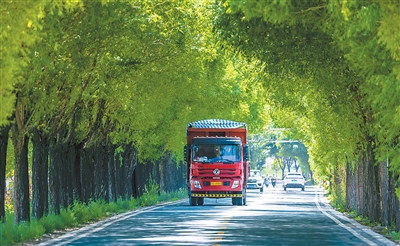
城乡融合发展

Search documents
展现新面貌 焕发新活力——赣吉青三省加快城乡融合发展步伐
Ren Min Ri Bao· 2025-08-20 00:26
Group 1: Urban-Rural Integration Development - Urban-rural integration is a necessary requirement for modernization in China, emphasizing the organic combination of rural revitalization and new urbanization [2][4] - The integration has led to diverse county economies, with unique characteristics and continuous circulation between urban and rural areas, resulting in vibrant development [2][4] Group 2: Technological Advancements in Agriculture - In Jiangxi, a digital poultry farm produces 40,000 eggs daily, generating an annual output value of approximately 13 million yuan, showcasing the impact of digital management in agriculture [1][3] - The use of 5G and IoT technologies in egg production allows for real-time monitoring and traceability, enhancing competitiveness in the market [3][5] Group 3: Ecotourism and Seasonal Operations - Jilin's Songhua Lake has transformed from a winter ski resort to a year-round tourist destination, with expected summer visitor numbers surpassing 400,000 [3][4] - Ecotourism around Qinghai Lake has benefited over 20,000 residents through a distribution mechanism that includes government leadership and collective participation [1][4] Group 4: Financial Innovations Supporting Rural Development - Financial institutions in Qinghai have introduced innovative products like livestock collateral and order financing, facilitating over 3 billion yuan in loans to support agricultural and pastoral development [7][8] - The return of talent and capital to rural areas has created new opportunities for comprehensive revitalization [7][8] Group 5: Infrastructure and Public Services Improvement - Jilin has implemented a "toilet revolution," significantly improving rural sanitation and achieving over 98% coverage in waste management systems [9][10] - Qinghai has enhanced healthcare access in rural areas, with county-level medical services now fully covered, improving the quality of care available to residents [10][11] Group 6: Smart Governance and Community Engagement - The "Bayli Ban" smart platform in Jiangxi allows residents to report issues like broken streetlights, with a response time of under 24 hours, showcasing efficient digital governance [11][12] - Jilin's new urbanization strategy focuses on breaking down barriers to urban-rural resource flow, enhancing living conditions and economic opportunities in rural areas [11][12]
展现新面貌 焕发新活力(活力中国调研行)
Ren Min Ri Bao· 2025-08-19 22:46
Core Insights - Urban-rural integration is a necessary requirement for modernization in China, emphasizing the organic combination of rural revitalization and new urbanization [2][3] Group 1: Agricultural Innovation - In Jiangxi, a digital poultry farm produces 40,000 eggs daily, generating an annual output value of approximately 13 million yuan, showcasing the impact of digital technology on agriculture [1][3] - The introduction of 5G and IoT technologies in egg production allows for real-time monitoring of environmental conditions, enhancing productivity and market competitiveness [3][5] - In Jilin, the transformation of winter sports resources into year-round tourism has led to an expected summer visitor count of over 400,000, demonstrating effective resource utilization [3][4] Group 2: Economic Development - The integration of ecological tourism around Qinghai Lake has benefited over 20,000 residents across eight towns, highlighting the economic advantages of sustainable practices [1][4] - In Jiangxi, the establishment of 81 national and 1,147 provincial agricultural leading enterprises has resulted in an average annual income increase of 4,260 yuan for 3.76 million farmers [5][6] Group 3: Infrastructure and Public Services - Jilin's rural sanitation improvements have led to over 98% coverage of waste collection systems and 47.1% control of rural sewage treatment, significantly enhancing living conditions [9][11] - Qinghai has improved healthcare access in rural areas, with county-level medical services now fully covered, ensuring better health outcomes for residents [10][11] Group 4: Financial Support and Talent Return - Innovative financial products in Qinghai, such as livestock collateral and order financing, have facilitated over 3 billion yuan in loans to support agricultural development [7][8] - The return of talent and capital to rural areas has spurred entrepreneurship, with significant job creation and economic revitalization in previously underdeveloped regions [7][8]
展现新面貌 焕发新活力——赣吉青三省加快城乡融合发展步伐(活力中国调研行)
Ren Min Ri Bao· 2025-08-19 22:33
Core Insights - Urban-rural integration is a necessary requirement for modernization in China, emphasizing the organic combination of rural revitalization and new urbanization [2][4]. Group 1: Agricultural Innovation - In Jiangxi, a digital poultry farm produces 40,000 eggs daily, generating an annual output value of approximately 13 million yuan, showcasing the impact of digital management in agriculture [1][3]. - The introduction of 5G and IoT technologies in Jiangxi's egg production enhances operational efficiency and product traceability, making the eggs highly sought after in the market [3][5]. - In Jilin, the transformation of winter sports resources into year-round tourism has led to an expected summer visitor count of over 400,000, demonstrating the potential of seasonal resource diversification [3][4]. Group 2: Economic Development - The integration of ecological tourism around Qinghai Lake has benefited over 20,000 residents across eight towns and 20 villages, highlighting the economic advantages of sustainable tourism practices [1][4]. - Jilin's agricultural advancements have resulted in a significant increase in rice production, with 155,000 acres yielding 2.06 billion pounds, showcasing the effectiveness of agricultural research and technology [6][7]. Group 3: Infrastructure and Public Services - The "toilet revolution" in Jilin has improved rural sanitation, with over 98% of rural areas now covered by waste management systems, reflecting a significant enhancement in living conditions [9][10]. - Qinghai has made strides in healthcare accessibility, with county-level medical services now fully covering rural areas, improving healthcare delivery for local populations [10][11]. - The implementation of a smart governance platform in Jiangxi has streamlined public service requests, achieving rapid response times for community issues, thus enhancing local governance efficiency [11][12].
中经评论:畅通农村发展“民生线”
Zhong Guo Jing Ji Wang· 2025-08-19 09:19
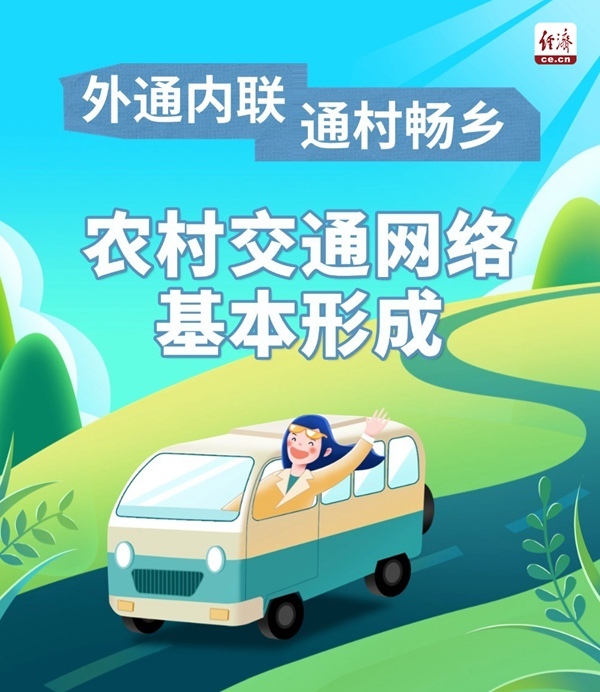
在安徽绩溪,有关部门对路面进行提质加宽、完善必要排水设施,切实提高了乡村公路的通行能力;在 湖北十堰,当地通过国省干线公路和"四好农村路"提档升级、文化赋能、区域协同、产业联动等举措, 促进农民就业增收……从各地实践来看,农村公路高质量发展不仅改善了农村的交通条件,更有助于将 农村地区的环境优势、资源优势转化为经济优势和发展优势,这对于实现乡村全面振兴、城乡融合发展 和共同富裕具有重要意义。 在广袤的农村大地上,一条条蜿蜒的公路犹如毛细血管,串联起千家万户,承载着乡村发展的希望。近 年来,我国农村公路建设成效显著。截至2024年底,农村公路总里程达464万公里,实现了全国3万多个 乡镇、50多万个建制村全部通硬化路,外通内联、通村畅乡的农村交通网络基本形成。 要想富先修路。公路是乡村兴业致富的重要依托。过去,不少农村地区因交通不便,农产品只能"养在 深闺人未识"。如今,随着农村公路建设不断延伸,电商、物流等新兴产业如雨后春笋般涌现,越来越 多的农产品通过网络平台走向全国乃至全球市场,农民的收入也水涨船高。 如何让农村的路更好走?加强顶层设计,科学规划布局是关键。各地应根据农村的地理条件、人口分 布、产业布局等 ...

让人民过上更加美好的生活——看中国经济之“美”
Xin Hua Wang· 2025-08-18 00:07
Core Points - The article emphasizes the importance of improving people's livelihoods and ensuring that the benefits of modernization are shared equitably among all citizens, reflecting the commitment to "Chinese-style modernization" and common prosperity [1][7][9]. Group 1: Economic and Social Policies - The average PM2.5 concentration in key cities decreased by approximately 60% from 2013 to 2024, indicating significant environmental improvements [1]. - In the first half of this year, the per capita disposable income of residents increased by 5.4% year-on-year, outpacing GDP growth [1]. - A yearly childcare subsidy of 3,600 yuan per child will be provided until the child reaches three years old, starting from January 1, 2025 [4]. Group 2: Social Welfare and Support Systems - The central government has allocated 1,566.8 billion yuan for social assistance programs, supporting minimum living guarantees and emergency aid for vulnerable populations [5]. - The average monthly minimum standard for urban and rural residents' basic pensions has been increased by 20 yuan this year [4]. - The number of elderly care insurance participants is approximately 190 million, with over 6,000 public hospitals having geriatric medicine departments by the end of 2024 [4]. Group 3: Poverty Alleviation and Employment - The government aims to consolidate and expand poverty alleviation achievements, ensuring no large-scale return to poverty [7]. - By June, over 6.8 million individuals at risk of returning to poverty have received assistance [8]. - The total output value of the main industries in 832 poverty-stricken counties exceeds 1.7 trillion yuan, with nearly three-quarters of the formerly impoverished population linked to new agricultural business entities [8]. Group 4: Environmental Protection and Sustainability - The article highlights the ongoing efforts to improve environmental quality, including a 2.4% year-on-year decrease in PM2.5 concentration, with an average of 32.1 micrograms per cubic meter [13]. - The forest coverage rate has exceeded 25%, with significant investments in grassland protection and restoration [11]. - The proportion of water quality in major rivers and lakes rated as good (Ⅰ-Ⅲ class) is 90.4%, reflecting improvements in water resource management [12].
建行江苏省分行:以金融之力助推城乡融合发展
Zhong Guo Jin Rong Xin Xi Wang· 2025-08-15 06:50
Core Viewpoint - Jiangsu province is actively exploring rural revitalization and urban-rural integration, with a focus on innovative financial services to support these initiatives [1][4]. Financial Services Innovation - China Construction Bank Jiangsu Branch has developed a comprehensive financial service system to facilitate the flow of social capital, technology, and talent between urban and rural areas, aiming to inject strong momentum into urban-rural integration [1]. - The bank's agricultural loan balance is expected to reach nearly 340 billion yuan by June 2025, with a growth rate exceeding 15% [1]. - The bank has launched products like "Yunong Quick Loan (Industry Chain Version)" to address the financing needs of farmers, allowing them to apply for loans via mobile phones [2]. Organizational Structure and Strategy - The Jiangsu Branch established a Rural Revitalization Financial Department in March 2021 to coordinate financial services in the agricultural sector [2]. - A three-year action plan for county-level business expansion was issued in 2022, featuring 28 supporting policies tailored to different county branches [2][3]. Leadership and Community Engagement - The bank integrates financial services for rural revitalization into its leadership projects, emphasizing the role of party organizations in promoting financial development [3]. - The bank's strategy includes focusing on six agricultural service areas: major agricultural projects, agricultural financing guarantees, market credit, agricultural supplies, agricultural machinery, and agricultural technology [3]. Project Support and Financial Products - By May 2025, the bank's loans in the rural revitalization sector are projected to exceed 30 billion yuan, supporting over 300 enterprises [4]. - Innovative financial products have been developed, such as "Sunan Cloud Loan" and "Yunong Loan - Urban-Rural Integration Loan," to cater to diverse customer needs [7]. Urban-Rural Integration Initiatives - The bank is involved in projects that combine agriculture and tourism, enhancing rural areas through financial support for boutique homestays and cultural centers [8]. - The bank has provided a total credit amount of 4.9 billion yuan for major industrial projects in Jiangsu, focusing on sectors like battery manufacturing and smart manufacturing [9]. Talent Development and Digital Transformation - The bank is committed to cultivating a talent pool specialized in rural financial services, aiming to train 500 professionals by the end of 2025 [9]. - Digital tools and platforms are being developed to enhance customer engagement and streamline financial services [9]. Future Directions - The Jiangsu Branch plans to align its strategies with new urbanization and comprehensive rural revitalization, focusing on government collaboration, financing intelligence, and integrated services [10].
淳安县高质量发展工作推进会暨区县协作第一协作组联席会议召开
Hang Zhou Ri Bao· 2025-08-13 03:27
Core Viewpoint - The meeting emphasized the importance of high-quality development in Chun'an County, focusing on the integration of urban and rural areas and the implementation of the "Ten Million Project" to reduce the "three major gaps" [1][2][3] Group 1: High-Quality Development Initiatives - The provincial and municipal leadership highlighted the need to implement Xi Jinping's important speeches on common prosperity and the "Ten Million Project" to drive urban-rural integration [1][2] - The meeting outlined the goal of making Chun'an a model area for the concept of "Lucid waters and lush mountains are invaluable assets," aiming to showcase it as a highlight in Hangzhou's high-quality development [1][2] Group 2: Economic and Social Strategies - Emphasis was placed on enhancing the tourism industry and promoting the "Thousand Island Lake" regional brand while exploring mechanisms for realizing the value of ecological products [2] - The strategy includes expanding the water industry, improving the comprehensive carrying capacity of the county and central towns, and promoting the development of local specialties to increase farmers' income [2][3] Group 3: Governance and Leadership - The meeting stressed the need for strong party leadership and the central role of the county committee in narrowing the "three major gaps," with the county secretary acting as the frontline commander [3] - A call was made for a robust evaluation system to ensure accountability for both primary and supportive responsibilities in promoting high-quality development [3]
(走进中国乡村)从城市到田园 中国“西部菜都”年轻人回乡探寻更多可能
Zhong Guo Xin Wen Wang· 2025-08-08 12:38
Core Viewpoint - The article highlights the trend of young people returning to rural areas in Chongqing's Tongnan district, leveraging the internet and e-commerce to explore new opportunities in agriculture and rural development [1][5]. Group 1: Young Entrepreneurs in Rural Areas - Gong Yijia, born in 1992, has been engaged in rural e-commerce for over seven years, successfully selling agricultural products like ginger and rice to major cities and even exporting them [1]. - Jiang Feng, a former kindergarten teacher, joined the "Yumeiren" village broadcasting team, emphasizing the emotional connection and community engagement through live streaming and video content [3]. - Wen Chunlai, the village party secretary, transitioned from running a small renovation company to managing the needs of over 2,000 villagers, focusing on selling agricultural products through live streaming [3][4]. Group 2: Rural Development Initiatives - The "Tongnan Village Broadcasting" brand plan aims to empower locals to promote their hometown's culture and products through the internet, enhancing visibility and market reach [5]. - The trend of "reverse urbanization" is noted, with more urban residents choosing to move to rural areas, indicating a shift towards regional coordination and urban-rural integration [5]. - The initiative is seen as a platform for young people to innovate and start businesses in rural settings, aligning with broader urbanization trends [5]. Group 3: Innovation in Agriculture and Food - Li Youfu, with over 20 years in the restaurant industry, has introduced innovative dishes and snacks, such as lemon-flavored meals, to attract a wider audience [6]. - His online presence, "Tongnan Lemon Brother," showcases the potential of food to connect cultures and markets beyond local boundaries, particularly in Southeast Asia [6].
让农村道路更好走
Ren Min Ri Bao Hai Wai Ban· 2025-08-08 01:32
Core Viewpoint - The article discusses the "New Round of Rural Road Improvement Action Plan" issued by the Ministry of Transport, Ministry of Finance, and Ministry of Natural Resources in China, aimed at promoting high-quality development of rural roads and addressing existing challenges in rural transportation infrastructure [1][2][3]. Summary by Relevant Sections Rural Road Development Goals - By the end of 2024, the total length of rural roads is expected to reach 4.64 million kilometers, establishing a basic rural transportation network [2]. - By 2027, the plan aims to complete the reconstruction of 300,000 kilometers of rural roads, maintain a good condition rate of over 70% for road quality, and improve safety and service capabilities [2][4]. Key Tasks of the Action Plan - The plan outlines eight key tasks including road network quality improvement, safety enhancement, transportation service improvement, and rural community development [4]. - Specific actions include upgrading rural roads to meet technical standards, enhancing connectivity with major transport routes, and promoting integrated services for passenger and freight transport [4]. Funding and Financial Support - The plan specifies that central finance will support rural road development through existing funding channels, while local governments are responsible for managing and maintaining rural roads [5]. - It encourages financial institutions and social forces to participate in rural road development and explore stable funding mechanisms [5]. Employment and Economic Development - The plan emphasizes the integration of rural roads with local industries to enhance economic advantages and promote employment [6][7]. - It highlights the importance of developing the "Rural Road +" model to support tourism and logistics, thereby improving the overall service capacity of rural transportation [7]. Achievements and Future Outlook - The Ministry of Transport reports that over 30,000 towns and more than 500,000 administrative villages have been connected by hardened roads, with a high percentage of roads meeting quality standards [7]. - The ongoing efforts aim to provide robust support for rural revitalization and modernization of agriculture and rural areas [7].

让农村道路更好走(锐财经)
Ren Min Ri Bao Hai Wai Ban· 2025-08-07 21:00
Core Viewpoint - The Ministry of Transport, Ministry of Finance, and Ministry of Natural Resources of China have issued a new action plan to enhance rural road quality, aiming for a high-quality development of the "Four Good Rural Roads" initiative by 2027 [2][3]. Summary by Relevant Sections Rural Road Development Goals - By the end of 2024, the total length of rural roads is expected to reach 4.64 million kilometers, establishing a basic rural transportation network [2]. - By 2027, the plan aims to complete the reconstruction of 300,000 kilometers of rural roads, maintain a good technical condition rate of over 70%, and improve safety and service capabilities [2][6]. Key Tasks of the Action Plan - The action plan outlines eight key tasks: road network quality improvement, safety enhancement, transportation improvement, governance capability enhancement, travel service improvement, beautiful countryside enhancement, industry support, and employment increase [4][5]. - Specific measures include upgrading rural road standards, connecting rural roads with major transport routes, and enhancing the integration of passenger and freight services [5][6]. Financial Support and Investment - The plan specifies that central finance will support rural road development through existing funding channels, while local governments are responsible for the management and maintenance of rural roads [5][6]. - It encourages financial institutions and social forces to participate in rural road development, exploring increased long-term credit support [5]. Integration with Local Economy - The plan promotes the "Rural Road +" model, integrating rural roads with local industries, tourism, logistics, and postal services to enhance economic development [6]. - The Minister of Transport highlighted that over 30,000 towns and 500,000 administrative villages have been connected by hardened roads, with a road quality rate of 97.3% [6].