智能体

Search documents
360正式发布企业级智能体构建与运营平台
Zhong Zheng Wang· 2025-10-28 11:59
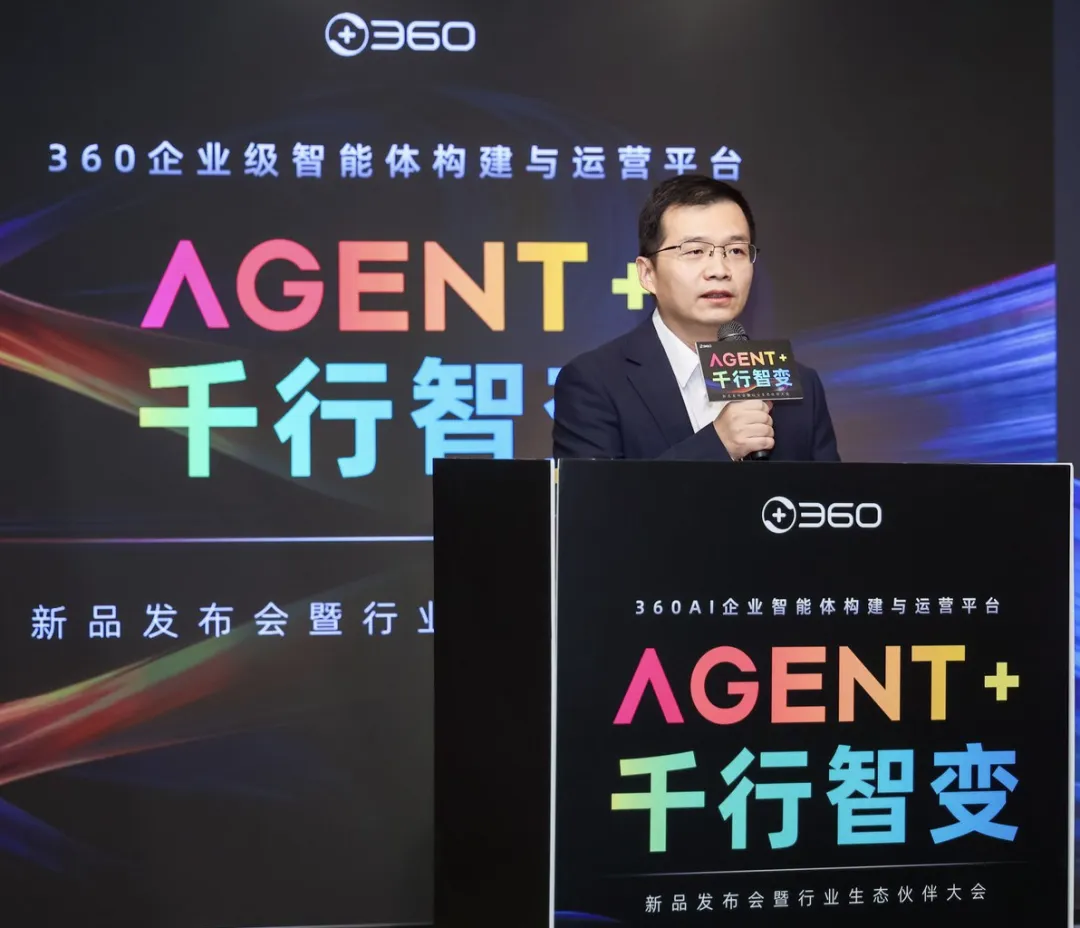
Core Insights - 360 launched a new enterprise-level intelligent agent construction and operation platform at the "Agent+千行智变" product release conference, aimed at helping government and enterprise users systematically build, utilize, and manage intelligent agents, facilitating a seamless transition into the intelligent agent era [1][2] Group 1: Product Development - The platform encompasses L2 to L4 level intelligent agents, representing a significant evolution from the previously introduced L4 level enterprise intelligent agent factory, SEAF, which was designed to assist enterprises in achieving breakthroughs from "0 to 1" [1] - SEAF is equipped with eight foundational infrastructures and ten enhanced capabilities, integrating tools, resources, and functional modules necessary for agent development, addressing the inefficiencies of open-source intelligent agent platforms [2] Group 2: Application and Flexibility - SEAF supports a flexible combination of multiple models, knowledge bases, and MCP capabilities to cater to diverse enterprise needs, allowing for customizable solutions [2] - The intelligent agent factory has established a comprehensive security protection system covering the entire lifecycle of intelligent agent production and application, ensuring data compliance, privacy security, and business reliability [2] Group 3: Target Users - For C-end users, 360 has developed a nano AI multi-agent swarm based on the SEAF platform, enabling seamless generation of video content with a single command [3] - For B-end users, SEAF employs a modular intelligent agent production architecture, providing a Lego-style solution that covers all scenarios through a product matrix including AI browsers and enterprise-level intelligent agent platforms [3]

竞业达(003005) - 2025年10月28日投资者关系活动记录表
2025-10-28 11:46
Group 1: Financial Performance - In the first nine months of 2025, the company achieved a revenue of 190 million CNY, with education revenue accounting for 79% [3] - Revenue fluctuations were primarily influenced by seasonal factors, with a significant decrease of 93.1 million CNY in rail transit project acceptance impacting overall revenue [3] - The company’s R&D investment increased by 7.82% year-on-year, reflecting a commitment to key areas such as industry models and AIGC applications [3] Group 2: Operational Insights - The company expanded its national sales network, increasing total employees by approximately 250 compared to the end of 2024, leading to a rise in operational expenses by 14.97 million CNY [3] - As of September 30, 2025, the total order backlog was 480 million CNY, representing a year-on-year growth of 13% [4] - Orders for smart education increased by 80% compared to the end of the first half of 2025 [4] Group 3: AI Education Products - The company has made significant advancements in AI education products, launching numerous new hardware and software solutions in 2025 [4] - AI classroom solutions have been fully AI-enabled, with products such as smart blackboards and interactive systems already in mass production and deployed in multiple educational institutions [4] - The company has developed a comprehensive support system from data collection to backend applications, aiming to provide systemic solutions covering the entire teaching process [4] Group 4: Market Engagement - The company maintains high customer retention in Beijing while successfully penetrating new clients in various regions, including significant projects in Wuhan and Shanghai [4] - AI teaching revenue is primarily project-based, with individual project values ranging from 1 million to 10 million CNY, while service-based revenue remains lower but is expected to grow as AI and data services evolve [3]

360企业级智能体构建与运营平台发布
Zheng Quan Shi Bao Wang· 2025-10-28 11:20
Core Insights - 360 launched the world's first enterprise-level intelligent agent construction and operation platform, covering L2 to L4 level agents, aimed at helping government and enterprise users integrate AI into their business scenarios [2][3] - The company also initiated the "Qianhang" industry ecosystem cooperation plan, building on its previous launch of the world's first L4-level enterprise intelligent agent factory, SEAF [3] Group 1: Product Development - The new platform is designed to address challenges faced by government and enterprise users, such as the disconnect between intelligent agents and business systems, long development cycles, and industry adaptation difficulties [3] - SEAF is positioned as a solution to enhance individual efficiency, organizational collaboration, and product innovation, facilitating the transition from 0 to 1 in AI implementation [3][4] Group 2: Technical Features - SEAF includes eight foundational infrastructures and ten enhanced capabilities, integrating tools, resources, and functional modules necessary for agent development, thus improving application efficiency [3][4] - The platform supports flexible combinations of multiple models, knowledge bases, and MCP capabilities to meet diverse enterprise needs, ensuring cost control [4] Group 3: Security and Compliance - A comprehensive security protection system for the entire lifecycle of intelligent agents has been established, covering supply chain, content security, data access, and privacy protection to ensure compliance and reliability [4] Group 4: Market Applications - The enterprise-level intelligent agent platform has been integrated with various industries, including urban industries, airlines, healthcare, education, and government, creating multiple closed-loop solutions for "perception-decision-execution" [5]

360企业级智能体构建与运营平台发布:让智能体“能用、好用、放心用”
Huan Qiu Wang· 2025-10-28 10:31
Core Viewpoint - The article highlights the launch of 360's enterprise-level intelligent agent platform, which aims to facilitate the integration of AI into business processes for government and enterprise users, addressing challenges in AI implementation and providing a comprehensive solution for AI transformation [1][3][9]. Group 1: Product Launch and Features - 360 introduced the world's first enterprise-level intelligent agent platform that encompasses L2 to L4 level agents, designed to help users effectively build, utilize, and manage intelligent agents [1][3]. - The SEAF platform, a significant component of this launch, is positioned as the world's first L4-level enterprise intelligent agent factory, addressing issues such as usability and reliability in enterprise scenarios [5][6]. - The platform features a full-stack integration of tools, resources, and modules necessary for agent development, including over a hundred MCPs and thousands of ready-to-use intelligent agents, enhancing business execution capabilities [5][6]. Group 2: Addressing Challenges in AI Implementation - The article discusses three major challenges faced by government and enterprise users in adopting intelligent agents: disconnection from business systems, long development cycles, and difficulty in industry adaptation [3][9]. - 360's SEAF aims to resolve these challenges by providing a flexible combination of multiple models and knowledge bases, allowing for tailored solutions to meet diverse enterprise needs [5][6]. Group 3: Security and Compliance - The intelligent agent factory includes a comprehensive security protection system covering the entire lifecycle of agent production and application, ensuring data compliance, privacy security, and business reliability [5][8]. - The platform incorporates a professional evaluation and monitoring system for intelligent agents, emphasizing a "human-in-the-loop" approach to ensure correct execution and stable operation [8]. Group 4: Industry Collaboration and Ecosystem - The launch event also marked the initiation of the "Thousand Industries" ecological cooperation plan, showcasing 360's commitment to empowering various industries through intelligent agents [3][9]. - Collaborations with various sectors, including education, healthcare, and government, have already begun, demonstrating the practical application of 360's intelligent agent capabilities in real-world scenarios [9][11].
从基础适配走向体验创新:互联网巨头为何纷纷押注鸿蒙6?
3 6 Ke· 2025-10-27 10:49
Core Insights - HarmonyOS 6 has officially launched its large-scale public testing with over 90 models available for upgrade, attracting significant attention from major internet companies like Tencent, Alipay, Meituan, and JD.com, which are launching new features and exclusive experiences on the platform [3][19] - The operating system is evolving from basic compatibility to innovative experiences, showcasing its unique creativity and vitality, despite still being in a growth phase [3][5][19] Group 1: Ecosystem Development - The vitality of an operating system is derived from a continuously growing ecosystem, as demonstrated by Android, iOS, and Linux, which have established robust ecosystems through community engagement and collaboration [5][6] - HarmonyOS 6 has transitioned from merely ensuring compatibility to fostering innovation, with internet giants launching exclusive features tailored for HarmonyOS users, enhancing user experience significantly [6][14] - The introduction of features like high-precision AR shopping and real-time traffic updates illustrates how HarmonyOS 6 is creating new user experiences that go beyond traditional functionalities [7][10][17] Group 2: User Experience and Innovation - The AR shopping feature allows users to visualize products in their environment, transforming the shopping experience into a more immersive and informed decision-making process [7][10] - Real-time updates in travel applications enhance user control and reduce uncertainty during travel, showcasing the system's ability to provide timely and relevant information [8][10] - The introduction of intelligent agents within the ecosystem lowers the barrier for developers to integrate AI capabilities into applications, enabling a more intelligent and responsive user experience [11][13] Group 3: Growth Metrics and Future Potential - HarmonyOS has seen rapid growth, with device numbers surpassing 23 million, reflecting user trust and ecosystem vitality [17][19] - The system's evolution is marked by a shift from basic functionality to a more integrated and innovative ecosystem, indicating a significant milestone in its development journey [14][19] - The collaborative efforts of various partners in enhancing the HarmonyOS ecosystem demonstrate its potential as a new growth engine and innovation platform in the mobile operating system market [19]

机构:到2028年,45%的IT产品与服务交互将以智能体为主要界面
Huan Qiu Wang Zi Xun· 2025-10-27 09:00
Core Insights - By 2028, 45% of IT product and service interactions will primarily utilize intelligent agents as the main interface [1] - The role of CIOs is evolving to redefine enterprise architecture and user experience in response to the new ecosystem of IT interactions mediated by intelligent agents [1] - By 2026, 70% of organizations are expected to adopt a hybrid AI approach that integrates generative, procedural, predictive, and intelligent agent technologies [1] Industry Trends - The global IT industry will be driven by three key forces in the coming years: the ongoing expansion of AI agents within enterprises, significant structural changes in the IT industry due to "Agentic AI transformation," and early investments in rapidly maturing frontier technologies such as quantum computing and next-generation connectivity [1] - CIOs are transitioning from being "system builders and maintainers" to "conductors of intelligent ecosystems," integrating human, digital, and autonomous capabilities to achieve scalable innovation and resilience [2]
加快高水平科技自立自强!四中全会“划重点”,企业提速布局新质生产力
Hua Xia Shi Bao· 2025-10-25 11:58
Core Insights - The Fourth Plenary Session of the 20th Central Committee of the Communist Party of China emphasized accelerating high-level technological self-reliance and building a modern industrial system centered on advanced manufacturing [1][2] - China's high-tech industry is transitioning from "following" to "running alongside" and even "leading" in certain areas, driven by technologies like AI, 5G, and cloud computing [1][2] Group 1: Industrial Development - The session highlighted the importance of strengthening the foundation of the real economy, focusing on intelligent, green, and integrated development [2] - China's semiconductor display industry has captured 70% of the global LCD market, showcasing significant progress in the sector [2] - The OLED technology is becoming the mainstream display technology, with Chinese companies like BOE and TCL investing heavily in production lines [2] Group 2: Technological Innovation - Companies like Visionox are focusing on transforming technological innovations into new productive forces, aiming to enhance China's position in the global high-end market [3] - The integration of digital supply chains is crucial for reducing costs and increasing efficiency in industries such as automotive [3][4] - JD Industrial has developed a supply chain model that significantly reduces procurement time and inventory costs for clients [4] Group 3: AI and Automation - The rise of AI large models is making artificial intelligence a focal point of global innovation, with increasing integration into B-end industries [5][6] - Intelligent agents are being widely applied across various sectors, including manufacturing, healthcare, and finance, enhancing operational efficiency [6] - The emphasis on technology innovation driving industrial innovation aims to ensure that technological advancements are effectively utilized in practical applications [6][7]

加快高水平科技自立自强!四中全会“划重点”,企业提速布局新质生产力|四中全会时间
Hua Xia Shi Bao· 2025-10-24 15:08
Group 1 - The core viewpoint of the article emphasizes the importance of accelerating high-level technological self-reliance and establishing a modern industrial system centered on advanced manufacturing in China [2][3]. - The recent developments in China's high-tech industry reflect a significant shift from "following" to "running alongside" and even "leading" in certain areas, driven by technologies such as artificial intelligence, 5G, and cloud computing [2][3]. - The semiconductor display industry has seen remarkable growth, with China now holding a 70% share of the global LCD market and making strides in the OLED sector, indicating a transition from scale competition to technology and value competition [3][4]. Group 2 - The construction of a modern industrial system aims to strengthen the foundation of the real economy, focusing on intelligent, green, and integrated development while maintaining a reasonable proportion of manufacturing [3]. - Companies like Visionox are accelerating the transformation of technological innovation into new productive forces, with plans to expand their OLED production capabilities and enhance their market position [4]. - The integration of digital supply chains is becoming a key driver for cost reduction and efficiency in the real economy, exemplified by JD Industrial's solutions that significantly reduce procurement times and inventory costs for clients [5]. Group 3 - The article highlights the role of AI and intelligent agents in bridging the gap between technology and industry, with applications expanding across various sectors including manufacturing, healthcare, and finance [6]. - The emphasis on technological innovation driving industrial innovation is crucial, as it aims to ensure that technological advancements are effectively implemented in practical applications [6]. - The importance of security in the innovation process is underscored, with industry leaders advocating for a shift from price competition to innovation competition, ensuring a secure environment for technological advancements [7].

融资传言背后,月之暗面再向海外走了一步
3 6 Ke· 2025-10-24 11:47
Core Insights - The company "月之暗面" is set to complete a new round of financing amounting to several hundred million dollars, with overseas funds leading the investment, potentially indicating a shift towards international markets [1][2][26] - The company is exploring commercialization strategies, focusing on C-end users and subscription models, with an optimistic revenue target of approximately $100 million within a year [6][7][18] - The launch of the OK Computer Agent marks a significant step in the company's overseas expansion, with a subscription plan already in place [3][4][20] Financing and Market Strategy - 月之暗面 has not secured financing for a year but is now on the verge of a significant funding round, which may facilitate its international IPO plans [2][26] - The company is adjusting its development strategy post-DeepSeek, emphasizing foundational models and intelligent agents to regain market attention [2][12] - The overseas market is seen as a lucrative opportunity, with the company actively hiring for roles focused on international operations and marketing [8][26] Product Development and Commercialization - The company has launched the OK Computer Agent, a full-stack intelligent assistant, aimed at industry research and analysis, which is now available in overseas markets [3][4] - A subscription model has been introduced, with pricing tiers set at $19, $39, and $199 for overseas users, and 49, 99, and 199 yuan for domestic users [4][20] - The internal expectation is to achieve over $100 million in revenue from C-end markets within a year, which translates to a target of over $10 million in annual recurring revenue (ARR) [6][7] Competitive Landscape - The company faces stiff competition in the overseas market, where other AI products have established a strong user base and revenue streams [9][23] - The shift towards overseas markets is a common trend among domestic AI companies, necessitating 月之暗面 to enhance its product offerings and marketing strategies to compete effectively [8][24] - The company aims to emulate the success of OpenAI by bundling high-quality models with products for monetization, although it currently lacks the user base of its competitors [19][21] Future Outlook - The company is focused on advancing its foundational model, Kimi K2, to compete with leading models from OpenAI and others, with aspirations of achieving artificial general intelligence (AGI) [27][28] - Despite the challenges in commercialization, the company maintains a strong financial position with over 11 billion yuan raised across four funding rounds, allowing for continued investment in technology and market expansion [26][27]

财通租赁朱江:融资租赁行业来到转型期,智能体开拓资产运营的“新大陆”
3 6 Ke· 2025-10-24 00:32
Core Insights - The financing leasing industry is at a transformative crossroads in 2025, facing challenges such as asset scarcity and narrowing interest margins, which limit growth and efficiency [2] - Traditional business models reliant on funding costs and relationships are becoming increasingly difficult, necessitating a shift towards asset operation and AI integration [3][4] Industry Challenges - The industry has been dominated by a debt-centric mindset, focusing on providing funding solutions to large clients, leading to homogenized competition and compressed profit margins [3][5] - The operational bottlenecks stem from outdated operational methods and a need for new value release points within the business model [3] AI Integration - Wuxi Caitong Financing Leasing Co., Ltd. is leveraging AI through its "Intelligent Agent Square" platform to facilitate a transition from being merely a funding provider to an asset operator [2][3] - AI is seen as a critical tool for processing vast amounts of heterogeneous asset data, automating internal processes, and enhancing risk management [4][5] Strategic Development - The company has initiated a three-step approach to AI evolution, starting with internal management tools, progressing to customer service platforms, and ultimately aiming to create an open ecosystem [6][7] - The focus is on embedding AI capabilities into existing workflows to enhance operational efficiency and decision-making [5][8] Operational Efficiency - AI has already demonstrated its value by significantly reducing time spent on tasks such as resume screening and compliance approvals, thereby freeing up employee resources for more complex decision-making [11] - The platform enables real-time monitoring and management of assets, transforming risk management from a reactive to a proactive function [13][14] Market Positioning - The integration of AI allows the company to expand its business boundaries, providing reliable assessments and management for high-value, non-standard equipment, thus creating new market opportunities [14][15] - The company aims to evolve from a standalone service provider to an ecosystem hub that facilitates asset liquidity and collaboration among various stakeholders [15][16] Future Outlook - The company's approach serves as a model for other industries, illustrating that AI can be a foundational infrastructure for reshaping business models and overcoming competitive challenges [16][17] - The ongoing AI integration journey highlights the need for a deep understanding of industry knowledge and technology evolution, as well as resilience in navigating challenges [16][17]