
风险管理

Search documents
上海电气风电集团股份有限公司2026年度日常关联交易的公告
Shang Hai Zheng Quan Bao· 2025-12-07 18:39
证券代码:688660 证券简称:电气风电 公告编号:2025-040 上海电气风电集团股份有限公司 2026年度日常关联交易的公告 本公司董事会及全体董事保证本公告内容不存在任何虚假记载、误导性陈述或者重大遗漏,并对其内容 的真实性、准确性和完整性依法承担法律责任。 重要内容提示: ● 本次2026年度日常关联交易尚需提交股东会审议。 ● 本次日常关联交易对公司的影响:本次公司及其合并报表范围内的子公司和其他主体(以下简称"公 司及其子公司")拟与各关联人之间发生的交易均为开展日常业务和实际生产经营所需。公司及其子公 司与关联人之间的交易均遵循协商一致、公平交易、互惠互利的原则,不存在损害公司和全体股东利益 的情形。公司及其子公司就关联交易中的采购及销售等业务均有其他市场渠道,不会对关联人形成依 赖。 一、关联交易基本情况 (一)履行的审议程序 第三届董事会于2025年12月06日召开2025年度第四次临时会议审议通过了《2026年度日常关联交易的议 案》,其中同意5票,反对0票,弃权0票,关联董事乔银平、陈术宇、董春英、王勇均予以回避表决。 该议案将提交公司股东会2025年第二次临时会议审议,关联股东上海 ...


期市品种创新潮涌 夯实服务实体根基
Qi Huo Ri Bao Wang· 2025-12-07 17:04
Core Viewpoint - The number of futures and options products in China's market has reached 164, with a steady increase in product supply during the "14th Five-Year Plan" period, aiming to better serve the real economy and fill gaps in risk management tools across various industrial chains [1][2]. Group 1: Product Expansion and Coverage - During the "14th Five-Year Plan," China's futures market has accelerated the establishment of a comprehensive product system, covering major sectors such as agriculture, metals, energy, chemicals, construction materials, shipping, and finance [2][3]. - The Shanghai Futures Exchange has launched 18 futures and options products, while the Zhengzhou Commodity Exchange has introduced 19 products, and the Dalian Commodity Exchange has added 14 products, including the first monthly average price futures in China [2][3]. Group 2: Innovation and Systematic Development - The innovation of products and tools has shifted from "single-point breakthroughs" to a systematic and sectoral approach, with the Shanghai Futures Exchange forming a product matrix covering metals, energy, chemicals, and shipping services [3]. - The Zhengzhou Commodity Exchange has made significant strides in product innovation, transitioning from "catching up" to "leading" in the polyester industry [3]. Group 3: Focus on Green Development - The futures market is aligning with national strategies and industrial development, with a strong emphasis on green development. The launch of the first recycled commodity futures, such as casting aluminum alloy futures, supports the green transformation of the aluminum industry [4]. - A diversified green futures product system has been established, focusing on new energy metals and clean energy futures, which are crucial for industries like photovoltaics and lithium batteries [4]. Group 4: Risk Management Tools - Futures products like live pig futures provide effective tools for industries to manage cyclical risks, with a significant number of major pig farming enterprises participating in hedging [5]. - The introduction of the first shipping service futures, the collection index (European line) futures, offers effective risk management tools for the shipping industry, allowing companies to expand hedging strategies to other routes [5]. Group 5: Development of Options Market - The options market has seen significant growth, with 51 new options products launched during the "14th Five-Year Plan," achieving full coverage of major futures products in various sectors [6][7]. - The increasing variety of options tools meets the more refined and diverse risk management needs of the real economy, with companies adopting flexible strategies to mitigate risks [7]. Group 6: Future Directions - Moving forward, the focus of the futures market will shift from expansion to quality improvement, addressing gaps in the derivatives system to better serve national strategies and industrial pain points [8]. - Future innovations may include carbon emission rights futures, electricity futures, foreign exchange futures, commodity index futures, and weather derivatives, which are essential for enhancing the market's functionality [8].
中金所蔡向辉:加力推动中长期资金入市
21世纪经济报道· 2025-12-06 23:34
Core Viewpoint - The article emphasizes the significant progress in China's financial futures market, highlighting the increased participation of institutional investors and the positive interaction between institutional involvement and market quality improvement [3][5]. Group 1: Institutional Participation and Market Dynamics - The China Financial Futures Exchange (CFFEX) aims to enhance the entry of medium- and long-term funds into the market, which has led to a notable increase in market capacity and institutional engagement [3][4]. - A joint initiative by six departments has outlined a clear plan to promote medium- and long-term funds entering the market, which is expected to support high-quality economic development and align with national strategic needs [4]. - In the first three quarters of the year, the average daily trading volume and open interest reached 1.24 million contracts and 2.08 million contracts, respectively, marking year-on-year increases of 30% and 13% [5]. Group 2: Financial Futures and Market Stability - The introduction of stock index futures and government bond futures has contributed to a more stable market environment, reducing the volatility of underlying indices by 6% to 17% [7]. - Institutional investors that engage in cross-period trading have extended their holding periods by 25% to 60% compared to those only participating in the spot market, indicating enhanced confidence and stability [7]. - The growth of index funds has surged over 150% in the past two years, with corresponding long positions in stock index futures increasing by over 170% [8]. Group 3: Future Directions and Innovations - CFFEX plans to further enrich its product offerings and optimize services to create a financial futures market ecosystem that supports long-term investments [8]. - The role of ETF market makers has been crucial, contributing over 25% of the total ETF trading volume, and they rely on stock index futures to hedge risks while maintaining market liquidity [7][8].


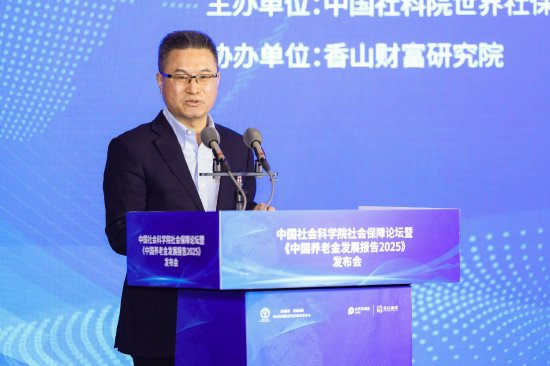
如何重构良好的养老金财富管理生态?曹德云提出从五方面采取综合措施
Xin Lang Cai Jing· 2025-12-06 05:07
Core Viewpoint - The necessity of steadily expanding pension assets and establishing an asset-based pension system is emphasized as a crucial solution to alleviate pension pressure [3][8]. Group 1: Cultural Philosophy - A long-term investment philosophy should be upheld, focusing on value investment goals and sustainable asset arrangements that highlight the unique characteristics of long-term funds [3][9]. - The perspective of pension wealth management should shift from short-term financial returns to maximizing long-term value growth, adopting a vision that is "long, wide, far, stable, and lasting" [3][9]. Group 2: Market Conditions - The construction of a robust capital market and the availability of diverse financial instruments are essential for the growth of pension assets [4][9]. - Supportive policies from the government have been introduced to encourage the development of the capital market and the entry of medium to long-term funds, which are vital for the preservation and appreciation of pension assets [4][9]. Group 3: Allocation Strategies - A diversified regional distribution and flexible investment strategies are necessary, with global allocation being a common strategy in international pension asset management to effectively mitigate risks and seize growth opportunities [5][10]. - Lifecycle asset allocation strategies should be established to cater to different age groups and their respective risk preferences [5][10]. Group 4: Service Quality - The professional level and capabilities of pension wealth management must be highlighted, fostering active participation from pension holders and building a high-trust interactive relationship [6][11]. - Pension management institutions should enhance their professional capabilities and service levels, focusing on market guidance, communication, and education for pension holders [6][11]. Group 5: Mechanism Construction - A scientific and effective operational mechanism should be established, utilizing advanced technologies for efficient management [7][12]. - A long-term assessment mechanism should be created, with regular reviews and dynamic adjustments to investment strategies based on market changes and individual circumstances [7][12]. - Risk management mechanisms must be robust to avoid high-risk speculation and leverage, ensuring the safety and stability of funds [7][12].
7.7亿手、66.61万亿元!11月期货市场成交量与成交额显著增长
Qi Huo Ri Bao· 2025-12-05 23:45
中国期货业协会昨日发布的数据显示,以单边计算,11月全国期货市场成交量为7.7亿手,成交额为66.61万亿元,同比分别增长13.54%和7.11%。1—11月 全国期货市场累计成交量为81.17亿手,累计成交额为675.45万亿元,同比分别增长14.74%和20.19%。11月末全国期货市场总持仓量较上月增长7.14%。 从各家期货交易所的成交情况来看,1—11月,上期所累计成交量为20.35亿手,累计成交额为216.64万亿元,同比分别下降1.8%和增长16.57%;上期能源 累计成交量为1.45亿手,累计成交额为27.18万亿元,同比分别增长12.37%和下降6.52%;郑商所累计成交量为28.30亿手,累计成交额为80.57万亿元,同 比分别增长17.42%和2.17%;大商所累计成交量为23.58亿手,累计成交额为93.70万亿元,同比分别增长14.75%和5.08%;中金所累计成交量为2.77亿手, 累计成交额为231.32万亿元,同比分别增长21.39%和36.88%;广期所累计成交量为4.72亿手,累计成交额为26.03万亿元,同比分别增长161.99%和 159.36%。 总的来看,11月全国 ...

金融监管总局:强化风险管理筑牢安全防线,稳妥处置存量风险
Zheng Quan Shi Bao Wang· 2025-12-05 13:49
人民财讯12月5日电,近期,金融监管总局陆续召开8场银行业保险业学习贯彻党的二十届四中全会精神 系列座谈会。金融监管总局党委书记、局长李云泽主持会议。李云泽强调,要坚持问题导向深化改革, 专注主业、完善治理、错位发展,深化降本提质增效,规范经营行为,坚决纠正无序竞争,维护健康公 平的市场秩序。要强化风险管理筑牢安全防线,稳妥处置存量风险,严密防控增量风险,加大资本补充 力度,夯实发展基础,牢牢守住不发生系统性风险底线。 ...
“取款超5万元不再登记”兼顾安全与便利
Bei Jing Qing Nian Bao· 2025-12-05 07:32
Core Viewpoint - The People's Bank of China has released new regulations emphasizing risk-based customer due diligence for financial institutions, balancing anti-money laundering efforts with improved financial services. The regulation, effective from January 1, 2026, removes the requirement for customers to declare the source of funds for cash withdrawals exceeding 50,000 yuan, reflecting a more nuanced approach to risk management [1][2][3]. Group 1: Regulatory Changes - The new regulation cancels the requirement for customers to register the source of funds for cash withdrawals over 50,000 yuan, which has been a point of public concern and discussion [1][2]. - Financial institutions are now required to conduct customer due diligence based on risk assessments rather than a one-size-fits-all approach, allowing for a more tailored investigation process [2][3]. Group 2: Impact on Customer Experience - Customers have previously expressed frustration with intrusive inquiries regarding the source and purpose of funds during transactions, leading to a poor banking experience [2]. - The updated regulations aim to simplify the process for low-risk customers, enhancing their experience while maintaining necessary security measures for high-risk transactions [2][3]. Group 3: Enhanced Risk Management - Financial institutions must develop a more sophisticated risk assessment system that utilizes various data points, including customer identity and transaction history, to identify potential risks accurately [3]. - The ongoing prevalence of financial crimes necessitates that banks not only maintain but enhance their due diligence practices, ensuring a balance between customer convenience and financial security [3].
中证报价开展场外债券投资交易业务展业情况排查
Zhong Guo Zheng Quan Bao· 2025-12-04 20:22
Core Viewpoint - The China Securities Regulatory Commission (CSRC) is conducting a review of off-market bond investment trading activities among securities and fund management institutions to ensure compliance and accurate data reporting [1][2]. Group 1: Regulatory Review - The review focuses on two main aspects: the accuracy of the institution names registered in the off-market bond investment trading data reporting system and whether institutions have actually engaged in bond trading activities with their own funds and asset management businesses [1][2]. - Institutions are required to report their bond investment trading data monthly, and those not engaged in any bond-related business must register on the monitoring platform and provide basic information [2]. Group 2: Off-Market Bond Trading - Off-market bond trading includes activities such as cash bond trading, bond repurchase, bond forwards, and bond lending, conducted by securities and fund management institutions using their own funds and asset management [2]. - Institutions that have not obtained public fund qualifications must report their completed rectifications according to specific guidelines [2]. Group 3: Derivative Products - Off-market derivatives provide customized, flexible, and finely managed tools for professional investors, meeting diverse investment needs [3]. - These derivatives serve as effective risk management tools, helping investors mitigate investment volatility while maintaining their underlying asset positions [3]. - The development of off-market derivatives is driving strategic transformation and service upgrades for trading firms, enhancing their core capabilities in risk management and digital empowerment [3].
谁在为正大生物撑起“全球安全网” | 稳外贸⑥
Sou Hu Cai Jing· 2025-12-03 15:11
Core Viewpoint - The article emphasizes the importance of export credit insurance as a crucial support for foreign trade enterprises in Henan, especially in the context of a complex global trade environment. It highlights how this insurance acts as a safety net for companies, enabling them to manage risks and expand into international markets effectively [1]. Group 1: Role of Export Credit Insurance - Export credit insurance is described as a key "navigator" and "booster" for enterprises, helping them to mitigate risks associated with overseas buyers and trade barriers [1]. - The collaboration between China Export Credit Insurance Corporation (China Credit Insurance) and Henan enterprises is aimed at enhancing high-quality development and high-level openness in Henan [1]. - The article outlines the dual benefits of export credit insurance: providing a safety net against credit risks and injecting confidence for companies to explore new markets and secure new orders [1]. Group 2: Case Study of Zhengda Bio - Zhengda Bio, a biotechnology company with an annual export exceeding $100 million, attributes its steady expansion to both its industry chain advantages and the risk management system provided by China Credit Insurance [2][3]. - The partnership between Zhengda Bio and China Credit Insurance has lasted over 20 years, with a cumulative insured amount exceeding $1 billion, showcasing a long-term commitment to risk management [3][4]. - Zhengda Bio's internal systems are integrated with China Credit Insurance's systems, allowing for real-time order uploads and automatic underwriting, which embeds risk management into the company's operational processes [4]. Group 3: Risk Management and Support - The article highlights that China Credit Insurance is not merely a compensation entity but acts as a risk management advisor, providing services such as global risk analysis, client credit investigations, and risk alerts [6][7]. - Zhengda Bio has developed its own risk management system, which includes risk identification and compliance training, transitioning from experience-based to system-based risk management [7]. - The effectiveness of this partnership is illustrated by Zhengda Bio's ability to navigate risks successfully, having not encountered significant collection risks in over 20 years [8]. Group 4: Future Outlook - The article suggests that as international trade becomes more complex, the capabilities of China Credit Insurance will continue to evolve, enhancing its risk prevention and service levels [7]. - Zhengda Bio's experience serves as a model for other enterprises in Henan, demonstrating that improved risk management and credit systems can enhance long-term competitiveness in foreign trade [9]. - The narrative concludes with the notion that while risks in global markets will persist, effective management strategies can bolster companies' confidence in pursuing international opportunities [9].
筑牢风险管理体系 深化风险文化赋能
Qi Huo Ri Bao· 2025-12-03 03:17
Core Viewpoint - The company emphasizes the importance of risk management as a foundation for stable operations and a safeguard for the financial market, aligning with regulatory requirements and industry culture [1] Group 1: Risk Awareness and Culture - The company has established a risk culture advocacy system based on case studies to enhance risk management capabilities, making risk management proactive rather than reactive [2] - Regular collection and analysis of risk events in the industry help identify management loopholes and optimize management measures [2] - The initiative transforms abstract risk concepts into concrete business scenarios, fostering a culture where everyone is responsible for risk management [2] Group 2: Technology Empowerment - The company is committed to building an intelligent risk control system across all business lines through technological empowerment [3] - A self-developed risk management system allows for the measurement and early warning of key risks, integrating risk management into every business process [3] - The establishment of a centralized risk control platform enhances efficiency and accuracy in risk management, shifting from post-event handling to real-time intervention and pre-warning [3] Group 3: Risk Management Framework - A robust risk management system is essential for embedding risk culture within the organization [4] - The company has developed a comprehensive risk management organization centered on governance and management layers, adhering to the "three lines of defense" theory [4] - Continuous optimization of the risk management framework, including risk preferences and limits, enhances understanding and execution of risk management among employees [4] Group 4: Future Outlook - The company views risk culture development as a dynamic, long-term strategic initiative, focusing on continuous improvement in risk education, technology, and management frameworks [5] - The goal is to embed risk culture as an intrinsic value and habit among employees, strengthening the company's competitive advantage in risk management [5]